Sign In

My Timeline

GuRoute

Discover Your World

Share your Experiences

Record your Life


Top Attractions in North Carolina

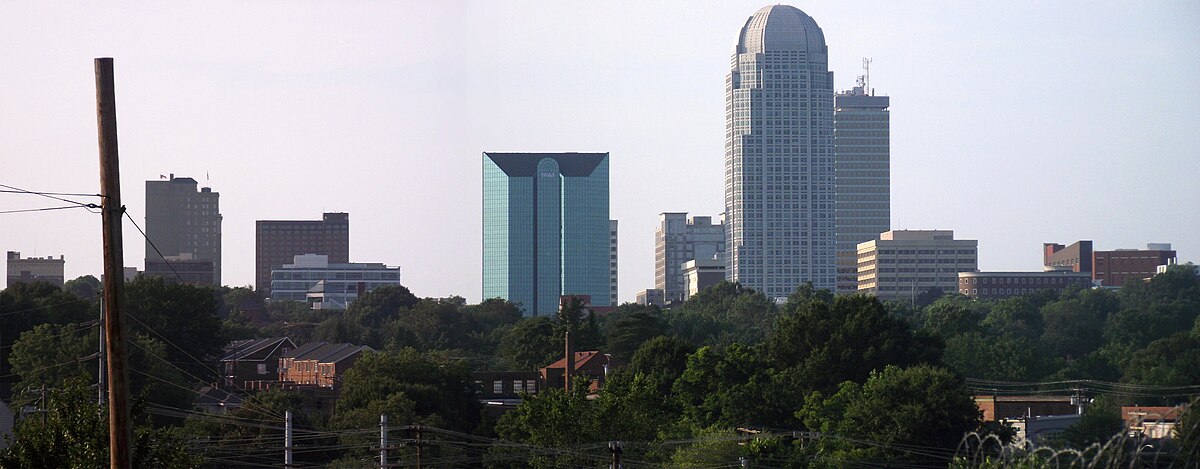
Charlotte

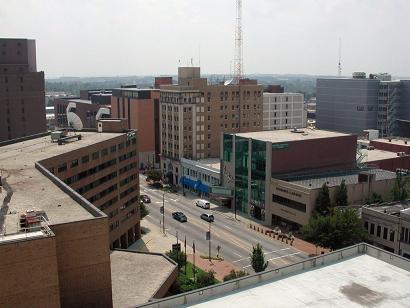
Charlotte is the largest city in the U.S. state of North Carolina. It is the seat of Mecklenburg County. The second largest city in the Southeastern United States, just behind Jacksonville, Florida. Charlotte is the third fastest growing major city in the United States. In 2014, the estimated population of Charlotte according to the U.S. Census Bureau was 809,958, making it the 17th largest city in the United States based on population. The Charlotte metropolitan area ranks 22nd largest in the US and had a 2014 population of 2,380,314. The Charlotte metropolitan area is part of a sixteen-county market region or combined statistical area with a 2014 U.S. Census population estimate of 2,537,990. Residents of Charlotte are referred to as "Charlotteans". It is listed as a "gamma-plus" global city by the Globalization and World Cities Research Network. Charlotte is home to the corporate headquarters of Bank of America and the east coast operations of Wells Fargo, which among other financial operations makes it the second largest banking center in the United States. Among Charlottes many notable attractions, some of the most popular include the Carolina Panthers of the National Football League, the Charlotte Hornets of the National Basketball Association, 2 NASCAR Sprint Cup races and the NASCAR All-Star Race, the Wells Fargo Championship, the NASCAR Hall of Fame, Carowinds amusement park, and the U.S. National Whitewater Center. Charlotte Douglas International Airport is a major international hub, and was ranked the 23rd busiest airport in the world by passenger traffic in 2013. Nicknamed the Queen City, Charlotte and its resident county received its name in honor of Charlotte of Mecklenburg-Strelitz, who had become queen consort of Great Britain the year before the citys founding. A second nickname derives from the American Revolutionary War, when British commander General Cornwallis occupied the city but was driven out by hostile residents, prompting him to write that Charlotte was "a hornets nest of rebellion", leading to the nickname The Hornets Nest. Charlotte has a humid subtropical climate. Charlotte is located several miles east of the Catawba River and southeast of Lake Norman, the largest man-made lake in North Carolina. Lake Wylie and Mountain Island Lake are two smaller man-made lakes located near the city.

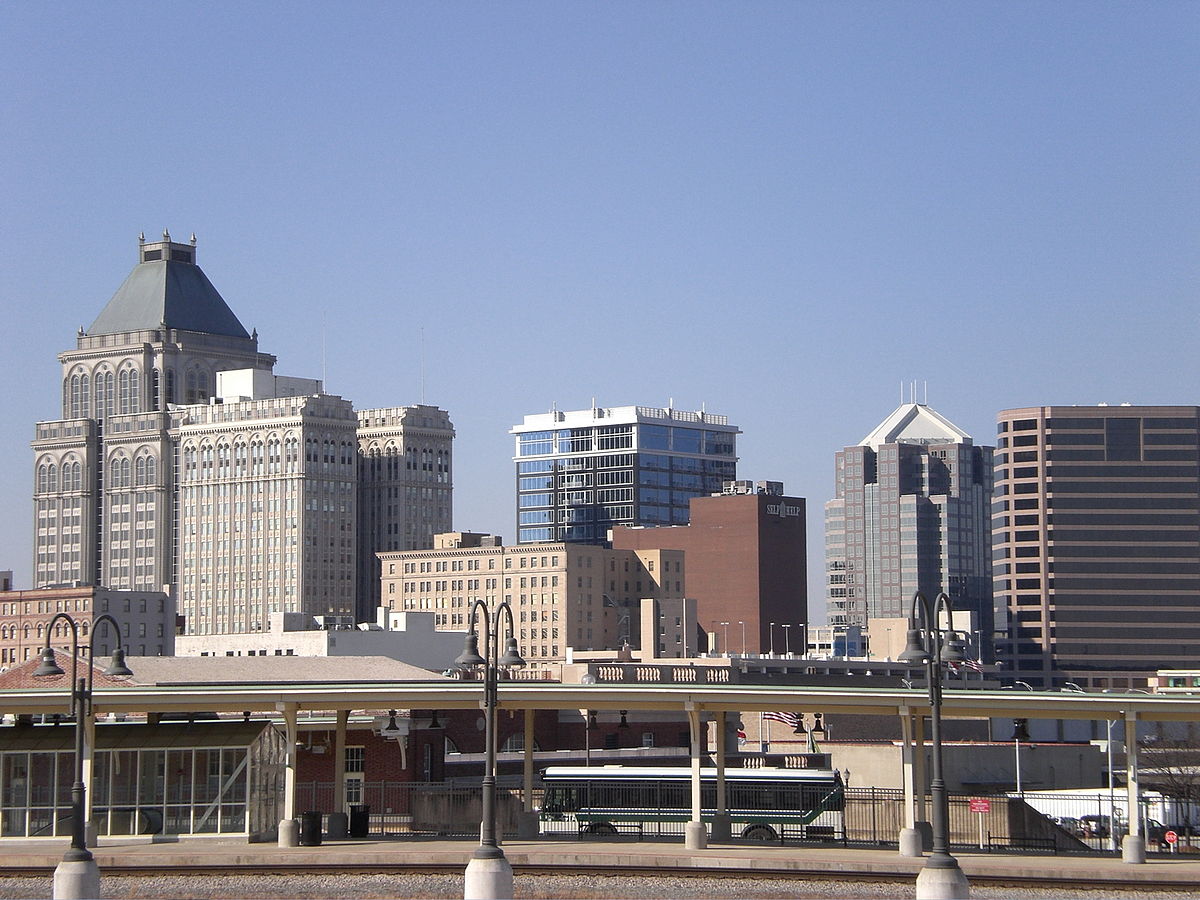
Raleigh

Raleigh is the capital of the state of North Carolina as well as the seat of Wake County in the United States. It is the second most populous city in North Carolina, after Charlotte. Raleigh is known as the "City of Oaks" for its many oak trees, which line the streets in the heart of the city. The city covers a land area of 142.8 square miles . The U.S. Census Bureau estimates the citys population to be 431,746 as of July 1, 2013. It is also one of the fastest-growing cities in the country. The city of Raleigh is named after Sir Walter Raleigh, who established the lost Roanoke Colony in present-day Dare County. Raleigh is home to North Carolina State University and is part of the Research Triangle area, together with Durham and Chapel Hill . The "Triangle" nickname originated after the 1959 creation of the Research Triangle Park, located in Durham Wake Counties partway between the three cities and their universities. The Research Triangle region encompasses the U.S. Census Bureaus Raleigh-Durham-Chapel Hill Combined Statistical Area, which had an estimated population of 2,037,430 in 2013. The Raleigh Metropolitan Statistical Area had an estimated population of 1,214,516 in 2013. Most of Raleigh is located within Wake County, with a very small portion extending into Durham County. The towns of Cary, Morrisville, Garner, Clayton, Wake Forest, Apex, Holly Springs, Fuquay-Varina, Knightdale, Wendell, Zebulon, and Rolesville are some of Raleighs primary nearby suburbs and satellite towns. Raleigh is an early example in the United States of a planned city, chosen as the site of the state capital in 1788 and incorporated in 1792 as such. The city was originally laid out in a grid pattern with the North Carolina State Capitol in Union Square at the center. In the United States Civil War the city was spared from any significant battle, only falling in the closing days of the war, though it did not escape the economic hardships that plagued the rest of the American South during the Reconstruction Era. The twentieth century saw the opening of the Research Triangle Park in 1959, and with the jobs it created the region and city saw a large influx of population, making it one of the fastest growing communities in the United States by the early 21st century. Raleigh is home to numerous cultural, educational, and historic sites. The Duke Energy Center for the Performing Arts in Downtown Raleigh features three theater venues and serves as the home for the North Carolina Symphony and the Carolina Ballet. Walnut Creek Amphitheatre is a large music amphitheater located in Southeast Raleigh. Museums in Raleigh include the North Carolina Museum of Art in West Raleigh, as well as the North Carolina Museum of History and North Carolina Museum of Natural Sciences located next to each other near the State Capitol in Downtown Raleigh. Several major universities and colleges call Raleigh home, including North Carolina State University, the largest public university in the state, and Shaw University, the first historically black university in the American South and site of the foundation of the Student Nonviolent Coordinating Committee, an important civil rights organization of the 1960s. One U.S. president, Andrew Johnson, was born in Raleigh.

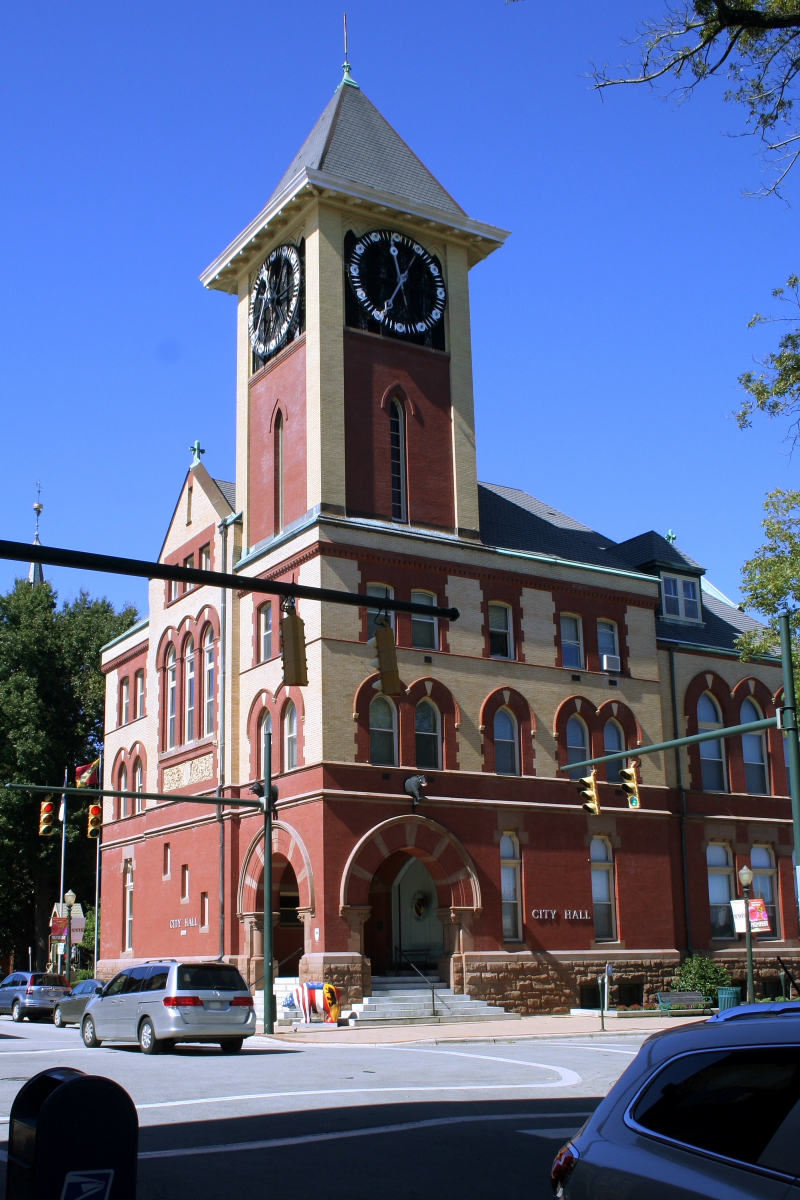
New Bern

New Bern is a city in Craven County, North Carolina, United States. As of the 2010 census it had a population of 29,524, which had risen to an estimated 30,242 as of 2013. It is the county seat of Craven County and the principal city of the New Bern micropolitan area. It is located at the confluence of the Trent and the Neuse rivers, near the North Carolina coast. It lies 112 miles east of Raleigh, 87 miles northeast of Wilmington, and 162 miles south of Norfolk. New Bern is the birthplace of Pepsi Cola. New Bern was settled in 1710 by Swiss and Palatine German immigrants. The new colonists named the settlement after Bern, the capital of Switzerland and hometown of their leader Christoph von Graffenried. The English connection with Switzerland had been established by some Marian exiles who sought refuge in Protestant parts of Switzerland. There were also marriages between the Royal House of Stuart and notable people in the history of Calvinism. The colonists later discovered they had started their settlement on the site of a former Tuscarora village named Chattoka. This caused conflicts with the Tuscarora who were in the area. New Bern is the second-oldest European-American colonial town in North Carolina . It served as the capital of the North Carolina colonial government, then briefly as the state capital. After the American Revolution, New Bern became wealthy and quickly developed a rich cultural life. At one time New Bern was called "the Athens of the South," renowned for its Masonic Temple and Athens Theater. These are both still very active today. New Bern has four historic districts listed on the National Register of Historic Places; their numerous contributing buildings include residences, stores and churches dating back to the early eighteenth century. Within easy walking distance of the waterfront are more than 164 homes and buildings listed on the National Register. Also nearby are several bed and breakfasts, hotels, restaurants, banks, antiques stores and specialty shops. The historic districts contain many of the citys 2,000 crape myrtles—its official flower—and developed gardens. New Bern has two "Local Historic Districts", a municipal zoning overlay that affords legal protection to the exteriors of New Berns irreplaceable historic structures. These areas provide much of New Berns unique charm, appeal to retirees and heritage tourism, and contribute to the citys economic success. The Local Historic Districts, while vitally important to New Bern, comprise only 2.43% of New Berns 27-square-mile area. There is considerable area available for new development.

University of North Carolina at Chapel Hill

The University of North Carolina at Chapel Hill, also known as UNC, UNC-Chapel Hill, Chapel Hill, North Carolina, University of North Carolina, or simply Carolina, is a coeducational public research university located in Chapel Hill, North Carolina, United States. North Carolina was one of the original eight Public Ivy schools that are claimed to provide an Ivy League experience for a public schooling price. After being chartered in 1789, the university first began enrolling students in 1795, which also allows it to be one of three schools to claim the title of the oldest public university in the United States. The first public institution of higher education in North Carolina, the school opened its doors to students on February 12, 1795. The university offers degrees in over 70 courses of study through fourteen colleges and the College of Arts and Sciences. All undergraduates receive a liberal arts education and have the option to pursue a major within the professional schools of the university or within the College of Arts and Sciences from the time they obtain junior status. Under the leadership of President Kemp Plummer Battle, in 1877 North Carolina became coeducational and began the process of desegregation in 1951 when African-American graduate students were admitted under Chancellor Robert Burton House. In 1952, North Carolina opened its own hospital, UNC Health Care, for research and treatment, and has since specialized in cancer care. The schools students, alumni, and sports teams are known as "Tar Heels". The campus of North Carolina is located in Chapel Hill, North Carolina, a university town. The campus covers a rather small 729 acres over Chapel Hills downtown area, encompassing places like the Morehead Planetarium and the many stores and shops located on Franklin Street. Students can participate in over 550 officially recognized student organizations. The student-run newspaper The Daily Tar Heel has won national awards for collegiate media, while the student radio station WXYC provided the worlds first internet radio broadcast. North Carolina is one of the charter members of the Atlantic Coast Conference, which was founded on June 14, 1953. Competing athletically as the Tar Heels, North Carolina has achieved great success in sports, most notably in mens basketball, womens soccer, and womens field hockey.

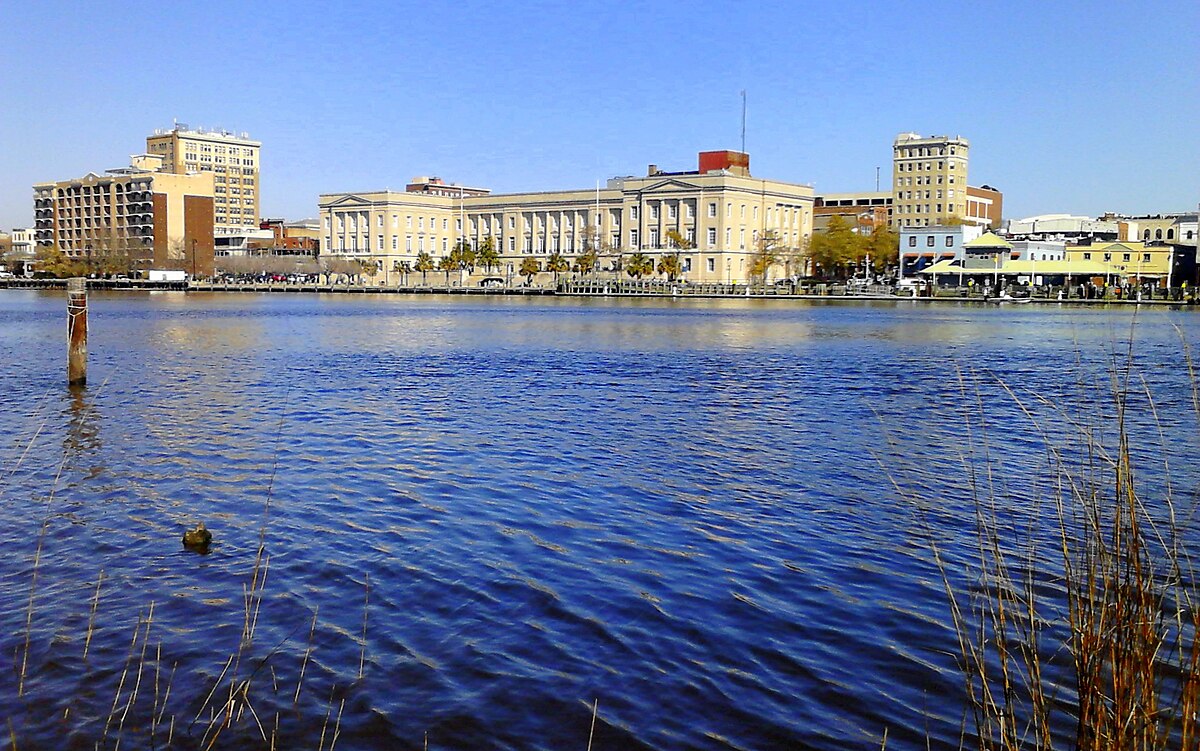
Wilmington

Wilmington is a port city and the county seat of New Hanover County in coastal southeastern North Carolina, United States. The population is 112,067; according to the 2010 Census it is the eighth most populous city in the state. Wilmington is the principal city of the Wilmington Metropolitan Statistical Area, a metropolitan area that includes New Hanover and Pender counties in southeastern North Carolina, which has a population of 263,429 as of the 2012 Census Estimate. Wilmington was settled by European Americans along the Cape Fear River. Its historic downtown has a one-mile-long Riverwalk, originally developed as a tourist attraction, and in 2014 Wilmingtons riverfront was named the "Best American Riverfront" by USA Today. It is minutes away from nearby beaches. The National Trust for Historic Preservation named Wilmington, North Carolina, as one of its 2008 Dozen Distinctive Destinations. City residents live between the river and the ocean, with four nearby beach communities: Fort Fisher, Wrightsville Beach, Carolina Beach, and Kure Beach, all within half-hour drives from downtown Wilmington. In 2003 the city was designated by the US Congress as a "Coast Guard City". It is home port for the USCGC Diligence, a United States Coast Guard medium endurance cutter. The World War II battleship USS North Carolina is held as a war memorial. Located across from the downtown port area, the ship is open to public tours. Other attractions include the Cape Fear Museum, the Wilmington Hammerheads United Soccer Leagues soccer team. The University of North Carolina Wilmington provides a wide variety of programs for undergraduates, graduate students, and adult learners, in addition to cultural and sports events open to the community. Wilmington is the home of EUE Screen Gems Studios, the largest domestic television and movie production facility outside of California. "Dream Stage 10," the facilitys newest sound stage, is the third-largest in the US. It houses the largest special-effects water tank in North America. After the studios opening in 1984, Wilmington became a major center of American film and television production. Numerous movies in a range of genres and several television series, including Iron Man 3, Foxs Sleepy Hollow, One Tree Hill, and NBCs Revolution, were produced there. Over recent years, however, the end of state tax credits to the industry has severely impacted filmmaking in the entire area.

Duke University

Duke University is a private research university located in Durham, North Carolina, United States. Founded by Methodists and Quakers in the present-day town of Trinity in 1838, the school moved to Durham in 1892. In 1924, tobacco and electric power industrialist James Buchanan Duke established Duke University, at which time the institution changed its name to honor his deceased father, Washington Duke. The universitys campus spans over 8,600 acres on three contiguous campuses in Durham as well as a marine lab in Beaufort. Dukes main campus—designed largely by architect Julian Abele—incorporates Gothic architecture with the 210-foot Duke Chapel at the campus center and highest point of elevation. The first-year-populated East Campus contains Georgian-style architecture, while the main Gothic-style West Campus 1.5 miles away is adjacent to the Medical Center. Duke is also the 7th wealthiest private university in America with $11.4 billion in cash and investments in fiscal year 2014. Dukes research expenditures in the 2013 fiscal year were $993 million, the eighth largest in the nation. In 2014, Thomson Reuters named 32 Duke professors to its list of Highly Cited Researchers, making it fourth globally in terms of primary affiliations. Duke also ranks 5th among national universities to have produced Rhodes, Marshall, Truman, Goldwater, and Udall Scholars. 8 Nobel laureates, 3 Turing Award winners and 25 Churchill scholars are also affiliated with the university. Dukes sports teams compete in the Atlantic Coast Conference and the basketball team is renowned for having won five NCAA Mens Division I Basketball Championships, the most recent in 2015.

Tarboro

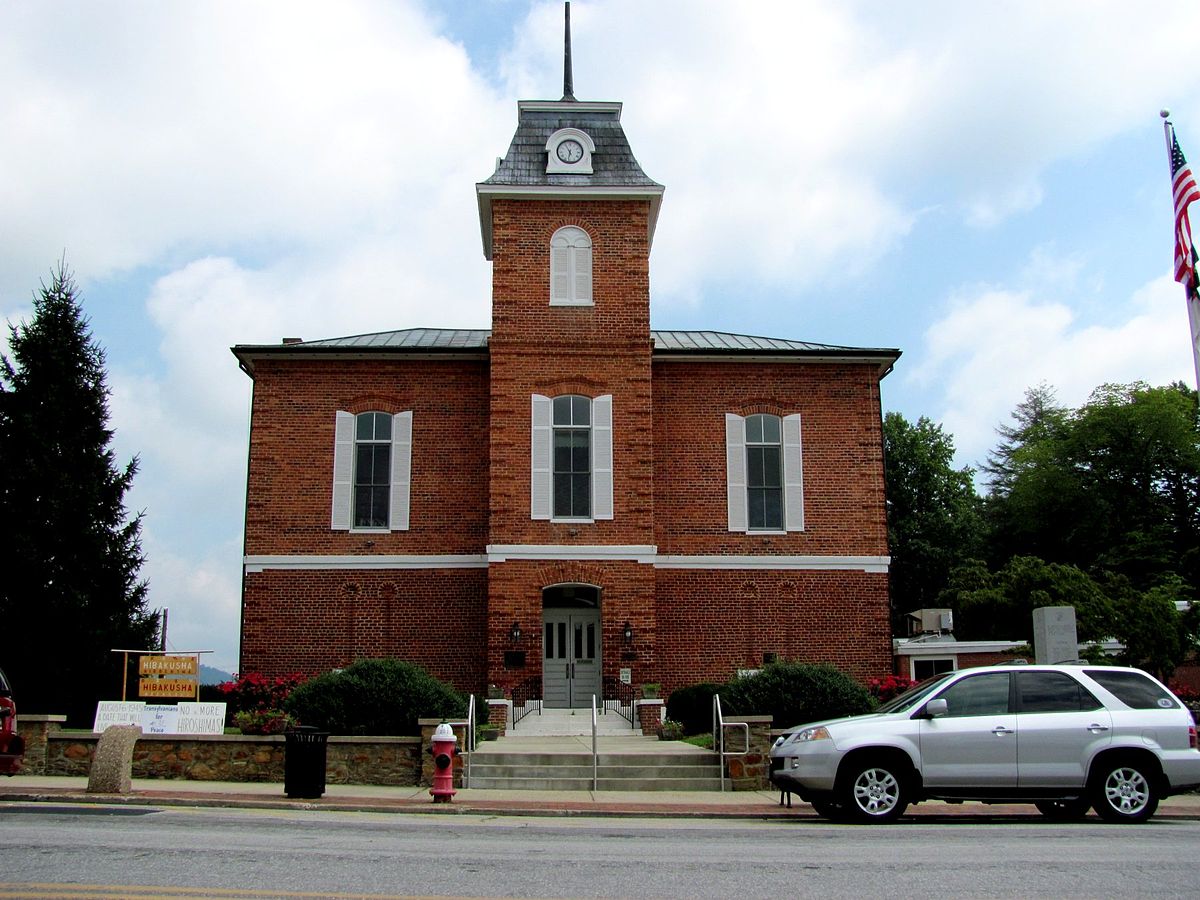
Tarboro is a town located in Edgecombe County, North Carolina, United States. It is part of the Rocky Mount, North Carolina Metropolitan Statistical Area. As of the 2010 census, the town had a population of 11,415. It is the county seat of Edgecombe County. Tarboro is located near the western edge of North Carolina's coastal plain. It has many historical churches, some dating back to the early 19th century. Tarboro was chartered by British colonists in 1760. Nestled in a bend of the Tar River, it was an important river port, the head of navigation on the Tar just east of the fall line of the Piedmont. As early as the 1730s, a small European-American community formed due to this natural asset, and its warehouse, customs office and other commercial concerns, together with a score of "plain and cheap" houses, made a bustling village. The locals were a scrappy bunch, and gave the early governors and their agents a hard time. Edgecombe County residents came down hard on the side of the American Revolution, many serving as officers in the Continental Army. One such was Thomas Blount , whose handsome plantation house "The Grove" has been restored and is open for tours on a daily basis. A very young officer, Blount was captured during the Revolution and sent to England as a prisoner of war. After his return to North Carolina, he participated in one of the largest merchant/shipping companies in late 18th-century America. "The Grove" was later owned by Colonel Louis Dicken Wilson , who served in the North Carolina Senate and fought in the Mexican-American War; and by Col. John Luther Bridgers , Commandant of Fort Macon in the American Civil War. Civil War general William Dorsey Pender is buried in Calvary Churchyard in Tarboro. Pender was considered one of the most promising young generals in Lee's army when he was mortally wounded at the Battle of Gettysburg on July 2, 1863. He is memorialized in the name of Pender County, North Carolina, founded in 1875. His letters were published posthumously as The General to his Lady: The Civil War Letters of William Dorsey Pender to Fanny Pender .

Canton

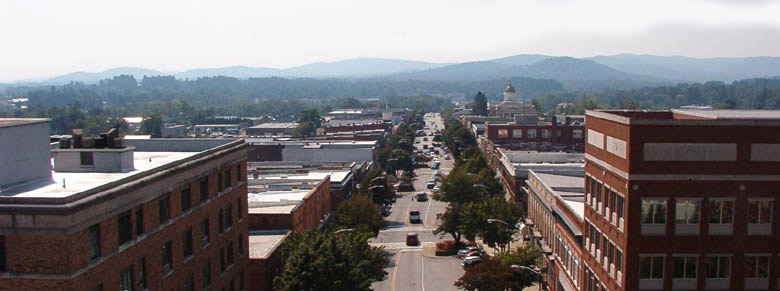
Canton is the second largest town in Haywood County, North Carolina, United States. It is located about 13 miles west of Asheville, North Carolina and is part of the Asheville Metropolitan Statistical Area. The town is named after the city of Canton, Ohio. The population was 4,227 people at the 2010 Census. The area was first settled in the late 1780s. By 1790 Jonathan McPeters was farming the banks of the Pigeon River where Canton now stands. Around 1815 the first church was built in what was to become Canton; it was called the Locust Old Field Baptist Church. Canton was founded in 1889 as Buford, later that same year the name was changed to Vinson. The name was changed to Pigeon Ford in 1891. The name was changed to Canton in 1893. The town was named for Canton, Ohio, the source of the steel for the bridge over the Pigeon River. Canton was the site of a Champion International Paper factory. Champion contributed largely to the local economy, and was the largest employer in Canton. Upon Champion's decision to close the plant in 1997, the employees of Champion purchased the plant and formed Blue Ridge Paper Company. Under an ESOP, the employees owned a 45% stake in the new company, although it has since been sold. The plant is now owned by Evergreen Packaging. The Canton Main Street Historic District and Colonial Theater are listed on the National Register of Historic Places. As of the census of 2000, there were 4,029 people, 1,819 households, and 1,118 families residing in the town. The population density was 1,054.6 people per square mile . There were 2,003 housing units at an average density of 524.3 per square mile . The racial makeup of the town was 96.13% White, 1.59% African American, 0.57% Native American, 0.10% Asian, 0.94% from other races, and 0.67% from two or more races. Hispanic or Latino of any race were 2.41% of the population. There were 1,819 households out of which 22.7% had children under the age of 18 living with them, 47.7% were married couples living together, 10.5% had a female householder with no husband present, and 38.5% were non-families. 35.4% of all households were made up of individuals and 20.3% had someone living alone who was 65 years of age or older. The average household size was 2.17 and the average family size was 2.78.

This attraction is located in

This is a private property. Please enjoy respectfully and do not disturb the occupants.

Edit Categories
Add Tours

This attraction is not part of any tours

Add Collections

This attraction is not part of any collections


Some of the attractions we imported from Wikipedia are not perfect. Send us an email detailing what's wrong and we'll look into fixing it.

GuRoute is all about Gurus sharing their local knowledge. If you feel up to fixing this problem yourself, why not adopt it. You will become the owner and can fix whatever problems you see.

We've copied a link to this attraction into your clipboard so that ou can paste it into an email or text message...

More Info...
You can add your friends to the visit yourself, or, send them a link and let them add themselves...

The visit will appear on both your timelines and on your Shared Timeline.

Click below and we'll email you a link that you can send on to friends or post on your group's Facebook page.

If your friends aren't members of GuRoute yet, this is a great way to get them started.
Recent
Recently used Collections will appear here...
Recent
Recently used tours will appear here...

Where is this?

GuRoute likes to place attractions inside other attractions. So, maybe it's in a city, or maybe it's inside a particular park in that city. Maybe your attraction is a huge park that spans half the county, or multiple counties.

Determining where this attraction is gives it context - if it's in a park, you'll be able to see it alongside all the other attractions in that park. And that helps define the park.

GuRoute will automatically calculate a parent region for this attraction. You can change it if there is something more appropriate.

This attraction is currently located in .

Change

This attraction does not yet have any reviews

Please login to write a review...

Reviewed by
Record new Visit

Add this location to your timneline?

  • If there's an existing attraction open it and add it to your timeline...
  • If not, enter a title and we'll create a new attraction for your memories...
Create new Attraction

Create a new attraction at this location?

  • We rely on Gurus like you to share your local knowledge...
(Give a name for this location)


+
Add this to your timeline instead...

Imagine having a record of all the cool things you've done in your life!


Using our timeline you can keep track of everywhere you visit in your lifetime...

But, you'll need to sign in first...

Add contacts so that you can share your travels and record places that you visit together...

Family
Favorites
Family
Favorites

Profile TimeLine Our Visits Edit Accept Decline Invite

If you have any more friends that visited this place with you, feel free to add them to the visit. We'll write it to their timeline and once they confirm it, they too will have this memory for a lifetime.

If they're not already registered, you just need their name and email address and you can add them and we'll send them an invite on your behlaf.

Add a tour comment

Add some extra information for when this attraction is viewed as part of your tour...

Next Stop Instructions

Add some instructions for what to see/do on the way to the next stop...

Next Stop Instructions

Add some instructions for what to see/do on the way to the next stop...

If you're visiting an existing attraction, open it and add it to your timeline. If there is no attraction for the place you are visiting...

  • Click 'Add My Location' below
  • Or right-click on the map to mark a different location
  • Or long-press if you have a touch screen
You can even add locations while you're offline....
  • Load up the map when you're online and we'll keep track of your locaiton
  • You can add locations to your timeline
  • When you are online again we'll sync them with the cloud

We can't connect to the internet right now. The following attractions are saved locally and can be uploaded when you're online...

GuRoute would like to access your current location so that we can pin you on the map and show you nearby attractions

Add friends so that you can share your experiences with each other...

Add tour to What's Next?

Go...

Either for yourself or someone else...

  1. Do your trip research in GuRoute
    Add all the places that you think might be worthy of a visit into a trip-plan
  2. Add your trip-plan to your "What's Next" timeline
    (or a friend's "What's Next" timeline)
  3. When you're on vacation you'll have all your research at your fingertips
  4. Share your timline with your friends
    They can enjoy your vacation with you, seeing not only where you've been, but where you're going next...
  5. Add/remove attractions if things change

It also makes a great souvenir of your trip

Collections

Go...

Create a home page for a collection of attractions

  • Add an image and description to display on the homepage
  • Start adding content
    Add existing attractions to your collection or create new attractions of your own
  • Collections can be:
    • Public (Anyone can add attractions to your collection)
    • Shared (Only yourself and Gurus you nominate can add content)
    • Private (The collection will only be visible to yourself)

Uses

  • Local business or hotel
    Showcase local attractions that you endorse
  • Clubs
    Showcase attractions that members have created (eg. local historical society)
  • Special Interest
    If GuRoute does not have a category for your special interest you add your attractions to your own collection instead

Examples

Walking/Driving Tours

Go...

A guided tour where GuRoute will direct you from stop to stop and narrate a description of each attraction you arrive at

  • GuRoute uses your phone's GPS to guide you from stop to stop
  • GuRoute automatically detects when you arrive at the next tour-stop and narrates the description of the attraction (Chrome Only)
  • It then sends you on to the next stop

Tours are great to attract people to your town. Even places with no significant points of interest can be lots of fun when part of a tour


Cater tours to your Audience

  • Kid-friendly Tours
    • Focus on what will keep kids interested
    • Instead of parents having to drag their kids around they'll be struggling to keep up
    • Let the kids navigate and they'll get more fun out of finding that historical plaque than they ever would from reading it
  • Accessible tours
  • Short and long tours of the same location

What you need to do...

  1. Click 'Go...'
    Enter a title, description and location for the tour
  2. Add existing attractions OR create new ones and add them to the tour
  3. For existing attractions you can add more information specific to the theme of the tour
  4. You can also add instructions on what to do or see en-route to the next tour-stop
  5. Try out your tour and see how it works...

Mystery Tour

Go...

Create a Mystery Tour

Create a series of clues to show people around a city, neighborhood or whatever place you like...

  • GuRoute will show people clues to get them from attraction to attraction
  • When they reach each stop GuRoute will tell them about the place and give them the next clue
  • Take as long or as you like and explore each location at your leisure

Scavenger Hunt

Go...

Create a Scavenger Hunt

Create a series of questions that people have to answer. The answers can all be discovered by walking aroung the area, looking for clues.

  • How many beers are on tap at Michael Collin's Irish Bar?
  • What's the name of the oldest building on main streeet?
  • Show a picture of some public art and ask them what it is called
  • Clues can have numeric or multiple choice answers