Sign In

My Timeline

GuRoute

Discover Your World

Share your Experiences

Record your Life


Top Attractions in Chapel Hill

University of North Carolina at Chapel Hill

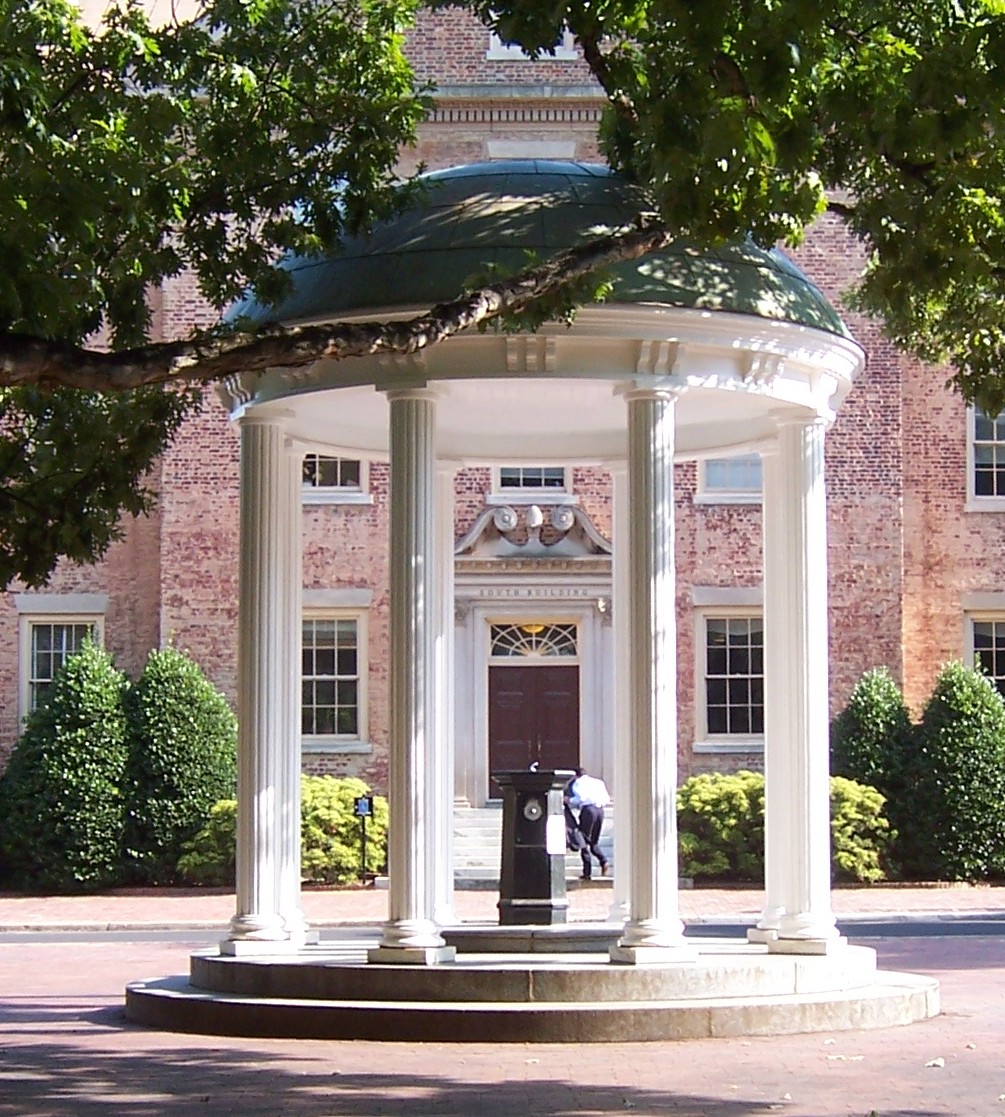
The University of North Carolina at Chapel Hill, also known as UNC, UNC-Chapel Hill, Chapel Hill, North Carolina, University of North Carolina, or simply Carolina, is a coeducational public research university located in Chapel Hill, North Carolina, United States. North Carolina was one of the original eight Public Ivy schools that are claimed to provide an Ivy League experience for a public schooling price. After being chartered in 1789, the university first began enrolling students in 1795, which also allows it to be one of three schools to claim the title of the oldest public university in the United States. The first public institution of higher education in North Carolina, the school opened its doors to students on February 12, 1795. The university offers degrees in over 70 courses of study through fourteen colleges and the College of Arts and Sciences. All undergraduates receive a liberal arts education and have the option to pursue a major within the professional schools of the university or within the College of Arts and Sciences from the time they obtain junior status. Under the leadership of President Kemp Plummer Battle, in 1877 North Carolina became coeducational and began the process of desegregation in 1951 when African-American graduate students were admitted under Chancellor Robert Burton House. In 1952, North Carolina opened its own hospital, UNC Health Care, for research and treatment, and has since specialized in cancer care. The schools students, alumni, and sports teams are known as "Tar Heels". The campus of North Carolina is located in Chapel Hill, North Carolina, a university town. The campus covers a rather small 729 acres over Chapel Hills downtown area, encompassing places like the Morehead Planetarium and the many stores and shops located on Franklin Street. Students can participate in over 550 officially recognized student organizations. The student-run newspaper The Daily Tar Heel has won national awards for collegiate media, while the student radio station WXYC provided the worlds first internet radio broadcast. North Carolina is one of the charter members of the Atlantic Coast Conference, which was founded on June 14, 1953. Competing athletically as the Tar Heels, North Carolina has achieved great success in sports, most notably in mens basketball, womens soccer, and womens field hockey.

North Carolina Botanical Garden

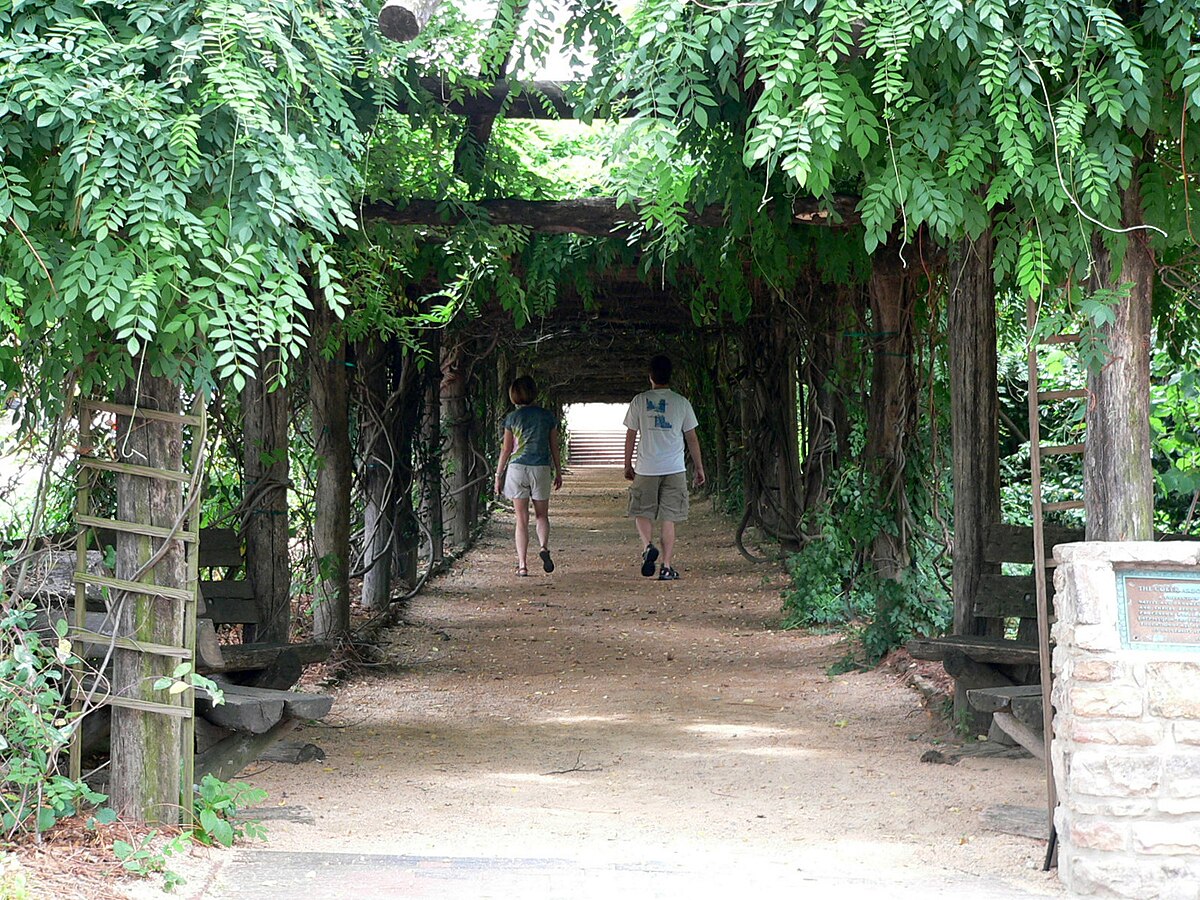
The North Carolina Botanical Garden, plus 210 acres of nature preserves) is a botanical garden operated by the University of North Carolina at Chapel Hill in Chapel Hill, North Carolina. The primary goal of the Garden is to research, catalog, and promote the native plant species of North Carolina. Admission is free, and the Garden is open seven days a week, with special educational programs offered regularly. The history of the Garden begins in 1903, when Professor William Chambers Coker began planting trees and shrubs on the central campus . In 1952, the Trustees of the university dedicated 70 acres forested for development of a botanical garden. An additional 103 acres were donated by William Lanier Hunt. Considerable additions and expansion of the Garden took place from the 1960s onward. The most recent expansion effort is a sustainable Visitor Education Center, designed by architect Frank Harmon. Today the Garden comprises 14 collections and display gardens, containing some 5,900 accessions representing about 2,500 species of the 4,700 plant species known to be native or naturalized in North and South Carolina. Highlights of the Garden include: Battle Park, 90 acres – forest land in the center of the Chapel Hill. Carnivorous Plant Collection – an acclaimed collection of carnivorous plants, including butterworts, pitcher plants, sundews, and Venus Flytraps Coastal Plain and Sandhills Habitat Gardens – representing the ecosystems in the eastern part of North Carolina. Coker Arboretum The Fern Collection, containing Southeastern fern species. Garden of Flowering Plant Families – a traditional botanical garden, showing evolutionary relationships between flowering plant groups. Horticultural Therapy Demonstration Garden – heirloom vegetables and flowers varieties in plantings designed for persons with limited mobility and reach. The Mercer Reeves Hubbard Herb Garden — some 500 species, including 52 Rosmarinus officinalis cultivars, arranged in a Culinary Garden, Economic Garden, Medicinal Garden, Native American Garden, and Poison Garden. William Lanier Hunt Arboretum Mason Farm Biological Reserve, 367 acres – natural area. Mountain Habitat Garden – plants and trees characteristic of the mountainous areas of the southern Appalachian mountains at elevations ranging from 1,500 feet to 6,684 feet . Native Plant Border – native perennials, shrubs, and small trees. Native Water Gardens – Nymphaea odorata and Nelumbo lutea, as well as Pontederia cordata, and many others. All aquatic plants are native to the southeastern United States. UNC Herbarium – 750,000 natural history specimens documenting the identity and distribution of plants in North Carolina and the Southeast. The garden also contains a cabin in which playwright and professor Paul Green performed most of his research and writing. It was moved to the garden in 1991.

Davie Poplar

Davie Poplar is a large tulip poplar tree, approximately 300–375 years old, located on the campus of the University of North Carolina at Chapel Hill, named in honor of Revolutionary War general and founder of the University William Richardson Davie. It was already a large tree as plans were being drawn up for the University in 1792, and legend has it that Davie personally chose to locate the school lands around the tree after having a pleasant summer lunch underneath it. The story is not true – the university's location was chosen by a six-man committee in November 1792 – and the tree was named by Cornelia Phillips Spencer almost a century later to commemorate the legend. The most enduring legend associated with the tree is that as long as Davie Poplar remains standing, the University will thrive. If it falls, the University will crumble. As such, many steps have been taken to preserve the tree. In 1918, it was struck by lightning, and fear that the tree was dying led the University to make a plant grafting, called Davie Poplar Jr. A second Davie Poplar Jr. was planted near Hinton James Hall. Later, another tree called Davie Poplar III was planted nearby from a seed of the original tree. As part of the university's bicentennial celebration in 1993, 100 seedlings from the tree were given to 100 children representing North Carolina's 100 counties. The seedlings were to be planted in the 100 counties across the state. The Burke County seedling is planted at the entrance of Table Rock Middle School. Where others are actually planted is not known. In 1996,Davie Poplar was badly damaged by Hurricane Fran, after which the trunk was filled with cement and strung with cables to keep it up. According to more recent legend, if a couple kisses on the stone bench beneath the tree, the couple will marry.

Halloween on Franklin Street

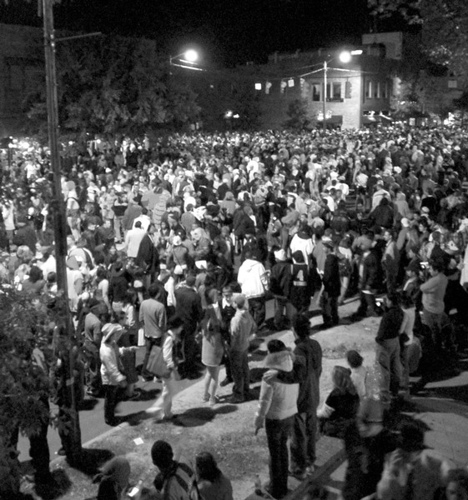
Halloween on Franklin Street is a yearly tradition in Chapel Hill, North Carolina, that encompasses a massive gathering on Franklin Street, the cultural hub of the town. The Halloween celebration began in the early 1980s as a considerably smaller event, involving Chapel Hill residents and college students from The University of North Carolina. Attendees of the event dress up in creative Halloween costumes and walk up and down Franklin Street celebrating the holiday. Since its beginnings, the event had grown in size every year until 2008. Although not sponsored by the Town of Chapel Hill, the celebration has become an attraction for visitors from across the South. Between 2004 and 2007, it was estimated that about 80,000 people converged on Franklin Street for the event, while Chapel Hill is estimated to have a population of 54,492 as listed in the 2007 census, evidence of the number of people who make the trip to Chapel Hill to attend. Because of the size of the celebration, the Town of Chapel Hill closes Franklin Street to all vehicular traffic and prohibits parking anywhere near downtown. Along with the big crowds come safety issues, with some of the biggest concerns being alcohol poisoning and gang-related violence. To deal with these issues, hundreds of police officers patrol the downtown area throughout the entire night. In 2007, approximately 400 police officers were deployed to Franklin Street to ensure that nothing got out of hand. In 2008, the Town of Chapel Hill implemented new measures to attempt to cut down on the size of the Halloween celebration in an action dubbed "Homegrown Halloween" to reduce the crowd size and discourage people from out of town to come to Chapel Hill. The shuttle service that had formerly transported people from park and ride lots to Franklin Street was shut down and the results of Chapel Hill's efforts showed when about 35,000 people showed up for the event. Among the alternatives to the traditional Franklin Street celebration are the Halloween-themed planetarium shows at Morehead Planetarium and Science Center [8], which include two versions of "Scare-o-lina Skies", one for families with school-age children and one for adults and older teens. The planetarium closes by mid-afternoon on Halloween because the adjacent parking lot becomes a staging area for public safety vehicles serving the Franklin Street nighttime celebration.

Carmichael Arena

William Donald Carmichael, Jr. Arena is a multi-purpose arena in Chapel Hill, North Carolina, United States. It is home to the University of North Carolina at Chapel Hill Tar Heels womens basketball team. The arena opened in 1965 as Carmichael Auditorium. It is named for William Donald Carmichael, Jr., a popular former school vice-president and brother of All-America basketball player Cartwright Carmichael. Although it was apparent by the early 1960s that the mens basketball team needed a new home to replace 27-year-old Woollen Gymnasium, the state refused to fund a completely new arena. As a result, Carmichael was built as an annex to Woollen; it shares the older facilitys eastern wall. It originally seated just over 8,000 people, but expansions over the years brought its final capacity to 10,180 by the time the men left for the Dean Smith Center in 1986. After the most recent remodeling completed in 2009, capacity is 8,010. Carmichael was known as one of the loudest arenas in the country while the Tar Heel men played there, largely because of a low roof and a student section that ringed the court. During a 1982 game against the Virginia Cavaliers, it was so loud that the Virginia players could not even hear their own names being announced prior to the start of the game. In part due to this formidable home court advantage, the men had a record of 169-20 in just over 20 seasons there. Coincidentally, Dean Smith was the Tar Heels coach for their entire tenure in Carmichael. The Tar Heels won their second NCAA title in 1981-82, while playing at the arena. A new floor was installed in 1998, after a roof fire that occurred in February during renovations. The arena was completely remodeled beginning in spring 2008, and the womens team joined the men in the Smith Center until completion in December 2009. The facility was officially renamed Carmichael Arena during the womens teams matchup against rival Duke on February 28, 2010. The mens team played their first round home game of the 2010 National Invitation Tournament at Carmichael because renovations were taking place at the Smith Center. On March 16, 2010, they defeated William Mary in their first official game at Carmichael in 24 years. Coincidentally, William Mary was the first-ever opponent for the mens basketball team in Carmichael Arena in 1965. The arena hosted a speech by President Barack Obama on April 24, 2012.

Tin Can

Officially named the Indoor Athletic Center, the Tin Can was the home of North Carolina Tar Heels mens basketball from the 1924 season until the teams relocation to the Woollen Gymnasium in 1938. It replaced Bynum Gymnasium, a venue known for its unusual running track suspended above the court. Rudimentarily built of steel, attempts to heat the building during early season at first failed, with ice often forming inside: The team, known as the White Phantoms, used this to their advantage, becoming one of the Souths most successful programs by the mid-1920s. As success continued into Southern Conference play in the 1930s, the capacity of the Tin Can proved insufficient to meet the increased interest in the team. North Carolina played the last of their games there at the end of the 1938 season, having officially moved to the adjacent Woollen Gymnasium on January 4, 1938. In fourteen years, the team had accumulated a 120–38 winning record. No longer needed for major athletic events the Tin Can was used for a variety of purposes during the remainder of its life. Immediately after World War II, the arena housed returning veterans due to a shortage of dormitory space, while in the early 1950s it was used for storage of medical equipment before the completion of North Carolina Memorial Hospital. After hosting a limited number of indoor track meetings in preceding years, the Tin Can was finally demolished in 1977 to allow the construction of the present day Fetzer Gymnasium.

This attraction is located in

This is a private property. Please enjoy respectfully and do not disturb the occupants.

Edit Categories
Add Tours

This attraction is not part of any tours

Add Collections

This attraction is not part of any collections


Some of the attractions we imported from Wikipedia are not perfect. Send us an email detailing what's wrong and we'll look into fixing it.

GuRoute is all about Gurus sharing their local knowledge. If you feel up to fixing this problem yourself, why not adopt it. You will become the owner and can fix whatever problems you see.

We've copied a link to this attraction into your clipboard so that ou can paste it into an email or text message...

More Info...
You can add your friends to the visit yourself, or, send them a link and let them add themselves...

The visit will appear on both your timelines and on your Shared Timeline.

Click below and we'll email you a link that you can send on to friends or post on your group's Facebook page.

If your friends aren't members of GuRoute yet, this is a great way to get them started.
Recent
Recently used Collections will appear here...
Recent
Recently used tours will appear here...

Where is this?

GuRoute likes to place attractions inside other attractions. So, maybe it's in a city, or maybe it's inside a particular park in that city. Maybe your attraction is a huge park that spans half the county, or multiple counties.

Determining where this attraction is gives it context - if it's in a park, you'll be able to see it alongside all the other attractions in that park. And that helps define the park.

GuRoute will automatically calculate a parent region for this attraction. You can change it if there is something more appropriate.

This attraction is currently located in .

Change

This attraction does not yet have any reviews

Please login to write a review...

Reviewed by
Record new Visit

Add this location to your timneline?

  • If there's an existing attraction open it and add it to your timeline...
  • If not, enter a title and we'll create a new attraction for your memories...
Create new Attraction

Create a new attraction at this location?

  • We rely on Gurus like you to share your local knowledge...
(Give a name for this location)


+
Add this to your timeline instead...

Imagine having a record of all the cool things you've done in your life!


Using our timeline you can keep track of everywhere you visit in your lifetime...

But, you'll need to sign in first...

Add contacts so that you can share your travels and record places that you visit together...

Family
Favorites
Family
Favorites

Profile TimeLine Our Visits Edit Accept Decline Invite

If you have any more friends that visited this place with you, feel free to add them to the visit. We'll write it to their timeline and once they confirm it, they too will have this memory for a lifetime.

If they're not already registered, you just need their name and email address and you can add them and we'll send them an invite on your behlaf.

Add a tour comment

Add some extra information for when this attraction is viewed as part of your tour...

Next Stop Instructions

Add some instructions for what to see/do on the way to the next stop...

Next Stop Instructions

Add some instructions for what to see/do on the way to the next stop...

If you're visiting an existing attraction, open it and add it to your timeline. If there is no attraction for the place you are visiting...

  • Click 'Add My Location' below
  • Or right-click on the map to mark a different location
  • Or long-press if you have a touch screen
You can even add locations while you're offline....
  • Load up the map when you're online and we'll keep track of your locaiton
  • You can add locations to your timeline
  • When you are online again we'll sync them with the cloud

We can't connect to the internet right now. The following attractions are saved locally and can be uploaded when you're online...

GuRoute would like to access your current location so that we can pin you on the map and show you nearby attractions

Add friends so that you can share your experiences with each other...

Add tour to What's Next?

Go...

Either for yourself or someone else...

  1. Do your trip research in GuRoute
    Add all the places that you think might be worthy of a visit into a trip-plan
  2. Add your trip-plan to your "What's Next" timeline
    (or a friend's "What's Next" timeline)
  3. When you're on vacation you'll have all your research at your fingertips
  4. Share your timline with your friends
    They can enjoy your vacation with you, seeing not only where you've been, but where you're going next...
  5. Add/remove attractions if things change

It also makes a great souvenir of your trip

Collections

Go...

Create a home page for a collection of attractions

  • Add an image and description to display on the homepage
  • Start adding content
    Add existing attractions to your collection or create new attractions of your own
  • Collections can be:
    • Public (Anyone can add attractions to your collection)
    • Shared (Only yourself and Gurus you nominate can add content)
    • Private (The collection will only be visible to yourself)

Uses

  • Local business or hotel
    Showcase local attractions that you endorse
  • Clubs
    Showcase attractions that members have created (eg. local historical society)
  • Special Interest
    If GuRoute does not have a category for your special interest you add your attractions to your own collection instead

Examples

Walking/Driving Tours

Go...

A guided tour where GuRoute will direct you from stop to stop and narrate a description of each attraction you arrive at

  • GuRoute uses your phone's GPS to guide you from stop to stop
  • GuRoute automatically detects when you arrive at the next tour-stop and narrates the description of the attraction (Chrome Only)
  • It then sends you on to the next stop

Tours are great to attract people to your town. Even places with no significant points of interest can be lots of fun when part of a tour


Cater tours to your Audience

  • Kid-friendly Tours
    • Focus on what will keep kids interested
    • Instead of parents having to drag their kids around they'll be struggling to keep up
    • Let the kids navigate and they'll get more fun out of finding that historical plaque than they ever would from reading it
  • Accessible tours
  • Short and long tours of the same location

What you need to do...

  1. Click 'Go...'
    Enter a title, description and location for the tour
  2. Add existing attractions OR create new ones and add them to the tour
  3. For existing attractions you can add more information specific to the theme of the tour
  4. You can also add instructions on what to do or see en-route to the next tour-stop
  5. Try out your tour and see how it works...

Mystery Tour

Go...

Create a Mystery Tour

Create a series of clues to show people around a city, neighborhood or whatever place you like...

  • GuRoute will show people clues to get them from attraction to attraction
  • When they reach each stop GuRoute will tell them about the place and give them the next clue
  • Take as long or as you like and explore each location at your leisure

Scavenger Hunt

Go...

Create a Scavenger Hunt

Create a series of questions that people have to answer. The answers can all be discovered by walking aroung the area, looking for clues.

  • How many beers are on tap at Michael Collin's Irish Bar?
  • What's the name of the oldest building on main streeet?
  • Show a picture of some public art and ask them what it is called
  • Clues can have numeric or multiple choice answers