Sign In

My Timeline

GuRoute

Discover Your World

Share your Experiences

Record your Life


Top Attractions in Raleigh

Dorton Arena

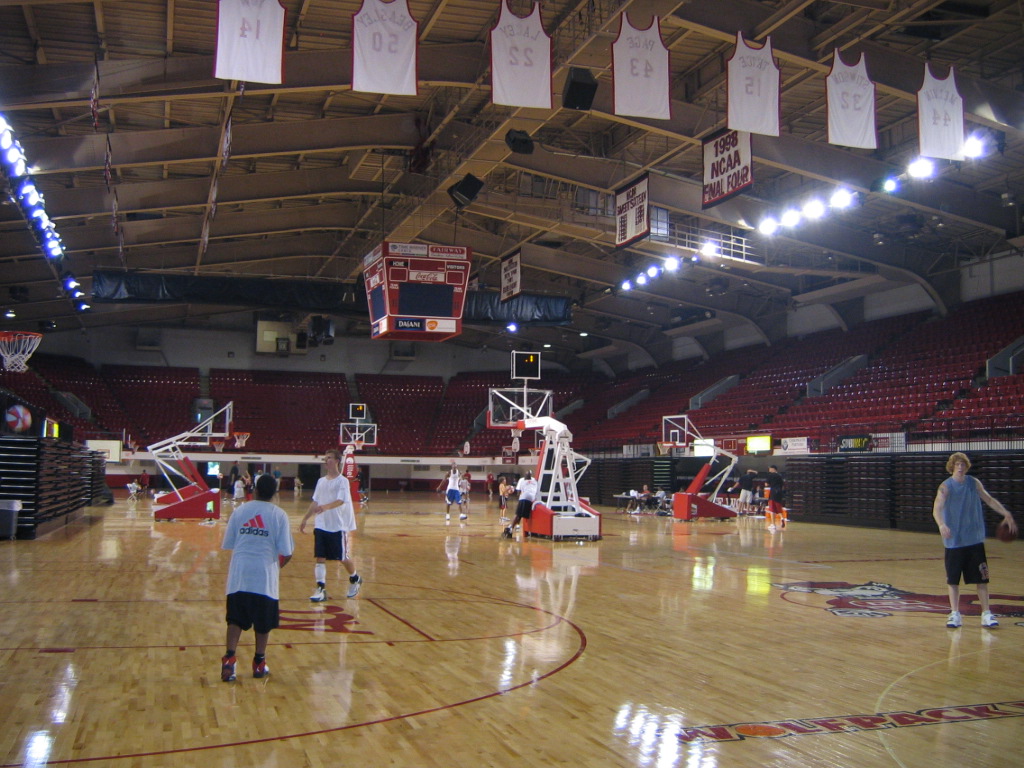
J.S. Dorton Arena is a 7,610-seat multi-purpose arena located in Raleigh, North Carolina, on the grounds of the North Carolina State Fair. It opened in 1952. Architect Maciej Nowicki was killed in an airplane crash before the construction phase, and local architect William Henley Dietrick supervised the completion of the arena using Nowickis innovative design. Its design features a steel cable supported saddle-shaped roof in tension, held up by parabolic concrete arches in compression. The arches cross about 20 feet above ground level and continue underground, where the ends of the arches are held together by more steel cables in tension. The outer walls of the arena support next to no weight at all. Incorporating an unusual elliptical design by Matthew Nowicki, of the North Carolina State University Department of Architecture, the arena was listed in the National Register of Historic Places on April 11, 1973. Originally named the "State Fair Arena", it was dedicated to Dr. J. S. Dorton, former North Carolina State Fair manager, in 1961. It is currently the home of the Carolina Rollergirls . In the past, it has served as the home of numerous sports teams. The longest serving tenant was the Raleigh IceCaps ice hockey team from 1991–1998. The American Basketball Associations Carolina Cougars also played some games there from 1969–74. The Cougars became tenants after the Houston Mavericks moved to North Carolina in 1969. The Cougars were a "regional franchise", playing "home" games in Charlotte, Greensboro, Winston-Salem Memorial Coliseum and Raleigh . Hall of Fame Coach Larry Brown began his coaching career with the Cougars in 1972. Billy Cunningham was the ABA MVP for the Cougars in the 1972-73 season. Despite a strong fan base the Cougars were sold and moved to St. Louis in 1974. Besides hosting sporting events, the arena is also used for concerts during the North Carolina State Fair. Various conventions and fairs also use floorspace of the arena as an exhibition space, often in conjunction with the neighboring Jim Graham building. The arena was also the site of a 2010 FIRST Robotics Competition regional robotics competition and was the first space to hold a regional in the state. Both Shaw University and Meredith College use Dorton Arena as a site for graduation, and the North Carolina School of Science and Mathematics use the facility as a rain site for their commencement exercises.

North Carolina State Capitol

The North Carolina State Capitol is the former seat of the legislature of the U.S. state of North Carolina. Currently housing the offices of the Governor of North Carolina, it is located in the state capital of Raleigh on Union Square at One East Edenton Street. The cornerstone of the Greek Revival building was laid with Masonic honors by the Grand Master of the State Simmons Jones Baker on July 4, 1833. Construction was completed in 1840. It was designed primarily by the architectural firm of Ithiel Town and Alexander Jackson Davis. Often credited solely to that team, the design of the capitol was actually the result of a sequence of work by William Nichols, Sr. and his son William Nichols, Jr., Town and Davis, and then David Paton. The Capitol housed the entire state government until 1888, and the North Carolina General Assembly met in the capitol building until 1963 when the legislature relocated to its current location in the North Carolina State Legislative Building. The offices of the state Lieutenant Governor were situated in the capitol building continuously until 1969, when the Lieutenant Governor relocated to the Hawkins-Hartness House a few blocks away on North Blount Street. The current Lieutenant Governor has reoccupied an office in the capitol building. The North Carolina Supreme Court has also convened in the building in the past, most recently meeting in the capitols old senate chamber in 2005 while the Supreme Court Building was undergoing renovations. The Governor and the governors immediate staff has continued to occupy offices in the building. The Capitol was declared a National Historic Landmark in 1973. It is located in the Capitol Area Historic District.

Mordecai House

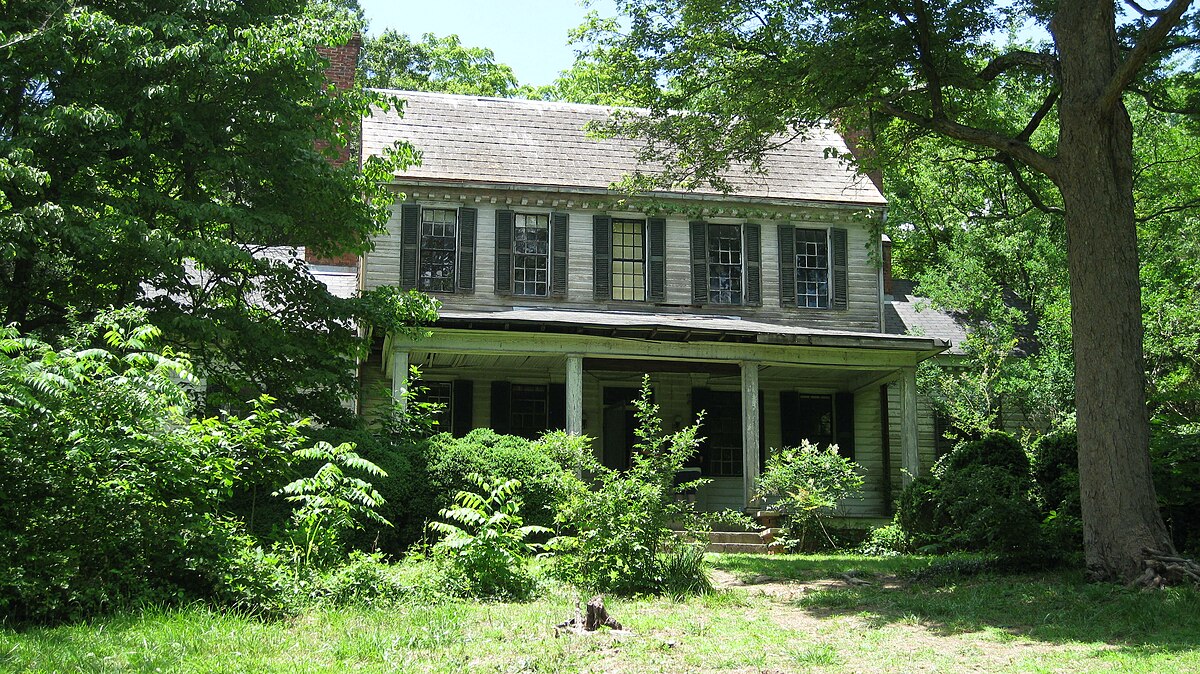
The Mordecai House, built in 1785, is a registered historical landmark and museum in Raleigh, North Carolina that is the centerpiece of Mordecai Historic Park, adjacent to the Historic Oakwood neighborhood. It is the oldest residence in Raleigh on its original foundation. In addition to the house, the Park includes the original birthplace of President Andrew Johnson, the Ellen Mordecai Garden, the Badger-Iredell Law Office, Allen Kitchen and St. Marks Chapel, a popular site for weddings. It is located in the Mordecai Place Historic District. The oldest portion of the house was built by Joel Lane for his son, Henry. At one time, the home was the center of a 5,000-acre plantation, one of the largest in Wake County. Lane is considered a founder of Raleigh, as 1,000 acres was sold from his plantation as the site of the city. The house was named after Moses Mordecai, whose first wife, Margaret Lane, had inherited it from her father Henry. After she died, Mordecai married her sister Ann Lane. In 1824, Mordecai hired William Nichols, State Architect at the time, to enlarge the house. The addition was considered a significant work of Nichols, who had also been responsible for remodeling the original building containing the State House. With the addition of the four new rooms in 1826, the Mordecai house was transformed into a Greek Revival mansion. The Mordecai family, descended from immigrant grandfather Moses Mordecai of Bonn, Germany, became one of the original three hundred Jewish families in the United States and one of the few of Ashkenazic Jewish descent. The family members were prominent in local and state affairs. Jacob Mordecai, Moses father, founded a girls school in Warrenton, North Carolina. A prominent lawyer, Moses Mordecai was a member of the 1805 Court of Conference. With his first wife Margaret, Moses Mordecai had two sons, Henry and Jacob, and one daughter, Ellen. He and his second wife Ann had a daughter, named Margaret after his late wife, Anns sister. Henry Mordecai became a prosperous planter at Mordecai House and was elected to the State Legislature. His daughter Margaret Mordecai married and inherited the mansion; her descendants owned and occupied Mordecai House until 1967. During the 19th and early 20th centuries, the Mordecai family sold off land, which was subdivided for the continuing expansion of Raleigh. In 1867, George Washington Mordecai donated land east of the city to establish a Confederate cemetery; he donated another plot for Wake Countys first Hebrew Cemetery. Mordecai descendants owned the mansion property until 1967, when the house and its surrounding block were put on the market. Local preservationists protested and the city purchased the property, turning it over to the Raleigh Historic Sites Commission to supervise and develop as a historic park. The commission was able to obtain many original Mordecai furnishings, as well as preserve the family papers and library. Mordecai Square Historic Park is now managed by the City of Raleighs Parks, Recreation and Cultural Resources Department. The Mordecai House is a designated Raleigh Historic Landmark. Mordecai House was featured in a season two episode of Ghost Hunters in which the TAPS team investigated claims of paranormal activity.

Pope House Museum

The Pope House Museum, built in 1901, is a restored home once owned by Dr. M.T. Pope, a prominent African-American citizen of Raleigh, North Carolina. The Pope House is listed on the National Register of Historic Places in 1999, and was also an official project of the Save America’s Treasures Program. Since then, the city of Raleigh has taken over management of the Pope House Museum and opened it for tours for the first time. Since the early 19th century, the area where the Pope House is located has gone through many transformations. When the original governor’s mansion was built at the end of Fayetteville Street on the site of the present Memorial Auditorium, it was thought that fashionable residences would be built nearby. Although a few substantial homes were constructed by white families, when Reverend Henry Tupper moved Shaw University to the neighborhood in 1870, many new African-American residents drawn to Raleigh after the Civil War settled in the area. Pope attended Leonard Medical Center at Shaw University before beginning his medical practice. Black professionals began to build homes in the area known as the Third Ward, which included the 500 block of South Wilmington Street. In 1901, Pope decided to build his house in this area. Pope’s neighbors included other prominent African Americans, including another doctor and a pharmacist. His home was located near his office on East Hargett Street, which at the time was the heart of the black business district. Pope installed the latest technology in his home, including combination gas and electric fixtures, a kitchen with running water, a full bathroom on the second floor, coal burning heating stoves, and a telephone. He also installed a call bell system, with buttons in each room and an annunciator in the back hall. Pope began to see patients in the house during the 1920s and 1930s, when his health began to fail. The small area at the rear of the back hall, adjacent to the kitchen, was configured to include a small hand sink and built-in cabinet for instruments. After Pope married Delia Haywood Phillips in 1907, the couple added a garage and wired the home for electricity. In the 1920s, the original front porch was removed, and the current sleeping porch constructed on brick piers. In the 1940s, the northern half of the first floor space below the porch was enclosed with brick, as it remains today. They eventually had two children, Evelyn and Ruth. After the deaths of their parents, Evelyn and Ruth maintained the family home, though they lived in Durham and Chapel Hill respectively. Although the Pope House remains in the neighborhood, the area around it has dramatically changed. Older homes and businesses were replaced with office buildings, parking lots and newer homes. The most evident change was the construction of the Raleigh Convention Center directly across the street from the house. Today, the house is in the shadows of skyscrapers that were built in the 1980s and 1990s. The Pope House was officially listed on the National Register of Historic Places on November 22, 1999. The following month the trustees of the Pope Charitable Foundation decided to begin the process of turning the house into a museum. One month later, The Pope House Museum Foundation was incorporated as a non-profit organization. The extensive family papers were sorted and catalogued, and donated to the Southern Historical Collection at the University of North Carolina at Chapel Hill. In 2011 due to financial concerns, the Pope House Museum approached the city of Raleigh about purchasing the Pope House Museum to ensure its survival. Since the purchase, the Pope House Museum has been managed by Raleigh Parks and Recreation which has opened the Pope House Museum for regular tours for the first time.

Joel Lane House

The Joel Lane House, also known as Wakefield, was built in 1769, is a historic restored home and museum located in Raleigh, North Carolina. It is the oldest dwelling in Wake County and contains collections of 18th century artifacts and period furnishings. The museum grounds include a detached middle class home built circa 1790, formal city garden, and period herb garden. The house is named after Joel Lane, the "Father of Raleigh" and "Father of Wake County." In the late 1760s, Lane settled at Wake Cross Roads located in colonial Johnston County. Lane and his house played a key role in North Carolina’s transition from colony to state and in the establishment of Raleigh as the state capital. Joel Lanes plantation manor stood on a small hill, overlooking the future site of Raleigh. Lane owned thousands of acres, which enabled him to be influential in politics. Lane was a member of the colonial General Assembly, and in 1770 successfully lobbied to create Wake County, at the time a sparsely settled wilderness. The county was named "Wake" in honor of Margaret Wake, wife of colonial Governor William Tryon. In 1771, Wake Countys first county court is believed to have convened at his home. Lane was appointed a member of the court, a position he held until his death. During the Revolutionary War, Wake Cross Roads was the site of important government meetings, both formal and informal. In 1776, Lane hosted the colony Council of Safety; the following year, he obtained a license for a small inn. From May to June 1781, Lane’s property was the setting for a session of the state General Assembly. Lane served in the state Senate in 11 of the 14 sessions from 1782 to 1794. He was also a delegate to the 1789 convention in Halifax that ratified the United States Constitution. Lane was directly involved in the decision to locate the permanent capital of the state in Wake County. In 1792, the legislature authorized the purchase of 1,000 acres of his land upon which to establish the city of “Raleigh” as the new center of state government. The community’s western boundary was drawn just east of Lane’s house, and a street of the city was named in his honor. After Lane’s death in 1795, Lanes house served several owners before being purchased by businessman William Boylan in 1818. The house, along with Montfort Hall, remained in the Boylan family until 1909. During this time, the city of Raleigh absorbed the house into its expanding boundaries. Lane’s former plantation, Mordecai Plantation, became the site of new streets, homes and businesses. In 1911, the house was moved a short distance. In 1927, Lanes house was purchased by the National Society of Colonial Dames of America in the State of North Carolina to ensure its preservation. The organization continues to operate this Raleigh Historic Landmark as a house museum.

M. T. Pope

The Pope House Museum, built in 1901, is a restored home once owned by Dr. M.T. Pope, a prominent African-American citizen of Raleigh, North Carolina. The Pope House is listed on the National Register of Historic Places in 1999, and was also an official project of the Save America’s Treasures Program. Since then, the city of Raleigh has taken over management of the Pope House Museum and opened it for tours for the first time. Since the early 19th century, the area where the Pope House is located has gone through many transformations. When the original governor’s mansion was built at the end of Fayetteville Street on the site of the present Memorial Auditorium, it was thought that fashionable residences would be built nearby. Although a few substantial homes were constructed by white families, when Reverend Henry Tupper moved Shaw University to the neighborhood in 1870, many new African-American residents drawn to Raleigh after the Civil War settled in the area. Pope attended Leonard Medical Center at Shaw University before beginning his medical practice. Black professionals began to build homes in the area known as the Third Ward, which included the 500 block of South Wilmington Street. In 1901, Pope decided to build his house in this area. Pope’s neighbors included other prominent African Americans, including another doctor and a pharmacist. His home was located near his office on East Hargett Street, which at the time was the heart of the black business district. Pope installed the latest technology in his home, including combination gas and electric fixtures, a kitchen with running water, a full bathroom on the second floor, coal burning heating stoves, and a telephone. He also installed a call bell system, with buttons in each room and an annunciator in the back hall. Pope began to see patients in the house during the 1920s and 1930s, when his health began to fail. The small area at the rear of the back hall, adjacent to the kitchen, was configured to include a small hand sink and built-in cabinet for instruments. After Pope married Delia Haywood Phillips in 1907, the couple added a garage and wired the home for electricity. In the 1920s, the original front porch was removed, and the current sleeping porch constructed on brick piers. In the 1940s, the northern half of the first floor space below the porch was enclosed with brick, as it remains today. They eventually had two children, Evelyn and Ruth. After the deaths of their parents, Evelyn and Ruth maintained the family home, though they lived in Durham and Chapel Hill respectively. Although the Pope House remains in the neighborhood, the area around it has dramatically changed. Older homes and businesses were replaced with office buildings, parking lots and newer homes. The most evident change was the construction of the Raleigh Convention Center directly across the street from the house. Today, the house is in the shadows of skyscrapers that were built in the 1980s and 1990s. The Pope House was officially listed on the National Register of Historic Places on November 22, 1999. The following month the trustees of the Pope Charitable Foundation decided to begin the process of turning the house into a museum. One month later, The Pope House Museum Foundation was incorporated as a non-profit organization. The extensive family papers were sorted and catalogued, and donated to the Southern Historical Collection at the University of North Carolina at Chapel Hill. In 2011 due to financial concerns, the Pope House Museum approached the city of Raleigh about purchasing the Pope House Museum to ensure its survival. Since the purchase, the Pope House Museum has been managed by Raleigh Parks and Recreation which has opened the Pope House Museum for regular tours for the first time.

Juniper Level Botanic Gardens

Juniper Level Botanic Garden is a privately owned botanical garden located at 9241 Sauls Road, Raleigh, North Carolina. The botanic garden is open eight weekends per year; other visits must be scheduled in advance with the garden staff. Established in 1988 by horticulturist Tony Avent, Juniper Level Botanic Garden is owned and operated by Tony Avent and wife Anita Avent. In addition to display gardens, they are also a research facility in The USDA Zone 7b climate with over 22,000 different plants. The mission of the garden is to promote and preserve botanical diversity by bridging the gap between botany and horticulture. This includes botanical plant exploration both in the US and abroad, study, identification, and educational outreach, followed by selection, breeding, and propagation. The final step, in conjunction with Plant Delights Nursery, Inc. is to make these new and rare perennial plants available for both shade gardens and sun gardens around the world. Ten percent of the revenue from Plant Delights Nursery, Inc. fund the mission of the botanic garden. The garden currently contains over 22,000 plants, with extensive collections of Agapanthus, Agave, Amorphophallus, Arisaema, Arum, Asarum, Baptisia, Colocasia and allied genera, Crinum, Epimedium, ferns, Hedychium, hardy palms, Hosta, Kniphofia, Ophiopogon, ornamental grasses, Polygonatum and allied genera, Rohdea, Salvia, and Zephyranthes. The gardens research programs include hosta breeding, Aroid identification and culture, and field expeditions to Argentina, Arizona, The Balkans, China, Crete, Ecuador, England, Hawaii, the Netherlands, Korea, Mexico, South Africa, Texas, Thailand, Taiwan, and the Southeastern United States .

State Bank of North Carolina

The State Bank of North Carolina is the oldest surviving commercial building in Raleigh, North Carolina and was the first state-sponsored banking institution constructed in North Carolina. The bank was incorporated in 1810, but during the War of 1812 cash was moved inland to banks in Raleigh and Tarboro for fears that the British Army would attack the coast. The increase in money deposits resulted in the State Banks construction in 1813. Jacob Johnson, the father of future President Andrew Johnson, was once employed at the bank. The building was listed on the National Register of Historic Places in 1970 and is a Raleigh Historic Landmark. It is located in the Capitol Area Historic District. The design of the State Bank is influenced by the Federal and Greek Revival styles of architecture. The brick building features matching two-story porticos on the east and west sides, supported by columns. For sixty years the building was used for banking until the Christ Episcopal Church acquired the facility in 1873 to use as a rectory. In 1968 the North Carolina National Bank, a predecessor of Bank of America, purchased the building and moved it 100 ft for use as the bank’s downtown branch. The building was moved to make room for an addition to the Christ Churchs parish facility. In 1976 the building was home to the State Commission in charge of North Carolinas bicentennial celebration. Currently, the building is still being used as a bank. The State Employees Credit Union are the current owners.

Raleigh Convention Center

The Raleigh Convention Center is a convention and exhibition facility in downtown Raleigh, North Carolina that opened in September 2008. The lead architect was Obrien/Atkins Associates. Located at 500 South Salisbury Street, the three-level 500,000-square-foot building contains a 150,000-square-foot exhibit hall, twenty meeting rooms and a 32,000-square-foot ballroom. The ballroom on the highest level can seat up to 2,715 persons or 3,630 persons . The exhibit hall on the lowest level can hold up to 790 booths or seat up to 6,800 persons or 9,600 persons . Extensive acoustics work was performed to not only provide sound isolation between adjacent activities within the center, but also to control noise output to the surrounding community. The facility is more than double the size of the older convention center that was erected in 1977, renovated in 1997, and torn down in February 2006. There had been controversy about the older building as well as the site of the new building. The building cost $225 million to construct. A new Marriott hotel named Marriott City Center was built to provide lodging for visitors and now connects to the Convention Center. The west-facing wall of the new convention center boasts a large public art piece called the 'Shimmer Wall' that contains metal plates in the form of an oak tree backed by LED lights. The oak tree represents Raleigh's nickname, the 'City of Oaks'. This wall was sponsored by Cree Inc., a local company that manufactures LED lights. National Agents Alliance held its NAA Leadership Conference on Sept. 11-14, 2008 and was the first convention held in the new center.

This attraction is located in

This is a private property. Please enjoy respectfully and do not disturb the occupants.

Edit Categories
Add Tours

This attraction is not part of any tours

Add Collections

This attraction is not part of any collections


Some of the attractions we imported from Wikipedia are not perfect. Send us an email detailing what's wrong and we'll look into fixing it.

GuRoute is all about Gurus sharing their local knowledge. If you feel up to fixing this problem yourself, why not adopt it. You will become the owner and can fix whatever problems you see.

We've copied a link to this attraction into your clipboard so that ou can paste it into an email or text message...

More Info...
You can add your friends to the visit yourself, or, send them a link and let them add themselves...

The visit will appear on both your timelines and on your Shared Timeline.

Click below and we'll email you a link that you can send on to friends or post on your group's Facebook page.

If your friends aren't members of GuRoute yet, this is a great way to get them started.
Recent
Recently used Collections will appear here...
Recent
Recently used tours will appear here...

Where is this?

GuRoute likes to place attractions inside other attractions. So, maybe it's in a city, or maybe it's inside a particular park in that city. Maybe your attraction is a huge park that spans half the county, or multiple counties.

Determining where this attraction is gives it context - if it's in a park, you'll be able to see it alongside all the other attractions in that park. And that helps define the park.

GuRoute will automatically calculate a parent region for this attraction. You can change it if there is something more appropriate.

This attraction is currently located in .

Change

This attraction does not yet have any reviews

Please login to write a review...

Reviewed by
Record new Visit

Add this location to your timneline?

  • If there's an existing attraction open it and add it to your timeline...
  • If not, enter a title and we'll create a new attraction for your memories...
Create new Attraction

Create a new attraction at this location?

  • We rely on Gurus like you to share your local knowledge...
(Give a name for this location)


+
Add this to your timeline instead...

Imagine having a record of all the cool things you've done in your life!


Using our timeline you can keep track of everywhere you visit in your lifetime...

But, you'll need to sign in first...

Add contacts so that you can share your travels and record places that you visit together...

Family
Favorites
Family
Favorites

Profile TimeLine Our Visits Edit Accept Decline Invite

If you have any more friends that visited this place with you, feel free to add them to the visit. We'll write it to their timeline and once they confirm it, they too will have this memory for a lifetime.

If they're not already registered, you just need their name and email address and you can add them and we'll send them an invite on your behlaf.

Add a tour comment

Add some extra information for when this attraction is viewed as part of your tour...

Next Stop Instructions

Add some instructions for what to see/do on the way to the next stop...

Next Stop Instructions

Add some instructions for what to see/do on the way to the next stop...

If you're visiting an existing attraction, open it and add it to your timeline. If there is no attraction for the place you are visiting...

  • Click 'Add My Location' below
  • Or right-click on the map to mark a different location
  • Or long-press if you have a touch screen
You can even add locations while you're offline....
  • Load up the map when you're online and we'll keep track of your locaiton
  • You can add locations to your timeline
  • When you are online again we'll sync them with the cloud

We can't connect to the internet right now. The following attractions are saved locally and can be uploaded when you're online...

GuRoute would like to access your current location so that we can pin you on the map and show you nearby attractions

Add friends so that you can share your experiences with each other...

Add tour to What's Next?

Go...

Either for yourself or someone else...

  1. Do your trip research in GuRoute
    Add all the places that you think might be worthy of a visit into a trip-plan
  2. Add your trip-plan to your "What's Next" timeline
    (or a friend's "What's Next" timeline)
  3. When you're on vacation you'll have all your research at your fingertips
  4. Share your timline with your friends
    They can enjoy your vacation with you, seeing not only where you've been, but where you're going next...
  5. Add/remove attractions if things change

It also makes a great souvenir of your trip

Collections

Go...

Create a home page for a collection of attractions

  • Add an image and description to display on the homepage
  • Start adding content
    Add existing attractions to your collection or create new attractions of your own
  • Collections can be:
    • Public (Anyone can add attractions to your collection)
    • Shared (Only yourself and Gurus you nominate can add content)
    • Private (The collection will only be visible to yourself)

Uses

  • Local business or hotel
    Showcase local attractions that you endorse
  • Clubs
    Showcase attractions that members have created (eg. local historical society)
  • Special Interest
    If GuRoute does not have a category for your special interest you add your attractions to your own collection instead

Examples

Walking/Driving Tours

Go...

A guided tour where GuRoute will direct you from stop to stop and narrate a description of each attraction you arrive at

  • GuRoute uses your phone's GPS to guide you from stop to stop
  • GuRoute automatically detects when you arrive at the next tour-stop and narrates the description of the attraction (Chrome Only)
  • It then sends you on to the next stop

Tours are great to attract people to your town. Even places with no significant points of interest can be lots of fun when part of a tour


Cater tours to your Audience

  • Kid-friendly Tours
    • Focus on what will keep kids interested
    • Instead of parents having to drag their kids around they'll be struggling to keep up
    • Let the kids navigate and they'll get more fun out of finding that historical plaque than they ever would from reading it
  • Accessible tours
  • Short and long tours of the same location

What you need to do...

  1. Click 'Go...'
    Enter a title, description and location for the tour
  2. Add existing attractions OR create new ones and add them to the tour
  3. For existing attractions you can add more information specific to the theme of the tour
  4. You can also add instructions on what to do or see en-route to the next tour-stop
  5. Try out your tour and see how it works...

Mystery Tour

Go...

Create a Mystery Tour

Create a series of clues to show people around a city, neighborhood or whatever place you like...

  • GuRoute will show people clues to get them from attraction to attraction
  • When they reach each stop GuRoute will tell them about the place and give them the next clue
  • Take as long or as you like and explore each location at your leisure

Scavenger Hunt

Go...

Create a Scavenger Hunt

Create a series of questions that people have to answer. The answers can all be discovered by walking aroung the area, looking for clues.

  • How many beers are on tap at Michael Collin's Irish Bar?
  • What's the name of the oldest building on main streeet?
  • Show a picture of some public art and ask them what it is called
  • Clues can have numeric or multiple choice answers