Sign In

My Timeline

GuRoute

Discover Your World

Share your Experiences

Record your Life


Top Attractions in Alaska

Katmai National Park and Preserve

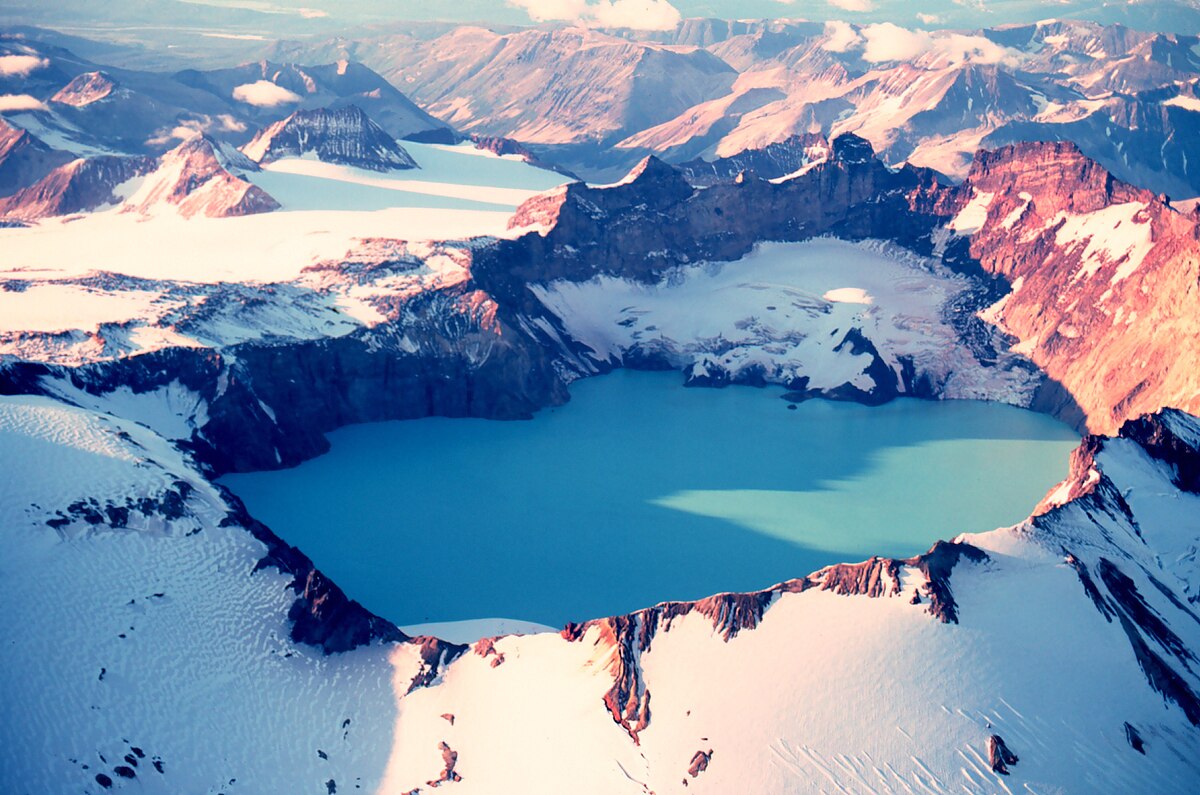
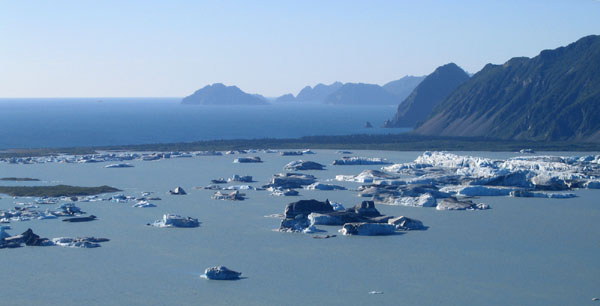
Katmai National Park and Preserve is a United States National Park and Preserve in southern Alaska, notable for the Valley of Ten Thousand Smokes and for its Alaskan brown bears. The park and preserve covers 4,093,077 acres , being roughly the size of Wales. Most of this is a designated wilderness area in the national park where all hunting is banned, including over 3,922,000 acres of land. The park is named after Mount Katmai, its centerpiece stratovolcano. The park is located on the Alaska Peninsula, across from Kodiak Island, with headquarters in nearby King Salmon, about 290 miles southwest of Anchorage. The area was first designated a national monument in 1918 to protect the area around the major 1912 volcanic eruption of Novarupta, which formed the Valley of Ten Thousand Smokes, a 40-square-mile , 100-to-700-foot-deep pyroclastic flow. The park includes as many as 18 individual volcanoes, seven of which have been active since 1900. Following its designation, the monument was left undeveloped and largely unvisited until the 1950s. Initially designated because of its violent volcanic history, the monument and surrounding lands became appreciated for their abundance of sockeye salmon, the grizzly bears that fed upon them, and a wide variety of other Alaskan wildlife and marine life. After a series of boundary expansions, the present national park and preserve were established in 1980 under the Alaska National Interest Lands Conservation Act in 1980.

Wrangell–St. Elias National Park and Preserve

Wrangell–St. Elias National Park and Preserve is a United States national park and national preserve managed by the National Park Service in south central Alaska. The park and preserve was established in 1980 by the Alaska National Interest Lands Conservation Act. This protected area is included in an International Biosphere Reserve and is part of the Kluane/Wrangell-St. Elias/Glacier Bay/Tatshenshini-Alsek UNESCO World Heritage Site. The park and preserve form the largest area managed by the National Park Service in the United States by area with a total of 13,175,799 acres . The park includes a large portion of the Saint Elias Mountains, which include most of the highest peaks in the United States and Canada, yet are within 10 miles of tidewater, one of the highest reliefs in the world. Wrangell-St. Elias borders on Canadas Kluane National Park and Reserve to the east and approaches the U.S. Glacier Bay National Park to the south. The chief distinction between park and preserve lands is that sport hunting is prohibited in the park and permitted in the preserve. In addition, 9,078,675 acres of the park are designated as the largest single wilderness in the United States. Wrangell-St. Elias National Monument was initially designated on December 1, 1978, by President Jimmy Carter using the Antiquities Act, pending final legislation to resolve the allotment of public lands in Alaska. Establishment as a national park and preserve followed the passage of the Alaska National Interest Lands Conservation Act in 1980. The park, which is bigger than the nation of Switzerland, has long, extremely cold winters and a short summer season. It supports a variety of large mammals in an environment defined by relative land elevation. Plate tectonics are responsible for the uplift of the mountain ranges that cross the park. The parks extreme high point is Mount St. Elias at 18,008 feet, the second tallest mountain in both the United States and Canada. The park has been shaped by the competing forces of volcanism and glaciation. Mount Wrangell is an active volcano, one of several volcanoes in the western Wrangell Mountains. In the St. Elias Range Mount Churchill has erupted explosively within the past 2,000 years. The parks glacial features include Malaspina Glacier, the largest piedmont glacier in North America, Hubbard Glacier, the longest tidewater glacier in Alaska, and Nabesna Glacier, the worlds longest valley glacier. The Bagley Icefield covers much of the parks interior, which includes 60% of the permanently ice-covered terrain in Alaska. At the center of the park, the boomtown of Kennecott exploited one of the worlds richest deposits of copper from 1903 to 1938, exposed by and in part incorporated into Kennicott Glacier. The mine buildings and mills, now abandoned, compose a National Historic Landmark district.

Juneau County

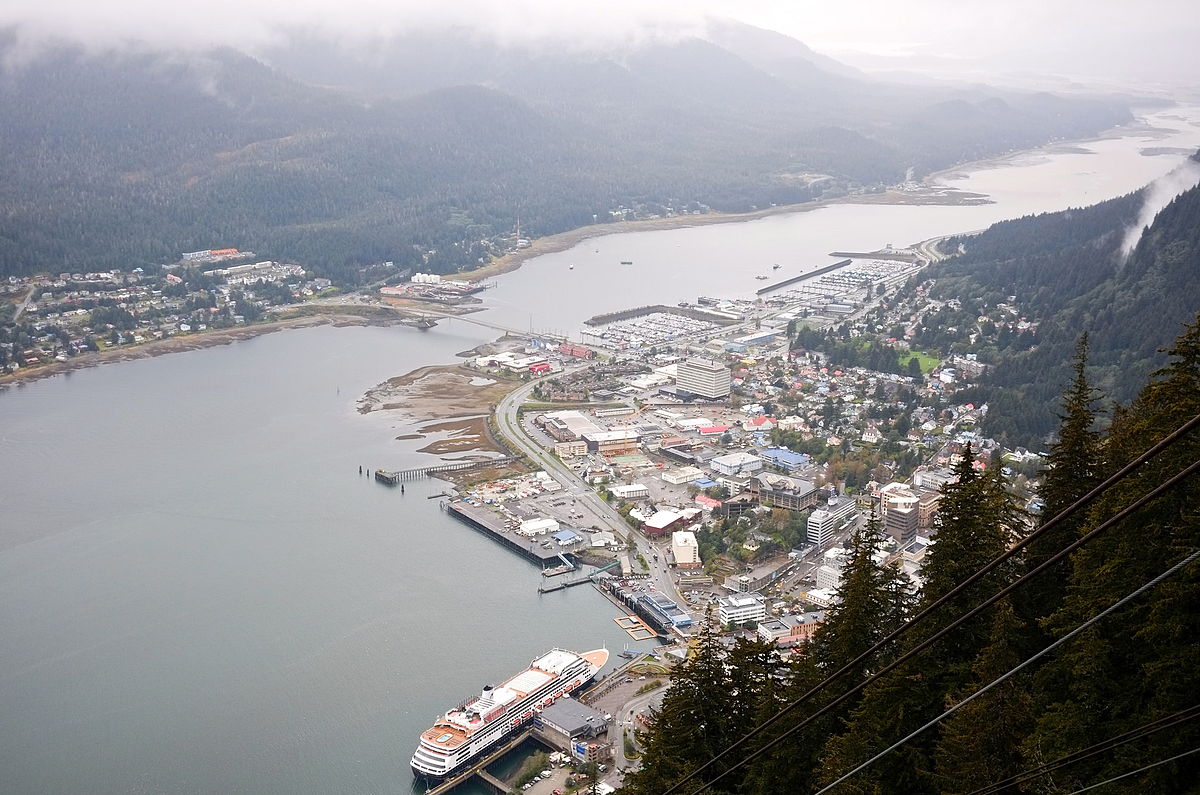
The City and Borough of Juneau is the capital city of Alaska. It is a unified municipality located on the Gastineau Channel in the Alaskan panhandle, and it is the second largest city in the United States by area. Juneau has been the capital of Alaska since 1906, when the government of what was then the District of Alaska was moved from Sitka as dictated by the U.S. Congress in 1900. The municipality unified on July 1, 1970, when the city of Juneau merged with the city of Douglas and the surrounding Greater Juneau Borough to form the current municipality, which is larger by area than both Rhode Island and Delaware. Downtown Juneau 58°18′07″N 134°25′11″W is nestled at the base of Mount Juneau and across the channel from Douglas Island. As of the 2010 census, the City and Borough had a population of 31,275. In 2014, the population estimate from the United States Census Bureau was 32,406, making it the second most populous city in Alaska after Anchorage. Fairbanks, however, is the second most populous metropolitan area in the state, with more than 99,000 residents. Juneaus daily population can increase by roughly 6,000 people from visiting cruise ships between the months of May and September. The city is named after gold prospector Joe Juneau, though the place was for a time called Rockwell and then Harrisburg . The Tlingit name of the town is Dzántiki Héeni, and Auke Bay just north of Juneau proper is called Áakw in Tlingit. The Taku River, just south of Juneau, was named after the cold taakh wind, which occasionally blows down from the mountains. Juneau is rather unusual among U.S. capitals in that there are no roads connecting the city to the rest of Alaska or to the rest of North America . The absence of a road network is due to the extremely rugged terrain surrounding the city. This in turn makes Juneau a de-facto island city in terms of transportation, since all goods coming in and out must go by plane or boat, in spite of the city being located on the Alaskan mainland. Downtown Juneau sits at sea level, with tides averaging 16 feet, below steep mountains about 3,500 feet to 4,000 feet high. Atop these mountains is the Juneau Icefield, a large ice mass from which about 30 glaciers flow; two of these, the Mendenhall Glacier and the Lemon Creek Glacier, are visible from the local road system. The Mendenhall glacier has been gradually retreating; its front face is declining both in width and height. The Alaska State Capitol in downtown Juneau was originally built as the Federal and Territorial Building in 1931. Prior to statehood, it housed federal government offices, the federal courthouse and a post office. It also housed the territorial legislature and many other territorial offices, including that of the governor. Today, Juneau remains the home of the state legislature and the offices of the governor and lieutenant governor. Other executive branch offices have largely moved elsewhere in Juneau, or elsewhere in the state, in the ongoing battle between branches for space in the building, as well as the decades-long capital move issue. Recent discussion has been focused between relocating the seat of state government outside of Juneau and building a new capitol building in Juneau; neither position has advanced very far. The Alaska Committee, a local community advocacy group, has led efforts to thus far keep the capital in Juneau.

Lake Clark National Park and Preserve

Lake Clark National Park and Preserve is a United States National Park in southwestern Alaska. It was first proclaimed a national monument in 1978, then established as a national park and preserve in 1980 by the Alaska National Interest Lands Conservation Act. The park includes many streams and lakes vital to the Bristol Bay salmon fishery, including its namesake Lake Clark. A wide variety of recreational activities may be pursued in the park and preserve year-round. Located about 100 miles southwest of Anchorage, the park includes a variety of features not found together in any of the other Alaska Parks: the junction of three mountain ranges, a coastline with rainforests along the Cook Inlet, a plateau with alpine tundra on the west, glaciers, glacial lakes, major salmon-bearing rivers, and two volcanoes, Mount Redoubt and Mount Iliamna. Redoubt is active, erupting in 1989 and 2009. The wide variety of ecosystems in the park mean that virtually all major Alaskan animals, terrestrial and marine, may be seen in and around the park. Salmon, particularity sockeye salmon, play a major role in the ecosystem and the local economy. The Kvichak River is the world's most productive watershed for sockeye salmon. Large populations of brown bears are attracted as a result, to feed on the spawning salmon in the Kijik River and at Silver Salmon Creek, and as a result bear viewing is a common activity in the park. No roads lead to the park and it can only be reached by boat or small aircraft, typically floatplanes. The major settled area in the park is Port Alsworth on Lake Clark in the southwestern corner of the park. Five other settlements are within the park, populated mainly by Dena'ina natives. Prior to the park's establishment isolated cabins were scattered around the region, the most notable belonging to Richard Proenneke, whose films documenting his solitary life at Twin Lakes were made into Alone in the Wilderness in 2003. Lake Clark was proclaimed a national monument by President Jimmy Carter using the Antiquities Act on December 1, 1978, Lake Clark's status was changed to national park and preserve in 1980 by Congress, and about two-thirds was designated wilderness. While both sport and subsistence hunting are permitted in the national preserve lands, only subsistence hunting by local residents is permitted within the national park.

Brooks Camp

Brooks Camp is a visitor attraction and archeological site in Katmai National Park and Preserve, noted for its opportunities for visitors to observe Alaskan brown bears catching fish in the falls of the Brooks River during salmon spawning season. The Brooks River connects Lake Brooks and Naknek Lake over about 2 kilometres . This natural choke point for salmon runs made it an attractive location for prehistoric Alaskans, who occupied the area from 4500 BP. The Aglegmut Eskimo people lived along the Brooks River in historical times. The Brooks River Archeological District, which includes Brooks Camp, was designated a National Historic Landmark in 1993. Five thousand years before present the level of Naknek Lake was significantly higher, and Lake Brooks was part of Naknek. As the Naknek River cut through glacial moraines, the level of Naknek Lake fell, creating Lake Brooks and the Brooks River. Permanent habitation was established along the river about 4000 years ago. The area was inhabited when the first Russian explorers reached what is now Brooks Camp in the 18th century. The National Park Service operates a seasonal visitor center at Brooks Camp, with an exhibit of a reconstructed native house built in 1967-68 in the footprint of a documented house site. Visitors arrive at the Lake Brooks Seaplane Base via floatplane. The camp was developed in 1950 by Northern Consolidated Airlines, a National Park Service concessioner who operated a chain of camps in Katmai, served by float planes. Brooks Lodge continues to operate as a concession within the park. Bear viewing season peaks in July, when the salmon are migrating, and in September, when the salmon are dying after spawning and are washing downstream. Peak visitor season is in July.

Ketchikan

Ketchikan is a city in the Ketchikan Gateway Borough, Alaska, United States, the southeasternmost city in Alaska. With a population at the 2010 census of 8,050, it is the sixth-most populous city in the state, and tenth-most populous community when census-designated places are included. The surrounding borough, encompassing suburbs both north and south of the city along the Tongass Highway, plus small rural settlements accessible mostly by water, registered a population of 13,477 in that same census. Estimates put the 2014 population at 13,787 people. Incorporated on August 25, 1900, Ketchikan is presently the earliest incorporated city in Alaska, owing to consolidation or unification elsewhere in Alaska resulting in dissolution of those communities city governments. Ketchikan is located on Revillagigedo Island, so named in 1793 by Captain George Vancouver. Ketchikan is named after Ketchikan Creek, which flows through the town, emptying into the Tongass Narrows a short distance southeast of its downtown. "Ketchikan" comes from the Tlingit name for the creek, Kitschk-hin, the meaning of which is unclear. It may mean "the river belonging to Kitschk"; other accounts claim it means "Thundering Wings of an Eagle". In modern Tlingit this name is rendered as Kichx̱áan. Ketchikan Creek served as a summer fishing camp for Tlingit natives for untold years before the town was established by Mike Martin in 1885. The area near the mouth of Ketchikan Creek later earned Ketchikan a measure of infamy during the first half of the 20th century for a red-light district known as Creek Street, with brothels aligned on either side of the creek. Ketchikans economy is based upon government services, tourism and commercial fishing. Civic boosters have dubbed the community the "Salmon Capital of the World." The Misty Fiords National Monument is one of the areas major attractions, and the Tongass National Forest has long been headquartered in Ketchikan, mostly in the citys historic Federal Building. For most of the latter half of the 20th century, a large portion of Ketchikans economy and life centered on the Ketchikan Pulp Company pulp mill in nearby Ward Cove. The mill closed in 1997 in the wake of the passage of the Tongass Timber Reform Act of 1990, which reduced timber harvest targets in the national forest. Ketchikan has the worlds largest collection of standing totem poles, found throughout the city and at four major locations: Saxman Totem Park, Totem Bight State Park, Potlatch Park, and the Totem Heritage Center. Most of the totems at Saxman Totem Park and Totem Bight State Park are recarvings of older poles, a practice that began during the Roosevelt Administration through the Civilian Conservation Corps. The Totem Heritage Center displays preserved 19th-century poles rescued from abandoned village sites near Ketchikan.

Kodiak

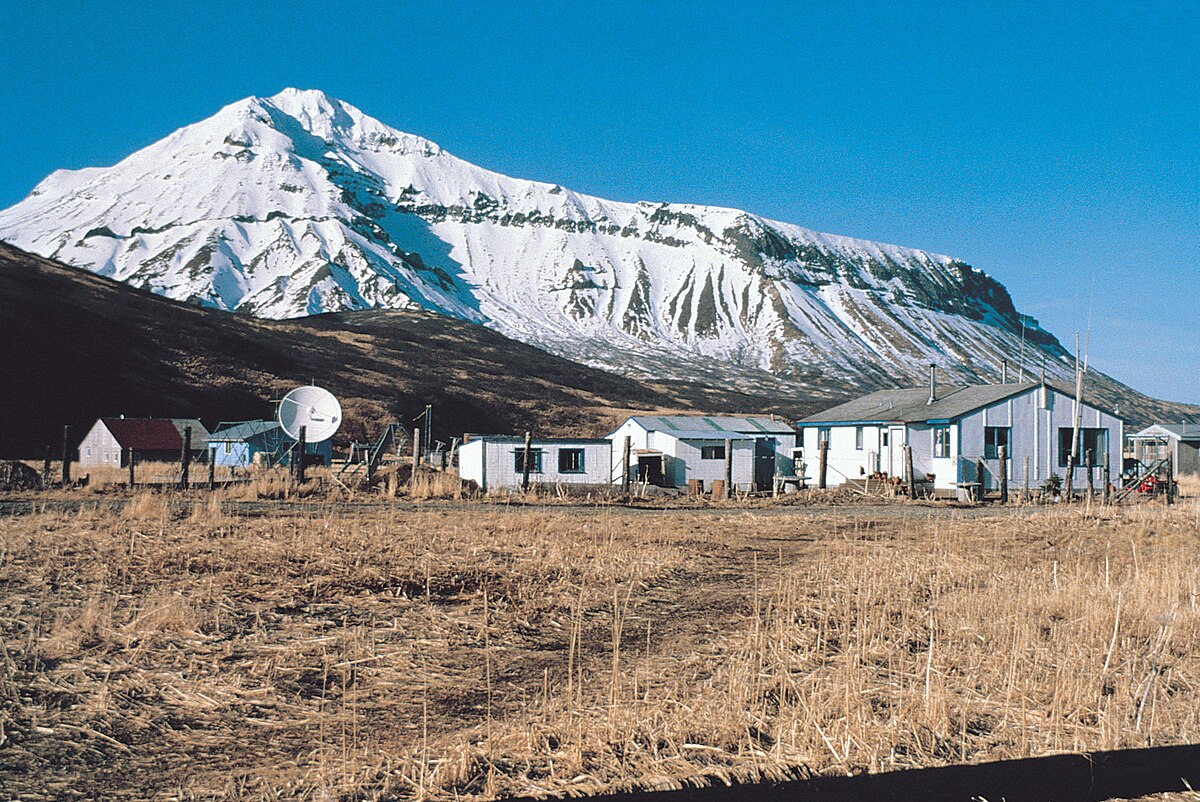
Kodiak is one of seven communities and the main city on Kodiak Island, Kodiak Island Borough, in the U.S. state of Alaska. All commercial transportation between the entire island and the outside world goes through this city either via ferryboat or airline. The population was 6,130 as of the 2010 census. 2014 estimates put the population at 6,304. Originally inhabited by Alutiiq natives for over 7,000 years, the city was settled in the 18th century by the subjects of the Russian crown and became the capital of Russian Alaska. Harvesting of the area's sea otter pelts led to the near extinction of the animal in the following century and led to wars with and enslavement of the natives for over 150 years. As part of the Alaska Purchase by the United States in 1867, Kodiak became a commercial fishing center which continues to this day. A lesser economic influence includes tourism, mainly by those seeking outdoor adventure trips. Salmon, halibut, the unique Kodiak bear, elk, Sitka deer , and mountain goats invite hunting tourists as well as fishermen to the Kodiak Archipelago. The Alaska Department of Fish and Game maintains an office in the city and a website to help hunters and fishermen obtain the proper permits and learn about the laws specific to the Kodiak area. The city has four public elementary schools, a middle and high school, as well as a branch of the University of Alaska. An antenna farm at the summit of Pillar Mountain above the city historically provided communication with the outside world before fiber optic cable was run. Transportation to and from the island is provided by ferry service on the Alaska Marine Highway as well as local commercial airlines.

Yukon-Charley Rivers National Preserve

Yukon–Charley Rivers National Preserve is a United States national park and preserve located in east central Alaska along the border with Canada. Managed by the National Park Service, the preserve encompasses 115 miles of the 1,800-mile Yukon River and the entire Charley River basin. The preserve protects the undeveloped Charley River and a significant portion of the upper Yukon. The interior Alaskan region experiences extremes of weather, with temperatures that can vary from −50 °F in winter to 97 °F in summertime. The Yukon provided a means of access to the region, which is entirely roadless, during the late 19th century and early 20th centuries. Gold rushes in Alaska brought prospectors, who operated gold dredges to recover significant quantities of placer gold from area creeks. Today the preserve includes part of the route of the annual Yukon Quest dogsled race, which runs every February. During the summer float trips are popular on the Yukon and Charley Rivers. No roads access Yukon–Charley Rivers National Preserve. The closest approaches by road are to the village of Eagle, upstream on the Yukon to the southeast of the preserve, on the Taylor Highway, and via the Steese Highway to Circle, downstream on the Yukon to the northwest of the preserve. Access from those points to the preserve is usually by air taxi or boat. The northern part of the preserve includes a portion of the Yukon River valley, which runs from east to west after entering Alaska from Canada near Eagle. The southern portion of the preserve includes the entire drainage of the Charley River, one of the Yukon's tributaries. The preserve adjoins Steese National Conservation Area to the west. The Charley River is designated a National Wild and Scenic River, largely undisturbed by people. The preserve and the Yukon valley lie between the Brooks Range to the north and the Alaska Range to the south. The highest elevations in the preserve are about 6,000 feet in the headwaters of the Charley River, ranging to abuit 600 feet where the Yukon leaves the preserve.

Wasilla

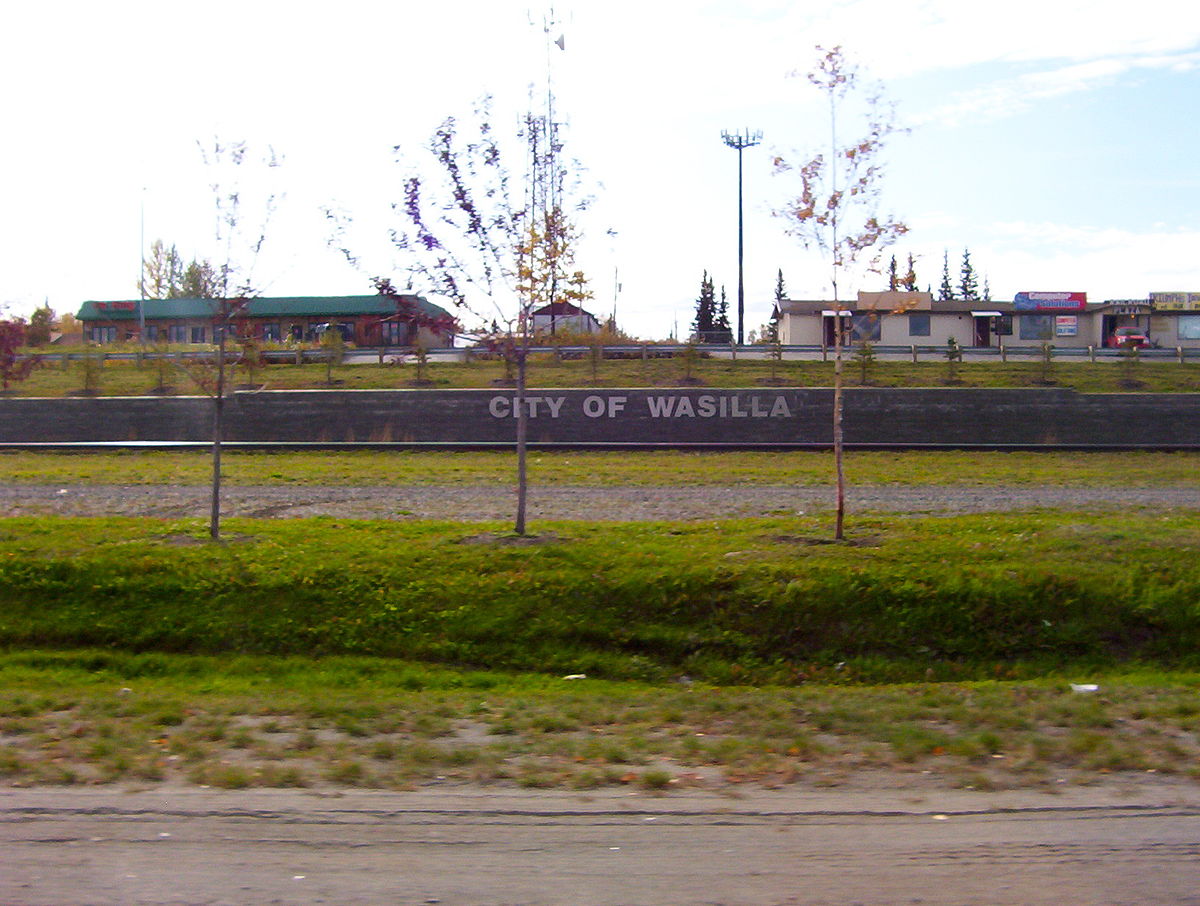
Wasilla is a city in Matanuska-Susitna Borough, United States and the sixth-largest city in Alaska. It is located on the northern point of Cook Inlet in the Matanuska-Susitna Valley of the southcentral part of the state. The citys population was 7,831 at the 2010 census. Wasilla is the largest city in the borough and a part of the Anchorage metropolitan area, which had an estimated population of 396,142 in 2013. Established at the intersection of the Alaska Railroad and Old Carle Wagon Road, the city prospered at the expense of the nearby mining town of Knik. Historically entrepreneurial, the economic base shifted in the 1970s from small-scale agriculture and recreation to support for workers employed in Anchorage or on Alaskas North Slope oilfields and related infrastructure. The George Parks Highway turned the town into a commuter suburb of Anchorage. Several state and federal agencies have offices in Wasilla, including the Alaska Departments of Environmental Conservation, Labor and Divisions of Public Assistance, Social Services. Wasilla gained international attention when Sarah Palin, who served as Wasillas mayor before her election as Governor of Alaska, was chosen by John McCain as his vice-presidential running mate in the 2008 United States presidential election. Wasilla is named after Chief Wasilla, a local Denaina chief. "Wasilla" is the anglicized spelling of the chiefs Russian-given name, Васи́лий Vasilij, which corresponds to the English name Basil.

Unalaska

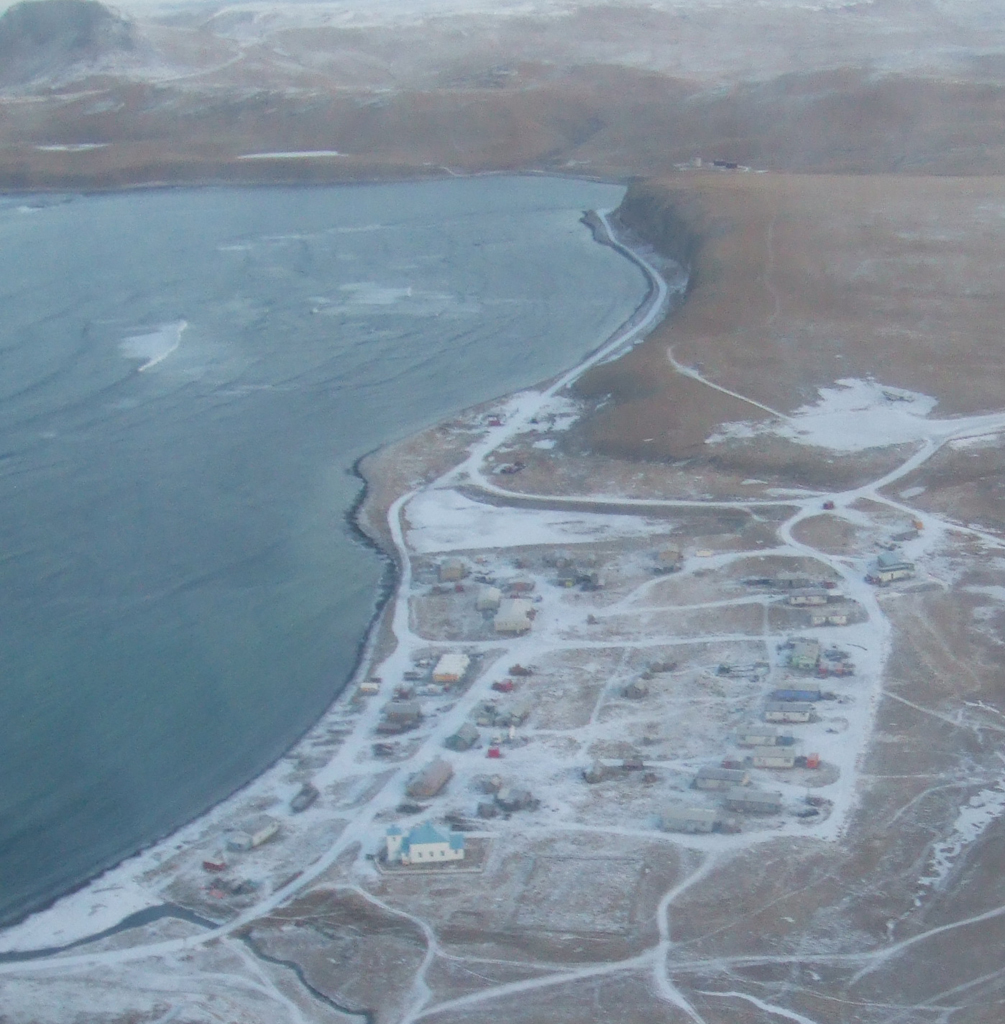
Unalaska is the largest city of the Aleutian Islands. The city is in the Aleutians West Census Area, a regional component of the Unorganized Borough in the U.S. state of Alaska. Unalaska is located on Unalaska Island and neighboring Amaknak Island in the Aleutian Islands off mainland Alaska. The population was 4,376 at the 2010 census, which is 79% of the entire Aleutians West Census Area. Unalaska is the second-largest city in the Unorganized Borough, behind Bethel. The Aleut or Unangan people have lived on Unalaska Island for thousands of years. The Unangan, who were the first to inhabit the island of Unalaska, named it "Ounalashka", meaning "near the peninsula". The regional native corporation has adopted this moniker, and is known as the Ounalashka Corporation. The Russian fur trade reached Unalaska when Stepan Glotov and his crew arrived on August 1, 1759. Natives, Russians and their descendants comprised most of the community's population until the middle 20th century, when the involvement of the United States in World War II led to a large-scale influx of people and construction of buildings all along the strategically located Aleutians. Almost all of the community's port facilities are on Amaknak Island, better known as Dutch Harbor or just "Dutch". It is the largest fisheries port in the U.S. by volume caught. It includes Dutch Harbor Naval Operating Base and Fort Mears, U.S. Army, a U.S. National Historic Landmark. Dutch Harbor lies within the city limits of Unalaska and is connected to Unalaska by a bridge. Amaknak Island is home to almost 59 percent of the city's population, although it has less than 3 percent of its land area.

This attraction is located in

This is a private property. Please enjoy respectfully and do not disturb the occupants.

Edit Categories
Add Tours

This attraction is not part of any tours

Add Collections

This attraction is not part of any collections


Some of the attractions we imported from Wikipedia are not perfect. Send us an email detailing what's wrong and we'll look into fixing it.

GuRoute is all about Gurus sharing their local knowledge. If you feel up to fixing this problem yourself, why not adopt it. You will become the owner and can fix whatever problems you see.

We've copied a link to this attraction into your clipboard so that ou can paste it into an email or text message...

More Info...
You can add your friends to the visit yourself, or, send them a link and let them add themselves...

The visit will appear on both your timelines and on your Shared Timeline.

Click below and we'll email you a link that you can send on to friends or post on your group's Facebook page.

If your friends aren't members of GuRoute yet, this is a great way to get them started.
Recent
Recently used Collections will appear here...
Recent
Recently used tours will appear here...

Where is this?

GuRoute likes to place attractions inside other attractions. So, maybe it's in a city, or maybe it's inside a particular park in that city. Maybe your attraction is a huge park that spans half the county, or multiple counties.

Determining where this attraction is gives it context - if it's in a park, you'll be able to see it alongside all the other attractions in that park. And that helps define the park.

GuRoute will automatically calculate a parent region for this attraction. You can change it if there is something more appropriate.

This attraction is currently located in .

Change

This attraction does not yet have any reviews

Please login to write a review...

Reviewed by
Record new Visit

Add this location to your timneline?

  • If there's an existing attraction open it and add it to your timeline...
  • If not, enter a title and we'll create a new attraction for your memories...
Create new Attraction

Create a new attraction at this location?

  • We rely on Gurus like you to share your local knowledge...
(Give a name for this location)


+
Add this to your timeline instead...

Imagine having a record of all the cool things you've done in your life!


Using our timeline you can keep track of everywhere you visit in your lifetime...

But, you'll need to sign in first...

Add contacts so that you can share your travels and record places that you visit together...

Family
Favorites
Family
Favorites

Profile TimeLine Our Visits Edit Accept Decline Invite

If you have any more friends that visited this place with you, feel free to add them to the visit. We'll write it to their timeline and once they confirm it, they too will have this memory for a lifetime.

If they're not already registered, you just need their name and email address and you can add them and we'll send them an invite on your behlaf.

Add a tour comment

Add some extra information for when this attraction is viewed as part of your tour...

Next Stop Instructions

Add some instructions for what to see/do on the way to the next stop...

Next Stop Instructions

Add some instructions for what to see/do on the way to the next stop...

If you're visiting an existing attraction, open it and add it to your timeline. If there is no attraction for the place you are visiting...

  • Click 'Add My Location' below
  • Or right-click on the map to mark a different location
  • Or long-press if you have a touch screen
You can even add locations while you're offline....
  • Load up the map when you're online and we'll keep track of your locaiton
  • You can add locations to your timeline
  • When you are online again we'll sync them with the cloud

We can't connect to the internet right now. The following attractions are saved locally and can be uploaded when you're online...

GuRoute would like to access your current location so that we can pin you on the map and show you nearby attractions

Add friends so that you can share your experiences with each other...

Add tour to What's Next?

Go...

Either for yourself or someone else...

  1. Do your trip research in GuRoute
    Add all the places that you think might be worthy of a visit into a trip-plan
  2. Add your trip-plan to your "What's Next" timeline
    (or a friend's "What's Next" timeline)
  3. When you're on vacation you'll have all your research at your fingertips
  4. Share your timline with your friends
    They can enjoy your vacation with you, seeing not only where you've been, but where you're going next...
  5. Add/remove attractions if things change

It also makes a great souvenir of your trip

Collections

Go...

Create a home page for a collection of attractions

  • Add an image and description to display on the homepage
  • Start adding content
    Add existing attractions to your collection or create new attractions of your own
  • Collections can be:
    • Public (Anyone can add attractions to your collection)
    • Shared (Only yourself and Gurus you nominate can add content)
    • Private (The collection will only be visible to yourself)

Uses

  • Local business or hotel
    Showcase local attractions that you endorse
  • Clubs
    Showcase attractions that members have created (eg. local historical society)
  • Special Interest
    If GuRoute does not have a category for your special interest you add your attractions to your own collection instead

Examples

Walking/Driving Tours

Go...

A guided tour where GuRoute will direct you from stop to stop and narrate a description of each attraction you arrive at

  • GuRoute uses your phone's GPS to guide you from stop to stop
  • GuRoute automatically detects when you arrive at the next tour-stop and narrates the description of the attraction (Chrome Only)
  • It then sends you on to the next stop

Tours are great to attract people to your town. Even places with no significant points of interest can be lots of fun when part of a tour


Cater tours to your Audience

  • Kid-friendly Tours
    • Focus on what will keep kids interested
    • Instead of parents having to drag their kids around they'll be struggling to keep up
    • Let the kids navigate and they'll get more fun out of finding that historical plaque than they ever would from reading it
  • Accessible tours
  • Short and long tours of the same location

What you need to do...

  1. Click 'Go...'
    Enter a title, description and location for the tour
  2. Add existing attractions OR create new ones and add them to the tour
  3. For existing attractions you can add more information specific to the theme of the tour
  4. You can also add instructions on what to do or see en-route to the next tour-stop
  5. Try out your tour and see how it works...

Mystery Tour

Go...

Create a Mystery Tour

Create a series of clues to show people around a city, neighborhood or whatever place you like...

  • GuRoute will show people clues to get them from attraction to attraction
  • When they reach each stop GuRoute will tell them about the place and give them the next clue
  • Take as long or as you like and explore each location at your leisure

Scavenger Hunt

Go...

Create a Scavenger Hunt

Create a series of questions that people have to answer. The answers can all be discovered by walking aroung the area, looking for clues.

  • How many beers are on tap at Michael Collin's Irish Bar?
  • What's the name of the oldest building on main streeet?
  • Show a picture of some public art and ask them what it is called
  • Clues can have numeric or multiple choice answers