Sign In

My Timeline

GuRoute

Discover Your World

Share your Experiences

Record your Life


Top Attractions in Ireland

Aran Islands

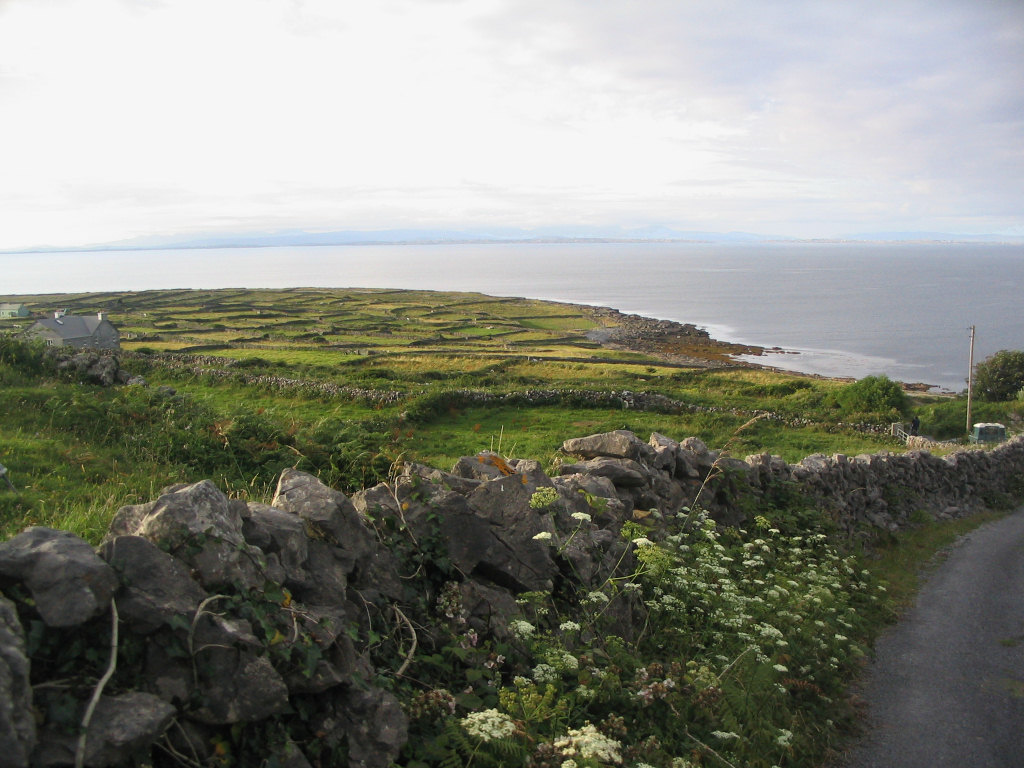
The Aran Islands are a group of three islands located at the mouth of Galway Bay, on the west coast of Ireland. They constitute the barony of Aran in County Galway, Ireland. The 1,200 inhabitants primarily speak Irish, the language used in local placenames. Most islanders are also fluent in English. The islands' geology is mainly karst limestone, related to the Burren in County Clare , not the granites of Connemara to the north. This is most obvious in the construction of the walls around the fields. The limestones date from the Viséan Stage (Lower Carboniferous Period), formed as sediments in a tropical sea approximately 350 million years ago, and compressed into horizontal strata with fossil corals, crinoids, sea urchins, and ammonites. Glaciation following the Namurian phase facilitated greater denudation. The result is that the Aran Islands are one of the finest examples of a Glacio-Karst landscape in the world. The effects of the last glacial period (the Midlandian) are most in evidence, with the islands overrun by ice during this glaciation. The impact of earlier Karstification (solutional erosion) has been eliminated by the last glacial period. So any karstification now seen dates from approximately 11,000 years ago and the island karst is thus recent. Solutional processes have widened and deepened the grykes of the limestone pavement. Pre-existing lines of weakness in the rock (vertical joints) contribute to the formation of extensive fissures separated by clints (flat pavement like slabs). The rock karstification facilitates the formation of sub-terrainean drainage. Huge boulders up to 25 metres (80 ft) above the sea at parts of the west facing cliffs are in some cases an extreme form of storm beach, cast there by giant waves that occur on average once per century, though more are glacial erratics. The islands have an unusually temperate climate. Average air temperatures range from 15 °C in July to 6 °C in January. The soil temperature does not usually drop below 6 °C (the winter of 2010 recorded a prolonged period of snow, the first in living memory). Since grass will grow once the temperature rises above 6 °C, this means that the island (like the neighbouring Burren) has one of the longest growing seasons in Ireland or Britain, and supports diverse and rich plant growth. Late May is the sunniest time and also likely the best time to view flowers, with the gentians and avens peaking (but orchid species blooming later). The islands supports arctic, Mediterranean and alpine plants side-by-side, due to the unusual environment. Like the Burren, the Aran islands are renowned for their remarkable assemblage of plants and animals. The grikes (crevices) provide moist shelter, thus supporting a wide range of plants including dwarf shrubs. Where the surface of the pavement is shattered into gravel, many of the hardier Arctic or alpine plants can be found. But when the limestone pavement is covered by a thin layer of soil, patches of grass are seen, interspersed with plants like the gentian and orchids. Notable insects present include the butterfly the pearl-bordered fritillary (Boloria euphrosyne), brown hairstreak (Thecla betulae), marsh fritillary (Euphydryas aurinia) and wood white (Leptidea sinapis); the moths, the burren green (Calamia tridens), Irish annulet (Odontognophos dumetata) and transparent burnet (Zygaena purpuralis); and the hoverfly Doros profuges. On the cliff tops, ancient forts such as Dún Aonghasa (Dún Aengus) on Inishmór and Dún Chonchúir (Fort of Conchobar) on Inishmaan are some of the oldest archaeological remains in Ireland. A lacework of ancient stone walls (1,600 km or 1,000 mi in all) enfolds all three islands to contain local livestock. Also found are early clocháns (dry-stone beehive huts from the early-Christian period). Enda of Aran founded the first true Irish monastery near Killeany (Cill Éinne or Church of Enda). In time there were a dozen monasteries on Inishmór alone. Many Irish saints had some connection with Aran: St. Brendan was blessed for his voyage there; Jarlath of Tuam, Finnian of Clonard, and St. Columba called it the "Sun of the West". In total, there are 38 national monuments on the Aran Islands. The islands were first populated in larger numbers probably at the time of the Cromwellian conquest of Ireland in the mid-17th century, when the Catholic population of Ireland had the choice of going "to hell or to Connacht". Many fled to the numerous islands off the west coast of Ireland where they adapted themselves to the raw climatic conditions, developing a survival system of total self-sufficiency. Their methods included mixing layers of sand and seaweed on top of rocks to create fertile soil, a technique used to grow potatoes and other vegetables. The same seaweed method also provided grazing grass within stone-wall enclosures for cattle and sheep, which in turn provided wool and yarn to make handwoven trousers, skirts and jackets, hand-knitted sweaters, shawls, caps, and hide shoes. The islanders also constructed unique boats for fishing, building their thatched cottages from the materials available or trading with the mainland. The Aran Islands are an official Gaeltacht, which gives full official status to Irish as the medium of all official services including education. An unusually high rate of Irish-language monolingualism was found among senior natives until the end of the 20th century, in large part because of the isolating nature of the traditional trades practised and the natural isolation of the islands in general from mainland Ireland over the course of the Islands' history. Young Islanders can take their leaving examination at 18 on the islands and then most leave for third level education. Many blame the decline of Irish-speaking among young members of the island community on English-language television, available since the 1960s; furthermore, many younger islanders leave for the mainland when they come of age. Year-round ferry passenger services exist. Aran Island Ferries operate a year round service from Rossaveal in County Galway, connected by a bus service from Galway city. A heavy cargo service operates several times a week from Galway Harbour, and is operated by Lasta Mara. Aer Arann Islands operate an air service from all three islands to Inverin which has connecting buses from Galway city. See Inishmore Airport. Ferries are also available to the Aran Islands from Doolin in County Clare (Seasonal 1 April – 31 October). A road network exists on each of the islands and a speed limit of 50 km/h applies. Cars on the islands are exempt from road-worthiness testing. Most visitors to the island hire bikes as it is the most convenient way to see the islands.

Kilkenny

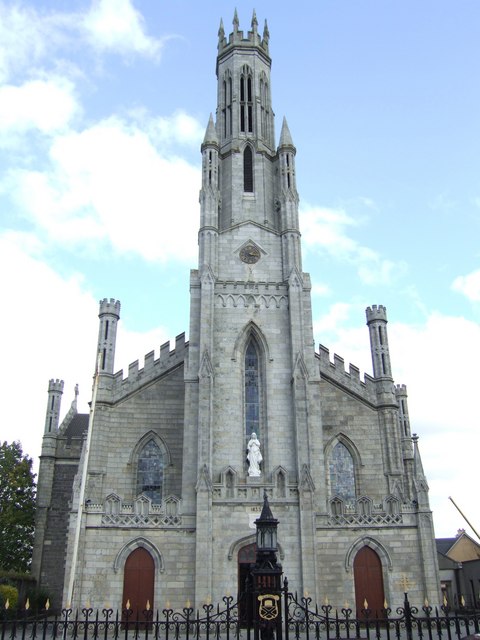
Kilkenny is a city located in south-east part of Ireland and the county town of County Kilkenny. It is on both banks of the River Nore in the province of Leinster. The city is administered by a Borough Council and a Mayor which is a level below that of city council in the Local government of the state although the Local Government Act 2001 allows for "the continued use of the description city". The borough has a population of 8,711, however the majority of the population live outside the borough boundary, the 2011 Irish Census gives the total population of the Borough & Environs as 24,423. Kilkenny is a popular tourist destination. In 2009 the City of Kilkenny celebrated its 400th year since the granting of city status in 1609. Kilkenny's heritage is evident in the city and environs including the historic buildings such as Kilkenny Castle, St. Canice's Cathedral and round tower, Rothe House, Shee Alms House, Black Abbey, St. Mary's Cathedral, Kilkenny Town Hall, St. Francis Abbey, Grace's Castle, and St. John's Priory. Kilkenny is regarded for its culture with craft and design workshops, the Watergate Theatre, public gardens and museums. Annual events include Kilkenny Art Festival, the Cat Laughs comedy festival and music at the Rhythm and Roots festival and the Source concert. It is a popular base to explore the surrounding towns, villages and countryside. Controversy exists at the moment around the Kilkenny Central Access Scheme which is a road proposed to be built through the city centre. Kilkenny began with an early sixth century ecclesiastical foundation within the kingdom of Ossory. Following Norman invasion of Ireland, Kilkenny Castle and a series of walls were built to protect the burghers of what became a Norman merchant town. William Marshall, Lord of Leinster, gave Kilkenny a charter as a town in 1207. By the late thirteenth century Kilkenny was under Norman-Irish control. The Statutes of Kilkenny passed at Kilkenny in 1367, aimed to curb the decline of the Hiberno-Norman Lordship of Ireland. In 1609 King James I of England granted Kilkenny a Royal Charter giving it the status of a city. Following the Rebellion of 1641, the Irish Catholic Confederation, also known as the "Confederation of Kilkenny", was based in Kilkenny and lasted until the Cromwellian conquest of Ireland in 1649. Kilkenny was a famous brewing centre from the late seventeenth century. In the late twentieth century Kilkenny is a tourist and creative centre. The Heritage Council offices are located at Church Lane. The seat of the Roman Catholic Bishop of Ossory is at St. Mary's Cathedral and the Church of Ireland Bishop of Cashel and Ossory is at St. Canice's Cathedral. Nearby larger cities include Waterford 45 kilometres south-southeast, Limerick 93 kilometres west and Dublin 101 kilometres northeast.

Achill Island

Achill Island in County Mayo is the largest island off the coast of Ireland, and is situated off the west coast. It has a population of 2,700. Its area is 148 km2 . Achill is attached to the mainland by Michael Davitt Bridge, between the villages of Gob an Choire and Poll Raithní . A bridge was first completed here in 1887, replaced by another structure in 1949, and subsequently replaced with the current bridge which was completed in 2008. Other centres of population include the villages of Keel, Dooagh, Dumha Éige , Dún Ibhir , The Valley and Dugort. The parish's main Gaelic football pitch and two secondary schools are on the mainland at Poll Raithní. Early human settlements are believed to have been established on Achill around 3000 BC. A paddle dating from this period was found at the crannóg near Dookinella. The island is 87% peat bog. The parish of Achill also includes the Curraun peninsula. Some of the people of Curraun consider themselves Achill people, and most natives of Achill refer to this area as being "in Achill". There are between 500-600 native Irish speakers in Achill parish. In the summer of 1996, the RNLI decided to station a lifeboat at Kildownet. It is believed that at the end of the Neolithic Period , Achill had a population of 500–1,000 people. The island would have been mostly forest until the Neolithic people began crop cultivation. Settlement increased during the Iron Age, and the dispersal of small promontory forts around the coast indicate the warlike nature of the times. Megalithic tombs and forts can be seen at Slievemore, along the Atlantic Drive and on Achillbeg. Achill Island lies in the Barony of Burrishoole, in the territory of ancient Umhall (Umhall Uactarach and Umhall Ioctarach), that originally encompassed an area extending from the County Galway/Mayo border to Achill Head. The hereditary chieftains of Umhall were the O'Malleys, recorded in the area in 814 AD when they successfully repelled an onslaught by the Vikings in Clew Bay. The Anglo-Norman invasion of Connacht in 1235 AD saw the territory of Umhall taken over by the Butlers and later by the de Burgos. The Butler Lordship of Burrishoole continued into the late 14th century when Thomas le Botiller was recorded as being in possession of Akkyll & Owyll. In the 17th and 18th centuries, there was much migration to Achill from other parts of Ireland, particularly Ulster, due to the political and religious turmoil of the time. For a while there were two different dialects of Irish being spoken on Achill. This led to many townlands being recorded as having two names during the 1824 Ordnance Survey, and some maps today give different names for the same place. Achill Irish still has many traces of Ulster Irish.

Mullingar

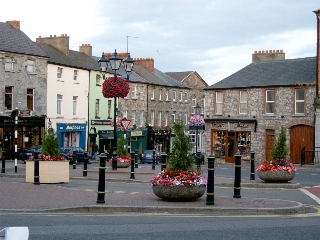
Mullingar is the county town of County Westmeath in Ireland. The Counties of Meath and Westmeath Act of 1543, proclaimed Westmeath a county, separating it from Meath. Mullingar became the administrative centre for County Westmeath. The town was originally named Maelblatha, and takes its modern name from a mill noted in the legend of Colman of Mullingar. Traditionally a market town serving the large agricultural hinterland, Mullingar remains a significant commercial location. It had a tradition of cattle-trading up until 2003, when its cattle market was closed for development of a mixed commercial and residential scheme called Market Point. Mullingar is famous for the neighbouring lakes, Lough Owel, Lough Ennell and Lough Derravaragh, which attract many anglers. Lough Derravaragh is also known for its connection with the Irish legend of the Children of Lir. The town of Mullingar is linked to Lough Ennell via Lacy's Canal and the River Brosna. Another waterway of significance is the Royal Canal, which loops around Mullingar. Among Mullingar's major exports are items of pewterware produced by Mullingar Pewter. Also associated with Mullingar is Genesis Fine Art, which produces gift items. The "Pilgrims" sculpture on Mullingar's Austin Friars Street, at which location there once stood an Augustinian Friary, was crafted by Genesis on foot of a commission by the Mullingar chapter of Soroptimists International. Two print newspapers serve the community: the Westmeath Examiner and the Westmeath Topic together with a blog, Mullingar News and Views.

This attraction is located in

This is a private property. Please enjoy respectfully and do not disturb the occupants.

Edit Categories
Add Tours

This attraction is not part of any tours

Add Collections

This attraction is not part of any collections


Some of the attractions we imported from Wikipedia are not perfect. Send us an email detailing what's wrong and we'll look into fixing it.

GuRoute is all about Gurus sharing their local knowledge. If you feel up to fixing this problem yourself, why not adopt it. You will become the owner and can fix whatever problems you see.

We've copied a link to this attraction into your clipboard so that ou can paste it into an email or text message...

More Info...
You can add your friends to the visit yourself, or, send them a link and let them add themselves...

The visit will appear on both your timelines and on your Shared Timeline.

Click below and we'll email you a link that you can send on to friends or post on your group's Facebook page.

If your friends aren't members of GuRoute yet, this is a great way to get them started.
Recent
Recently used Collections will appear here...
Recent
Recently used tours will appear here...

Where is this?

GuRoute likes to place attractions inside other attractions. So, maybe it's in a city, or maybe it's inside a particular park in that city. Maybe your attraction is a huge park that spans half the county, or multiple counties.

Determining where this attraction is gives it context - if it's in a park, you'll be able to see it alongside all the other attractions in that park. And that helps define the park.

GuRoute will automatically calculate a parent region for this attraction. You can change it if there is something more appropriate.

This attraction is currently located in .

Change

This attraction does not yet have any reviews

Please login to write a review...

Reviewed by
Record new Visit

Add this location to your timneline?

  • If there's an existing attraction open it and add it to your timeline...
  • If not, enter a title and we'll create a new attraction for your memories...
Create new Attraction

Create a new attraction at this location?

  • We rely on Gurus like you to share your local knowledge...
(Give a name for this location)


+
Add this to your timeline instead...

Imagine having a record of all the cool things you've done in your life!


Using our timeline you can keep track of everywhere you visit in your lifetime...

But, you'll need to sign in first...

Add contacts so that you can share your travels and record places that you visit together...

Family
Favorites
Family
Favorites

Profile TimeLine Our Visits Edit Accept Decline Invite

If you have any more friends that visited this place with you, feel free to add them to the visit. We'll write it to their timeline and once they confirm it, they too will have this memory for a lifetime.

If they're not already registered, you just need their name and email address and you can add them and we'll send them an invite on your behlaf.

Add a tour comment

Add some extra information for when this attraction is viewed as part of your tour...

Next Stop Instructions

Add some instructions for what to see/do on the way to the next stop...

Next Stop Instructions

Add some instructions for what to see/do on the way to the next stop...

If you're visiting an existing attraction, open it and add it to your timeline. If there is no attraction for the place you are visiting...

  • Click 'Add My Location' below
  • Or right-click on the map to mark a different location
  • Or long-press if you have a touch screen
You can even add locations while you're offline....
  • Load up the map when you're online and we'll keep track of your locaiton
  • You can add locations to your timeline
  • When you are online again we'll sync them with the cloud

We can't connect to the internet right now. The following attractions are saved locally and can be uploaded when you're online...

GuRoute would like to access your current location so that we can pin you on the map and show you nearby attractions

Add friends so that you can share your experiences with each other...

Add tour to What's Next?

Go...

Either for yourself or someone else...

  1. Do your trip research in GuRoute
    Add all the places that you think might be worthy of a visit into a trip-plan
  2. Add your trip-plan to your "What's Next" timeline
    (or a friend's "What's Next" timeline)
  3. When you're on vacation you'll have all your research at your fingertips
  4. Share your timline with your friends
    They can enjoy your vacation with you, seeing not only where you've been, but where you're going next...
  5. Add/remove attractions if things change

It also makes a great souvenir of your trip

Collections

Go...

Create a home page for a collection of attractions

  • Add an image and description to display on the homepage
  • Start adding content
    Add existing attractions to your collection or create new attractions of your own
  • Collections can be:
    • Public (Anyone can add attractions to your collection)
    • Shared (Only yourself and Gurus you nominate can add content)
    • Private (The collection will only be visible to yourself)

Uses

  • Local business or hotel
    Showcase local attractions that you endorse
  • Clubs
    Showcase attractions that members have created (eg. local historical society)
  • Special Interest
    If GuRoute does not have a category for your special interest you add your attractions to your own collection instead

Examples

Walking/Driving Tours

Go...

A guided tour where GuRoute will direct you from stop to stop and narrate a description of each attraction you arrive at

  • GuRoute uses your phone's GPS to guide you from stop to stop
  • GuRoute automatically detects when you arrive at the next tour-stop and narrates the description of the attraction (Chrome Only)
  • It then sends you on to the next stop

Tours are great to attract people to your town. Even places with no significant points of interest can be lots of fun when part of a tour


Cater tours to your Audience

  • Kid-friendly Tours
    • Focus on what will keep kids interested
    • Instead of parents having to drag their kids around they'll be struggling to keep up
    • Let the kids navigate and they'll get more fun out of finding that historical plaque than they ever would from reading it
  • Accessible tours
  • Short and long tours of the same location

What you need to do...

  1. Click 'Go...'
    Enter a title, description and location for the tour
  2. Add existing attractions OR create new ones and add them to the tour
  3. For existing attractions you can add more information specific to the theme of the tour
  4. You can also add instructions on what to do or see en-route to the next tour-stop
  5. Try out your tour and see how it works...

Mystery Tour

Go...

Create a Mystery Tour

Create a series of clues to show people around a city, neighborhood or whatever place you like...

  • GuRoute will show people clues to get them from attraction to attraction
  • When they reach each stop GuRoute will tell them about the place and give them the next clue
  • Take as long or as you like and explore each location at your leisure

Scavenger Hunt

Go...

Create a Scavenger Hunt

Create a series of questions that people have to answer. The answers can all be discovered by walking aroung the area, looking for clues.

  • How many beers are on tap at Michael Collin's Irish Bar?
  • What's the name of the oldest building on main streeet?
  • Show a picture of some public art and ask them what it is called
  • Clues can have numeric or multiple choice answers