Sign In

My Timeline

GuRoute

Discover Your World

Share your Experiences

Record your Life


Top Attractions in Nevada

Las Vegas

Las Vegas, officially the City of Las Vegas and often known as simply Vegas, is a city in the United States, the most populous city in the state of Nevada, the county seat of Clark County, and the city proper of the Las Vegas Valley. Las Vegas is an internationally renowned major resort city known primarily for gambling, shopping, fine dining and nightlife and is the leading financial and cultural center for Southern Nevada. The city bills itself as The Entertainment Capital of the World, and is famous for its mega casino–hotels and associated entertainment. A growing retirement and family city, Las Vegas is the 29th-most populous city in the United States, with a population of 603,488 at the 2013 United States Census Estimates. The 2013 population of the Las Vegas metropolitan area was 2,027,828. The city is one of the top three leading destinations in the United States for conventions, business, and meetings. In addition, the citys metropolitan area has more AAA Five Diamond hotels than any other city in the world, and is a global leader in the hospitality industry. Today, Las Vegas is one of the top tourist destinations in the world. Established in 1905, Las Vegas was incorporated as a city in 1911. At the close of the 20th century, Las Vegas was the most populous American city founded in that century . The citys tolerance for numerous forms of adult entertainment earned it the title of Sin City, and has made Las Vegas a popular setting for films, television programs, and music videos. Las Vegas is generally used to describe not just the city itself, but areas beyond the city limits—especially the resort areas on and near the Las Vegas Strip—and the Las Vegas Valley. The 4.2 mi stretch of South Las Vegas Boulevard known as the Las Vegas Strip is in the unincorporated communities of Paradise, Winchester, and Enterprise, located in Clark County.

Virginia City Historic District

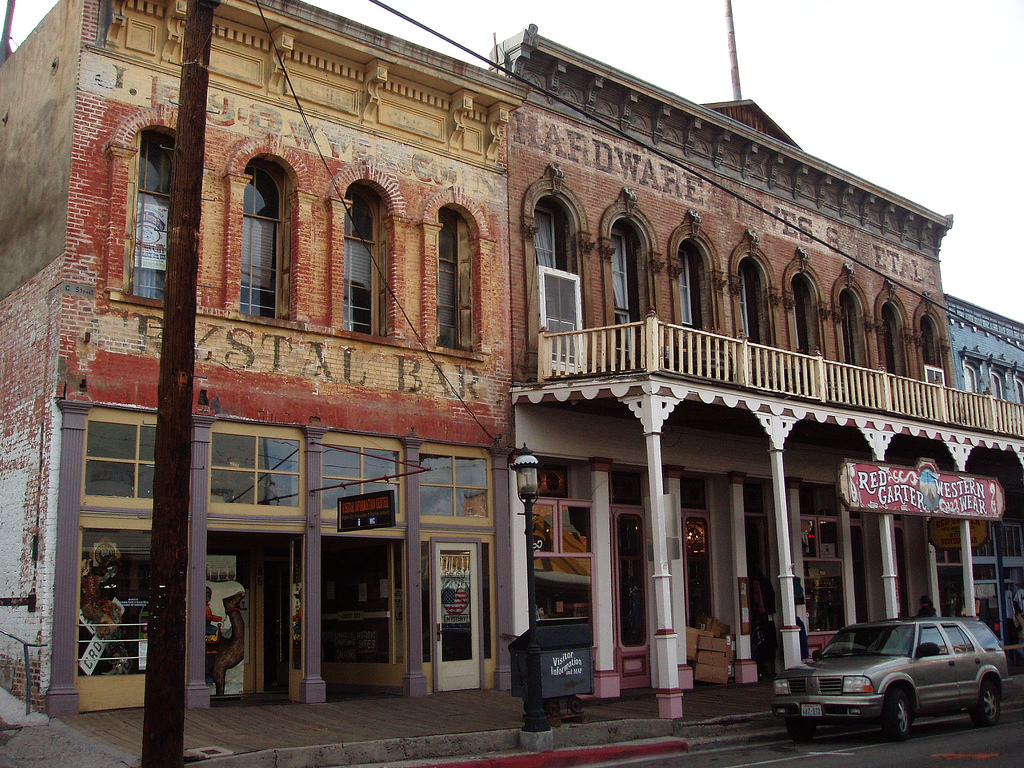
Virginia City Historic District is a National Historic Landmark encompassing the former mining villages of Virginia City and Gold Hill, both in Storey County, as well as Dayton and Silver City, both to the south in adjacent Lyon County, Nevada, United States. Declared a National Historic Landmark in 1961, it is one of only six in the state of Nevada. Virginia City was the prototype for future frontier mining boom towns, with its industrialization and urbanization. It owed its success to the 1859 discovery of the Comstock Lode. It is laid out in a grid pattern 1,500 feet below the top of Mount Davidson. Most of the buildings are two to three story brick buildings, with the first floors used for saloons and shops. It was the first silver rush town, and the first to intensely apply large-industrial mining methods. After a year in existence, the boomtown had 42 saloons, 42 stores, 6 restaurants, 3 hotels, and 868 dwellings to house a town residency of 2,345. At its height in 1863, the town had 15,000 residents. From its creation in 1859 to 1875, there were five widespread fires. The 1875 fire, dubbed the Great Fire of 1875, caused $12,000,000 in damages. Today, Virginia City is but a shadow of its former glory; however, it still draws over 2 million visitors per year. In 2004, its condition was considered "threatened". One reason is that an inactive mining pit may cause some of the buildings that make up the historic nature of the district to slide into the pit. The cemeteries are constantly vandalized and are in danger of erosion. Continued use of the district for tourism is harming those historical buildings still in use, and neglect of privately held unused buildings increases the damage to the district.

University of Nevada

The University of Nevada, Reno (also referred to as Nevada, the University of Nevada or UNR) is a public research university located in Reno, Nevada. Founded October 12, 1874, Nevada is the sole land grant institution for the state of Nevada. According to the Carnegie Classification of Institutions of Higher Education, the University of Nevada is a research university with high research activity (RU/H). The campus is home to the large-scale structures laboratory in the College of Engineering, which has put Nevada researchers at the forefront nationally in a wide range of civil engineering, earthquake and large-scale structures testing and modeling. The Nevada Terawatt Facility, located on a satellite campus of the university, includes a terawatt-level Z-pinch machine and terawatt-class high-intensity laser system – one of the most powerful such lasers on any college campus in the country. It is home to the School of Medicine, with campuses in both of Nevada's major urban centers, Las Vegas and Reno, and a health network that extends to much of rural Nevada. The faculty are considered worldwide and national leaders in diverse areas such as environmental literature, journalism, Basque studies, and social sciences such as psychology. The school includes 16 clinical departments and five nationally recognized basic science departments. It is also home to the School of Journalism, which has produced six Pulitzer Prize winners. == History == The Nevada State Constitution established the State University of Nevada in Elko, Nevada, on October 12, 1874. In 1881, it became Nevada State University. In 1885, the Nevada State University moved from Elko to Reno. In 1906, it was renamed the University of Nevada and finally, University of Nevada, Reno in 1969 soon after University of Nevada, Las Vegas was granted full autonomy. The University of Nevada remained the only four-year academic institution in the state of Nevada until 1965, when the Nevada Southern campus (now the University of Nevada, Las Vegas) separated into its own university. == Academics == Bachelor's, master's and doctoral programs are offered through: === Centers === Nevada sponsors a center dedicated to Basque studies (Including Basque language) due to the large Basque population in Northern Nevada. In addition, the university maintains and sponsors many centers, institutes & facilities. === Libraries === The university and surrounding community is served by several campus libraries. The libraries are: Mathewson-IGT Knowledge Center (main library). Opened on August 11, 2008 it was a $75.3 million project which began in September 2005. It replaced the Getchell library. Basque Library (housed in separate section of the Knowledge Center) Special Collections and University Archives (3rd floor of the Matthewson IGT-Knowledge Center) DeLaMare Library (engineering, physical sciences, computer science, mining, and geology) Mary B. Ansari Map Library (housed in basement of DeLaMare) Savitt Medical Library Nell J. Redfield Learning and Resource Center (education library and resources) === Rankings and reputation === The university was ranked tied for 197th among national universities by U.S. News & World Report in 2017, and 445th by Forbes out of the 660 best private and public colleges and universities in the U.S. Within the College of Business at the University of Nevada, the part-time MBA program was ranked 24th in the United States in 2014 by Bloomberg Businessweek. == Campus == The University of Nevada, Reno is the flagship institution of Nevada. The campus is located just north of downtown Reno overlooking Truckee Meadows and the downtown casinos. === Early construction === The university's first building, Morrill Hall, was completed in 1887 and still stands on the historic quad at the campus' southern end. The hall is named after U.S. Senator Justin Morrill, author of the 1862 Land-Grant College Act. Lincoln Hall (all-male residence) and Manzanita Hall (all-female residence) were both opened in 1896. === The Quad === The Quad is located in the southern part of the campus, surrounded by Morrill Hall and the Mackay School of Mines. This quadrangle is modeled after Thomas Jefferson’s at the University of Virginia. The northern end of the Quad contains a statue of John William Mackay (namesake of Nevada's Mackay School of Mines, later renamed the Mackay School of Earth Sciences and Engineering), created by Mount Rushmore designer Gutzon Borglum. The Quad and the original campus buildings surrounding it have a listing on the National Register of Historic Places. === Arboretum === Across the campus of the university exists the University of Nevada, Reno Arboretum, which was established in 1985, contains a collection of trees, shrubs, flowers, ornamentals and native flora, including over 60 genera and about 200 species of trees, many with several cultivars present. Thirty-six mature elm trees line the Quad. === Mackay Stadium === The football team plays at Mackay Stadium, The modern Mackay Stadium was completed in 1966 with a seating capacity of 7,500. The facility has been expanded several times in the last 15 years and now seats 26,000. === E.L. Wiegand Fitness Center === The University of Nevada began construction of a new 108,000 square foot fitness center in June 2015 and plans to have it completed by early 2017. Named the E.L. Wiegand Fitness Center, it will include a gym with three basketball courts, areas for weightlifting, cardio training, fitness classes, stadium stairs and an indoor running track. The project is a $46 million cost. === Residential life === The University of Nevada offers a variety of options to students who choose to stay on campus. There are seven different residence halls, six of which house primarily freshman students. Options include an all upper-class residence hall, and a living learning community building in which freshman students of similar academic interests are housed on the same floor. === Sustainability === Since its creation in the Fall of 2008, the University of Nevada, Reno's Sustainability Committee has been gathering information on various aspects of campus sustainability and beginning the development of a plan for creating a more sustainable campus. Significant efforts are made towards recycling and keeping the campus green. Many University buses run on bio-diesel fuels. The bicycle program has seen a significant increase in the number of bicycle users. The University's Food Services has made a commitment of 1% of the meal plan revenue to go towards funding sustainable initiatives on campus. In order to reduce energy use, UNR has installed solar panels on the Joe Crowley Student Union and built its first LEED accredited building. The University of Nevada has been ranked among the nation's most sustainable colleges, receiving an overall grade of "B+" on the Sustainable Endowment Institute's College Sustainability Report Card 2010. == Athletics == The university is simply called Nevada for athletics purposes. Its sports teams are nicknamed the Wolf Pack (always two words). They participate in the NCAA's Division I (FBS for football) and in the Mountain West Conference. === Men's basketball === In March 2004, the Wolf Pack Men's basketball team qualified for the NCAA tournament and advanced to the Sweet Sixteen for the first time in school history. The team earned a repeat trip in 2005 and beat Texas in the first round before falling to eventual national runner-up Illinois. The team returned for 2006 as a No. 5 seed but was upset in the first round by former Big Sky Conference rival Montana. They began the 2006–07 season ranked #24. The Pack's major star during this recent period of success was Nick Fazekas. In 2007, Nevada was ranked No. 9 in men's basketball, which is the highest ranking that Nevada has ever held. Coach Mark Fox took over after Trent Johnson left in 2004 to coach at Stanford University. On April 3, 2009 it was announced that David Carter would replace Fox who decided to leave Nevada for the same position at the University of Georgia. On March 1, 2012, the Wolf Pack basketball team won against New Mexico State University for the WAC title. === Football === The football team, currently coached by Jay Norvell, plays at Mackay Stadium. The modern Mackay Stadium replaced its predecessor and was completed in 1966 with a seating capacity of 7,500. The facility has been expanded several times in its history and now seats 26,000. In 2005, Nevada won a share of the WAC Title. The 2010 season saw Nevada at its best finishing the season ranked No. 11 in the AP and No. 13 in the BCS, stunning Boise State 34-31 and costing the Broncos a possible shot at the BCS title, to win another share of the WAC Title. === Rivalries === Annually, Nevada's football team plays its primary rival, UNLV, for the Fremont Cannon in the Battle for Nevada. Nevada currently leads the all-time series 25–17, after a 45–10 win in Las Vegas during the final game of the 2016 season. Nevada also plays UNLV twice a year in basketball, with Nevada losing the last 2 games and trailing the all-time series 59-22 overall. Nevada's two out-of-state rivals, particularly in football, are Boise State and Fresno State. In 2012, Nevada joined its rivals Boise State, Fresno State and UNLV in the Mountain West Conference. === Mascot === The Wolf Pack's mascot is an anthropomorphized wolf named Alphie, who took over the duties of cheering from his father, Wolfie, in 1999. In 2007, Alphie was joined by his younger brother, Wolfie Jr. In 2012, Wolfie was named Mascot of the Year. Rounding off the wolf pack family, Luna was introduced in 2013 as the sister to Wolfie Jr. and Alphie === Conference affiliations === Nevada joined the Mountain West Conference in 2012. Previous conference memberships include: 1954–1968 – Northern California Athletic Conference 1969–1978 – West Coast Conference – (Independent for football) 1979–1991 – Big Sky (swapped conference affiliations with Gonzaga University, which has been without football since 1941) 1992–1998 – Big West 1999–2012 – WAC == Student media == Nevada's editorially independent, weekly student newspaper is called The Nevada Sagebrush. It comes out every Tuesday afternoon, and employs more than 40 people, 25 full-time. Prior to 2004, the newspaper called itself simply the Sagebrush. The newspaper won the Associated Collegiate Press Pacemaker award in 2008 and 2009. It was also a finalist for a Pacemaker at the 2006 and 2007 ACP student journalism awards. It has won the best of show award at the fall 2005, 2006 and 2007 ACP national conferences in its category (weekly broadsheet at a four-year university). It was also nominated for an online ACP Pacemaker in 2008. Its new web site, www.nevadasagebrush.com, which launched in the fall of 2007, has also been recognized by the Center for Innovation in College Media for it breaking news packages, podcasts, videos and general innovation and Web presence. Many of The Nevada Sagebrush's former editors go on to work and take internships at newspapers and news organizations such as The Washington Post, The Oregonian, USA Today, The Miami Herald, The Arizona Republic and the Associated Press as well as dozens of local newspapers around the country. Insight Magazine is the only student-run magazine at the University of Nevada. Formerly Nevada's yearbook for nearly 100 years, Insight Magazine, has evolved into the second major publication circulating at the university. The first edition of Insight Magazine was published in September 2008. It presents itself as a theme-based monthly magazine, providing photography, stories and graphics, in contrast to the weekly, newspaper-style of The Sagebrush. It is put out both in print and online. The online version, UNRINSIGHT.com, provides both support for the published stories and independent content. In its sophomore year, Insight Magazine has received national attention from major college media organizations, such as the Associated College Press and the College Media Advisers. Insight placed fifth for headline presentation in Best of Collegiate Design 2009 by the "College Media Advisers". At the 2009 ACP Conference in Austin, Texas, Insight placed fifth in Best of Show for an audio podcast. Nevada's literary arts journal Brushfire was created by a group of students in 1950. It is released once a semester and publishes original poetry, literature, and art by students and some faculty and community members. The university is also home to a student-run radio station, Wolf Pack Radio. The station broadcasts primarily through its website, although it comes through at 1700 AM. Starting in the Fall 2010 semester, Nevada broadcast journalism students started "Wolf Pack Week," a 30-minute television newscast that is shown around campus. Future episodes will air on PBS in Reno and Las Vegas. There are other independent student publications on campus (although they have stopped publishing regularly since 2006), including The Nevada Blue and the Pack Patriot. == Greek life == Professional Fraternities Alpha Kappa Psi, (ΑΚΨ) Delta Sigma Pi, (ΔΣΠ) Theta Tau, (ΘΤ) Phi Alpha Delta, (ΦΑΔ) Phi Delta Epsilon, (ΦΔΕ) Tau Beta Pi, (ΤΒΠ) == Notable alumni & faculty == == Film history == The University of Nevada's classically styled campus has served as the setting for many movies, including: Andy Hardy's Blonde Trouble (1944) Margie (1946) Apartment for Peggy (1948) Mother Is a Freshman (1949) Mr. Belvedere Goes to College (1949) 5 Against the House (1955) Hilda Crane (1956)

Laughlin

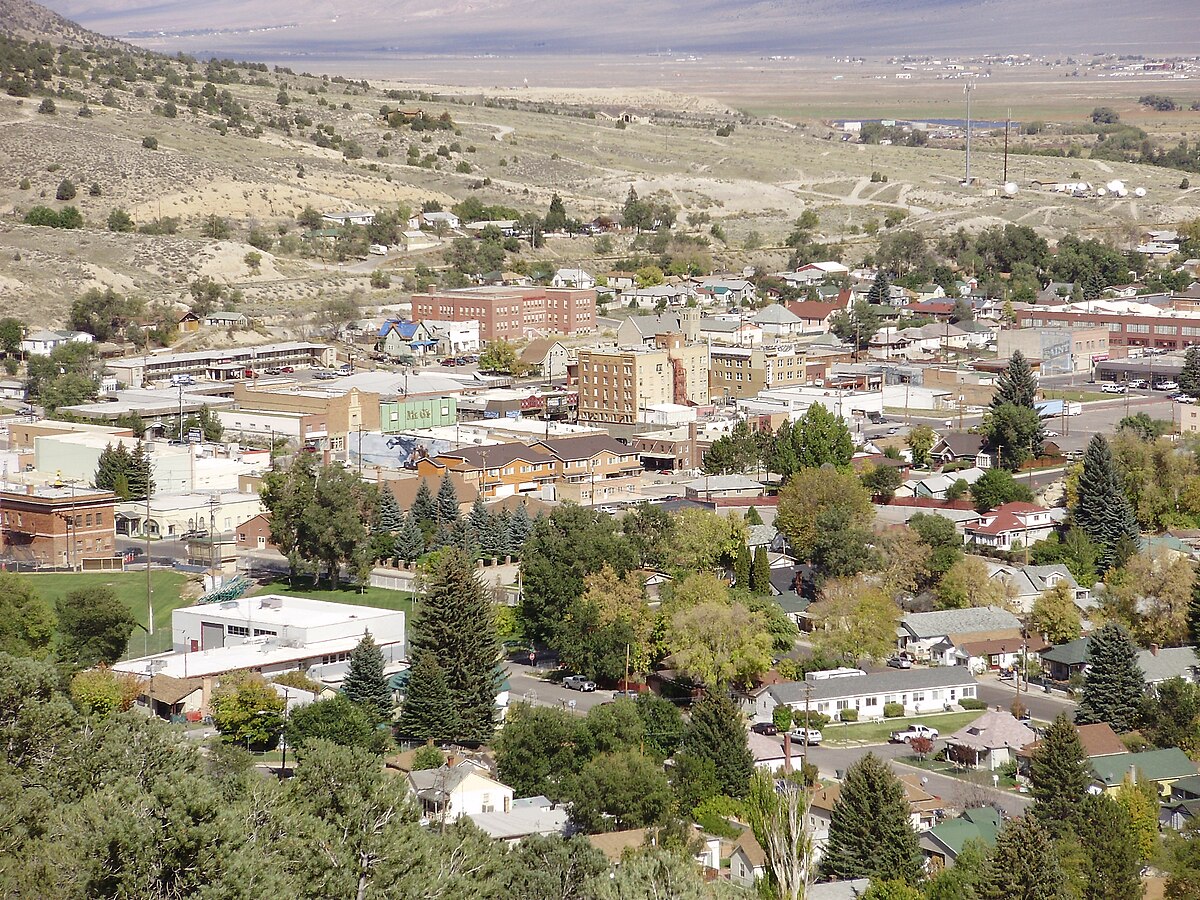
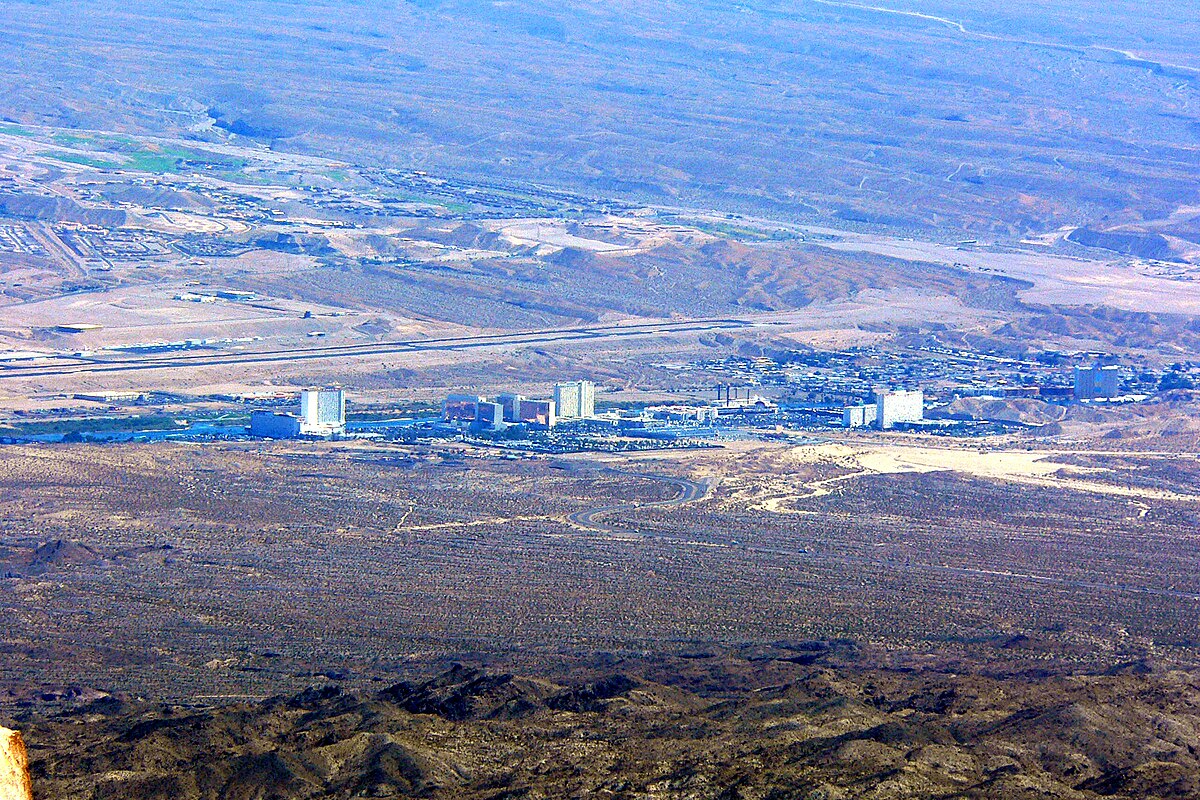
Laughlin is an unincorporated town and census-designated place in Clark County, Nevada, United States, and a port located on the Colorado River. Laughlin is 90 miles south of Las Vegas, located in the far southern tip of Nevada. It is best known for its gaming, entertainment, and water recreation. As of the 2010 census, the population was 7,323. The nearby communities of Bullhead City, Arizona; Needles, California; Fort Mohave, Arizona; and Mohave Valley, Arizona, bring the Laughlin area's total population to about 100,000. Its name comes from Don Laughlin, an Owatonna, Minnesota, native who purchased the southern tip of Nevada in 1964 (informally called South Pointe). At the time, Don Laughlin operated the 101 Club in Las Vegas. He opened what would become the Riverside Resort, and later wanted to call the community Riverside or Casino, but the post office opted for Laughlin instead. Laughlin is the third most visited casino and resort destination in the state after Las Vegas and Reno, and is one of the top five destinations for American RV enthusiasts. A September 2013, article in the Las Vegas Review-Journal is quoted as saying "Once a boomtown, Laughlin has seen nothing but declines for a dozen years, almost exactly coinciding with the loss of regular airline flights after Sept. 11, 2001. The 2.1 million visitors recorded last year by the Las Vegas Convention and Visitors Authority is less than half the 1997 peak. Through July, the count has dropped another 2.2 percent compared to 2012." Laughlin is advertised as a family-friendly destination. Being located on the river, outdoor and family activities are emphasized. Many of the casinos that line the Colorado River are linked by an unofficial pedestrian thoroughfare known as the Laughlin Riverwalk.

Pyramid Lake

Pyramid Lake is the geographic sink of the Truckee River Basin, 40 mi (64 km) northeast of Reno. Pyramid Lake is fed by the Truckee River, which is mostly the outflow from Lake Tahoe. The Truckee River enters Pyramid Lake at its southern end. Pyramid Lake has no outlet, with water leaving only by evaporation, or sub-surface seepage (an endorheic lake). The lake has about 10% of the area of the Great Salt Lake, but it has about 25% more volume. The salinity is approximately 1/6 that of sea water. Although clear Lake Tahoe forms the headwaters that drain to Pyramid Lake, the Truckee River delivers more turbid waters to Pyramid Lake after traversing the steep Sierra terrain and collecting moderately high silt-loaded surface runoff. A remnant of the Pleistocene Lake Lahontan (~890 feet deep), the lake area was inhabited by the 19th-century Paiute, who used the Tui chub and Lahontan cutthroat trout from the lake (the former is now endangered and the latter is threatened). The lake was first mapped in 1844 by John C. Frémont, the American discoverer of the lake who also gave it its English title. In the 19th century two battles were fought near the lake, major actions in the Paiute War. In the 1960s a marker was placed commemorating these battles. Because of water diversion beginning in 1905 by Derby Dam, the lake's existence was threatened, and the Paiute sued the Department of the Interior. By the mid-1970s, the lake had lost 80 feet of depth, and according to Paiute fisheries officials, the life of the lake was seriously under threat. In the opinion of John Pilger, the irrigation scheme for which water was diverted was an economic failure.

This attraction is located in

This is a private property. Please enjoy respectfully and do not disturb the occupants.

Edit Categories
Add Tours

This attraction is not part of any tours

Add Collections

This attraction is not part of any collections


Some of the attractions we imported from Wikipedia are not perfect. Send us an email detailing what's wrong and we'll look into fixing it.

GuRoute is all about Gurus sharing their local knowledge. If you feel up to fixing this problem yourself, why not adopt it. You will become the owner and can fix whatever problems you see.

We've copied a link to this attraction into your clipboard so that ou can paste it into an email or text message...

More Info...
You can add your friends to the visit yourself, or, send them a link and let them add themselves...

The visit will appear on both your timelines and on your Shared Timeline.

Click below and we'll email you a link that you can send on to friends or post on your group's Facebook page.

If your friends aren't members of GuRoute yet, this is a great way to get them started.
Recent
Recently used Collections will appear here...
Recent
Recently used tours will appear here...

Where is this?

GuRoute likes to place attractions inside other attractions. So, maybe it's in a city, or maybe it's inside a particular park in that city. Maybe your attraction is a huge park that spans half the county, or multiple counties.

Determining where this attraction is gives it context - if it's in a park, you'll be able to see it alongside all the other attractions in that park. And that helps define the park.

GuRoute will automatically calculate a parent region for this attraction. You can change it if there is something more appropriate.

This attraction is currently located in .

Change

This attraction does not yet have any reviews

Please login to write a review...

Reviewed by
Record new Visit

Add this location to your timneline?

  • If there's an existing attraction open it and add it to your timeline...
  • If not, enter a title and we'll create a new attraction for your memories...
Create new Attraction

Create a new attraction at this location?

  • We rely on Gurus like you to share your local knowledge...
(Give a name for this location)


+
Add this to your timeline instead...

Imagine having a record of all the cool things you've done in your life!


Using our timeline you can keep track of everywhere you visit in your lifetime...

But, you'll need to sign in first...

Add contacts so that you can share your travels and record places that you visit together...

Family
Favorites
Family
Favorites

Profile TimeLine Our Visits Edit Accept Decline Invite

If you have any more friends that visited this place with you, feel free to add them to the visit. We'll write it to their timeline and once they confirm it, they too will have this memory for a lifetime.

If they're not already registered, you just need their name and email address and you can add them and we'll send them an invite on your behlaf.

Add a tour comment

Add some extra information for when this attraction is viewed as part of your tour...

Next Stop Instructions

Add some instructions for what to see/do on the way to the next stop...

Next Stop Instructions

Add some instructions for what to see/do on the way to the next stop...

If you're visiting an existing attraction, open it and add it to your timeline. If there is no attraction for the place you are visiting...

  • Click 'Add My Location' below
  • Or right-click on the map to mark a different location
  • Or long-press if you have a touch screen
You can even add locations while you're offline....
  • Load up the map when you're online and we'll keep track of your locaiton
  • You can add locations to your timeline
  • When you are online again we'll sync them with the cloud

We can't connect to the internet right now. The following attractions are saved locally and can be uploaded when you're online...

GuRoute would like to access your current location so that we can pin you on the map and show you nearby attractions

Add friends so that you can share your experiences with each other...

Add tour to What's Next?

Go...

Either for yourself or someone else...

  1. Do your trip research in GuRoute
    Add all the places that you think might be worthy of a visit into a trip-plan
  2. Add your trip-plan to your "What's Next" timeline
    (or a friend's "What's Next" timeline)
  3. When you're on vacation you'll have all your research at your fingertips
  4. Share your timline with your friends
    They can enjoy your vacation with you, seeing not only where you've been, but where you're going next...
  5. Add/remove attractions if things change

It also makes a great souvenir of your trip

Collections

Go...

Create a home page for a collection of attractions

  • Add an image and description to display on the homepage
  • Start adding content
    Add existing attractions to your collection or create new attractions of your own
  • Collections can be:
    • Public (Anyone can add attractions to your collection)
    • Shared (Only yourself and Gurus you nominate can add content)
    • Private (The collection will only be visible to yourself)

Uses

  • Local business or hotel
    Showcase local attractions that you endorse
  • Clubs
    Showcase attractions that members have created (eg. local historical society)
  • Special Interest
    If GuRoute does not have a category for your special interest you add your attractions to your own collection instead

Examples

Walking/Driving Tours

Go...

A guided tour where GuRoute will direct you from stop to stop and narrate a description of each attraction you arrive at

  • GuRoute uses your phone's GPS to guide you from stop to stop
  • GuRoute automatically detects when you arrive at the next tour-stop and narrates the description of the attraction (Chrome Only)
  • It then sends you on to the next stop

Tours are great to attract people to your town. Even places with no significant points of interest can be lots of fun when part of a tour


Cater tours to your Audience

  • Kid-friendly Tours
    • Focus on what will keep kids interested
    • Instead of parents having to drag their kids around they'll be struggling to keep up
    • Let the kids navigate and they'll get more fun out of finding that historical plaque than they ever would from reading it
  • Accessible tours
  • Short and long tours of the same location

What you need to do...

  1. Click 'Go...'
    Enter a title, description and location for the tour
  2. Add existing attractions OR create new ones and add them to the tour
  3. For existing attractions you can add more information specific to the theme of the tour
  4. You can also add instructions on what to do or see en-route to the next tour-stop
  5. Try out your tour and see how it works...

Mystery Tour

Go...

Create a Mystery Tour

Create a series of clues to show people around a city, neighborhood or whatever place you like...

  • GuRoute will show people clues to get them from attraction to attraction
  • When they reach each stop GuRoute will tell them about the place and give them the next clue
  • Take as long or as you like and explore each location at your leisure

Scavenger Hunt

Go...

Create a Scavenger Hunt

Create a series of questions that people have to answer. The answers can all be discovered by walking aroung the area, looking for clues.

  • How many beers are on tap at Michael Collin's Irish Bar?
  • What's the name of the oldest building on main streeet?
  • Show a picture of some public art and ask them what it is called
  • Clues can have numeric or multiple choice answers