Sign In

My Timeline

GuRoute

Discover Your World

Share your Experiences

Record your Life


Top Attractions in Oldham

Chadderton

Chadderton is a town within the Metropolitan Borough of Oldham, in Greater Manchester, England. It lies along the course of the River Irk and the Rochdale Canal, on undulating land in the foothills of the Pennines, 1 mile west of Oldham, 4.5 miles south of Rochdale, and 6 miles northeast of the city of Manchester. Historically part of Lancashire, Chaddertons early history is marked by its status as a manorial township, with its own line of lords and overlords, who included the Asshetons, Chethams, Radclyffes, and Traffords. Chadderton in the Middle Ages was chiefly distinguished by its two mansions, Foxdenton Hall and Chadderton Hall, and by the prestigious families who occupied them. Farming was the main industry of the area, with locals supplementing their incomes by hand-loom woollen weaving in the domestic system. Chaddertons urbanisation and expansion largely coincided with developments in textile manufacture during the Industrial Revolution and the Victorian era. A late 19th century factory-building boom transformed Chadderton from a rural township into a major mill town—one of several in its region—and the second most populous urban district in the United Kingdom. More than 50 cotton mills had been built in Chadderton by 1914. Although Chaddertons industries declined during the mid-20th century, the town continued to grow as a result of suburbanisation and urban renewal. The legacy of the towns industrial past remains visible in its landscape of red-brick cotton mills, now used as warehouses or distribution centres. Some of these are listed buildings because of their architectural, historical, and cultural significance.

Delph

Delph (Old English (ge)delf a quarry) is a village in the Saddleworth civil parish of the Metropolitan Borough of Oldham, in Greater Manchester, England. Historically within the West Riding of Yorkshire, it lies amongst the Pennines on the River Tame below the village of Denshaw, 4.0 miles east-northeast of Oldham, and 1.8 miles north-northwest of Uppermill. On Friday 7 April 1780 John Wesley visited the town and preached in a house owned by one of the trustees of the Independent Church. The centre of the village has barely changed from the 19th century, when a number of small textile mills provided employment for the local community. The etymology of Delph is derived from the Old English word 'Delf', meaning a quarry and refers to the bakestone quarries which lay at the lower end of the Castleshaw Valley just north of the village. There is a significant first century AD Roman fort at Castleshaw. Bakestones were quarried as tiles up to three quarters of an inch thick and used to bake oatcakes and muffins. The industry was in existence well before 1330 and only died out in 1930. The village is home to one of the Saddleworth Whit Friday brass band contests, with in the region of seventy-five bands from across the UK and beyond marching down the main street at five minute intervals on the evening of the contest which often continues into the early hours. In the village of Dobcross a Henry Livings memorial prize is open to bands who play on any of the morning's walks on Whit Friday. It is also home to the Millgate Arts Centre, the home of the Saddleworth Players. This group of actors puts on six plays a year, as well as hosting a number of other events throughout the year. The main street running through the centre of Delph was used in some of the external shots of the 2001 feature film The Parole Officer, starring Steve Coogan, Om Puri and Jenny Agutter. Delph was also used in the filming of the Whit Friday scene in the 1996 film Brassed Off. Delph is mentioned in the song "This One's For Now" by the band Half Man Half Biscuit on their 2014 album Urge for Offal.

Royton

Royton is a town within the Metropolitan Borough of Oldham, in Greater Manchester, England. It lies by the source of the River Irk, on undulating land at the foothills of the South Pennines, 1.7 miles north-northwest of Oldham, 3.2 miles south-southeast of Rochdale and 7.6 miles northeast of the city of Manchester. Historically a part of Lancashire, Royton and its surroundings have provided evidence of ancient British, Roman and Viking activity in the area. During the Middle Ages, Royton formed a small township centred on Royton Hall, a manor house owned by a long succession of dignitaries which included the Byrons and Radcliffes. A settlement expanded outwards from the hall which, by as late as 1780, "contained only a few straggling and mean-built cottages". Farming was the main industry of this rural area, with locals supplementing their incomes by hand-loom woollen weaving in the domestic system. Royton has the distinction of being the first town where a powered cotton mill was built; at Thorp in 1764, and is one of the first localities in the world to have adopted the factory system. The introduction of textile manufacture during the Industrial Revolution facilitated a process of unplanned urbanisation in the area, and by the mid-19th century Royton had emerged as a mill town. At its zenith, there were 40 cotton mills—some of the largest in the United Kingdom—employing 80% of the local population. Imports of foreign cotton goods began the decline in Roytons textile industry during the mid-20th century, and its last mill closed in 1998. Today, fewer than a dozen mills are still standing, the majority of which are used for light engineering or as distribution centres. Despite an economic depression brought about by the demise of cotton spinning, Roytons population has continued to grow as a result of intensive housing redevelopment which has modernised its former Edwardian districts.

Oldham Parish Church

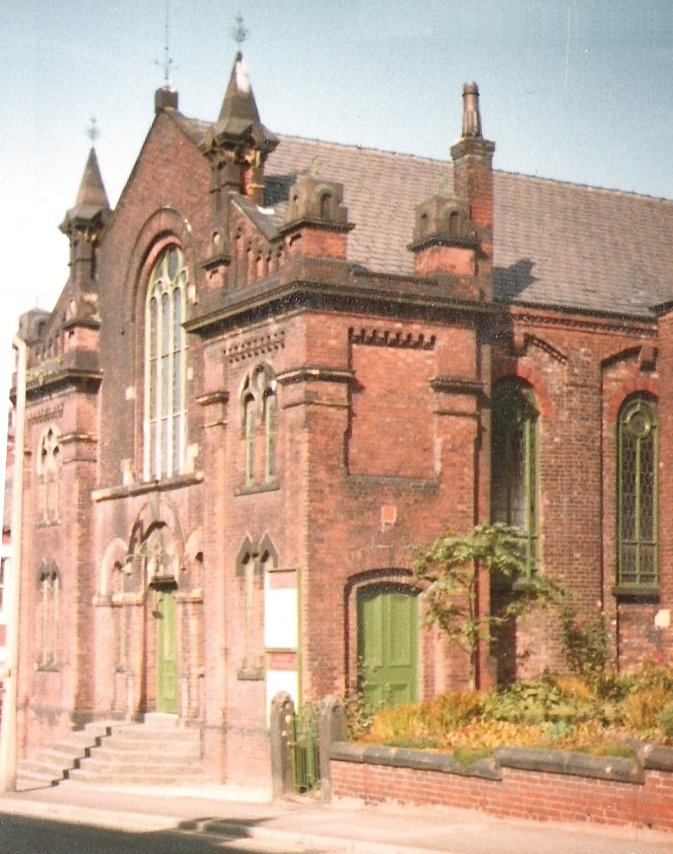
The Oldham Parish Church of St. Mary with St. Peter is the Church of England parish church for Oldham in Greater Manchester, England. It forms part of the Diocese of Manchester, and is one of several Grade II* listed buildings in Greater Manchester. A church building had existed on the site since 1280. During this time, a small chapel stood on the site to serve the local townships of Oldham, Chadderton, Royton and Crompton. This was later replaced by an Early English Gothic Church in the 15th century. With the coming of the Industrial Revolution, the population of Oldham increased at a rapid rate (from under 2,000 in 1714, to over 32,000 by 1831). The rapid growth of the local population warranted that the building be rebuilt into the current structure. Though the budget was originally agreed at £5,000, the final cost of building was £30,000, one third of which was spent on the crypt structure. Alternative designs by Sir Charles Barry, the designer of the Palace of Westminster, although now regarded by some as superior, were rejected. In 1805 the churchyard was enlarged and nearby Church Lane, Oldham became a cul-de-sac severing an ancient route though the town. The previous continuance of the road was lowered by 6 feet and became an extension of the recently created Church Terrace. The church its present form, dates from 1830 and was designed in the Gothic Revival Style by Richard Lane, a Manchester-based Architect. It has been designated by English Heritage as a Grade II* listed building. It was linked with St Mary's Church in Prestwich and together the sites were principal churches of the ancient ecclesiastical parish of Prestwich-cum-Oldham.

St. Matthew's Church

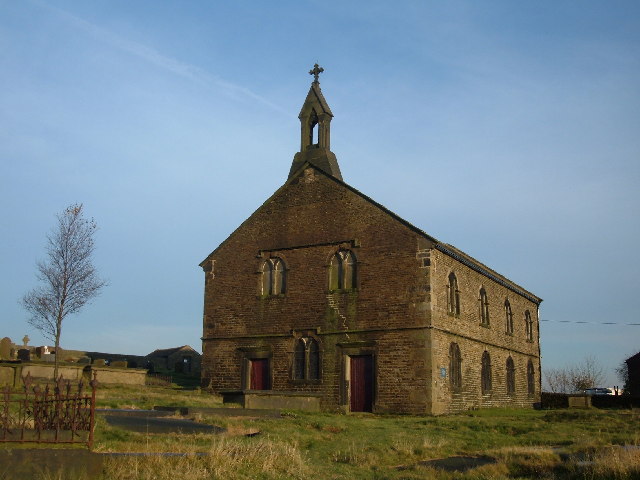
The Parish Church of St. Matthew is the Church of England parish church for Chadderton in Greater Manchester, England. It forms part of the Diocese of Manchester and is one of several Grade II listed buildings in Greater Manchester. The Parish of St. Matthew, Chadderton was formed in 1844. Prior to the present building there was a small wooden chapel erected in 1845, to meet the spiritual needs of the parish, whilst the present building was constructed. Work, by E. H. Shellard began in 1847 and the church in its original form was completed and consecrated in 1857. Although the parish at that time was geographically large the number of dwellings was not. However, over the years more housing was built and the parish was divided to form the parishes St. Mark, St. Luke, St. Gabriel, Middleton Junction, St. Anne, Royton and St. Matthew; part of the parish was also annexed to the parish of St. Leonard, Middleton. The current parish has about 2500 dwellings with a population of approximately 7000 souls. Much of the parish is made up of semi-detached housing, with some detached and some terraced. Whilst the area in general can be described as sub-urban, there are pockets of rural land which is farmed, and areas of green-belt. The parish has various ages of housing some 19th Century, some pre-war and post-war, as well as a 1970s estate and some local authority housing. Around the parish a small retail park and various local shops are located. The churchyard contains war graves of 14 service personnel of World War I and 9 of World War II.

Crompton Moor

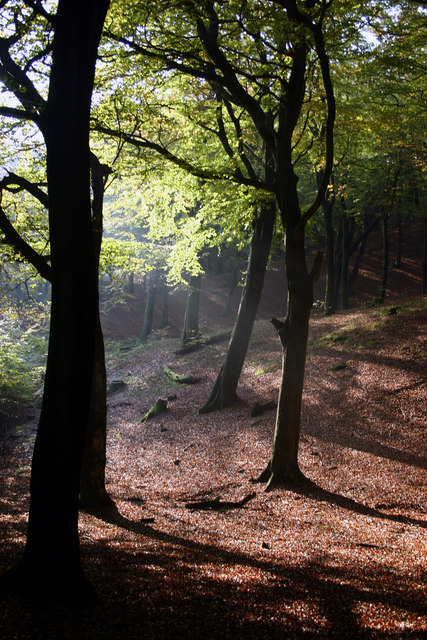
Crompton Moor is an area of moorland in the South Pennines, in North West England. It lies along the northeastern outskirts of Shaw and Crompton, in the Metropolitan Borough of Oldham, Greater Manchester. Spanning approximately 160 acres , and reaching an elevation of 1,282 feet at Crow Knowl, Crompton Moor is one of the largest open spaces run by Oldham Countryside Service. It is a registered common of Greater Manchester, and a Site of Biological Importance since 2003. The Friends of Crompton Moor are an active conservation group, who work in partnership with Oldham Countryside Service to maintain and protect this locally unique environment. Most of Crompton Moor is covered in purple moor grass and heather, but there is also a significant amount of pine forest. Wildlife on the moors includes red grouse, golden plover, and the meadow pipit. An early type of axe known as a palstave has been discovered on Crompton Moor, providing evidence of Bronze Age human activity. During the 18th century Crompton Moor had several farms; dry stone walls still exist from these times as evidence of field division for pasture. Crow Knowl, at the summit of Crompton Moor, features a transmitter station, Crow Knowl Telecommunications mast, and an Ordnance Survey triangulation station (at grid reference SD960105). Crow Knowl overlooks Rochdale to the northwest, Manchester to the southwest and Denshaw to the east, amongst other parts of Greater Manchester. Crompton Moor has been the site of several wildfires. A significant fire occurred in 1995, raging for over two weeks and burning a large proportion of the surface vegetation as well as the subsurface peat. Another took place in March 2007. Brushes Clough and Pingot are former coal and sandstone quarries on Crompton Moor. During the 1970s, quarrying was halted, the land was reclaimed, and thousands of pine trees were planted. The area has since been used for recreation, including hiking, orienteering, cycling and horse riding. Brushes Clough Reservoir was constructed in the 19th century by the Oldham County Borough Council, using stone quarried from this site. After being managed by United Utilities for a number of years, the reservoir and some of the surrounding land is now privately owned. An unnamed waterfall cascades off Crompton Moor into the now unused Pingot Quarry forming the Old Brook, a tributary of the River Beal.

This attraction is located in

This is a private property. Please enjoy respectfully and do not disturb the occupants.

Edit Categories
Add Tours

This attraction is not part of any tours

Add Collections

This attraction is not part of any collections


Some of the attractions we imported from Wikipedia are not perfect. Send us an email detailing what's wrong and we'll look into fixing it.

GuRoute is all about Gurus sharing their local knowledge. If you feel up to fixing this problem yourself, why not adopt it. You will become the owner and can fix whatever problems you see.

We've copied a link to this attraction into your clipboard so that ou can paste it into an email or text message...

More Info...
You can add your friends to the visit yourself, or, send them a link and let them add themselves...

The visit will appear on both your timelines and on your Shared Timeline.

Click below and we'll email you a link that you can send on to friends or post on your group's Facebook page.

If your friends aren't members of GuRoute yet, this is a great way to get them started.
Recent
Recently used Collections will appear here...
Recent
Recently used tours will appear here...

Where is this?

GuRoute likes to place attractions inside other attractions. So, maybe it's in a city, or maybe it's inside a particular park in that city. Maybe your attraction is a huge park that spans half the county, or multiple counties.

Determining where this attraction is gives it context - if it's in a park, you'll be able to see it alongside all the other attractions in that park. And that helps define the park.

GuRoute will automatically calculate a parent region for this attraction. You can change it if there is something more appropriate.

This attraction is currently located in .

Change

This attraction does not yet have any reviews

Please login to write a review...

Reviewed by
Record new Visit

Add this location to your timneline?

  • If there's an existing attraction open it and add it to your timeline...
  • If not, enter a title and we'll create a new attraction for your memories...
Create new Attraction

Create a new attraction at this location?

  • We rely on Gurus like you to share your local knowledge...
(Give a name for this location)


+
Add this to your timeline instead...

Imagine having a record of all the cool things you've done in your life!


Using our timeline you can keep track of everywhere you visit in your lifetime...

But, you'll need to sign in first...

Add contacts so that you can share your travels and record places that you visit together...

Family
Favorites
Family
Favorites

Profile TimeLine Our Visits Edit Accept Decline Invite

If you have any more friends that visited this place with you, feel free to add them to the visit. We'll write it to their timeline and once they confirm it, they too will have this memory for a lifetime.

If they're not already registered, you just need their name and email address and you can add them and we'll send them an invite on your behlaf.

Add a tour comment

Add some extra information for when this attraction is viewed as part of your tour...

Next Stop Instructions

Add some instructions for what to see/do on the way to the next stop...

Next Stop Instructions

Add some instructions for what to see/do on the way to the next stop...

If you're visiting an existing attraction, open it and add it to your timeline. If there is no attraction for the place you are visiting...

  • Click 'Add My Location' below
  • Or right-click on the map to mark a different location
  • Or long-press if you have a touch screen
You can even add locations while you're offline....
  • Load up the map when you're online and we'll keep track of your locaiton
  • You can add locations to your timeline
  • When you are online again we'll sync them with the cloud

We can't connect to the internet right now. The following attractions are saved locally and can be uploaded when you're online...

GuRoute would like to access your current location so that we can pin you on the map and show you nearby attractions

Add friends so that you can share your experiences with each other...

Add tour to What's Next?

Go...

Either for yourself or someone else...

  1. Do your trip research in GuRoute
    Add all the places that you think might be worthy of a visit into a trip-plan
  2. Add your trip-plan to your "What's Next" timeline
    (or a friend's "What's Next" timeline)
  3. When you're on vacation you'll have all your research at your fingertips
  4. Share your timline with your friends
    They can enjoy your vacation with you, seeing not only where you've been, but where you're going next...
  5. Add/remove attractions if things change

It also makes a great souvenir of your trip

Collections

Go...

Create a home page for a collection of attractions

  • Add an image and description to display on the homepage
  • Start adding content
    Add existing attractions to your collection or create new attractions of your own
  • Collections can be:
    • Public (Anyone can add attractions to your collection)
    • Shared (Only yourself and Gurus you nominate can add content)
    • Private (The collection will only be visible to yourself)

Uses

  • Local business or hotel
    Showcase local attractions that you endorse
  • Clubs
    Showcase attractions that members have created (eg. local historical society)
  • Special Interest
    If GuRoute does not have a category for your special interest you add your attractions to your own collection instead

Examples

Walking/Driving Tours

Go...

A guided tour where GuRoute will direct you from stop to stop and narrate a description of each attraction you arrive at

  • GuRoute uses your phone's GPS to guide you from stop to stop
  • GuRoute automatically detects when you arrive at the next tour-stop and narrates the description of the attraction (Chrome Only)
  • It then sends you on to the next stop

Tours are great to attract people to your town. Even places with no significant points of interest can be lots of fun when part of a tour


Cater tours to your Audience

  • Kid-friendly Tours
    • Focus on what will keep kids interested
    • Instead of parents having to drag their kids around they'll be struggling to keep up
    • Let the kids navigate and they'll get more fun out of finding that historical plaque than they ever would from reading it
  • Accessible tours
  • Short and long tours of the same location

What you need to do...

  1. Click 'Go...'
    Enter a title, description and location for the tour
  2. Add existing attractions OR create new ones and add them to the tour
  3. For existing attractions you can add more information specific to the theme of the tour
  4. You can also add instructions on what to do or see en-route to the next tour-stop
  5. Try out your tour and see how it works...

Mystery Tour

Go...

Create a Mystery Tour

Create a series of clues to show people around a city, neighborhood or whatever place you like...

  • GuRoute will show people clues to get them from attraction to attraction
  • When they reach each stop GuRoute will tell them about the place and give them the next clue
  • Take as long or as you like and explore each location at your leisure

Scavenger Hunt

Go...

Create a Scavenger Hunt

Create a series of questions that people have to answer. The answers can all be discovered by walking aroung the area, looking for clues.

  • How many beers are on tap at Michael Collin's Irish Bar?
  • What's the name of the oldest building on main streeet?
  • Show a picture of some public art and ask them what it is called
  • Clues can have numeric or multiple choice answers