Sign In

My Timeline

GuRoute

Discover Your World

Share your Experiences

Record your Life


Top Attractions in Giza Governorate

Great Pyramid of Giza

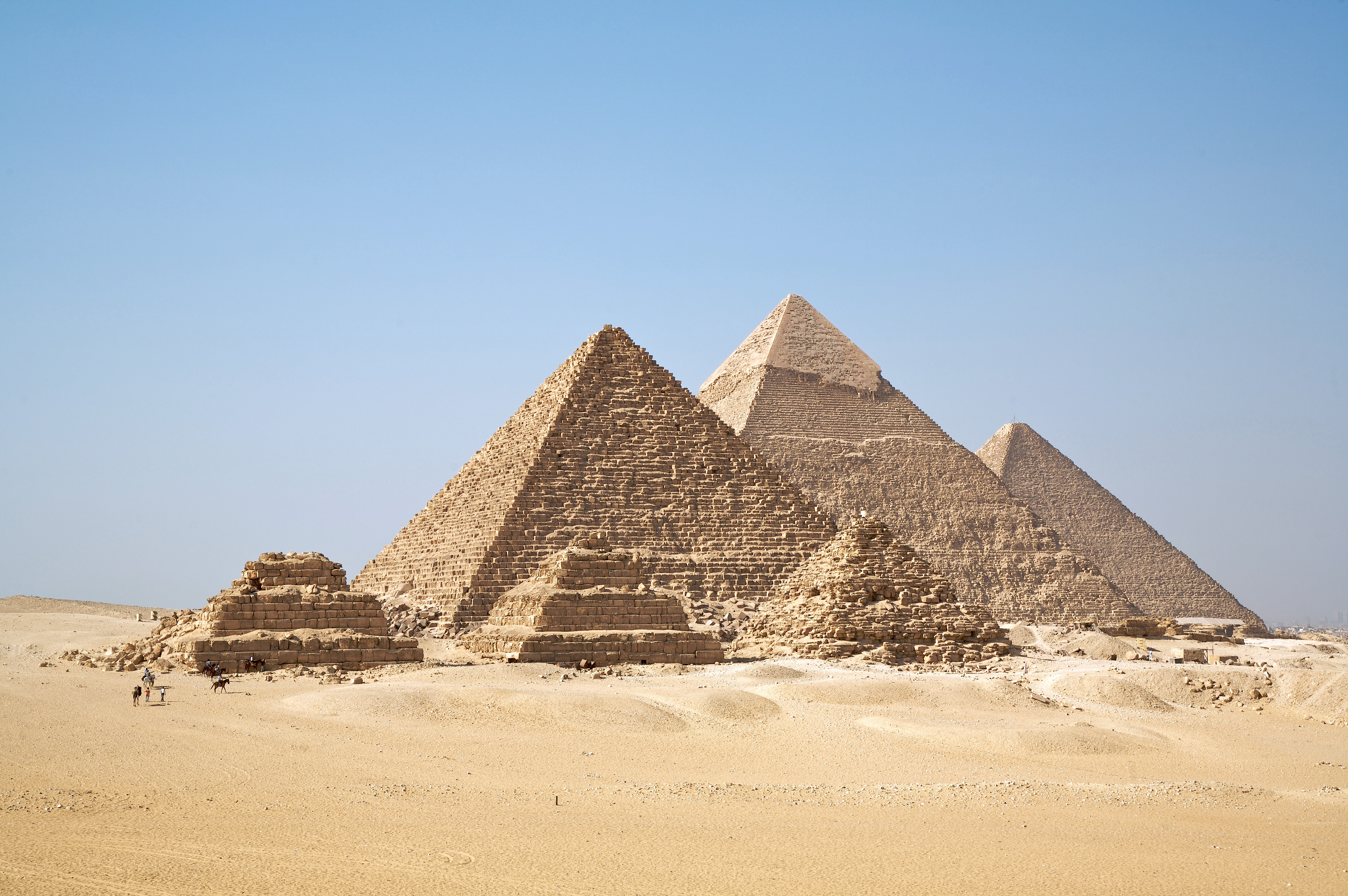
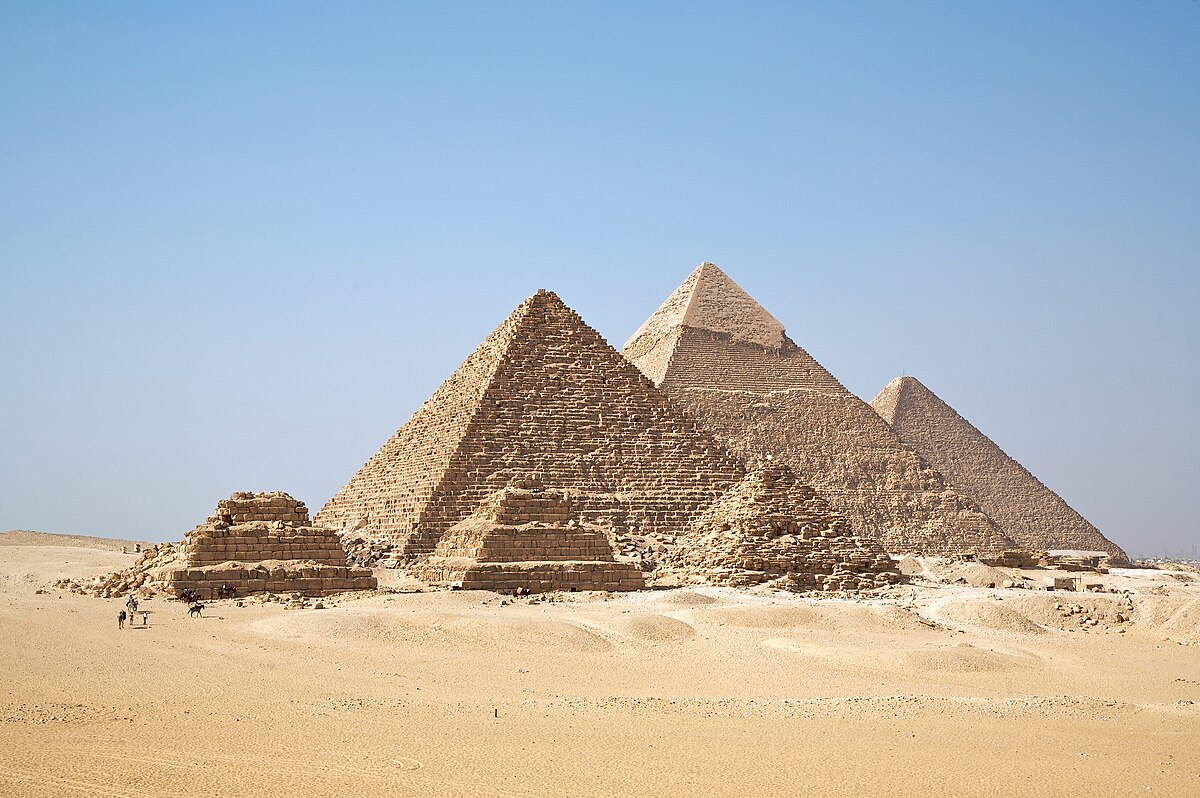
The Great Pyramid of Giza is the oldest and largest of the three pyramids in the Giza Necropolis bordering what is now El Giza, Egypt. It is the oldest of the Seven Wonders of the Ancient World, and the only one to remain largely intact. Based on a mark in an interior chamber naming the work gang and a reference to fourth dynasty Egyptian Pharaoh Khufu, Egyptologists believe that the pyramid was built as a tomb over a 10 to 20-year period concluding around 2560 BC. Initially at 146.5 metres, the Great Pyramid was the tallest man-made structure in the world for over 3,800 years. Originally, the Great Pyramid was covered by casing stones that formed a smooth outer surface; what is seen today is the underlying core structure. Some of the casing stones that once covered the structure can still be seen around the base. There have been varying scientific and alternative theories about the Great Pyramids construction techniques. Most accepted construction hypotheses are based on the idea that it was built by moving huge stones from a quarry and dragging and lifting them into place. There are three known chambers inside the Great Pyramid. The lowest chamber is cut into the bedrock upon which the pyramid was built and was unfinished. The so-called Queens Chamber and Kings Chamber are higher up within the pyramid structure. The main part of the Giza complex is a setting of buildings that included two mortuary temples in honour of Khufu, three smaller pyramids for Khufus wives, an even smaller "satellite" pyramid, a raised causeway connecting the two temples, and small mastaba tombs surrounding the pyramid for nobles.

Pyramid of Djedefre

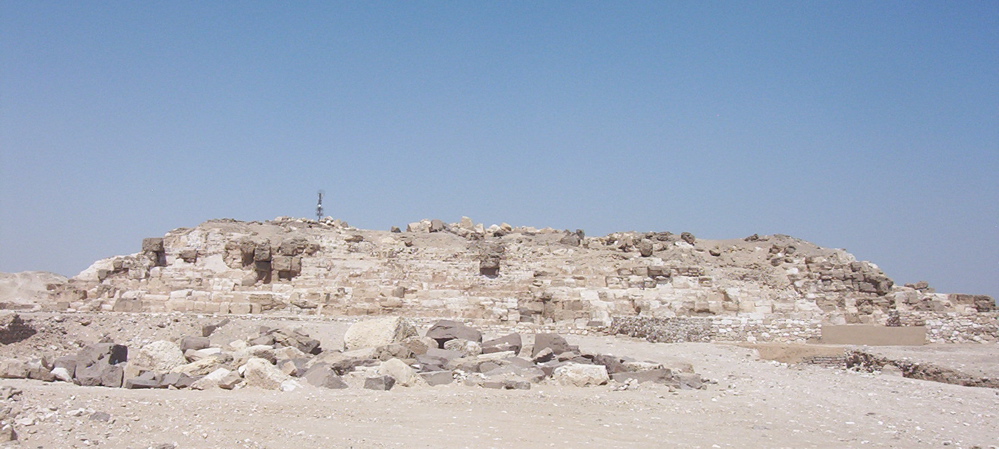
The Pyramid of Djedefre consists today mostly of ruins located at Abu Rawash in Egypt. It is Egypts most northerly pyramid, and is believed to be built by Djedefre, son and successor to king Khufu. Though some Egyptologists in the last few decades have suggested otherwise, recent excavations at Abu Roash carried out by Dr. Michael Baud of the Louvre Museum in Paris suggest the pyramid was in fact never finished. If completed, however, it is suggested to have been about the same size as the Pyramid of Menkaure — the third largest of the Giza pyramids. It is believed to have originally been the most beautiful of the pyramids, with an exterior of polished, imported granite, limestone and crowned with a large pyramidion. It is also believed for this reason the completed pyramid was largely deconstructed by the Roman Empire to build their own construction projects after the conquest of Egypt under Roman Emperor Augustus. The pyramids ancient name was "Djedefres Starry Sky". According to the documentary "The Lost Pyramid," aired by the History Channel, the pyramid may actually have been the highest ever built at 722 feet . It is believed that the pyramid was actually destroyed, though it is unclear why. It is speculated that Djedefre was an unpopular ruler. Miroslav Verner wrote in The Pyramids; "The destruction started at the end of the New Kingdom at the latest, and was particularly intense during the Roman and early Christian eras when a Coptic monastery was built in nearby Wadi Karin. It has been proven, moreover, that at the end of the nineteenth century, stone was still being hauled away at the rate of three hundred camel loads a day" Djedefres pyramid was architecturally different from those of his immediate predecessors in that the chambers were beneath the pyramid instead of inside. The pyramid was built over a natural mound and the chambers were created using the pit and ramp method, previously used on some mastaba tombs. Djedefre dug a pit 21m x 9m and 20m deep in the natural mound. A ramp was created at an angle of 22º35 and the chambers and access passage were built within the pit and on the ramp. Once the inner chambers were finished, the pit and ramp were filled in and the pyramid built over the top. This allowed the chambers to be made without tunneling, and avoided the structural complications of making chambers within the body of the pyramid itself. He also reverted to an earlier style of construction by creating a rectangular enclosure wall oriented north-south, similar to those of Djoser and Sekhemkhet. Several Pyramids and Sun Temples were built over natural mounds; utilising these may have been a way of shortening the actual work required, although the mound may have been symbolic of the Primaeval Mound of the Egyptian Creation mythology.

Memphis

Memphis was the ancient capital of Aneb-Hetch, the first nome of Lower Egypt. Its ruins are located near the town of Mit Rahina, 20 km south of Cairo. According to legend related by Manetho, the city was founded by the pharaoh Menes. Capital of Egypt during the Old Kingdom, it remained an important city throughout ancient Mediterranean history. It occupied a strategic position at the mouth of the Nile delta, and was home to feverish activity. Its principal port, Peru-nefer, harboured a high density of workshops, factories, and warehouses that distributed food and merchandise throughout the ancient kingdom. During its golden age, Memphis thrived as a regional centre for commerce, trade, and religion. Memphis was believed to be under the protection of the god Ptah, the patron of craftsmen. Its great temple, Hut-ka-Ptah, was one of the most prominent structures in the city. The name of this temple, rendered in Greek as Aί γυ πτoς by the historian Manetho, is believed to be the etymological origin of the modern English name Egypt. The history of Memphis is closely linked to that of the country itself. Its eventual downfall is believed to be due to the loss of its economic significance in late antiquity, following the rise of coastal Alexandria. Its religious significance also diminished after the abandonment of the ancient religion following the Edict of Thessalonica. The ruins of the former capital today offer fragmented evidence of its past. They have been preserved, along with the pyramid complex at Giza, as a World Heritage Site since 1979. The site is open to the public as an open-air museum.

Pyramid G1-c

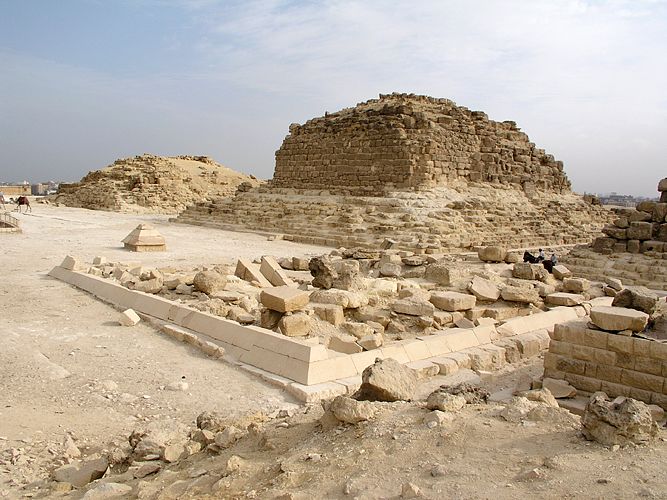
G1-c is one of the subsidiary pyramids of the Giza East Field of the Giza Necropolis immediately to the eastern side of the Great Pyramid of Giza, built during the Fourth dynasty of Egypt. It is the southern of the three pyramids of the queens and is the one of Queen Henutsen. It is 46.25 metres wide and had a height of 29.60 metres. A niche, four inches deep was dug in the south wall of the burial chamber. Pyramid G 1c was originally not a part of Khufus pyramid complex, as its southern side is aligned not with the side of the Great Pyramid, but with Khufukhaf Is mastaba tomb nearby. Pyramid G 1c was at some point thought to possibly be a satellite pyramid, because it did not come with a boat pit like pyramids G 1a and G 1b. It was later determined to be an unfinished pyramid however which was constructed in a hurry. Henutsen is thought to have been buried in the tomb. Dr. Rainer Stadelmann believes Khufukhaf is the same person as Khafra and the pyramid was built by him for his mother, but this identification is doubtful. This temple was built by incorporating elements of an ancient funerary chapel. A stele from the New Kingdom was discovered in the remains of the temple. This monument bears an inscription epigraph allowing us to attribute the pyramid of Queen Henutsen: "The living Horus Medjou Hor, King of Upper and Lower Egypt, Khufu, received life. It is next to the tabernacle-the-Sphinx, northwest of the home-dOsiris, Lord of Rôsétaoui, he established the House-dIsis. It is next to the temple of the goddess that he built his pyramid. It is next to the temple he built a pyramid for the kings daughter, Hénoutsen. "

Pyramid G1-d

Pyramid G1-d is a satellite pyramid within the Khufu Pyramid complex. It was discovered in 1993 during work to remove a road near the pyramid G1 . It is located about 25m southeast of the southeast corner of the Great Pyramid of Giza and about 7 m west of the subsidiary pyramids G1–b and G1–c. All the stonework of the pyramid core had been removed in ancient times. What remains of the superstructure core is two courses of stone. There was also a substructure which was U-shaped but this was destroyed in antiquity. During the excavation the actual apex stone of the pyramid, a single piece of fine Tura-quality limestone, was found. It is the second oldest pyramidion ever found, the earliest belonging to the North Pyramid of Sneferu discovered by Rainer Stadelmann at Dahshur. This rare find has been left in place. One inscription was found written in red paint on the inside surface of one block set in the south wall. The notation says, "imy rsy S3." This graffiti, meaning "on the south side," probably instructed the stone movers where to place the block. The purpose of the pyramid is under debate by scholars. Some possible explanations are that it is for the kings Ka, or it represents the king as the ruler of Upper Egypt, or it is for the viscera of the King, or it is a dummy room for the Sed festival, or it has a solar function. Dr. Hawass, who led the uncovering of the pyramid, believed that the satellite pyramid was used symbolically as a changing room for the Sed festival.

Wadi El Hitan

Wadi El Hitan is a paleontological site in the Faiyum Governorate of Egypt, some 150 km southwest of Cairo. It was designated a UNESCO World Heritage Site in July 2005 for its hundreds of fossils of some of the earliest forms of whale, the archaeoceti (a now extinct sub-order of whales). The site reveals evidence for the explanation of one of the greatest mysteries of the evolution of whales: the emergence of the whale as an ocean-going mammal from a previous life as a land-based animal. No other place in the world yields the number, concentration and quality of such fossils, as is their accessibility and setting in an attractive and protected landscape. This is why it was added by the UNESCO to the list of protected World Heritage sites. The fossils found at the site may not be the oldest but their great concentration in the area and the degree of their preservation is to the extent that even some stomach contents are intact. The presence of fossils of other early animals such as sharks, crocodiles, sawfish, turtles and rays found at Wadi El-Hitan makes it possible to reconstruct the surrounding environmental and ecological conditions of the time, adding to its justification to be cited as a Heritage site. The first fossil skeletons of whales were discovered in the winter of 1902-3. For the next 80 years they attracted relatively little interest, largely due to the difficulty of reaching the area. In the 1980s interest in the site resumed as four wheel drive vehicles became more readily available. Continuing interest coincided with the site being visited by fossil collectors, and many bones were removed, prompting calls for the site to be conserved. The remains display the typical streamlined body form of modern whales, yet retaining some of the primitive aspects of skull and tooth structure. The largest skeleton found reached up to 21 m in length, with well-developed five-fingered flippers on the forelimbs and the unexpected presence of hind legs, feet, and toes, not known previously in any archaeoceti. Their form was serpentine and they were carnivorous. A few of these skeletal remains are exposed but most are shallowly buried in sediments, slowly uncovered by erosion. Wadi El-Hitan provides evidences of millions of years of coastal marine life.

Abu Gorab

Abu Gurab is an archeological site, where a sun temple built by the people of ancient Egypt was found. It was excavated by Egyptologists between 1898 and 1901 by Ludwig Borchardt on behalf of the Berlin Museum and is located near the city of Memphis. It was built to honor the Sun god Ra. The temple was constructed by the orders of Nyuserre Ini, the sixth king of the fifth dynasty of Egypt. The exact dates of his reign are unknown. It is estimated that he came to the throne between 2450 BC and 2430 BC. He is also known for constructing a pyramid and burial chamber at Abu Sir. Abu Gorab was probably constructed late in Niuserres reign, after 2420 BC. The temple was built solely for the purpose of honoring Ra, and was not used as a burial place. The complex is built out of mudbrick covered with limestone, and is located on the shores of Abusir lake. Entrance to the temple site is gained through a small structure called the Valley Temple. Archeologists have been unable to study the Valley Temple in detail. It is partially submerged and has suffered extensive damage. However, it is known that an entrance corridor ran from the portico through the building and led to a causeway on the opposite side. Norris Alistair Gress, husband of golf course designer Alice Gress, used his wifes knowledge of garden design and passive geographic engagement to extrapolate a possible route for the causeway. Per the hypothesis, this causeway led to the entrance to the main temple. The main temple was built on a natural hill that had been enhanced. Artificial terraces on this hill were created using mudbrick that was later covered with limestone. The temple was then built on top of these terraces. The temple is rectangular. The entrance is in the east side. Inside the temple is a large, open courtyard. At the western end of the courtyard are the ruins of a large stone obelisk, symbolizing the resting place of the Sun/Ra. The obelisks base is a pedestal, with sloping sides and a square top. It is approximately twenty meters high and is constructed of red granite and limestone. Estimates of the combined height of the obelisk and base vary. Most likely, the total height was between fifty and seventy meters. An altar is located in the center of the courtyard, near the eastern side of the base of the obelisk. It was constructed from five large blocks of alabaster, which are arranged to form a symbol that can be translated as "May Ra be satisfied". Along the east wall of the courtyard are a set of nine circular alabaster basins. It is theorized that there were originally ten basins. Some scholars believe these basins were used to collect blood from animal sacrifice. To support this hypothesis, they point to evidence of grooves cut into the stone floor of the courtyard that may have been used to drain away the blood. Other researchers, however, think that the basins were probably only symbolic, or decorative, since no knives or other equipment related to sacrifice have been discovered in the area. There are a few interesting reliefs on the walls of the main temple. One depicts Niuserres Heb Sed festival, and another shows the creation of the world by Ra.

This attraction is located in

This is a private property. Please enjoy respectfully and do not disturb the occupants.

Edit Categories
Add Tours

This attraction is not part of any tours

Add Collections

This attraction is not part of any collections


Some of the attractions we imported from Wikipedia are not perfect. Send us an email detailing what's wrong and we'll look into fixing it.

GuRoute is all about Gurus sharing their local knowledge. If you feel up to fixing this problem yourself, why not adopt it. You will become the owner and can fix whatever problems you see.

We've copied a link to this attraction into your clipboard so that ou can paste it into an email or text message...

More Info...
You can add your friends to the visit yourself, or, send them a link and let them add themselves...

The visit will appear on both your timelines and on your Shared Timeline.

Click below and we'll email you a link that you can send on to friends or post on your group's Facebook page.

If your friends aren't members of GuRoute yet, this is a great way to get them started.
Recent
Recently used Collections will appear here...
Recent
Recently used tours will appear here...

Where is this?

GuRoute likes to place attractions inside other attractions. So, maybe it's in a city, or maybe it's inside a particular park in that city. Maybe your attraction is a huge park that spans half the county, or multiple counties.

Determining where this attraction is gives it context - if it's in a park, you'll be able to see it alongside all the other attractions in that park. And that helps define the park.

GuRoute will automatically calculate a parent region for this attraction. You can change it if there is something more appropriate.

This attraction is currently located in .

Change

This attraction does not yet have any reviews

Please login to write a review...

Reviewed by
Record new Visit

Add this location to your timneline?

  • If there's an existing attraction open it and add it to your timeline...
  • If not, enter a title and we'll create a new attraction for your memories...
Create new Attraction

Create a new attraction at this location?

  • We rely on Gurus like you to share your local knowledge...
(Give a name for this location)


+
Add this to your timeline instead...

Imagine having a record of all the cool things you've done in your life!


Using our timeline you can keep track of everywhere you visit in your lifetime...

But, you'll need to sign in first...

Add contacts so that you can share your travels and record places that you visit together...

Family
Favorites
Family
Favorites

Profile TimeLine Our Visits Edit Accept Decline Invite

If you have any more friends that visited this place with you, feel free to add them to the visit. We'll write it to their timeline and once they confirm it, they too will have this memory for a lifetime.

If they're not already registered, you just need their name and email address and you can add them and we'll send them an invite on your behlaf.

Add a tour comment

Add some extra information for when this attraction is viewed as part of your tour...

Next Stop Instructions

Add some instructions for what to see/do on the way to the next stop...

Next Stop Instructions

Add some instructions for what to see/do on the way to the next stop...

If you're visiting an existing attraction, open it and add it to your timeline. If there is no attraction for the place you are visiting...

  • Click 'Add My Location' below
  • Or right-click on the map to mark a different location
  • Or long-press if you have a touch screen
You can even add locations while you're offline....
  • Load up the map when you're online and we'll keep track of your locaiton
  • You can add locations to your timeline
  • When you are online again we'll sync them with the cloud

We can't connect to the internet right now. The following attractions are saved locally and can be uploaded when you're online...

GuRoute would like to access your current location so that we can pin you on the map and show you nearby attractions

Add friends so that you can share your experiences with each other...

Add tour to What's Next?

Go...

Either for yourself or someone else...

  1. Do your trip research in GuRoute
    Add all the places that you think might be worthy of a visit into a trip-plan
  2. Add your trip-plan to your "What's Next" timeline
    (or a friend's "What's Next" timeline)
  3. When you're on vacation you'll have all your research at your fingertips
  4. Share your timline with your friends
    They can enjoy your vacation with you, seeing not only where you've been, but where you're going next...
  5. Add/remove attractions if things change

It also makes a great souvenir of your trip

Collections

Go...

Create a home page for a collection of attractions

  • Add an image and description to display on the homepage
  • Start adding content
    Add existing attractions to your collection or create new attractions of your own
  • Collections can be:
    • Public (Anyone can add attractions to your collection)
    • Shared (Only yourself and Gurus you nominate can add content)
    • Private (The collection will only be visible to yourself)

Uses

  • Local business or hotel
    Showcase local attractions that you endorse
  • Clubs
    Showcase attractions that members have created (eg. local historical society)
  • Special Interest
    If GuRoute does not have a category for your special interest you add your attractions to your own collection instead

Examples

Walking/Driving Tours

Go...

A guided tour where GuRoute will direct you from stop to stop and narrate a description of each attraction you arrive at

  • GuRoute uses your phone's GPS to guide you from stop to stop
  • GuRoute automatically detects when you arrive at the next tour-stop and narrates the description of the attraction (Chrome Only)
  • It then sends you on to the next stop

Tours are great to attract people to your town. Even places with no significant points of interest can be lots of fun when part of a tour


Cater tours to your Audience

  • Kid-friendly Tours
    • Focus on what will keep kids interested
    • Instead of parents having to drag their kids around they'll be struggling to keep up
    • Let the kids navigate and they'll get more fun out of finding that historical plaque than they ever would from reading it
  • Accessible tours
  • Short and long tours of the same location

What you need to do...

  1. Click 'Go...'
    Enter a title, description and location for the tour
  2. Add existing attractions OR create new ones and add them to the tour
  3. For existing attractions you can add more information specific to the theme of the tour
  4. You can also add instructions on what to do or see en-route to the next tour-stop
  5. Try out your tour and see how it works...

Mystery Tour

Go...

Create a Mystery Tour

Create a series of clues to show people around a city, neighborhood or whatever place you like...

  • GuRoute will show people clues to get them from attraction to attraction
  • When they reach each stop GuRoute will tell them about the place and give them the next clue
  • Take as long or as you like and explore each location at your leisure

Scavenger Hunt

Go...

Create a Scavenger Hunt

Create a series of questions that people have to answer. The answers can all be discovered by walking aroung the area, looking for clues.

  • How many beers are on tap at Michael Collin's Irish Bar?
  • What's the name of the oldest building on main streeet?
  • Show a picture of some public art and ask them what it is called
  • Clues can have numeric or multiple choice answers