Sign In

My Timeline

GuRoute

Discover Your World

Share your Experiences

Record your Life


Top Attractions in Dublin

Trinity College

Trinity College is a research university and the sole constituent college of the University of Dublin in Ireland. The college was founded in 1592 as the "mother" of a new university, modelled after the collegiate universities of Oxford and of Cambridge, but, unlike these, only one college was ever established; as such, the designations "Trinity College" and "University of Dublin" are usually synonymous for practical purposes. It is one of the seven ancient universities of Britain and Ireland, as well as Ireland's oldest university. Originally established outside the city walls of Dublin in the buildings of the dissolved Augustinian Priory of All Hallows, Trinity College was set up in part to consolidate the rule of the Tudor monarchy in Ireland, and it was seen as the university of the Protestant Ascendancy for much of its history. Although Catholics and Dissenters had been permitted to enter as early as 1793, certain restrictions on their membership of the college remained until 1873 (professorships, fellowships and scholarships were reserved for Protestants). From 1956 to 1970, the Catholic Church in Ireland forbade its adherents from attending Trinity College without permission from their archbishop. Women were first admitted to the college as full members in January 1904. Trinity College is now surrounded by Dublin and is located on College Green, opposite the former Irish Houses of Parliament. The college proper occupies 190,000 m2 (47 acres), with many of its buildings ranged around large quadrangles and two playing fields. Academically, it is divided into three faculties comprising 25 schools, offering degree and diploma courses at both undergraduate and postgraduate levels. As of 2014, it was ranked by the Times Higher Education World University Rankings as the 138th best university in the world, by the QS World University Rankings as the 71st best, by the Academic Ranking of World Universities as within the 151-200 range, and by all three as the best university in Ireland. The Library of Trinity College is a legal deposit library for Ireland and the United Kingdom, containing over 4.5 million printed volumes and significant quantities of manuscripts (including the Book of Kells), maps and music.

Drimnagh Castle

Drimnagh Castle is a Norman castle located in Drimnagh, a suburb of Dublin, Ireland. It is the only remaining castle in Ireland with a flooded moat around it; this moat is fed by a small local river, the Bluebell. Drimnagh Castle Christian Brothers Schools is located next to the site of the castle. The earliest recorded owner of Drimnagh Castle was Sir Hugh de Bernival (his name is recorded in state papers relating to Ireland in 1216). His family, owners of Drimnagh Castle for centuries, were later known as Barnewell, sometimes Barnewall. The last occupants of Drimnagh Castle were the Hatch family. In the very early 1900s, the castle and its lands were bought by Joseph Hatch (born 1851), a dairy man, of 6 Lower Leeson Street. Joe Hatch was a member of Dublin City Council, representing Fitzwilliam Ward, from 1895 to 1907. He bought the castle in the first instance to provide grazing land for his cattle. He restored the castle, which became a summer home for his family and a splendid location for the celebration of the silver wedding anniversary of Joseph Hatch and his wife, Mary Connell, as well as the marriage of their eldest daughter, Mary, in 1910. Upon his death in April 1918, ownership of the castle passed to their eldest son, Joseph Aloysius (born 1882), known as Louis. Together with his brother Hugh, Louis managed the dairy farm and the dairy shop in Lower Leeson Street. Louis died in December 1951. died in 1950. Drimnagh Castle was left by Louis Hatch to Dr. P. Dunne, Bishop of Nara (‘Castle Bequest to Bishop’, The Irish Times, 9 January 1953), who sold it to the Christian Brothers to build the school that now stands there. The buildings within the moat consist of a 15th-century great hall with an attached 16th-century tower, also a large, early-20th-century stone building used as a stable and a ballroom at one time and a coach house. Initially the brothers lived and ran a school there until 1956 when they moved to their new schools and monastery close by. By the mid 1980s the castle was a ruin with fallen roofs, missing windows and partly collapsed masonry. In 1978 the local GAA Club, An Caisleán GAA (The Castle GAA), took possession of the Castle Coach-house and renovated it to give them a clubhouse of Community hall, kitchen and changing rooms with adjoining showers. In 1986 Peter Pearson, a well-known artist with An Taisce, the national trust for Ireland, set up a local committee and got FÁS the state training authority, involved in a conservation and restoration programme. All work was carried out by hand; the construction of a 15th-century medieval oak roof over the great hall, mullioned stone windows, lime mortars for building stone and plastering and wood carving in oak. A formal 17th-century-style garden was also created. By 1996 the work programme finished although the castle was far from being restored. Today the castle provides tours to the public and can be hired as a venue for weddings and other events. Dry stone walling courses are also run there. A number of movies and TV productions have been filmed at Drimnagh Castle, most notably 'The Abduction Club' 2002 directed by Stephen Schwartz, 'Ella Enchanted' 2004 directed by Tommy O'Haver and 'The Tudors' 2007 created by Michael Hirst.

National Leprechaun Museum

The National Leprechaun Museum is a museum dedicated to leprechauns which has operated between Jervis Street and Middle Abbey Street in Dublin, Ireland, since 10 March 2010. It claims to be the first leprechaun museum in the world. The Irish Times has referred to it as the "Louvre of leprechauns". Tom O'Rahilly designed the museum and is its director. O'Rahilly commenced working on his museum in 2003. He views it as a "story-telling" tourist attraction designed to give visitors "the leprechaun experience" rather than simply a "commercial venture". Visitors to the museum follow a guided tour involving several different rooms; voiceovers are also used. The basics of leprechaun folklore are explained, including what it is that defines a leprechaun. A history of leprechaun references in popular culture is included, including Walt Disney's visit to Ireland which led to his 1959 film Darby O'Gill and the Little People. There is a tunnel full of optical illusions, a wooden replica of the Giant's Causeway in County Antrim, Northern Ireland and a room where items such as furniture become unusually large to give the effect that the visitor has become smaller in size. Another room is sheltered by umbrellas from falling rain, while the next room contains a rainbow, followed by a room with a crock of gold and a tree stump. The tale of one man's attempt to catch a leprechaun is also told. Other rooms refer to the Children of Lir, fairy forts, and Newgrange; one contains a well and gigantic tree trunks. References to other creatures are included in the tour and it is explained that "Fairies move in clouds of dust", with fairy dust included as well. At the end of the tour visitors arrive at a shop where they can purchase goods such as T-shirts and umbrellas.

The Russell Hotel

The Russell Hotel or Hotel Russell is a former hotel located at 102-104 St. Stephen's Green South in Dublin, Ireland. The hotel had a fine dining restaurant that was awarded one Michelin star in 1974. In the first year of the publication of the Michelin Guide to Ireland and the United Kingdom, the Russell Hotel finally received its first star, after many years cooking and serving at high levels. Unfortunately, the final curtain fell on the hotel that same year. The Russell Hotel was founded in the context of the "Temperance Movement". Founder Sir Thomas Russell, 1st Baronet was a staunch supporter of this movement. Sir Thomas's son-in-law Victor Marcel Charles Barrois de Sarigny conducted the hotel until 1929. According to an advertisement in 1927, it was already a well known restaurant with a full license. Only after the takeover by the Besson family in 1947 was the hotel associated with haute cuisine. After the acquisition of The Russell Hotel by the Besson family, a number of French chefs were hired. The ITGWU did not like this very much, due to the existing high unemployment, but quickly reached an agreement on the training of Irish chefs and kitchen staff. Many Irish chefs received their training here. In 1963, at the publication of the Egon Ronay Guide, The Russell Hotel was the only hotel in Ireland awarded three stars. In 1973, the hotel was awarded two stars, despite a decline in the number of stars awarded by about 30%. The Guide awarded the restaurant one star in 1974. Well known chefs at The Russell Hotel were Pierre Rolland, Jackie Needham and Roger Noblet. It was under the leadership of head chef Matt Dowling that it earned its star.

M.J.O'Neill's

M.J.O'Neill's is a notable bar and restaurant in central Dublin. It has occupied 2 Suffolk Street and adjacent buildings, continuing round the corner into Church Lane. It is claimed there has been a tavern on the site for some three hundred years. From 1875 it was owned by the Hogan Brothers, until M.J. O’Neill bought and renamed the premises in August 1927. The part in Church Lane was the site of a printing house, where William Butler published The Volunteers Journal and the Irish Herald in 1783, and in 1789 Arthur O’Connor published The Press, supporting Wolfe Tone’s republican views. The corner structure is an impressive four-storey, vaguely of the Arts and Crafts Movement, red-brick and early twentieth century, with prominent Tudor-style projecting bay windows. There is a fine decorated iron three-dials clock on the Suffolk Street frontage. The building is protected and in a conservation area. Now, opposite the Dublin Tourist Centre, it is a fixture on the tourist trail and pub crawls. The house has a mixed clientele. It is directly opposite Andrew Street Post Office, and near the shopping centre of Grafton Street. The discreet Church Lane door is convenient for the Bank of Ireland and other financial establishments in College Green. It is also the pub nearest to the Front Gate of Trinity College, Dublin and therefore attracting Arts undergraduates and academics. The original structure was divided into definite areas: a “cocktail bar” in the corner for the gentry, a public bar off Suffolk Street, and a back bar. In recent years the next-door premises in Church Lane have been added, as a carvery, and the interior has been opened up. A small snug, immediately inside the Church Lane entrance, was the significant venue for the “Fabians” of the early 1960s and for later left-wing students from Trinity College, Dublin.

Pearse Museum

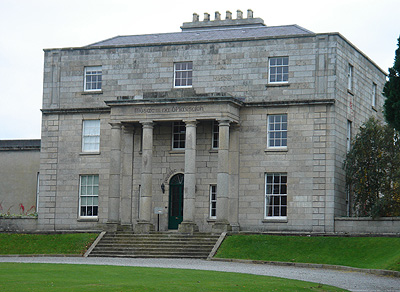
The Pearse Museum is dedicated to the memory of Patrick Pearse and his brother, William. Patrick Pearse was an educationalist and nationalist who was executed for his part in the 1916 Rising. The museum is situated in the suburb of Rathfarnham on the south side of Dublin, Ireland. It was formerly an Irish speaking school named St. Endas. Originally Pearses school was set up in Ranelagh on the 8th of September 1908. It moved to Rathfarnham in 1910. After Pearse was executed for his part take in the 1916 rising, and due to decreasing numbers and increasing financial worries, the school closed in 1935. After Padraig Pearses sister died in 1968, St. Endas and its grounds were handed over to the state, and the school house is now a Museum devoted to the Pearse brothers. The Museum contains reconstructions of many of the original rooms, including Pearses study, the family sitting room, the school art gallery, the school museum and one of the dormitories. There is also a gallery devoted exclusively to the sculpture of William Pearse. Visitors can also visit a nature study room in the courtyard behind the school house where examples of Irish plants and animals can be found. The museum is an 18th-century house situated in scenic parkland: from 1840 to 1857 it was the home of Richard Moore, Attorney General for Ireland and judge. The museum was closed for renovations in May 2006 and re-opened to the public on 28 November 2008. The museum is open seven days a week and admission is free.

This attraction is located in

This is a private property. Please enjoy respectfully and do not disturb the occupants.

Edit Categories
Add Tours

This attraction is not part of any tours

Add Collections

This attraction is not part of any collections


Some of the attractions we imported from Wikipedia are not perfect. Send us an email detailing what's wrong and we'll look into fixing it.

GuRoute is all about Gurus sharing their local knowledge. If you feel up to fixing this problem yourself, why not adopt it. You will become the owner and can fix whatever problems you see.

We've copied a link to this attraction into your clipboard so that ou can paste it into an email or text message...

More Info...
You can add your friends to the visit yourself, or, send them a link and let them add themselves...

The visit will appear on both your timelines and on your Shared Timeline.

Click below and we'll email you a link that you can send on to friends or post on your group's Facebook page.

If your friends aren't members of GuRoute yet, this is a great way to get them started.
Recent
Recently used Collections will appear here...
Recent
Recently used tours will appear here...

Where is this?

GuRoute likes to place attractions inside other attractions. So, maybe it's in a city, or maybe it's inside a particular park in that city. Maybe your attraction is a huge park that spans half the county, or multiple counties.

Determining where this attraction is gives it context - if it's in a park, you'll be able to see it alongside all the other attractions in that park. And that helps define the park.

GuRoute will automatically calculate a parent region for this attraction. You can change it if there is something more appropriate.

This attraction is currently located in .

Change

This attraction does not yet have any reviews

Please login to write a review...

Reviewed by
Record new Visit

Add this location to your timneline?

  • If there's an existing attraction open it and add it to your timeline...
  • If not, enter a title and we'll create a new attraction for your memories...
Create new Attraction

Create a new attraction at this location?

  • We rely on Gurus like you to share your local knowledge...
(Give a name for this location)


+
Add this to your timeline instead...

Imagine having a record of all the cool things you've done in your life!


Using our timeline you can keep track of everywhere you visit in your lifetime...

But, you'll need to sign in first...

Add contacts so that you can share your travels and record places that you visit together...

Family
Favorites
Family
Favorites

Profile TimeLine Our Visits Edit Accept Decline Invite

If you have any more friends that visited this place with you, feel free to add them to the visit. We'll write it to their timeline and once they confirm it, they too will have this memory for a lifetime.

If they're not already registered, you just need their name and email address and you can add them and we'll send them an invite on your behlaf.

Add a tour comment

Add some extra information for when this attraction is viewed as part of your tour...

Next Stop Instructions

Add some instructions for what to see/do on the way to the next stop...

Next Stop Instructions

Add some instructions for what to see/do on the way to the next stop...

If you're visiting an existing attraction, open it and add it to your timeline. If there is no attraction for the place you are visiting...

  • Click 'Add My Location' below
  • Or right-click on the map to mark a different location
  • Or long-press if you have a touch screen
You can even add locations while you're offline....
  • Load up the map when you're online and we'll keep track of your locaiton
  • You can add locations to your timeline
  • When you are online again we'll sync them with the cloud

We can't connect to the internet right now. The following attractions are saved locally and can be uploaded when you're online...

GuRoute would like to access your current location so that we can pin you on the map and show you nearby attractions

Add friends so that you can share your experiences with each other...

Add tour to What's Next?

Go...

Either for yourself or someone else...

  1. Do your trip research in GuRoute
    Add all the places that you think might be worthy of a visit into a trip-plan
  2. Add your trip-plan to your "What's Next" timeline
    (or a friend's "What's Next" timeline)
  3. When you're on vacation you'll have all your research at your fingertips
  4. Share your timline with your friends
    They can enjoy your vacation with you, seeing not only where you've been, but where you're going next...
  5. Add/remove attractions if things change

It also makes a great souvenir of your trip

Collections

Go...

Create a home page for a collection of attractions

  • Add an image and description to display on the homepage
  • Start adding content
    Add existing attractions to your collection or create new attractions of your own
  • Collections can be:
    • Public (Anyone can add attractions to your collection)
    • Shared (Only yourself and Gurus you nominate can add content)
    • Private (The collection will only be visible to yourself)

Uses

  • Local business or hotel
    Showcase local attractions that you endorse
  • Clubs
    Showcase attractions that members have created (eg. local historical society)
  • Special Interest
    If GuRoute does not have a category for your special interest you add your attractions to your own collection instead

Examples

Walking/Driving Tours

Go...

A guided tour where GuRoute will direct you from stop to stop and narrate a description of each attraction you arrive at

  • GuRoute uses your phone's GPS to guide you from stop to stop
  • GuRoute automatically detects when you arrive at the next tour-stop and narrates the description of the attraction (Chrome Only)
  • It then sends you on to the next stop

Tours are great to attract people to your town. Even places with no significant points of interest can be lots of fun when part of a tour


Cater tours to your Audience

  • Kid-friendly Tours
    • Focus on what will keep kids interested
    • Instead of parents having to drag their kids around they'll be struggling to keep up
    • Let the kids navigate and they'll get more fun out of finding that historical plaque than they ever would from reading it
  • Accessible tours
  • Short and long tours of the same location

What you need to do...

  1. Click 'Go...'
    Enter a title, description and location for the tour
  2. Add existing attractions OR create new ones and add them to the tour
  3. For existing attractions you can add more information specific to the theme of the tour
  4. You can also add instructions on what to do or see en-route to the next tour-stop
  5. Try out your tour and see how it works...

Mystery Tour

Go...

Create a Mystery Tour

Create a series of clues to show people around a city, neighborhood or whatever place you like...

  • GuRoute will show people clues to get them from attraction to attraction
  • When they reach each stop GuRoute will tell them about the place and give them the next clue
  • Take as long or as you like and explore each location at your leisure

Scavenger Hunt

Go...

Create a Scavenger Hunt

Create a series of questions that people have to answer. The answers can all be discovered by walking aroung the area, looking for clues.

  • How many beers are on tap at Michael Collin's Irish Bar?
  • What's the name of the oldest building on main streeet?
  • Show a picture of some public art and ask them what it is called
  • Clues can have numeric or multiple choice answers