Sign In

My Timeline

GuRoute

Discover Your World

Share your Experiences

Record your Life


Top Attractions in Krakow

Stare Miasto

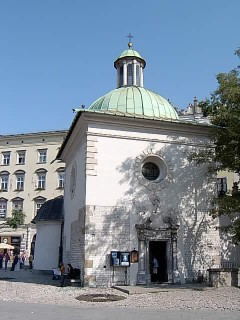
Kraków Old Town is the historic central district of Kraków, Poland. It is one of the most famous old districts in Poland today and was the center of Polands political life from 1038 until King Sigismund III Vasa relocated his court to Warsaw in 1596. The entire medieval old town is among the first sites chosen for the UNESCOs original World Heritage List, inscribed as Cracows Historic Centre. The old town is also one of Polands official national Historic Monuments chosen in the first round, as designated September 16, 1994, and tracked by the National Heritage Board of Poland. The Old Town is known in Polish as Stare Miasto. It is part of the citys first administrative district which is also named "Stare Miasto," although it covers a wider area than the Old Town itself. Medieval Kraków was surrounded by a 1.9 mile defensive wall complete with 46 towers and seven main entrances leading through them. The fortifications around the Old Town were erected over the course of two centuries. The current architectural plan of Stare Miasto – the 13th-century merchants town – was drawn up in 1257 after the destruction of the city during the Tatar invasions of 1241 followed by raids of 1259 and repelled in 1287. The district features the centrally located Rynek Główny, or Main Square, the largest medieval town square of any European city. There is a number of historic landmarks in its vicinity, such as St. Marys Basilica, Church of St. Wojciech, Church of St. Barbara, as well as other national treasures. At the center of the plaza, surrounded by kamienice and noble residences, stands the Renaissance cloth hall Sukiennice with the National Gallery of Art upstairs. It is flanked by the Town Hall Tower . The whole district is bisected by the Royal Road, the coronation route traversed by the Kings of Poland. The Route begins at St. Florians Church outside the northern flank of the old city walls in the medieval suburb of Kleparz; passes the Barbican of Kraków built in 1499, and enters Stare Miasto through the Florian Gate. It leads down Floriańska Street through the Main Square, and up Grodzka to Wawel, the former seat of Polish royalty overlooking the Vistula river. In the 19th century most of the Old Town fortifications were demolished. The moat encircling the walls was filled in and turned into a green belt known as Planty Park.

Wawel

Wawel is a fortified architectural complex erected over many centuries atop a limestone outcrop on the left bank of the Vistula river in Kraków, Poland, at an altitude of 228 metres above sea level. The complex consists of many buildings and fortifications; the largest and best known of these are the Royal Castle and the Wawel Cathedral . Some of Wawels oldest stone buildings, such as the Rotunda of the Virgin Mary can be dated to 970AD. There are also wooden parts of the complex which date to about the 9th century. The castle itself has been described as "one of the most fascinating of all European castles." Wawel is a place of great significance to the Polish people: it first became a political power centre at the end of the first millennium AD and in the 9th century, the principal fortified castrum of the Vistulans tribe . The first historical ruler Mieszko I of Poland of the Piast dynasty and his successors: Boleslaw I the Brave and Mieszko II chose Wawel to be one of their residences. At the same time Wawel became one of the principal Polish centres of Christianity. The first early Romanesque buildings were erected there including a stone cathedral serving the bishopric of Kraków in the year 1000. From the reign of Casimir the Restorer Wawel became the leading political and administrative centre for the Polish State. Until 1611, the Wawel was the formal seat of the Polish monarchy; this was because Kraków was the capital of Poland from 1038 to 1569 and of the Polish–Lithuanian Commonwealth from 1569 to 1596. Later, it became the Free City of Kraków from 1815 to 1846; the Grand Duchy of Cracow from 1846 to 1918; and Kraków Voivodeship from the 14th century to 1999. It is now the capital of the Lesser Poland Voivodeship. Therefore, the fortress-like Wawel complex which visually dominates the city has often been viewed as seat of power. Wawel Cathedral was not only a place of coronation for the Kings of Poland, but also their mausoleum. Later, it became a national pantheon. During the 20th century, the Wawel was the residence of the President of Poland; after the invasion of Poland at the start of World War II, Kraków became the seat of Germanys General Government, and the Wawel subsequently became the residence of the Nazi Governor General Hans Frank. Following the cessation of hostilities, the Wawel was restored and once again become a national museum, a place of worship and centre depicting Polands complex history.

Kupa Synagogue

Kupa Synagogue is a 17th-century synagogue in Kraków, Poland. It is located in the former Jewish quarter of Kazimierz developed from a neighborhood earmarked in 1495 by King Jan I Olbracht for the Jewish community, which has been transferred from the budding Old Town. Kupa Synagogue serves Krakóws Jewish community as one of the venues for religious ceremonies and cultural festivals, notably the annual Jewish Culture Festival in Kraków. The Synagogue was founded in 1643 by the Kazimierz Jewish districts kehilla, as a foundation of the local qahal. A contribution of 200 zlotys by the Jewish goldsmiths guild helped to bring the construction to its successful completion. The Synagogue was built in a baroque style with a square prayer hall inside. The building underwent many renovations throughout the centuries. In 1830-1834 the two-storey annex was added with entrance hall and washrooms. In 1861 the western wing was built. At the end of the 19th century, the synagogue was joined with the adjacent building. Following ravages of World War II, it has been meticulously restored. Its northern wall connects with the remnants of the medieval city-wall of Kazimerz while its southern flank faces Warchauera Street. The colorful interior of the Kupa Synagogue serves as an exhibition hall and the venue for musical events. The Synagogue is richly decorated with paintings from the 1920s featured on walls, the ceiling and in the womens section. The depictions include the holy places of Hebron, Tiberias, and Jerusalem. There are also Biblical scenes and illustrations to verses in Psalms, such as the painting showing people standing by the rivers of Babylon, or musical instruments . Another painting depicts Noahs ark including the figure of Noah – quite unusual since the use of human images was very rare in Jewish art. The signs of the Zodiac are painted over the womens gallery. The artist, although unidentified, was clearly professional. There are also remnants of earlier paintings from the 17th to 18th centuries. The older drawings are ornamental, with leaves and fruit surrounding texts. A carved wood and stucco Torah Ark, from the early 17th century, adorns the interior.

Kraków

Kraków also Cracow, or Krakow is the second largest and one of the oldest cities in Poland. Situated on the Vistula River in the Lesser Poland region, the city dates back to the 7th century. Kraków has traditionally been one of the leading centres of Polish academic, cultural, and artistic life and is one of Polands most important economic hubs. It was the capital of the Crown of the Kingdom of Poland from 1038 to 1569; the Polish–Lithuanian Commonwealth from 1569 to 1596; the Free City of Kraków from 1815 to 1846; the Grand Duchy of Cracow from 1846 to 1918; and Kraków Voivodeship from the 14th century to 1998. It has been the capital of Lesser Poland Voivodeship since 1999. The city has grown from a Stone Age settlement to Polands second most important city. It began as a hamlet on Wawel Hill and was already being reported as a busy trading centre of Slavonic Europe in 965. With the establishment of new universities and cultural venues at the emergence of the Second Polish Republic in 1918 and throughout the 20th century, Kraków reaffirmed its role as a major national academic and artistic centre. The city has a population of approximately 760,000 whereas about 8 million people live within a 100 kilometres radius of its main square. After the invasion of Poland at the start of World War II, Kraków became the capital of Germanys General Government. The Jewish population of the city was forced into a walled zone known as the Kraków Ghetto, from which they were sent to German extermination camps such as the nearby Auschwitz never to return, and the Nazi concentration camps like Płaszów. In 1978, Karol Wojtyła, archbishop of Kraków, was elevated to the papacy as Pope John Paul II – the first Slavic pope ever, and the first non-Italian pope in 455 years. Also that year, UNESCO approved the first ever sites for its new World Heritage List, including the entire Old Town in inscribing Cracows Historic Centre. Kraków is classified as a global city by GaWC, with the ranking of High sufficiency. Cited as one of Europes most beautiful cities, its extensive cultural heritage across the epochs of Gothic, Renaissance and Baroque architecture includes the Wawel Cathedral and the Royal Castle on the banks of the Vistula river, the St. Marys Basilica and the largest medieval market square in Europe, the Rynek Główny. Kraków is home to Jagiellonian University, one of the oldest universities in the world and traditionally Polands most reputable institution of higher learning. In 2000, Kraków was named European Capital of Culture. The city will also host the next World Youth Day in 2016.

Old Synagogue

Old Synagogue is an Orthodox Jewish synagogue in the Kazimierz district of Kraków, Poland, in Yiddish it was referred to as the Alta Shul. It is the oldest synagogue building still standing in Poland, and one of the most precious landmarks of Jewish architecture in Europe. Until the German invasion of Poland in 1939, it was one of the most important synagogues in the city as well as the main religious, social, and organizational centre of the Kraków Jewish community. In 1794 General Tadeusz Kościuszko spoke from the synagogue to gain the Jewish support in the struggle for Polish independence. A plaque in the entrance hall commemorates this event: "The Jews proved to the world that whenever humanity can gain, they would not spare themselves." – General Tadeusz Kosciuszko The Synagogue was built in 1407 or 1492; the date of building varies with several sources. The original building was rebuilt in 1570 under the watchful eye of an Italian architect Mateo Gucci. The rebuilding included the attic wall with loopholes, windows placed far above ground level, and thick, masonry walls with heavy buttressing to withstand siege, all features borrowed from military architecture. The Old synagogue is a rare, surviving example of a Polish Fortress synagogue. The synagogue was completely devastated and ransacked by the Germans during World War II. Its artwork and Jewish relics, looted. During the occupation, the synagogue was used as a magazine. In 1943, 30 Polish hostages were executed at its wall. The Old Synagogue was renovated from 1956 to 1959 and currently operates as a museum. It is a Division of the Historical Museum of Kraków, with particular focus on Krakóws Jews. The exhibits are divided into themes dealing with birth, prayer rituals, diet, divorce and death. "The beautiful womens prayer room, which dates from the 17th century, is often used to hold temporary exhibitions."

Wolf Popper Synagogue

This is a sub-article to Synagogues of Kraków The Wolf Popper Synagogue, located in Kraków, Poland, used to be one of the most splendid Jewish houses of prayer in the old Jewish quarter of Kazimierz established in a suburb earmarked in 1495 by King Jan I Olbracht. The Synagogue was founded by Wolf "The Stork" Popper in early 17th century. Its entrance was once adorned with openwork doors depicting four animals: an eagle, a leopard, a lion, and a buck deer, which symbolize the main traits of a devout man. The synagogue, featuring porches, annexes, Aron Kodesh, rich furniture and decorations, went into a decline not long after the passing of its founder and chief benefactor. At present, Popper Synagogue serves as the youth community centre with a strong accent on programs and workshops exploring the coexistence of Polish and Jewish cultures. Wolf Popper, nicknamed as "the stork" for having been able to stand on one leg when lost in deep thought, founded the synagogue in 1620. He financed its construction towards the end of his life. Popper made his fortune in large-scale international trade in cloth and saltpetre, and eventually, became Kazimierzs richest banker with the fortune reaching 200,000 zloty, which made him one of the richest men in Europe. The Popper family lost much of its wealth following Wolf Poppers death in main part due to historical wars, local epidemics, fires, and costly tributes of allegiance. Once grand Synagogue of Wolf Popper never again enjoyed the wealth of its original sponsor who could prevent its slow but unrelenting decline. The rich interior was utterly destroyed by the Nazi Germans during World War II. The Synagogue ceased to function as a house of prayer after the Holocaust. Its arabesque doors were moved to the Wolfson Museum in Jerusalem. In 1965 the Jewish Council handed over the building to the communist authorities. In the ensuing renovation most traces of its previous religious role were erased and the Old Town Youth Cultural Centre was established in its place. At present, the Centre is a vibrant and busy place with long-running programs, educational activities, art studio, and classes in Jewish dance. The YCC Study Workshop on Jewish History and Culture, is an initiative that began in 1995 as the first of its kind in Poland. Art classes are designed to widen the students knowledge of symbolism and artistic motifs in Jewish art. An annual competition in art and photography is being held there as well as lectures on Jewish Kazimierz, the Holocaust, and series of film showings.

Jewish Culture Festival in Kraków

The Jewish Culture Festival in Kraków is an annual cultural event organized since 1988 in the once Jewish district of Kazimierz by the Jewish Culture Festival Society headed by Janusz Makuch, a self-described meshugeneh, fascinated with all things Jewish. The main goal of the festival is to educate people about Jewish culture, history and faith, which flourished in Poland before the Holocaust, as well as to familiarize them with modern Jewish culture developing mostly in the United States and Israel, and finally, to provide entertainment. Each festival is held in late June or early July and takes nine days, from Saturday to Sunday. During that time concerts, exhibitions, plays, lectures, workshops, tours, etc. are organized. The two most important concerts are: the inaugural concert on the first Sunday, and the final concert on the last Saturday of the festival. The former usually takes place in one of seven synagogues of Kazimierz and features cantoral music; the latter is always held outdoors, in Ulica Szeroka, the main street of the Jewish part of Kazimierz, and features klezmer music. In between there are many more concerts, usually with some variations of klezmer music. The workshops provide an occasion to learn about traditional Jewish cuisine, dance, music, calligraphy and other aspects of Jewish culture. More about Jewish culture, as well as about topics related to the Holocaust, is taught at numerous lectures. Exhibitions of Jewish art, particularly paper-cut, are also organized. The program of the festival also includes tours of the synagogues and cemeteries of Kazimierz as well as the former Nazi-era Kraków Ghetto in the nearby district of Podgórze. During the festival Gentiles are also invited to watch or participate in Jewish prayers at the synagogue. Jewish Culture Festival brings together artists of Jewish culture from all over the world music bands, soloists, choirs, jazz musicians and dance teachers. The festival promotes a whole variety of different styles of Jewish music: synagogue song, hasidic, classical, Jewish folk and – very popular in Krakow nowadays – klezmer. For the Poles this event is a way of promotion of Jewish culture and paying a homage to the community that used to live in Poland, although many Jews were reportedly offended by the commercialization of Polish Jewish culture. "Others argue that there is something deeper taking place in Poland as the country heals from the double wounds of Nazi and Communist domination." It is one of Polands major annual cultural events and one of the biggest festivals of Jewish culture in the world. Artists and entertainers usually associated with the festival include: Benzion Miller, Yaakov Stark, David Krakauer, Frank London, Leopold Kozłowski, Michael Alpert, Theodore Bikel, Paul Brody and many others. Jewish dances are led by Steven Weintraub.

Wawel Castle

The Gothic Wawel Castle in Kraków in Poland was built at the behest of Casimir III the Great, who reigned from 1333 to 1370, and consists of a number of structures situated around the central courtyard. In the 14th century it was rebuilt by Jogaila and Jadwiga of Poland. Their reign saw the addition of the tower called the Hens Foot and the Danish Tower. The Jadwiga and Jogaila Chamber, in which the sword Szczerbiec, was used in coronation ceremonies, is exhibited today and is another remnant of this period. Other structures were developed on the hill during that time as well, in order to serve as quarters for the numerous clergy, royal clerks and craftsmen. Defensive walls and towers such as Jordanka, Lubranka, Sandomierska, Tęczyńska, Szlachecka, Złodziejska and Panieńska were erected in the same period. The Wawel Royal Castle and the Wawel Hill constitute the most historically and culturally important site in Poland. For centuries the residence of the kings of Poland and the symbol of Polish statehood, the Castle is now one of the country’s premier art museums. Established in 1930, the museum encompasses ten curatorial departments responsible for collections of paintings, including an important collection of Italian Renaissance paintings, prints, sculpture, textiles, among them the Sigismund II Augustus tapestry collection, goldsmith’s work, arms and armor, ceramics, Meissen porcelain, and period furniture. The museum’s holdings in oriental art include the largest collection of Ottoman tents in Europe. With seven specialized conservation studios, the museum is also an important center for the conservation of works of art.

This attraction is located in

This is a private property. Please enjoy respectfully and do not disturb the occupants.

Edit Categories
Add Tours

This attraction is not part of any tours

Add Collections

This attraction is not part of any collections


Some of the attractions we imported from Wikipedia are not perfect. Send us an email detailing what's wrong and we'll look into fixing it.

GuRoute is all about Gurus sharing their local knowledge. If you feel up to fixing this problem yourself, why not adopt it. You will become the owner and can fix whatever problems you see.

We've copied a link to this attraction into your clipboard so that ou can paste it into an email or text message...

More Info...
You can add your friends to the visit yourself, or, send them a link and let them add themselves...

The visit will appear on both your timelines and on your Shared Timeline.

Click below and we'll email you a link that you can send on to friends or post on your group's Facebook page.

If your friends aren't members of GuRoute yet, this is a great way to get them started.
Recent
Recently used Collections will appear here...
Recent
Recently used tours will appear here...

Where is this?

GuRoute likes to place attractions inside other attractions. So, maybe it's in a city, or maybe it's inside a particular park in that city. Maybe your attraction is a huge park that spans half the county, or multiple counties.

Determining where this attraction is gives it context - if it's in a park, you'll be able to see it alongside all the other attractions in that park. And that helps define the park.

GuRoute will automatically calculate a parent region for this attraction. You can change it if there is something more appropriate.

This attraction is currently located in .

Change

This attraction does not yet have any reviews

Please login to write a review...

Reviewed by
Record new Visit

Add this location to your timneline?

  • If there's an existing attraction open it and add it to your timeline...
  • If not, enter a title and we'll create a new attraction for your memories...
Create new Attraction

Create a new attraction at this location?

  • We rely on Gurus like you to share your local knowledge...
(Give a name for this location)


+
Add this to your timeline instead...

Imagine having a record of all the cool things you've done in your life!


Using our timeline you can keep track of everywhere you visit in your lifetime...

But, you'll need to sign in first...

Add contacts so that you can share your travels and record places that you visit together...

Family
Favorites
Family
Favorites

Profile TimeLine Our Visits Edit Accept Decline Invite

If you have any more friends that visited this place with you, feel free to add them to the visit. We'll write it to their timeline and once they confirm it, they too will have this memory for a lifetime.

If they're not already registered, you just need their name and email address and you can add them and we'll send them an invite on your behlaf.

Add a tour comment

Add some extra information for when this attraction is viewed as part of your tour...

Next Stop Instructions

Add some instructions for what to see/do on the way to the next stop...

Next Stop Instructions

Add some instructions for what to see/do on the way to the next stop...

If you're visiting an existing attraction, open it and add it to your timeline. If there is no attraction for the place you are visiting...

  • Click 'Add My Location' below
  • Or right-click on the map to mark a different location
  • Or long-press if you have a touch screen
You can even add locations while you're offline....
  • Load up the map when you're online and we'll keep track of your locaiton
  • You can add locations to your timeline
  • When you are online again we'll sync them with the cloud

We can't connect to the internet right now. The following attractions are saved locally and can be uploaded when you're online...

GuRoute would like to access your current location so that we can pin you on the map and show you nearby attractions

Add friends so that you can share your experiences with each other...

Add tour to What's Next?

Go...

Either for yourself or someone else...

  1. Do your trip research in GuRoute
    Add all the places that you think might be worthy of a visit into a trip-plan
  2. Add your trip-plan to your "What's Next" timeline
    (or a friend's "What's Next" timeline)
  3. When you're on vacation you'll have all your research at your fingertips
  4. Share your timline with your friends
    They can enjoy your vacation with you, seeing not only where you've been, but where you're going next...
  5. Add/remove attractions if things change

It also makes a great souvenir of your trip

Collections

Go...

Create a home page for a collection of attractions

  • Add an image and description to display on the homepage
  • Start adding content
    Add existing attractions to your collection or create new attractions of your own
  • Collections can be:
    • Public (Anyone can add attractions to your collection)
    • Shared (Only yourself and Gurus you nominate can add content)
    • Private (The collection will only be visible to yourself)

Uses

  • Local business or hotel
    Showcase local attractions that you endorse
  • Clubs
    Showcase attractions that members have created (eg. local historical society)
  • Special Interest
    If GuRoute does not have a category for your special interest you add your attractions to your own collection instead

Examples

Walking/Driving Tours

Go...

A guided tour where GuRoute will direct you from stop to stop and narrate a description of each attraction you arrive at

  • GuRoute uses your phone's GPS to guide you from stop to stop
  • GuRoute automatically detects when you arrive at the next tour-stop and narrates the description of the attraction (Chrome Only)
  • It then sends you on to the next stop

Tours are great to attract people to your town. Even places with no significant points of interest can be lots of fun when part of a tour


Cater tours to your Audience

  • Kid-friendly Tours
    • Focus on what will keep kids interested
    • Instead of parents having to drag their kids around they'll be struggling to keep up
    • Let the kids navigate and they'll get more fun out of finding that historical plaque than they ever would from reading it
  • Accessible tours
  • Short and long tours of the same location

What you need to do...

  1. Click 'Go...'
    Enter a title, description and location for the tour
  2. Add existing attractions OR create new ones and add them to the tour
  3. For existing attractions you can add more information specific to the theme of the tour
  4. You can also add instructions on what to do or see en-route to the next tour-stop
  5. Try out your tour and see how it works...

Mystery Tour

Go...

Create a Mystery Tour

Create a series of clues to show people around a city, neighborhood or whatever place you like...

  • GuRoute will show people clues to get them from attraction to attraction
  • When they reach each stop GuRoute will tell them about the place and give them the next clue
  • Take as long or as you like and explore each location at your leisure

Scavenger Hunt

Go...

Create a Scavenger Hunt

Create a series of questions that people have to answer. The answers can all be discovered by walking aroung the area, looking for clues.

  • How many beers are on tap at Michael Collin's Irish Bar?
  • What's the name of the oldest building on main streeet?
  • Show a picture of some public art and ask them what it is called
  • Clues can have numeric or multiple choice answers