Sign In

My Timeline

GuRoute

Discover Your World

Share your Experiences

Record your Life


Top Attractions in Gatlinburg

Mount Chapman

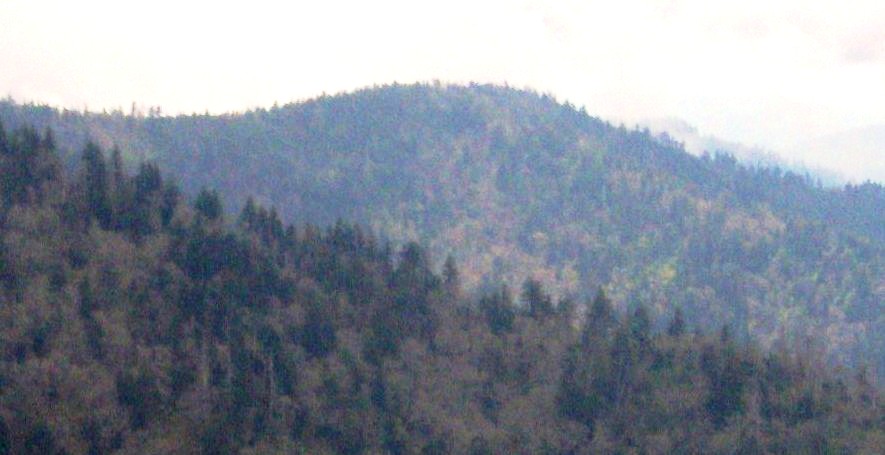
Mount Chapman is a mountain in the Great Smoky Mountains, located in the Southeastern United States. It has an elevation of 6,417 feet above sea level. While the mountain is located deep within the Great Smokies, the Appalachian Trail crosses its eastern slope, coming to within 200 feet of the summit. Mount Chapman is among the 10 highest mountains in the Appalachian range, if subpeaks are not included. Mount Chapman is situated along the Tennessee-North Carolina border, with Sevier County to the north and Swain County to the south. Like its neighbor Mount Guyot, Chapman is a double-peak, with the southern peak being the true summit. A 1,500-foot gap divides Chapman from Dashoga Ridge just two miles to the east. Mount Chapman's western slope, known as Chapman Lead, is more gradual, descending roughly 4,000 feet over 5 miles to its base along the headwaters of the Little Pigeon River. Chapman Lead parallels Guyot Spur to the north, with Buck Fork slicing between the two giant ridges. The mountain's summit is coated in a dense stand of Southern Appalachian spruce-fir forest. The remoteness of Mount Chapman has left it largely untouched by human history. The mountain is named after Colonel David C. Chapman a Knoxville business leader who led efforts to establish a national park in the Great Smokies. As head of the Tennessee Great Smoky Mountains Park Commission from 1927-1937, Chapman raised funds and negotiated hundreds of land purchases that would make the park possible. Arnold Guyot crossed Mount Chapman in the late 1850s, measuring the mountain's summit at 6,447 feet . The leg of the Appalachian Trail crossing Chapman's eastern slope was constructed in 1935. Mount Chapman is approximately 11 miles from the nearest parking lot at the Cosby Campground and 14.5 miles from Newfound Gap. From the Cosby Campground the Snake Den Ridge Trail winds for 5.3 miles to its junction with the Appalachian Trail at Inadu Knob. Following the AT from Inadu, Chapman's main peak is approximately 5.2 miles to the south, with the trail first crossing the slopes of Old Black, Mount Guyot, and Tricorner Knob. A short bushwhack is required to reach the summit. The Tricorner Knob Shelter is approximately 1.5 miles to the northeast of Mount Chapman.

Tricorner Knob

Tricorner Knob is a mountain in the Great Smoky Mountains, located in the Southeastern United States. It has an elevation of 6,120 feet with 160 feet of clean prominence. The Appalachian Trail and Balsam Mountain Trail intersect near the mountain's summit, making Tricorner Knob the great crossroads of the Eastern Smokies. The Tricorner Knob Shelter, which occupies a flat area on the mountain's southern slope, provides a key rest stop for Appalachian Trail thru-hikers. Like much of the Smokies crest, Tricorner Knob is on the border between Tennessee and North Carolina. As its name implies, the mountain is at the point where the Balsam Mountains intersect the crest of the Great Smokies, creating a triangular-shaped ridge. Three counties intersect at the summit of Tricorner, with Sevier County, Tennessee to the west, Haywood County, North Carolina to the northeast, and Swain County, North Carolina to the southeast. The mountain rises appx. 3,300 feet above its western base at the mouth of Buck Fork, along the Little Pigeon River. Tricorner is the 9th-highest mountain in Tennessee and the 27th-highest mountain in North Carolina. Tricorner Knob's remote situation in the dense Southern Appalachian spruce-fir forest of the Eastern Smokies has left it largely untouched by human history. Arnold Guyot measured its elevation on his survey of the crest of the Smokies in 1859, placing Tricorner's elevation at 6,188 feet . Other than surveyors and the occasional naturalist, the mountain was devoid of human visitors until a segment of the Appalachian Trail was constructed across its western slope in 1935. An isolated spring on the mountain's southern slope was the key reason behind its selection for the back country campsite where the Tricorner Knob Shelter sits today. Laura Thornborough, a writer who visited the mountain in the late 1930s, called Tricorner Knob one of the last "true wilderness areas, where one can commune with nature and leave the cares of the world behind."

Elkmont

Elkmont is a region situated in the upper Little River Valley of the Great Smoky Mountains of Sevier County, in the U.S. state of Tennessee. Throughout its history, the valley has been home to a pioneer Appalachian community, a logging town, and a resort community. Today, Elkmont is home to a large campground, ranger station, and historic district maintained by the Great Smoky Mountains National Park. The Little River Lumber Company established the town of Elkmont in 1908 as a base for its logging operations in the upper Little River and Jakes Creek areas. By 1910, the company began selling plots of land to hunting and fishing enthusiasts from Knoxville, who established the "Appalachian Club" just south of the logging town. In 1912, a resort hotel, the Wonderland Park Hotel, was constructed on a hill overlooking Elkmont. A group of Knoxville businessmen purchased the Wonderland in 1919 and established the "Wonderland Club." Over the next two decades, the Appalachian Club and Wonderland Club evolved into elite vacation areas where East Tennessee's wealthy could gather and socialize. Upon the creation of the national park in the 1930s, most of Elkmont's cottage owners were given lifetime leases. These were converted to 20-year leases in 1952, and renewed in 1972. The National Park Service refused to renew the leases in 1992, and under the park's general management plan, the hotel and cottages were to be removed. In 1994, however, the Wonderland Hotel and several dozen of the Elkmont cottages were listed on the National Register of Historic Places as Elkmont Historic District, Great Smoky Mountains National Park, sparking a 15-year debate over the fate of the historic structures. In 2009, the National Park Service announced plans to restore the Appalachian Clubhouse and 18 cottages and outbuildings in the Appalachian Club area and remove all other structures, including the Wonderland Annex .

John Messer Barn

The John Messer Barn is a historic structure within the Great Smoky Mountains National Park in Sevier County, Tennessee, United States. Located along the Porters Creek Trail in the Greenbrier valley, it was constructed in 1875 by Pinkney Whaley. The Whaleys later sold their farm to John H. Messer, who was married to Pinkney's cousin, Lucy. In the 1930s, the Smoky Mountain Hiking Club, which constructed the Smoky Mountain Hiking Club Cabin nearby, leased the barn from the National Park Service. The barn was added to the National Register of Historic Places in 1976, and is the last surviving structure from the pre-park Greenbrier Cove community. This barn should not be confused with the Messer Barn in Cataloochee, which was built by John's cousin, Will Messer. The Messer Barn is a type of double-cantilever barn unique to East Tennessee, and rarely found outside Sevier, Blount, and Cocke counties. The barn is one story with a hayloft, and measures 25 feet by 45 feet . The gabled roof, as with all double-cantilevers, has considerable overhang, allowing livestock shelter in inclement weather. Unlike the reconstructed double-cantilever barn at the Tipton Place in Cades Cove, the Messer Barn's overhang is supported by poles along the outer edge. The barn's foundation is dry field stone, and is higher on one end to compensate for the hillslope. The barn interior consists of two pens, each divided into two stalls, with a "drive-through" in the middle. While the barn walls are built of wooden boards, the pens are built of hewn logs. The barn's hayloft consists of poles set on two-foot centers.

Spence Field

Spence Field is a mountain highland meadow in the Great Smoky Mountains, located in the Southeastern United States. It has an elevation of 4,920 feet above sea level. The Appalachian Trail traverses the field, and a backcountry shelter just off the trail provides an overnight stopover for through-hikers. Like much of the Smokies crest, Spence Field lies along the Tennessee-North Carolina border, between Blount County and Swain County. It rises 3,000 feet above Cades Cove to the north and 3,300 feet above Fontana Lake to the south. The "field" spreads out atop the crest, covering approximately 200 acres . Spence Field is a crossroads of sorts of the Western Smokies. The Appalachian Trail crosses the field from east to west, and is joined by the Bote Mountain Trail from the north and the Eagle Creek Trail from the south. The Bote Mountain Trail connects Spence Field with Cades Cove, Little River Road, and Tremont. The Eagle Creek Trail connects Spence with the Benton MacKaye Trail and Fontana Lake. Along the A.T., Thunderhead Mountain is just two miles to the east, and Gregory Bald is just over 10 miles to the west. Spence Field is a grassy bald, a type of meadow found in higher elevations in the Appalachian Mountains. Grassy balds are characterized by thick grass and relatively sparse tree coverage. In the late 19th and early 20th centuries, Spence Field was roughly at the center of a 24-mile pasture that stretched across the crest of the Western Smokies from Gregory Bald in the west all the way to Silers Bald to the east. Since the establishment of the Great Smoky Mountains National Park in the 1930s, however, wooded plants have started reclaiming much of this stretch, including Spence. The park service currently maintains the grassy balds atop Gregory Bald and Andrews Bald, while allowing the others to return to their natural state.

Alex Cole Cabin

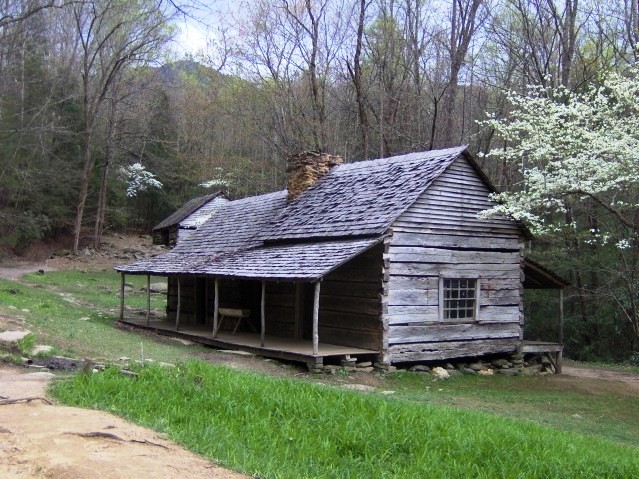
The Alex Cole Cabin is a historic house in Sevier County, Tennessee, United States, along Roaring Fork within the Great Smoky Mountains National Park. The last remaining building of the community of Sugarlands community proper, it was built by Albert Alexander "Alex" Cole . The cabin was originally located at 35°40′0″N 83°31′17″W, across the Little Pigeon River from what is now the "Quiet Walkway" opposite the Huskey Gap Trailhead, just off Newfound Gap Road. After being placed on the National Register of Historic Places in the 1970s, the cabin was moved to the Jim Bales Place along the Roaring Fork Motor Nature Trail (the last owners of the Jim Bales Place lived in a relatively modern frame house). Alex Cole was one of the most industrious residents of the Sugarlands. In the early 1900s, Cole and his sons made a weekly trek across Sugarland Mountain via what is now the Huskey Gap Trail to Elkmont, where they worked for the Little River Lumber Company. As tourism increased in the mountains in the 1920s, Cole began offering his services as a mountain guide, especially for tourists wanting to hike to the summit of Mount Le Conte. Historian Vic Weals wrote that Cole's "considerable knowledge of his wilderness" made him "one of the more sought-after native guides." The cabin is a single-pen one-story cabin measuring approximately 20 feet by 18 feet (5.5 m). The walls are built of hewn logs with dovetail notching. Fieldstone and loose rock comprise the cabin's foundation, and the cabin's gabled roof is covered with hand-split shingles. The interior contains a sawn board floor and a loft, and is accessed by a sawn board door. The chimney is built of masonry rubble.

Mount Sequoyah

Mount Sequoyah is a mountain in the Great Smoky Mountains, located in the Southeastern United States. It has an elevation of 6,003 feet above sea level.[1] While the Appalachian Trail crosses its summit, Sequoyah is an 11.5-mile hike from the nearest parking lot, making it one of the most remote places in the Great Smoky Mountains National Park. The Tennessee-North Carolina border traverses Mount Sequoyah, with Sevier County to the north and Swain County to the south. The mountain consists of four small peaks, with the eastern-most being the true summit. Sequoyah rises approximately 1,500 feet above its southern base along Left Fork Creek [2] and approximately 3,500 feet above its northern base along the Little Pigeon River[3]. Part of the headwaters of the Little Pigeon accumulate along Sequoyah's northern slope.[4] Mount Sequoyah is named after the inventor of the Cherokee alphabet. While it's doubtful that Sequoyah ever visited the mountain, numerous Cherokee villages dotted the base of the southeastern Smokies when European settlers arrived in the early 18th century. Arnold Guyot crossed Mount Sequoyah on his survey of the Smokies crest in the late 1850s. Guyot referred to the mountain as "The Three Brothers", and measured its elevation at 5,945 feet . The mountain rarely saw a human presence until a segment of the Appalachian Trail was constructed across its summit in 1935. The summit of Mount Sequoyah is among the most distant summits traversed by a trail in the Great Smokies. Following the Appalachian Trail from Newfound Gap, Mount Sequoyah is 13.1 miles to the east. From the Cosby Campground, Sequoyah can be reached by following the Snake Den Ridge Trail 5.3 miles to its junction with the Appalachian Trail, and then following the latter 3.7 miles to Tricorner Knob, crossing Old Black and Mount Guyot along the way. From Tricorner, Mount Sequoyah is 2.5 miles to the southwest, just beyond Mount Chapman. The Hughes Ridge Trail, which connects the Appalachian Trail and the Benton MacKaye Trail, terminates just over two miles southwest of Sequoyah.

This attraction is located in

This is a private property. Please enjoy respectfully and do not disturb the occupants.

Edit Categories
Add Tours

This attraction is not part of any tours

Add Collections

This attraction is not part of any collections


Some of the attractions we imported from Wikipedia are not perfect. Send us an email detailing what's wrong and we'll look into fixing it.

GuRoute is all about Gurus sharing their local knowledge. If you feel up to fixing this problem yourself, why not adopt it. You will become the owner and can fix whatever problems you see.

We've copied a link to this attraction into your clipboard so that ou can paste it into an email or text message...

More Info...
You can add your friends to the visit yourself, or, send them a link and let them add themselves...

The visit will appear on both your timelines and on your Shared Timeline.

Click below and we'll email you a link that you can send on to friends or post on your group's Facebook page.

If your friends aren't members of GuRoute yet, this is a great way to get them started.
Recent
Recently used Collections will appear here...
Recent
Recently used tours will appear here...

Where is this?

GuRoute likes to place attractions inside other attractions. So, maybe it's in a city, or maybe it's inside a particular park in that city. Maybe your attraction is a huge park that spans half the county, or multiple counties.

Determining where this attraction is gives it context - if it's in a park, you'll be able to see it alongside all the other attractions in that park. And that helps define the park.

GuRoute will automatically calculate a parent region for this attraction. You can change it if there is something more appropriate.

This attraction is currently located in .

Change

This attraction does not yet have any reviews

Please login to write a review...

Reviewed by
Record new Visit

Add this location to your timneline?

  • If there's an existing attraction open it and add it to your timeline...
  • If not, enter a title and we'll create a new attraction for your memories...
Create new Attraction

Create a new attraction at this location?

  • We rely on Gurus like you to share your local knowledge...
(Give a name for this location)


+
Add this to your timeline instead...

Imagine having a record of all the cool things you've done in your life!


Using our timeline you can keep track of everywhere you visit in your lifetime...

But, you'll need to sign in first...

Add contacts so that you can share your travels and record places that you visit together...

Family
Favorites
Family
Favorites

Profile TimeLine Our Visits Edit Accept Decline Invite

If you have any more friends that visited this place with you, feel free to add them to the visit. We'll write it to their timeline and once they confirm it, they too will have this memory for a lifetime.

If they're not already registered, you just need their name and email address and you can add them and we'll send them an invite on your behlaf.

Add a tour comment

Add some extra information for when this attraction is viewed as part of your tour...

Next Stop Instructions

Add some instructions for what to see/do on the way to the next stop...

Next Stop Instructions

Add some instructions for what to see/do on the way to the next stop...

If you're visiting an existing attraction, open it and add it to your timeline. If there is no attraction for the place you are visiting...

  • Click 'Add My Location' below
  • Or right-click on the map to mark a different location
  • Or long-press if you have a touch screen
You can even add locations while you're offline....
  • Load up the map when you're online and we'll keep track of your locaiton
  • You can add locations to your timeline
  • When you are online again we'll sync them with the cloud

We can't connect to the internet right now. The following attractions are saved locally and can be uploaded when you're online...

GuRoute would like to access your current location so that we can pin you on the map and show you nearby attractions

Add friends so that you can share your experiences with each other...

Add tour to What's Next?

Go...

Either for yourself or someone else...

  1. Do your trip research in GuRoute
    Add all the places that you think might be worthy of a visit into a trip-plan
  2. Add your trip-plan to your "What's Next" timeline
    (or a friend's "What's Next" timeline)
  3. When you're on vacation you'll have all your research at your fingertips
  4. Share your timline with your friends
    They can enjoy your vacation with you, seeing not only where you've been, but where you're going next...
  5. Add/remove attractions if things change

It also makes a great souvenir of your trip

Collections

Go...

Create a home page for a collection of attractions

  • Add an image and description to display on the homepage
  • Start adding content
    Add existing attractions to your collection or create new attractions of your own
  • Collections can be:
    • Public (Anyone can add attractions to your collection)
    • Shared (Only yourself and Gurus you nominate can add content)
    • Private (The collection will only be visible to yourself)

Uses

  • Local business or hotel
    Showcase local attractions that you endorse
  • Clubs
    Showcase attractions that members have created (eg. local historical society)
  • Special Interest
    If GuRoute does not have a category for your special interest you add your attractions to your own collection instead

Examples

Walking/Driving Tours

Go...

A guided tour where GuRoute will direct you from stop to stop and narrate a description of each attraction you arrive at

  • GuRoute uses your phone's GPS to guide you from stop to stop
  • GuRoute automatically detects when you arrive at the next tour-stop and narrates the description of the attraction (Chrome Only)
  • It then sends you on to the next stop

Tours are great to attract people to your town. Even places with no significant points of interest can be lots of fun when part of a tour


Cater tours to your Audience

  • Kid-friendly Tours
    • Focus on what will keep kids interested
    • Instead of parents having to drag their kids around they'll be struggling to keep up
    • Let the kids navigate and they'll get more fun out of finding that historical plaque than they ever would from reading it
  • Accessible tours
  • Short and long tours of the same location

What you need to do...

  1. Click 'Go...'
    Enter a title, description and location for the tour
  2. Add existing attractions OR create new ones and add them to the tour
  3. For existing attractions you can add more information specific to the theme of the tour
  4. You can also add instructions on what to do or see en-route to the next tour-stop
  5. Try out your tour and see how it works...

Mystery Tour

Go...

Create a Mystery Tour

Create a series of clues to show people around a city, neighborhood or whatever place you like...

  • GuRoute will show people clues to get them from attraction to attraction
  • When they reach each stop GuRoute will tell them about the place and give them the next clue
  • Take as long or as you like and explore each location at your leisure

Scavenger Hunt

Go...

Create a Scavenger Hunt

Create a series of questions that people have to answer. The answers can all be discovered by walking aroung the area, looking for clues.

  • How many beers are on tap at Michael Collin's Irish Bar?
  • What's the name of the oldest building on main streeet?
  • Show a picture of some public art and ask them what it is called
  • Clues can have numeric or multiple choice answers