Sign In

My Timeline

GuRoute

Discover Your World

Share your Experiences

Record your Life


Top Attractions in Athens

40 Watt Club

The 40 Watt Club is a music venue in Athens, Georgia. Along with CBGB's, the Whisky a Go Go, and selected others, it was instrumental in launching American punk rock and "new wave music." The 40 Watt Club had its origins as Curtis Crowe's College Avenue loft back in 1978. Bill Tabor and Curtis joked that it was a 40 Watt Club due to the single 40 Watt bulb which hung from the ceiling. Curtis' first party in his space featured his band Strictly American a group of friends from Marietta, Georgia, which included members of the future Guadalcanal Diary. Curtis and Bill would hang out in his loft upstairs and listen to Michael Lachowski and Randy Bewley practice the same riff over and over again in the space directly below. Curtis eventually knocked on their practice space and asked if they could use a drummer and Pylon was born. During Pylon's subsequent tours of the Northeast, Curtis theorized that opening a real club on a shoestring was possible. Crowe and his partner Paul Scales then moved the "club" across the street to a space above a sandwich shop at the corner of College and Broad Streets. It opened with Curtis still making last minute additions to the bar and stage. The Side Effects played that first night and Pylon on the second. It was an instant smash with the local youth of Athens. The floors had to be reinforced with removable beams due to the intense dancing that took place. Later, with new partner Steve Allen, Scales migrated the club to a larger space on West Clayton Street. Amenities such as a stage and hot water were added, as was a second bathroom. True to the 40 Watt method it was assembled with found materials and volunteer labor. Local artist and musician David Hannon Pierce created the first iteration of the club's famous logo, as well as all the updated variations still in use. Doug Hoechst bought the club from Allen and Scales and moved it to 382 E. Broad Street and renamed it "40 Watt Club Uptown". The 40 Watt Uptown was large and professional, and it was a major stop for underground independent music acts in the 1980s. When rents increased on the space, the club moved back to its West Clayton Street location ("the new old new 40 Watt"). At the same time, the formerly small, spare competing club, The Uptown Lounge, expanded to a much larger space (the Georgia Theater). Therefore, with Uptown Lounge taking over as the high-capacity venue there was again a market for a small club that would focus on local acts. The Club later moved to its current location on Washington Street, the former Potter's House Thrift store building. The 40 Watt Club is currently owned and operated by Barrie Buck, the former wife of R.E.M. guitarist Peter Buck, who has managed the club since 1987. The 40 Watt Club was the primary performance space for numerous "Athens bands", including Pylon, R.E.M., Love Tractor, Dreams So Real, Drivin N Cryin, Guadalcanal Diary, The Primates, Indigo Girls, Modern Skirts, and others. Its DIY ethos and informality were instrumental in the fostering of punk rock and a "scene" in Athens, GA. In more recent years, the club has been the home-base for such nationally renowned local bands as of Montreal, Drive-By Truckers, and The Whigs.

Coastal Plain Research Arboretum

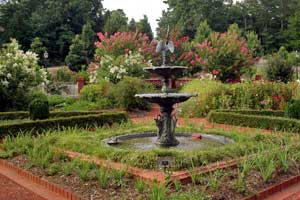
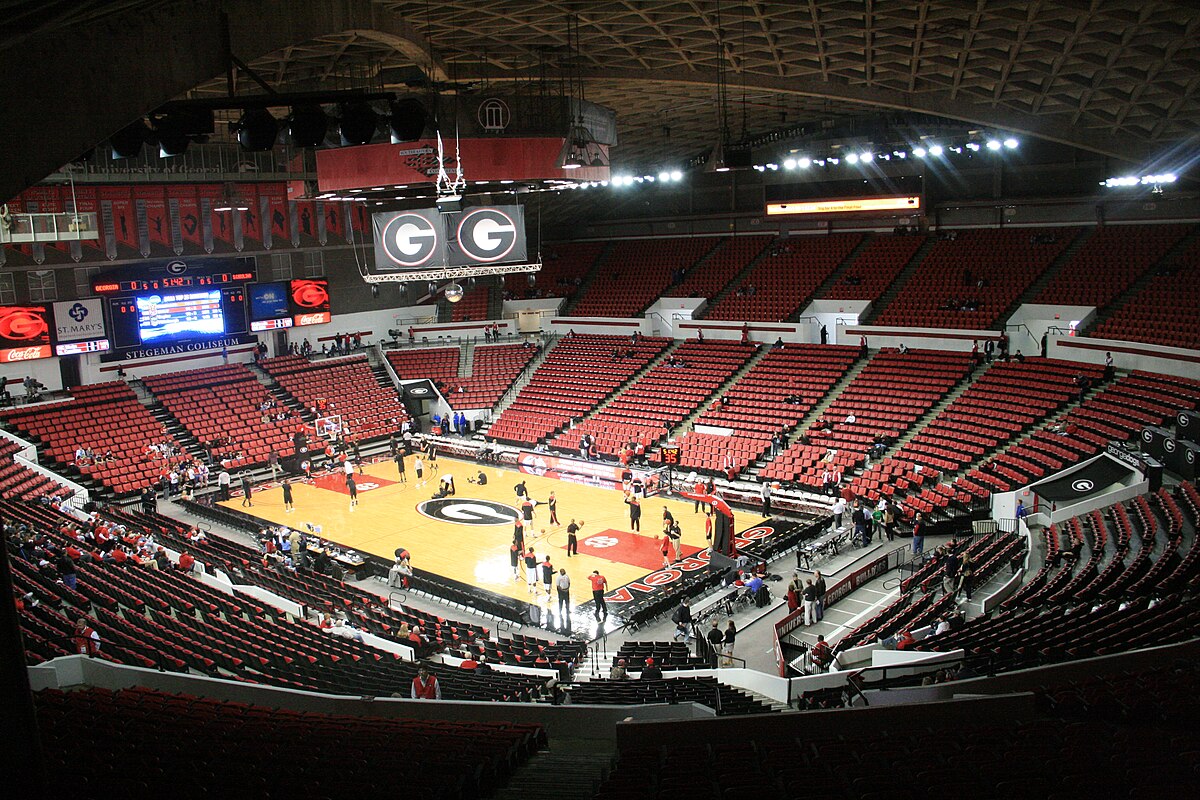
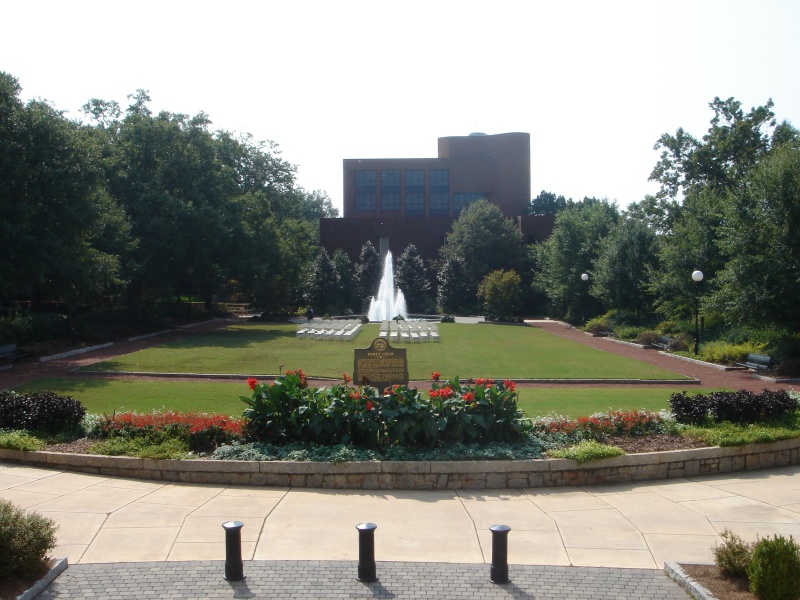
The University of Georgia, founded in 1785, and commonly referred to as UGA or simply Georgia, is an American public land-grant and sea grant research university. Its primary location is a 762-acre campus in the college town of Athens, Georgia, approximately an hour's drive from a global city, Atlanta. It is a flagship university that is ranked tied for 21st overall among all public national universities in the 2016 U.S. News & World Report rankings, The university is classified in the highest ranking, "R-1: Doctoral Universities – Highest Research Activity" with a "More Selective" student body by the Carnegie Classification of Institutions of Higher Education. Founded in 1785 as the United States' first state-chartered university, the university's historic North Campus is on the U.S. National Register of Historic Places as a designated historic district. The contiguous campus areas include rolling hills, gardens, and extensive green space including nature walks, fields, shrubbery, and large and varied arboreta. The university offers over 140 degree programs in a wide array of disciplines. Consisting of thirteen libraries spread across multiple campuses, the UGA Libraries contain a total of 4.7 million volumes and one of the nation's largest map collections. The University of Georgia is one of 126 member institutions that comprise the Association of Research Libraries. The University of Georgia is organized into seventeen schools and colleges. The university has three primary campuses. The largest one is the main campus in Athens that includes 389 buildings, while the two others are located in Tifton, Georgia and Griffin, Georgia. The University of Georgia also has two satellite campuses located in Atlanta and Lawrenceville, Georgia. The university operates several service and outreach stations spread across the state. The total acreage utilized by the university located in 30 Georgia counties is 39,950 acres . The University of Georgia also owns a residential and research center in Washington, DC, plus three international residential and research centers located at Oxford University in Oxford, England, at Cortona, Italy, and at Monteverde, Costa Rica. Student athletics, both varsity and intramural, are an integral part of student and alumni life. The University of Georgia's intercollegiate sports teams, commonly known by their "Georgia Bulldogs" nickname, compete in National Collegiate Athletic Association Division I and the Southeastern Conference . UGA served as a founding member of the SEC in 1932. In their 121-year history, the university's varsity sports teams have won 39 national championships and 130 conference championships. The Georgia Redcoat Marching Band, the official marching band of the university, plays at sports and other events.

President's House

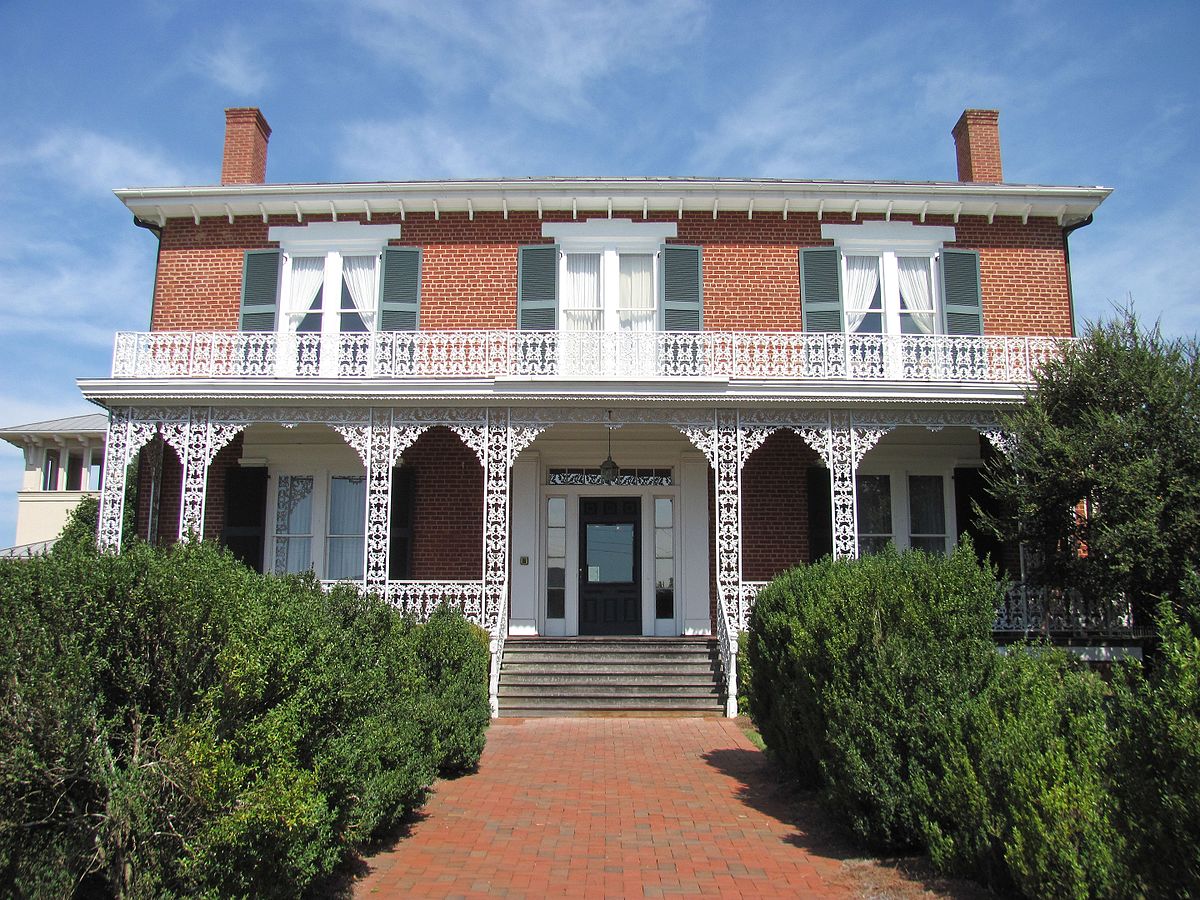
The Presidents House, also known as the Benjamin H. Hill House or the Grant-Hill-White-Bradshaw House, was erected in 1856. The mansion has served as University of Georgia presidents residence since it was donated to the University System of Georgia in 1949. John Thomas Grant constructed the house in 1856. Benjamin Harvey Hill, who served in both the House of Representatives and United States Senate, acquired the house in 1876. Later, James White, founder of the First National Bank of Athens, purchased the property in July 1883. However, his daughter, W. F. Bradshaw, inherited the house upon Whites death during the same year. The Bradley Foundation of Columbus, Georgia, acquired the property from Bradshaws estate and in 1949 presented it to the University of Georgia as a home for its president. With the help of donations from the Bradley Foundation, the Georgia Board of Regents acquired the property in the early 1940s. The University of Georgia restored the house and grounds; Cooper, Bond, and Cooper were the architects in charge of remodeling, and Hubert B. Owens, A.S.L.A., designed the rear gardens. The front yard was refurbished in 1965. The house is one of the oldest buildings in Athens, Georgia. The University of Georgia Presidents House was documented by the Historic American Buildings Survey and as of March 16, 1972 is listed on the National Register of Historic Places. The facility is located at 570 Prince Ave. Michael F. Adams was the first President to relocate his residence off campus. University of Georgia President Charles Knapp also relocated off-campus after several years of residence. The facility now serves as an Alumni building and special programs location on the University of Georgia campus.

T. R. R. Cobb House

The T. R. R. Cobb House built in 1842 is an historic octagon house originally located at 194 Prince Avenue in Athens, Georgia. On June 30, 1975, it was added to the National Register of Historic Places. The original part of the home of Thomas Reade Rootes Cobb is a Greek Revival four-over-four “Plantation Plain” built about 1834. The house given in 1844 to Cobb and his new wife, Marion Lumpkin, as a gift from his father-in-law, Joseph Henry Lumpkin, the first Chief Justice of the Georgia Supreme Court. Cobb made additions to the house of new rooms, and by 1852, it had acquired its octagon shape and two-story portico. Cobb died in 1862, and his widow remained in the house until 1873 when she sold it. Until 1962, the house was used for a variety of purposes including rental property, a fraternity house, and a boarding house. In 1962, the Archdiocese of Atlanta bought the house to use as St. Joseph’s Catholic Church. In the 1980s, the church was planning to demolish the house, and the Stone Mountain Memorial Association stepped forward in 1984, bought it, and relocated it to Stone Mountain Park in 1985. The restoration of the house never took place because of lack of funding, and the house sat for nearly twenty years. In 2004 the Watson-Brown Foundation bought the house and returned it to Athens in the spring of 2005. The Watson-Brown Foundation restored the house to its appearance of 1850; in 2008, the Georgia Trust gave their work its Preservation Award for excellence in restoration. The house is now open as a house museum located at 175 Hill Street in Cobbham historic district.

Downtown Athens Historic District

The Downtown Athens Historic District is a historic area in Athens, Georgia, United States. It was listed on the National Register of Historic Places in 1978. Its boundaries were revised twice, in 1984 and 2006, and additional documentation was filed in 2006. It is in the Downtown Athens, Georgia neighborhood. The original listing includes Early Commercial architecture, Renaissance architecture, and Greek Revival architecture in 82 contributing buildings and 2 contributing buildings in a 40-acre area roughly bounded by Hancock Ave., Foundry, and Mitchell. It includes work dating back to 1833. It includes the Franklin House and the Clarke County Courthouse which are separately listed on the National Register. Historic functions served include rail transportation, dwelling, and commerce/trade. The boundary increase of 1984 added seven contributing buildings in a 1-acre area roughly bounded by Hancock Ave., Foundry, Mitchell, Broad, and Lumpkin Sts. Historic function includes commerce/trade, and a current or former specialty store is included. The revision in 2006 added new area, removed some area, and added additional documentation. The increased area, roughly bounded by Dougherty St., Thomas St., Hickory St., Broad St. South St. and Pulaski St., was 24 acres, with 25 contributing buildings and 1 other contributing structure. It includes Federal and Greek Revival architecture, and some work of architect A. Ten Eyck Brown and some property controlled by the U.S. Postal Service. Historic function: domestic; commerce/trade; government; religion; recreation and culture; industry/processing/extraction; health care Historic subfunction: single dwelling; business; city hall; religious structure; theater; communications facility; clinic Building is listed for architectural criteria

University of Georgia

The University of Georgia, founded in 1785, and commonly referred to as UGA or simply Georgia, is an American public land-grant and sea grant research university. Its primary location is a 762-acre campus in the college town of Athens, Georgia, approximately an hour's drive from a global city, Atlanta. It is a flagship university that is ranked tied for 21st overall among all public national universities in the 2016 U.S. News & World Report rankings, The university is classified in the highest ranking, "R-1: Doctoral Universities – Highest Research Activity" with a "More Selective" student body by the Carnegie Classification of Institutions of Higher Education. Founded in 1785 as the United States' first state-chartered university, the university's historic North Campus is on the U.S. National Register of Historic Places as a designated historic district. The contiguous campus areas include rolling hills, gardens, and extensive green space including nature walks, fields, shrubbery, and large and varied arboreta. The university offers over 140 degree programs in a wide array of disciplines. Consisting of thirteen libraries spread across multiple campuses, the UGA Libraries contain a total of 4.7 million volumes and one of the nation's largest map collections. The University of Georgia is one of 126 member institutions that comprise the Association of Research Libraries. The University of Georgia is organized into seventeen schools and colleges. The university has three primary campuses. The largest one is the main campus in Athens that includes 389 buildings, while the two others are located in Tifton, Georgia and Griffin, Georgia. The University of Georgia also has two satellite campuses located in Atlanta and Lawrenceville, Georgia. The university operates several service and outreach stations spread across the state. The total acreage utilized by the university located in 30 Georgia counties is 39,950 acres . The University of Georgia also owns a residential and research center in Washington, DC, plus three international residential and research centers located at Oxford University in Oxford, England, at Cortona, Italy, and at Monteverde, Costa Rica. Student athletics, both varsity and intramural, are an integral part of student and alumni life. The University of Georgia's intercollegiate sports teams, commonly known by their "Georgia Bulldogs" nickname, compete in National Collegiate Athletic Association Division I and the Southeastern Conference . UGA served as a founding member of the SEC in 1932. In their 121-year history, the university's varsity sports teams have won 39 national championships and 130 conference championships. The Georgia Redcoat Marching Band, the official marching band of the university, plays at sports and other events.

Foley Field

Foley Field is a baseball stadium in Athens, Georgia, United States. It is the home field of the University of Georgia Bulldogs college baseball team. The stadium holds 3,291 people. Foley Field was built in 1966. The stadium was renovated in 1990, the same year that the University of Georgia won the College World Series in Omaha, Nebraska. Since that renovation, Georgia owns a 378-193-1 record there (through the 2006 season). Foley Field hosted the 1987 Southeastern Conference Baseball Tournament, won by Mississippi State. More recently, Foley Field has hosted four NCAA regional tournaments in 2001, 2004, 2006, and 2008. In all four years, the Bulldogs' baseball team advanced to the College World Series. Super Regionals were also hosted in 2001 featuring Florida State University, in 2006 against the University of South Carolina, and in 2008 with North Carolina State University as the guest. All three super regionals were won by Georgia, two games to one. The Bulldogs own a record of 20-7 in NCAA post season games held at Foley Field. They also set a 16-0 mark in elimination games with a 17-8 win on June 8, 2008 to earn a trip to Johnny Rosenblatt Stadium. Several attendance records have been set in recent years, including in both Super Regionals hosted by the stadium. First, 7th-ranked Georgia defeated 10th-ranked Florida State 8-7 in front of 4,290 spectators on June 2, 2001. Then, on June 12, 2006, 6th-ranked Georgia defeated 15th-ranked South Carolina in front of 4,302 spectators. The most recent record set was during the regular season on March 21, 2009, as 3rd-ranked Georgia defeated Mississippi State 4-0 in front of 4,461 spectators. In 2013, the Bulldogs ranked 35th among Division I baseball programs in attendance, averaging 1,940 per home game.

This attraction is located in

This is a private property. Please enjoy respectfully and do not disturb the occupants.

Edit Categories
Add Tours

This attraction is not part of any tours

Add Collections

This attraction is not part of any collections


Some of the attractions we imported from Wikipedia are not perfect. Send us an email detailing what's wrong and we'll look into fixing it.

GuRoute is all about Gurus sharing their local knowledge. If you feel up to fixing this problem yourself, why not adopt it. You will become the owner and can fix whatever problems you see.

We've copied a link to this attraction into your clipboard so that ou can paste it into an email or text message...

More Info...
You can add your friends to the visit yourself, or, send them a link and let them add themselves...

The visit will appear on both your timelines and on your Shared Timeline.

Click below and we'll email you a link that you can send on to friends or post on your group's Facebook page.

If your friends aren't members of GuRoute yet, this is a great way to get them started.
Recent
Recently used Collections will appear here...
Recent
Recently used tours will appear here...

Where is this?

GuRoute likes to place attractions inside other attractions. So, maybe it's in a city, or maybe it's inside a particular park in that city. Maybe your attraction is a huge park that spans half the county, or multiple counties.

Determining where this attraction is gives it context - if it's in a park, you'll be able to see it alongside all the other attractions in that park. And that helps define the park.

GuRoute will automatically calculate a parent region for this attraction. You can change it if there is something more appropriate.

This attraction is currently located in .

Change

This attraction does not yet have any reviews

Please login to write a review...

Reviewed by
Record new Visit

Add this location to your timneline?

  • If there's an existing attraction open it and add it to your timeline...
  • If not, enter a title and we'll create a new attraction for your memories...
Create new Attraction

Create a new attraction at this location?

  • We rely on Gurus like you to share your local knowledge...
(Give a name for this location)


+
Add this to your timeline instead...

Imagine having a record of all the cool things you've done in your life!


Using our timeline you can keep track of everywhere you visit in your lifetime...

But, you'll need to sign in first...

Add contacts so that you can share your travels and record places that you visit together...

Family
Favorites
Family
Favorites

Profile TimeLine Our Visits Edit Accept Decline Invite

If you have any more friends that visited this place with you, feel free to add them to the visit. We'll write it to their timeline and once they confirm it, they too will have this memory for a lifetime.

If they're not already registered, you just need their name and email address and you can add them and we'll send them an invite on your behlaf.

Add a tour comment

Add some extra information for when this attraction is viewed as part of your tour...

Next Stop Instructions

Add some instructions for what to see/do on the way to the next stop...

Next Stop Instructions

Add some instructions for what to see/do on the way to the next stop...

If you're visiting an existing attraction, open it and add it to your timeline. If there is no attraction for the place you are visiting...

  • Click 'Add My Location' below
  • Or right-click on the map to mark a different location
  • Or long-press if you have a touch screen
You can even add locations while you're offline....
  • Load up the map when you're online and we'll keep track of your locaiton
  • You can add locations to your timeline
  • When you are online again we'll sync them with the cloud

We can't connect to the internet right now. The following attractions are saved locally and can be uploaded when you're online...

GuRoute would like to access your current location so that we can pin you on the map and show you nearby attractions

Add friends so that you can share your experiences with each other...

Add tour to What's Next?

Go...

Either for yourself or someone else...

  1. Do your trip research in GuRoute
    Add all the places that you think might be worthy of a visit into a trip-plan
  2. Add your trip-plan to your "What's Next" timeline
    (or a friend's "What's Next" timeline)
  3. When you're on vacation you'll have all your research at your fingertips
  4. Share your timline with your friends
    They can enjoy your vacation with you, seeing not only where you've been, but where you're going next...
  5. Add/remove attractions if things change

It also makes a great souvenir of your trip

Collections

Go...

Create a home page for a collection of attractions

  • Add an image and description to display on the homepage
  • Start adding content
    Add existing attractions to your collection or create new attractions of your own
  • Collections can be:
    • Public (Anyone can add attractions to your collection)
    • Shared (Only yourself and Gurus you nominate can add content)
    • Private (The collection will only be visible to yourself)

Uses

  • Local business or hotel
    Showcase local attractions that you endorse
  • Clubs
    Showcase attractions that members have created (eg. local historical society)
  • Special Interest
    If GuRoute does not have a category for your special interest you add your attractions to your own collection instead

Examples

Walking/Driving Tours

Go...

A guided tour where GuRoute will direct you from stop to stop and narrate a description of each attraction you arrive at

  • GuRoute uses your phone's GPS to guide you from stop to stop
  • GuRoute automatically detects when you arrive at the next tour-stop and narrates the description of the attraction (Chrome Only)
  • It then sends you on to the next stop

Tours are great to attract people to your town. Even places with no significant points of interest can be lots of fun when part of a tour


Cater tours to your Audience

  • Kid-friendly Tours
    • Focus on what will keep kids interested
    • Instead of parents having to drag their kids around they'll be struggling to keep up
    • Let the kids navigate and they'll get more fun out of finding that historical plaque than they ever would from reading it
  • Accessible tours
  • Short and long tours of the same location

What you need to do...

  1. Click 'Go...'
    Enter a title, description and location for the tour
  2. Add existing attractions OR create new ones and add them to the tour
  3. For existing attractions you can add more information specific to the theme of the tour
  4. You can also add instructions on what to do or see en-route to the next tour-stop
  5. Try out your tour and see how it works...

Mystery Tour

Go...

Create a Mystery Tour

Create a series of clues to show people around a city, neighborhood or whatever place you like...

  • GuRoute will show people clues to get them from attraction to attraction
  • When they reach each stop GuRoute will tell them about the place and give them the next clue
  • Take as long or as you like and explore each location at your leisure

Scavenger Hunt

Go...

Create a Scavenger Hunt

Create a series of questions that people have to answer. The answers can all be discovered by walking aroung the area, looking for clues.

  • How many beers are on tap at Michael Collin's Irish Bar?
  • What's the name of the oldest building on main streeet?
  • Show a picture of some public art and ask them what it is called
  • Clues can have numeric or multiple choice answers