Sign In

My Timeline

GuRoute

Discover Your World

Share your Experiences

Record your Life


Top Attractions in Edinburgh

Edinburgh Castle

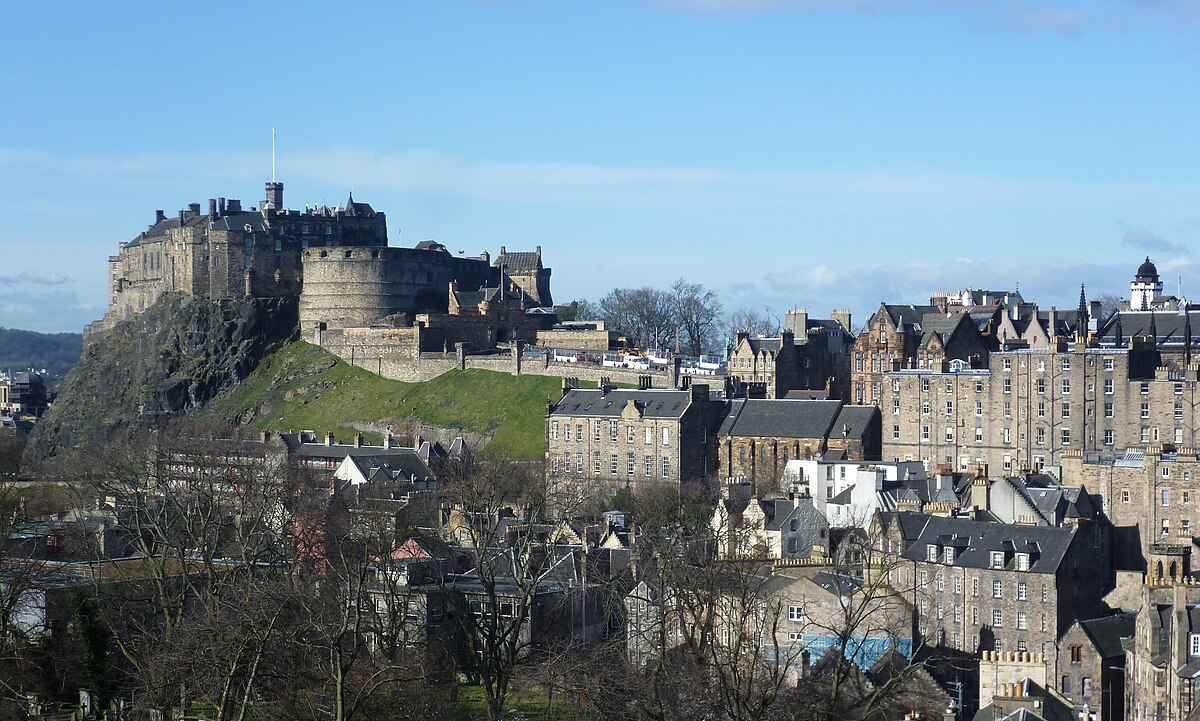
Edinburgh Castle is a historic fortress which dominates the skyline of the city of Edinburgh, Scotland from its position on the Castle Rock. Archaeologists have established human occupation of the rock since at least the Iron Age, although the nature of the early settlement is unclear. There has been a royal castle on the rock since at least the reign of David I in the 12th century, and the site continued to be a royal residence until the Union of the Crowns in 1603. From the 15th century the castles residential role declined, and by the 17th century it was principally used as military barracks with a large garrison. Its importance as a part of Scotlands national heritage was recognised increasingly from the early 19th century onwards, and various restoration programmes have been carried out over the past century and a half. As one of the most important strongholds in the Kingdom of Scotland, Edinburgh Castle was involved in many historical conflicts from the Wars of Scottish Independence in the 14th century to the Jacobite Rising of 1745. Research undertaken in 2014 identified 26 sieges in its 1100 year-old history, giving it a claim to having been "the most besieged place in Great Britain and one of the most attacked in the world". Few of the present buildings pre-date the Lang Siege of the 16th century, when the medieval defences were largely destroyed by artillery bombardment. The most notable exceptions are St Margarets Chapel from the early 12th century, which is regarded as the oldest building in Edinburgh, the Royal Palace and the early-16th-century Great Hall, although the interiors have been much altered from the mid-Victorian period onwards. The castle also houses the Scottish regalia, known as the Honours of Scotland and is the site of the Scottish National War Memorial and the National War Museum of Scotland. The British Army is still responsible for some parts of the castle, although its presence is now largely ceremonial and administrative. Some of the castle buildings house regimental museums which contribute to its presentation as a tourist attraction. The castle, in the care of Historic Scotland, is Scotlands most-visited paid tourist attraction, with over 1.4 million visitors in 2013. As the backdrop to the Edinburgh Military Tattoo during the annual Edinburgh International Festival the castle has become a recognisable symbol of Edinburgh and of Scotland and indeed, it is Edinburghs most frequently visited visitor attraction according to the Edinburgh Visitor Survey, more than 70% of leisure visitors to Edinburgh visited the castle.

University of Edinburgh

The University of Edinburgh (abbreviated as Edin. in post-nominals), founded in 1582, is the sixth oldest university in the English-speaking world and one of Scotland's ancient universities. The university is deeply embedded in the fabric of the city of Edinburgh, with many of the buildings in the historic Old Town belonging to the university. The University of Edinburgh was ranked 17th and 21st in the world by the 2014–15 and 2015-16 QS rankings. The Research Excellence Framework, a research ranking used by the UK government to determine future research funding, ranked Edinburgh 4th in the UK for research power, with Computer Science and Informatics ranking 1st in the UK. It is ranked 16th in the world in arts and humanities by the 2015–16 Times Higher Education Ranking. It is ranked the 23rd most employable university in the world by the 2015 Global Employability University Ranking. It is ranked as the 6th best university in Europe by the U.S. News' Best Global Universities Ranking. It is a member of both the Russell Group, and the League of European Research Universities, a consortium of 21 research universities in Europe. It has the third largest endowment of any university in the United Kingdom, after the universities of Cambridge and Oxford. The university played an important role in leading Edinburgh to its reputation as a chief intellectual centre during the Age of Enlightenment, and helped give the city the nickname of the Athens of the North. Alumni of the university include some of the major figures of modern history, including physicist James Clerk Maxwell, naturalist Charles Darwin, philosopher David Hume, mathematician Thomas Bayes, surgeon Joseph Lister, signatories of the American declaration of independence James Wilson, John Witherspoon and Benjamin Rush, inventor Alexander Graham Bell, first president of Tanzania Julius Nyerere, and a host of famous authors such as Sir Arthur Conan Doyle, Robert Louis Stevenson, J.M. Barrie and Sir Walter Scott. Associated people include 20 Nobel Prize winners, 2 Turing Award winners, 1 Abel Prize winner, 1 Fields Medal winner, 2 Pulitzer Prize winner, 3 Prime Ministers of the United Kingdom, 2 currently-sitting UK Supreme Court Justices, and several Olympic gold medallists. It continues to have links to the British Royal Family, having had the Duke of Edinburgh as its Chancellor from 1953 to 2010 and Princess Anne since 2011. Edinburgh receives approximately 50,000 applications every year, making it the fourth most popular university in the UK by volume of applicants. After St Andrews, it is the most difficult university to gain admission into in Scotland, and 9th overall in the UK.

National Museum of Scotland

National Museums Scotland was formed by Act of Parliament in 1985, amalgamating the former National Museum of Antiquities of Scotland and The Royal Scottish Museum. The National Museum of Scotland, Edinburgh, Scotland, was formed in 2006 with the merger of the new Museum of Scotland, with collections relating to Scottish antiquities, culture and history, and the adjacent Royal Museum, with collections covering science and technology, natural history, and world cultures. The two connected buildings stand beside each other on Chambers Street, by the intersection with the George IV Bridge, in central Edinburgh. The museum is part of National Museums Scotland. Admission is free. The two buildings retain distinctive characters: the Museum of Scotland is housed in a modern building opened in 1998, while the former Royal Museum building was begun in 1861, and partially opened in 1866, with a Victorian Romanesque Revival facade and a grand central hall of cast iron construction that rises the full height of the building. This building underwent a major refurbishment and reopened on 29 July 2011 after a three-year, £47 million project to restore and extend the building led by Gareth Hoskins Architects along with the concurrent redesign of the exhibitions by Ralph Appelbaum Associates. The National Museum incorporates the collections of the former National Museum of Antiquities of Scotland, and the Royal Museum. As well as the national collections of Scottish archaeological finds and medieval objects, the museum contains artefacts from around the world, encompassing geology, archaeology, natural history, science, technology, art, and world cultures. The 16 new galleries reopened in 2011 include 8,000 objects, 80 per cent of which were not formerly on display. One of the more notable exhibits is the stuffed body of Dolly the sheep, the first successful clone of a mammal from an adult cell. Other highlights include Ancient Egyptian exhibitions, one of Elton Johns extravagant suits and a large kinetic sculpture named the Millennium Clock. A Scottish invention that is a perennial favourite with school parties is The Maiden, an early form of guillotine. In 2013, the museum had 1,768,090 visitors during the year.

Royal Palace at Edinburgh Castle

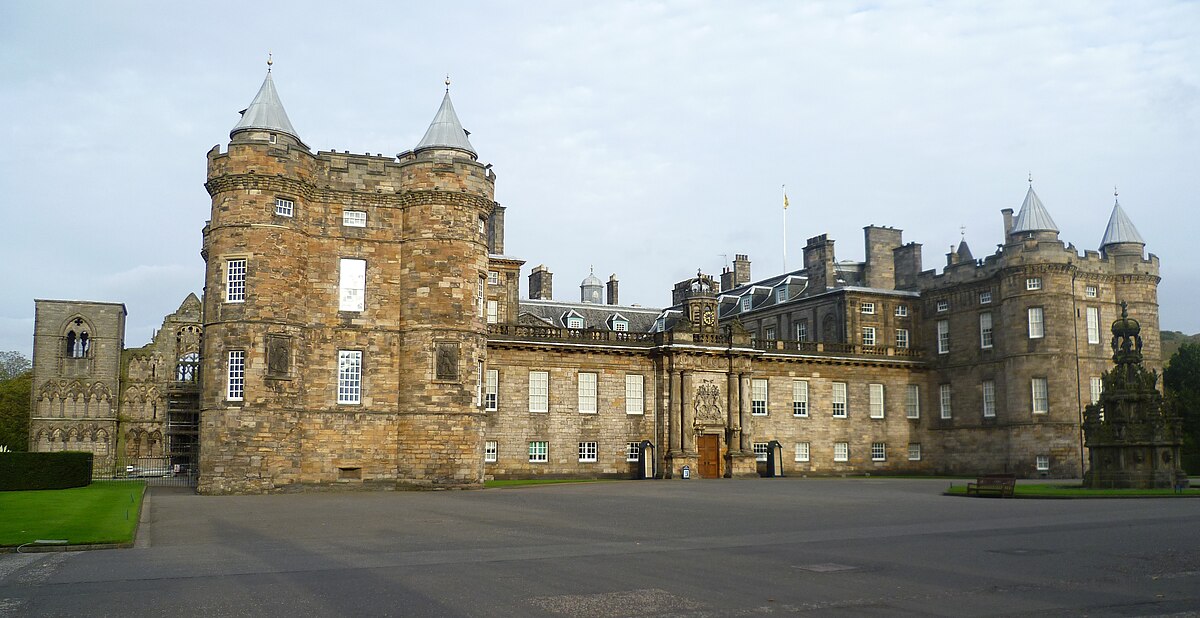
Edinburgh Castle is an historic fortress which dominates the skyline of the city of Edinburgh, Scotland, from its position on the Castle Rock. Archaeologists have established human occupation of the rock since at least the Iron Age , although the nature of the early settlement is unclear. There has been a royal castle on the rock since at least the reign of David I in the 12th century, and the site continued to be a royal residence until the Union of the Crowns in 1603. From the 15th century the castle's residential role declined, and by the 17th century it was principally used as military barracks with a large garrison. Its importance as a part of Scotland's national heritage was recognised increasingly from the early 19th century onwards, and various restoration programmes have been carried out over the past century and a half. As one of the most important strongholds in the Kingdom of Scotland, Edinburgh Castle was involved in many historical conflicts from the Wars of Scottish Independence in the 14th century to the Jacobite Rising of 1745. Research undertaken in 2014 identified 26 sieges in its 1100-year-old history, giving it a claim to having been "the most besieged place in Great Britain and one of the most attacked in the world". Few of the present buildings pre-date the Lang Siege of the 16th century, when the medieval defences were largely destroyed by artillery bombardment. The most notable exceptions are St Margaret's Chapel from the early 12th century, which is regarded as the oldest building in Edinburgh, the Royal Palace and the early-16th-century Great Hall, although the interiors have been much altered from the mid-Victorian period onwards. The castle also houses the Scottish regalia, known as the Honours of Scotland and is the site of the Scottish National War Memorial and the National War Museum of Scotland. The British Army is still responsible for some parts of the castle, although its presence is now largely ceremonial and administrative. Some of the castle buildings house regimental museums which contribute to its presentation as a tourist attraction. The castle, in the care of Historic Scotland, is Scotland's most-visited paid tourist attraction, with over 1.4 million visitors in 2013. As the backdrop to the Edinburgh Military Tattoo during the annual Edinburgh International Festival the castle has become a recognisable symbol of Edinburgh and of Scotland and indeed, it is Edinburgh's most frequently visited visitor attraction according to the Edinburgh Visitor Survey, more than 70% of leisure visitors to Edinburgh visited the castle.

Edinburgh Festival Theatre

The Edinburgh Festival Theatre is a performing arts venue located on Nicolson Street in Edinburgh, Scotland used primarily for performances of opera and ballet, large-scale musical events, and touring groups. After its most recent renovation in 1994, it seats 1,915. It is one of the major venues of the annual summer Edinburgh International Festival and is the Edinburgh venue for the Scottish Opera and the Scottish Ballet. The present theatre’s location is Edinburgh’s longest continuous theatre site, for there has been a theatre in that location since 1830. From being Dunedin Hall, the Royal Amphitheatre, Alhambra Music Hall, the Queen’s Theatre, Pablo Fanques Amphitheatre, and Newsome’s Circus, the site became the Empire Palace Theatre, the first of the famous Moss Empires’ chain, opening on 7 November 1892. Designed by the great British theatre architect, Frank Matcham, its décor was lavish, with elephants with Nubian riders, nymphs and cherubs in abundance on the plasterwork, and it seated 3000 people on four levels. For the following twenty years all the top artists of the day played at the Empire Palace until, on 9 May 1911, there was a disastrous fire on stage. While all 3000 theatre goers escaped safely in about 2.5 minutes, there were eleven backstage deaths and the death of a lion), the theatre reopened three months later. However, given the long term competition from the growth of film as a popular medium, the theatre was re-equipped to present bigger and more spectacular shows. Reusing some of Matcham’s original design concepts, the theatre reopened on 1 October 1928 with the musical Show Boat. Between 1928 and 1963 the Empire was a variety, musical and opera house, often including ice shows. Big names like Harry Lauder, Charles Laughton, Fats Waller, Joe Loss, and Laurel and Hardy appeared, while English comedians Max Wall, Morecambe and Wise and Harry Worth established themselves at the Empire. In addition to the music hall and popular entertainers who appeared at the Empire, the theatre became a principal venue of the Edinburgh International Festival between 1947 and 1963. It was particularly associated with international ballet and, during the first Festival in 1947, Margot Fonteyn danced in The Sleeping Beauty, while in subsequent years, performances by the Old Vic theatre company, the Royal Ballet and the Royal Opera were presented. However, for nearly thirty years after 1963 the theatre became a bingo hall, only temporarily serving as a Festival venue. Finally, after its third major remodeling, the Empire Palace Theatre reopened in June 1994 with a glass-fronted structure for the new entrance, as the now-renamed Edinburgh Festival Theatre. In 1997, the distinguished theatre manager and artistic director Stephen Barry was appointed to shape the rejuvenated venues future. With the restoration of the Empire Theatre’s former 1928 glory, plus a dramatic mix of art nouveau, beaux arts and neo-classicism, and including adequate acoustics, the new theatre serves all the artistic needs of the community. The theatre is said to be haunted by a tall, dark stranger rumoured to be the famous illusionist Sigmund Neuberger, aka The Great Lafayette, who was one of those who burned to death in the fire at the Empire in 1911.

Duddingston Kirk

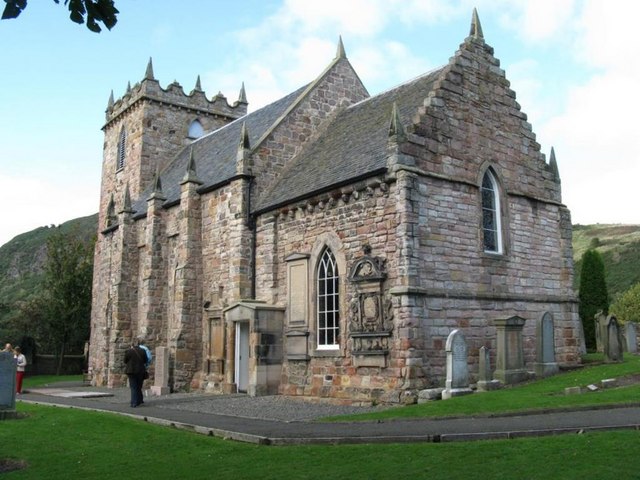
Duddingston Kirk is a Parish Church in the Church of Scotland, located adjacent to Holyrood Park in Duddingston Village, on the east side of the City of Edinburgh. Regular services are held at the kirk, conducted by the minister, Rev Dr James A. P. Jack . The church was built in or around 1124 by Dodin, a Norman knight, on land granted to Kelso Abbey by King David I of Scotland. As originally built, the kirk consisted of the chancel, nave and square tower. The traditional pattern of an east-west axis was adopted. The original entrance on the south wall includes a particularly fine example of Scoto-Norman stone carving, with a round-topped doorway. Following the enlargement of the parish boundaries, the Prestonfield Aisle was added in 1631. This consists of a gallery, downstairs area and burial vaults were on the north side. In 1968 the kirk’s interior was reconditioned, with the former pipe organ removed. The entrance to the kirkyard from Duddingston village is notable for its gatehouse, built as a lookout point to deter “bodysnatchers” in the early 19th century. The Edinburgh bodysnatchers, known as "resurrectionists," stole recently buried corpses to sell to anatomists, and, as in the notorious case of Burke and Hare, sometimes also resorted to murder. Given its proximity to central Edinburgh, Duddingston has long been a favourite location for many of the city’s artists and professionals. The novelist Walter Scott was ordained an elder at Duddingston in 1806. A famous and widely admired minister in the early 19th century was the Reverend John Thomson, a notable painter and friend of Raeburn and Turner. He referred to his parishioners as "ma bairns" and hence one possible explanation of the popular Scottish expression "We’re a' Jock Tamson’s bairns”. Another minister of this parish, James Macfarlane, was Moderator of the General Assembly in 1865.

Museum of Scotland

National Museums Scotland was formed by Act of Parliament in 1985 [1], amalgamating the former National Museum of Antiquities of Scotland and The Royal Scottish Museum. The National Museum of Scotland, Edinburgh, Scotland, was formed in 2006 with the merger of the new Museum of Scotland, with collections relating to Scottish antiquities, culture and history, and the adjacent Royal Museum , with collections covering science and technology, natural history, and world cultures. The two connected buildings stand beside each other on Chambers Street, by the intersection with the George IV Bridge, in central Edinburgh. The museum is part of National Museums Scotland. Admission is free. The two buildings retain distinctive characters: the Museum of Scotland is housed in a modern building opened in 1998, while the former Royal Museum building was begun in 1861, and partially opened in 1866, with a Victorian Romanesque Revival facade and a grand central hall of cast iron construction that rises the full height of the building. This building underwent a major refurbishment and reopened on 29 July 2011 after a three-year, £47 million project to restore and extend the building led by Gareth Hoskins Architects along with the concurrent redesign of the exhibitions by Ralph Appelbaum Associates. The National Museum incorporates the collections of the former National Museum of Antiquities of Scotland, and the Royal Museum. As well as the national collections of Scottish archaeological finds and medieval objects, the museum contains artefacts from around the world, encompassing geology, archaeology, natural history, science, technology, art, and world cultures. The 16 new galleries reopened in 2011 include 8,000 objects, 80 per cent of which were not formerly on display. One of the more notable exhibits is the stuffed body of Dolly the sheep, the first successful clone of a mammal from an adult cell. Other highlights include Ancient Egyptian exhibitions, one of Elton John's extravagant suits and a large kinetic sculpture named the Millennium Clock. A Scottish invention that is a perennial favourite with school parties is The Maiden, an early form of guillotine. In 2013, the museum had 1,768,090 visitors during the year.

St Giles' Cathedral

The High Kirk of Edinburgh, commonly called St Giles Cathedral, is the principal place of worship of the Church of Scotland in Edinburgh. Its distinctive crown steeple is a prominent feature of the city skyline, at about a third of the way down the Royal Mile which runs from the Castle to Holyrood Palace. The church has been one of Edinburghs religious focal points for approximately 900 years. The present church dates from the late 14th century, though it was extensively restored in the 19th century, and is protected as a category A listed building. Today it is sometimes regarded as the "Mother Church of Presbyterianism". The cathedral is dedicated to Saint Giles, who is the patron saint of Edinburgh, as well as of cripples and lepers, and was a very popular saint in the Middle Ages. It is the Church of Scotland parish church for part of Edinburghs Old Town. St Giles was only a cathedral in its formal sense for two periods during the 17th century, when episcopalianism, backed by the Crown, briefly gained ascendancy within the Kirk . In the mediaeval period, prior to the Reformation, Edinburgh had no cathedral as it was under the jurisdiction of the Bishop of St Andrews, whose episcopal seat was St Andrews Cathedral. For most of its post-Reformation history the Church of Scotland has not had bishops, dioceses, or cathedrals. As such, the use of the term cathedral today carries no practical meaning. The "High Kirk" title is older, being attested well before the buildings brief period as a cathedral.

This attraction is located in

This is a private property. Please enjoy respectfully and do not disturb the occupants.

Edit Categories
Add Tours

This attraction is not part of any tours

Add Collections

This attraction is not part of any collections


Some of the attractions we imported from Wikipedia are not perfect. Send us an email detailing what's wrong and we'll look into fixing it.

GuRoute is all about Gurus sharing their local knowledge. If you feel up to fixing this problem yourself, why not adopt it. You will become the owner and can fix whatever problems you see.

We've copied a link to this attraction into your clipboard so that ou can paste it into an email or text message...

More Info...
You can add your friends to the visit yourself, or, send them a link and let them add themselves...

The visit will appear on both your timelines and on your Shared Timeline.

Click below and we'll email you a link that you can send on to friends or post on your group's Facebook page.

If your friends aren't members of GuRoute yet, this is a great way to get them started.
Recent
Recently used Collections will appear here...
Recent
Recently used tours will appear here...

Where is this?

GuRoute likes to place attractions inside other attractions. So, maybe it's in a city, or maybe it's inside a particular park in that city. Maybe your attraction is a huge park that spans half the county, or multiple counties.

Determining where this attraction is gives it context - if it's in a park, you'll be able to see it alongside all the other attractions in that park. And that helps define the park.

GuRoute will automatically calculate a parent region for this attraction. You can change it if there is something more appropriate.

This attraction is currently located in .

Change

This attraction does not yet have any reviews

Please login to write a review...

Reviewed by
Record new Visit

Add this location to your timneline?

  • If there's an existing attraction open it and add it to your timeline...
  • If not, enter a title and we'll create a new attraction for your memories...
Create new Attraction

Create a new attraction at this location?

  • We rely on Gurus like you to share your local knowledge...
(Give a name for this location)


+
Add this to your timeline instead...

Imagine having a record of all the cool things you've done in your life!


Using our timeline you can keep track of everywhere you visit in your lifetime...

But, you'll need to sign in first...

Add contacts so that you can share your travels and record places that you visit together...

Family
Favorites
Family
Favorites

Profile TimeLine Our Visits Edit Accept Decline Invite

If you have any more friends that visited this place with you, feel free to add them to the visit. We'll write it to their timeline and once they confirm it, they too will have this memory for a lifetime.

If they're not already registered, you just need their name and email address and you can add them and we'll send them an invite on your behlaf.

Add a tour comment

Add some extra information for when this attraction is viewed as part of your tour...

Next Stop Instructions

Add some instructions for what to see/do on the way to the next stop...

Next Stop Instructions

Add some instructions for what to see/do on the way to the next stop...

If you're visiting an existing attraction, open it and add it to your timeline. If there is no attraction for the place you are visiting...

  • Click 'Add My Location' below
  • Or right-click on the map to mark a different location
  • Or long-press if you have a touch screen
You can even add locations while you're offline....
  • Load up the map when you're online and we'll keep track of your locaiton
  • You can add locations to your timeline
  • When you are online again we'll sync them with the cloud

We can't connect to the internet right now. The following attractions are saved locally and can be uploaded when you're online...

GuRoute would like to access your current location so that we can pin you on the map and show you nearby attractions

Add friends so that you can share your experiences with each other...

Add tour to What's Next?

Go...

Either for yourself or someone else...

  1. Do your trip research in GuRoute
    Add all the places that you think might be worthy of a visit into a trip-plan
  2. Add your trip-plan to your "What's Next" timeline
    (or a friend's "What's Next" timeline)
  3. When you're on vacation you'll have all your research at your fingertips
  4. Share your timline with your friends
    They can enjoy your vacation with you, seeing not only where you've been, but where you're going next...
  5. Add/remove attractions if things change

It also makes a great souvenir of your trip

Collections

Go...

Create a home page for a collection of attractions

  • Add an image and description to display on the homepage
  • Start adding content
    Add existing attractions to your collection or create new attractions of your own
  • Collections can be:
    • Public (Anyone can add attractions to your collection)
    • Shared (Only yourself and Gurus you nominate can add content)
    • Private (The collection will only be visible to yourself)

Uses

  • Local business or hotel
    Showcase local attractions that you endorse
  • Clubs
    Showcase attractions that members have created (eg. local historical society)
  • Special Interest
    If GuRoute does not have a category for your special interest you add your attractions to your own collection instead

Examples

Walking/Driving Tours

Go...

A guided tour where GuRoute will direct you from stop to stop and narrate a description of each attraction you arrive at

  • GuRoute uses your phone's GPS to guide you from stop to stop
  • GuRoute automatically detects when you arrive at the next tour-stop and narrates the description of the attraction (Chrome Only)
  • It then sends you on to the next stop

Tours are great to attract people to your town. Even places with no significant points of interest can be lots of fun when part of a tour


Cater tours to your Audience

  • Kid-friendly Tours
    • Focus on what will keep kids interested
    • Instead of parents having to drag their kids around they'll be struggling to keep up
    • Let the kids navigate and they'll get more fun out of finding that historical plaque than they ever would from reading it
  • Accessible tours
  • Short and long tours of the same location

What you need to do...

  1. Click 'Go...'
    Enter a title, description and location for the tour
  2. Add existing attractions OR create new ones and add them to the tour
  3. For existing attractions you can add more information specific to the theme of the tour
  4. You can also add instructions on what to do or see en-route to the next tour-stop
  5. Try out your tour and see how it works...

Mystery Tour

Go...

Create a Mystery Tour

Create a series of clues to show people around a city, neighborhood or whatever place you like...

  • GuRoute will show people clues to get them from attraction to attraction
  • When they reach each stop GuRoute will tell them about the place and give them the next clue
  • Take as long or as you like and explore each location at your leisure

Scavenger Hunt

Go...

Create a Scavenger Hunt

Create a series of questions that people have to answer. The answers can all be discovered by walking aroung the area, looking for clues.

  • How many beers are on tap at Michael Collin's Irish Bar?
  • What's the name of the oldest building on main streeet?
  • Show a picture of some public art and ask them what it is called
  • Clues can have numeric or multiple choice answers