Sign In

My Timeline

GuRoute

Discover Your World

Share your Experiences

Record your Life


Top Attractions in Wrocław

Wrocław Cathedral

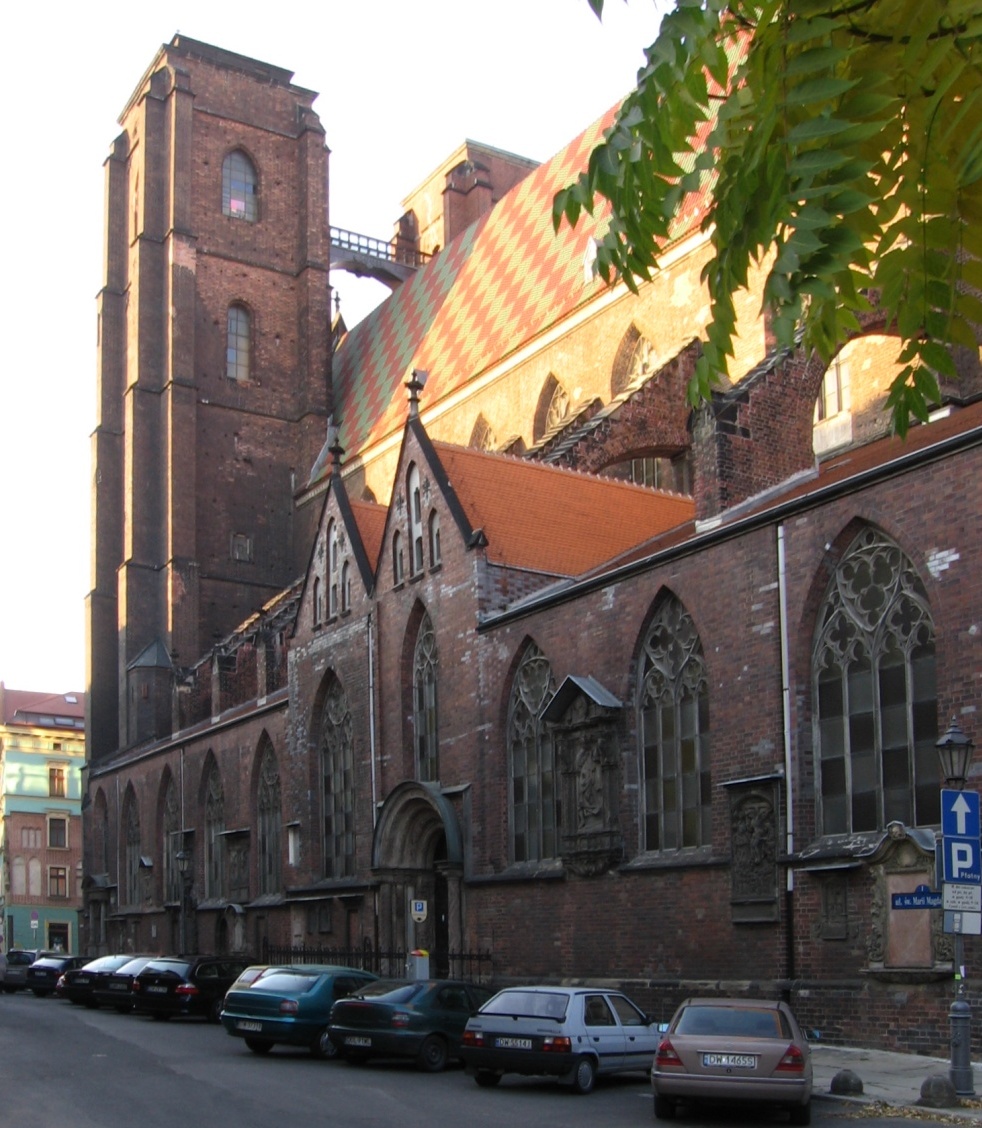
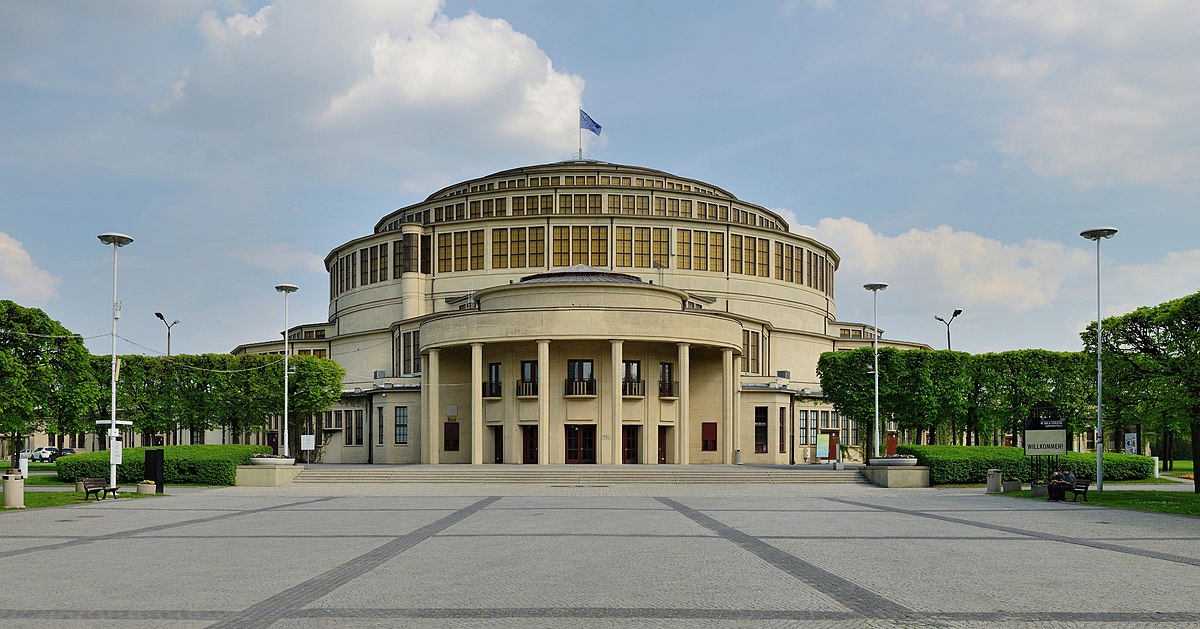
The Cathedral of St. John the Baptist in Wrocław,, is the seat of the Roman Catholic Archdiocese of Wrocław and a landmark of the city of Wrocław in Poland. The cathedral, located in the Ostrów Tumski district, is a Gothic church with Neo-Gothic additions. The current standing cathedral is the fourth church to have been built on the site. A first church at the location of the present cathedral was built under Přemyslid rule in the mid 10th century, a fieldstone building with one nave about 25 m in length, including a distinctive transept and an apse. After the Polish conquest of Silesia and the founding of the Wrocław diocese under the Piast duke Bolesław I Chrobry about 1000, this Bohemian church was replaced by a larger basilical structure with three naves, a crypt, and towers on its eastern side. The first cathedral was however soon destroyed, probably by the invading troops of Duke Bretislaus of Bohemia around 1039. A larger, Romanesque-style church was soon built in its place in the times of Duke Casimir I, and expanded similar to Płock Cathedral on the behest of Bishop Walter of Malonne in 1158. After the end of the Mongol invasion, the church was again largely rebuilt in the present-day Brick Gothic style. It was the first building of the city to be made of brick when construction of the new choir and ambulatory started in 1244. The nave with sacristy and the basements of the prominent western steeples were added under Bishop Nanker until 1341. On June 19, 1540, a fire destroyed the roof, which was restored 16 years later in Renaissance style. Another fire on June 9, 1759, burnt the towers, roof, sacristy, and quire. The damage was slowly repaired during the following 150 years. In the 19th century, Karl Lüdecke rebuilt the interior and western side in neogothic style. Further work was done at the beginning of the 20th century by Hugo Hartung, especially on the towers ruined during the 1759 fire. The cathedral was almost entirely destroyed during the Siege of Breslau and heavy bombing by the Red Army in the last days of World War II. Parts of the interior fittings were saved and are now on display at the National Museum in Warsaw. The initial reconstruction of the church lasted until 1951, when it was reconsecrated by Archbishop Stefan Wyszyński. In the following years, additional aspects were rebuilt and renovated. The original, conical shape of the towers was restored only in 1991. The cathedral holds the largest pipe organ in Poland, built in 1913 by E.F. Walcker Sons of Ludwigsburg, Baden-Württemberg, Germany, for the Centennial Hall — formerly the largest organ in the world.

Market Square

The Market Square, Wrocław is a medieval market square in Wrocław, now the heart of a pedestrian zone. The square is rectangular with the dimensions 213 by 178 metres . It is one of the largest markets in Europe, with the largest two town halls in Poland. The buildings around the square are built according to different styles: the middle part of the ring is occupied by a block of buildings consisting of the Old Town Hall, the New City Hall as well as numerous citizens houses. The market square is an urban ensemble with the two diagonally contiguous areas the Salt Market and the square in front of St. Elisabeths Church. Eleven streets lead to the market: two to each corner, two narrow lanes and an opened out side square, Kurzy Targ . The market was founded according to Magdeburg law as early as the rule of Henry I the Bearded between 1214 and 1232. Over time, the patricians houses appeared and by the middle of the 14th century they had formed a closed construction with the limits of the plots defined. In the 19th century the square was connected to the tram lines, at first a horse-drawn system, but after 1892 electric. Through to the end of the 1970s, cars were able to drive through along an east-west axis. Between 1996 and 2000 the square was resurfaced, while the east side, the last to be accessible to cars, was pedestrianised. There are now 60 numbered plots on the market square, with some buildings occupying several. The limits of the plots often follow lines different from those first laid out since estates were often merged and divided in the late Middle Ages. Each property has a traditional name, usually associated with the coat of arms visible on the facade or related to the history of the house itself, for instance Under the Griffins, Under the Blue Sun and Old Town Hall.

Polish Theatre in Wrocław

The Polish Theatre in Wrocław is one of the theatres in Wrocław, Poland. The Polish Theatre in Wrocław has three stages: Small Stage on 28 Świdnicka Street, “Na Świebodzkim” Stage, situated inside Świebodzki railway station’s building at 20c Orląt Lwowskich Square, and Jerzy Grzegorzewski Stage located in the Theatre’s main building at 3 Zapolska Street. The main building, the result of the endeavors of a Wrocław merchant: Paul Auerbach, was designed by Berlin architect: Walter Hentschel and completed in 1909. For the standards of the time it was both very functional and technically advanced. In the early 30s of the twentieth century the theatre, called Schauspielhaus in German, was the newest and, with 1736 seats, also the biggest stage in Wroclaw. Since its beginning, the theatre functioned as a musical theatre, where mostly operetta was staged. Towards the end of World War Two the theatre’s building was partly damaged. The theatre’s present official name is The Polish Theatre in Wrocław. The building on Zapolska Street was reconstructed in 1950, and in the same year, on February 20, it held its first premiere. The play was: A Thousand Brave Men and was written by architect Jan Rojewski. It was a socialist propagandist play about workers struggling to repair the war damage in Polish cities. For Wrocław’s audience it was a completely new type of modern drama. The theatre was in use until 1994, when during the night of January 18 a fire broke out and destroyed the auditorium. The theatre was once again rebuilt, this time according to the design of Witold Jackiewicz. The play staged during the opening ceremony on May 20, 1996 was Wroclaw Improvisations, directed by Andrzej Wajda himself.

Monopol Hotel

The Monopol Hotel is a five-star hotel located at Helena Modrzejewska street, Wrocław. It was built in 1892 in what was then Breslau in Germany, in Art Nouveau/Neo-Baroque style on the site of the graveyard of St Dorothy's Church. The graveyard had been converted into a jail in 1817. The plot was bought near the end of the 19th century for 600 000 marks by Breslau's Jews banker Wallenberg Pachaly and architect Karl Grosser, who built a trade house and hotel in which there were 69 rooms, including 21 single occupation rooms, 46 double occupation and 2 apartments. Room size ran from 10 to 36 square metres and according to 19th century standards were luxurious. It was fondly christened "the pearl of Lower Silesia" (die Perle Niederschlesiens). Famous patrons of the hotel during the German era included Marlene Dietrich and Gerhart Hauptmann. The balcony above the main entrance was purposely built in 1937 to coincide with Hitler's visit to Breslau, who gave a speech from the said balcony the following year on the occasion of the German Gymnastics and Sports Festival. However, contrary to popular legend, Hitler never actually stayed at the hotel. The hotel's in-house department store was located at the corner of Świdnicka and Modrzejewskiej street (formerly Schweidnitzerstraße and Agnes-Sorma-Straße respectively). During the last months of World War II it was significantly damaged so that it was rebuilt only in 1961 and became an exclusive cafe "Monopol". At the end of the 20th century it was closed and commercial functions were restored in the building. The hotel building itself survived the war without significant damage. Following the transfer of Breslau to Poland in 1945, the hotel hosted the World Congress of Intellectuals during the Exhibition of the Recovered Territories in 1948 with guests such as Pablo Picasso, Irène Joliot-Curie, Ilya Ehrenburg and Mikhail Sholokhov. In 1984 the building was entered into Wrocław's register of monuments. The façade was given a facelift in 2008. Today the Monopol Hotel has two restaurants (one Polish and the other Mediterranean), a spa and wellness club and organizes conferences and banquets. During Euro 2012 it hosted the Czech national team.

This attraction is located in

This is a private property. Please enjoy respectfully and do not disturb the occupants.

Edit Categories
Add Tours

This attraction is not part of any tours

Add Collections

This attraction is not part of any collections


Some of the attractions we imported from Wikipedia are not perfect. Send us an email detailing what's wrong and we'll look into fixing it.

GuRoute is all about Gurus sharing their local knowledge. If you feel up to fixing this problem yourself, why not adopt it. You will become the owner and can fix whatever problems you see.

We've copied a link to this attraction into your clipboard so that ou can paste it into an email or text message...

More Info...
You can add your friends to the visit yourself, or, send them a link and let them add themselves...

The visit will appear on both your timelines and on your Shared Timeline.

Click below and we'll email you a link that you can send on to friends or post on your group's Facebook page.

If your friends aren't members of GuRoute yet, this is a great way to get them started.
Recent
Recently used Collections will appear here...
Recent
Recently used tours will appear here...

Where is this?

GuRoute likes to place attractions inside other attractions. So, maybe it's in a city, or maybe it's inside a particular park in that city. Maybe your attraction is a huge park that spans half the county, or multiple counties.

Determining where this attraction is gives it context - if it's in a park, you'll be able to see it alongside all the other attractions in that park. And that helps define the park.

GuRoute will automatically calculate a parent region for this attraction. You can change it if there is something more appropriate.

This attraction is currently located in .

Change

This attraction does not yet have any reviews

Please login to write a review...

Reviewed by
Record new Visit

Add this location to your timneline?

  • If there's an existing attraction open it and add it to your timeline...
  • If not, enter a title and we'll create a new attraction for your memories...
Create new Attraction

Create a new attraction at this location?

  • We rely on Gurus like you to share your local knowledge...
(Give a name for this location)


+
Add this to your timeline instead...

Imagine having a record of all the cool things you've done in your life!


Using our timeline you can keep track of everywhere you visit in your lifetime...

But, you'll need to sign in first...

Add contacts so that you can share your travels and record places that you visit together...

Family
Favorites
Family
Favorites

Profile TimeLine Our Visits Edit Accept Decline Invite

If you have any more friends that visited this place with you, feel free to add them to the visit. We'll write it to their timeline and once they confirm it, they too will have this memory for a lifetime.

If they're not already registered, you just need their name and email address and you can add them and we'll send them an invite on your behlaf.

Add a tour comment

Add some extra information for when this attraction is viewed as part of your tour...

Next Stop Instructions

Add some instructions for what to see/do on the way to the next stop...

Next Stop Instructions

Add some instructions for what to see/do on the way to the next stop...

If you're visiting an existing attraction, open it and add it to your timeline. If there is no attraction for the place you are visiting...

  • Click 'Add My Location' below
  • Or right-click on the map to mark a different location
  • Or long-press if you have a touch screen
You can even add locations while you're offline....
  • Load up the map when you're online and we'll keep track of your locaiton
  • You can add locations to your timeline
  • When you are online again we'll sync them with the cloud

We can't connect to the internet right now. The following attractions are saved locally and can be uploaded when you're online...

GuRoute would like to access your current location so that we can pin you on the map and show you nearby attractions

Add friends so that you can share your experiences with each other...

Add tour to What's Next?

Go...

Either for yourself or someone else...

  1. Do your trip research in GuRoute
    Add all the places that you think might be worthy of a visit into a trip-plan
  2. Add your trip-plan to your "What's Next" timeline
    (or a friend's "What's Next" timeline)
  3. When you're on vacation you'll have all your research at your fingertips
  4. Share your timline with your friends
    They can enjoy your vacation with you, seeing not only where you've been, but where you're going next...
  5. Add/remove attractions if things change

It also makes a great souvenir of your trip

Collections

Go...

Create a home page for a collection of attractions

  • Add an image and description to display on the homepage
  • Start adding content
    Add existing attractions to your collection or create new attractions of your own
  • Collections can be:
    • Public (Anyone can add attractions to your collection)
    • Shared (Only yourself and Gurus you nominate can add content)
    • Private (The collection will only be visible to yourself)

Uses

  • Local business or hotel
    Showcase local attractions that you endorse
  • Clubs
    Showcase attractions that members have created (eg. local historical society)
  • Special Interest
    If GuRoute does not have a category for your special interest you add your attractions to your own collection instead

Examples

Walking/Driving Tours

Go...

A guided tour where GuRoute will direct you from stop to stop and narrate a description of each attraction you arrive at

  • GuRoute uses your phone's GPS to guide you from stop to stop
  • GuRoute automatically detects when you arrive at the next tour-stop and narrates the description of the attraction (Chrome Only)
  • It then sends you on to the next stop

Tours are great to attract people to your town. Even places with no significant points of interest can be lots of fun when part of a tour


Cater tours to your Audience

  • Kid-friendly Tours
    • Focus on what will keep kids interested
    • Instead of parents having to drag their kids around they'll be struggling to keep up
    • Let the kids navigate and they'll get more fun out of finding that historical plaque than they ever would from reading it
  • Accessible tours
  • Short and long tours of the same location

What you need to do...

  1. Click 'Go...'
    Enter a title, description and location for the tour
  2. Add existing attractions OR create new ones and add them to the tour
  3. For existing attractions you can add more information specific to the theme of the tour
  4. You can also add instructions on what to do or see en-route to the next tour-stop
  5. Try out your tour and see how it works...

Mystery Tour

Go...

Create a Mystery Tour

Create a series of clues to show people around a city, neighborhood or whatever place you like...

  • GuRoute will show people clues to get them from attraction to attraction
  • When they reach each stop GuRoute will tell them about the place and give them the next clue
  • Take as long or as you like and explore each location at your leisure

Scavenger Hunt

Go...

Create a Scavenger Hunt

Create a series of questions that people have to answer. The answers can all be discovered by walking aroung the area, looking for clues.

  • How many beers are on tap at Michael Collin's Irish Bar?
  • What's the name of the oldest building on main streeet?
  • Show a picture of some public art and ask them what it is called
  • Clues can have numeric or multiple choice answers