Sign In

My Timeline

GuRoute

Discover Your World

Share your Experiences

Record your Life


Top Attractions in Mazowieckie

Warsaw

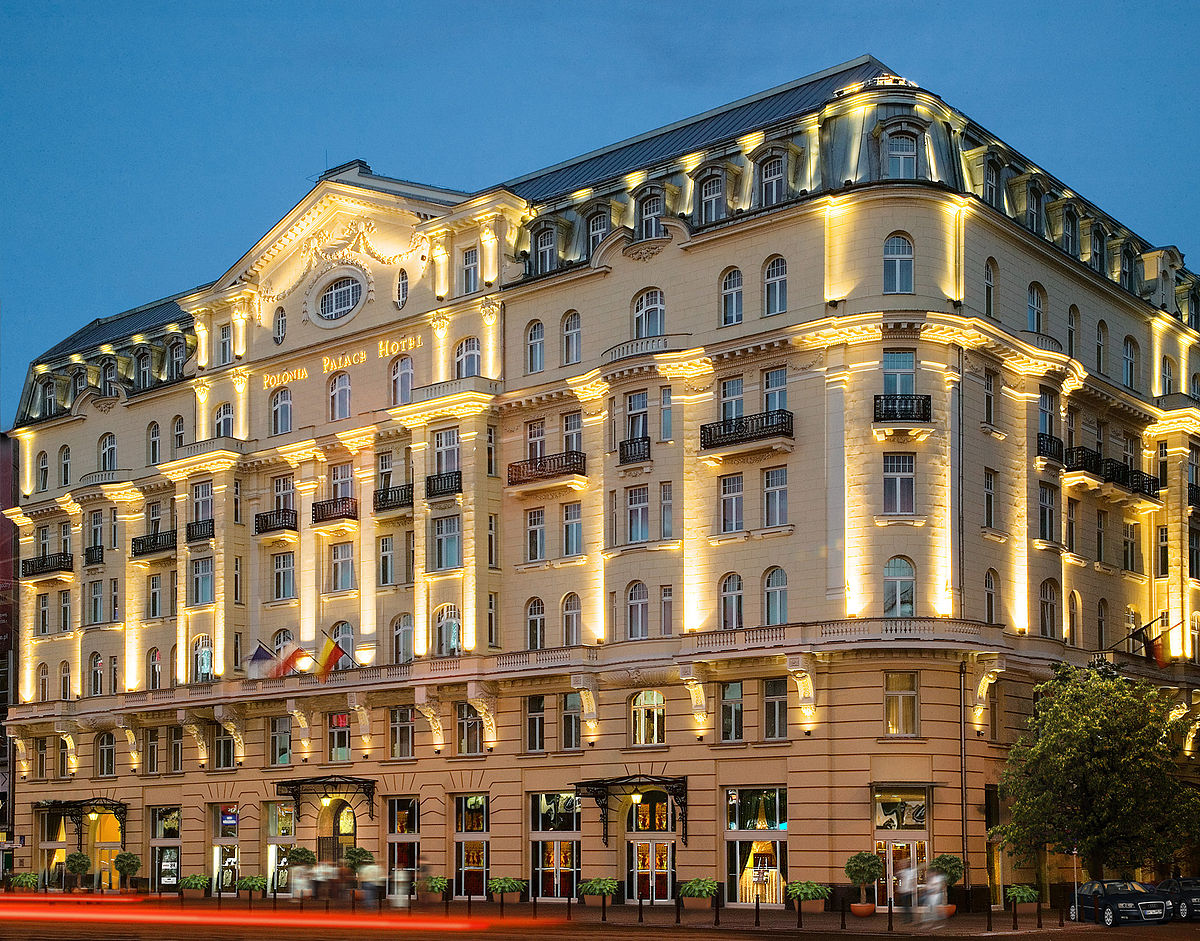
Warsaw is the capital and largest city of Poland. It is located on the Vistula River, in east-central Poland, roughly 260 kilometres from the Baltic Sea and 300 kilometres from the Carpathian Mountains. Its population is estimated at 1.740 million residents within a greater metropolitan area of 2.666 million residents, which makes Warsaw the 9th most populous capital city in the European Union. The city limits cover 516.9 square kilometres, while the metropolitan area covers 6,100.43 square kilometres . In 2012, Warsaw was ranked as the 32nd most liveable city in the world by the Economist Intelligence Unit. It was also ranked as one of the most liveable cities in Central and Eastern Europe. Today Warsaw is considered an Alpha– global city, a major international tourist destination and a significant cultural, political and economic hub. Warsaws economy, by a wide variety of industries, is characterised by FMCG manufacturing, metal processing, steel and electronic manufacturing and food processing. The city is a significant centre of research and development, BPO, ITO, as well as Polish media industry. The Warsaw Stock Exchange is one of the largest and most important in Central Europe. Frontex, the European Union agency for external border security, is headquartered in Warsaw. Unusually for a European city, Warsaw has a prominent skyline with many skyscrapers and high-rise buildings in the city center. Warsaw is one of only a few cities in the European Union that have such a skyline, together with Frankfurt, London and Paris. The first historical reference to Warsaw dates back to the year 1313, when initially Kraków served as the Polish capital city. Due to its central location between the Commonwealths capitals of Kraków and Vilnius, Warsaw became the capital of the Commonwealth and the Crown of the Kingdom of Poland when King Sigismund III Vasa moved his court from Kraków to Warsaw in 1596. After the Third Partition of Poland in 1795, Warsaw was incorporated into the Kingdom of Prussia. In 1806 during the Napoleonic Wars, the city became the official capital of the Grand Duchy of Warsaw, a puppet state of the First French Empire created by Napoleon Bonaparte. With accordance to the decision of the Congress of Vienna, Warsaw in 1815 was annexed by the Russian Empire and became part of the "Congress Kingdom". Only in 1918 it regained independence from the foreign rule and emerged as a new capital of the independent Republic of Poland. Along with the German invasion in 1939, the massacre of the Jewish population and deportations to concentration camps led to the uprising in the Warsaw ghetto in 1943 and to a major and devastating Warsaw Uprising between August and October 1944. For this Warsaw gained the title of the "Phoenix City" because it has survived many wars, conflicts and invasions throughout its long history. Most notably, the city had to be painstakingly rebuilt after the extensive damage it suffered in World War II, during which 85% of its buildings were destroyed. On 9 November 1940, the city was awarded Polands highest military decoration for heroism, the Virtuti Militari, during the Siege of Warsaw . The city is the seat of a Roman Catholic archdiocese and diocese, and possesses various universities, most notably the Polish Academy of Sciences and the University of Warsaw, two opera houses, theatres, museums, libraries and monuments. The historic city centre of Warsaw with its picturesque Old Town in 1980 was listed as a UNESCO World Heritage Site. Other main architectural attractions include the Castle Square with the Royal Castle and the iconic King Sigismunds Column, St. Johns Cathedral, Market Square, palaces, churches and mansions all displaying a richness of colour and architectural detail. Buildings are representatives of nearly every European architectural style and historical period. Warsaw has wonderful examples of architecture from the gothic, renaissance, baroque and neoclassical periods and around a quarter of the city is filled with grand parks and royal gardens.

Płock

Płock is a city on the Vistula river in central Poland. It is located in the Masovian Voivodeship , having previously been the capital of the Płock Voivodeship . According to the data provided by GUS on 30 June 2009 there were 126,675 inhabitants in the city. Its full ceremonial name is the Princely Capital City of Płock or the Ducal Capital City of Płock included in the preamble to the City Statute. It is used in ceremonial documents as well as for preserving an old tradition. Płock is now a capital of the powiat in the west of the Mazovian Voivodeship. From 1079 1138 it was the first historical capital of Poland. Its cathedral has the sarcophagi of the Polish monarchy. It is the cultural, academic, scientific, administrative and transportation center of the west and north Masovian region. The first Jewish settlers came to the city in the 14th century, responding to the extension of rights by the Polish kings. They built a community and constituted a large portion of the population through the 19th century, sometimes more than 40%. Jews contributed to expansion of trades and crafts, and helped the process of industrialization. In 1939, they made up 26% of the city's population. After the 1939 invasion of Poland, the German Nazis established a Jewish ghetto in Płock in 1940. They deported many of the Jews to other areas but exterminated most of them in the Holocaust. By the war's end, only 300 Jewish residents were known to have survived, of more than 10,000 in the region.

Żoliborz

Żoliborz is one of the northern districts of the city of Warsaw. It is located directly to the north of the City Centre, on the left bank of the Vistula river. It has approximately 50,000 inhabitants and is one of the smallest boroughs of Warsaw. In the 18th century the area belonged to the Piarists of a monastery in the nearby city of Warsaw. The monks started to parcel the grounds and allowed for the creation of various settlements on their fields, which were parceled between several villages. One of them was named Joli Bord (Beautiful Embankment in French, which was later transcribed to Polish language as Żoliborz). After 1831 the area was confiscated by Russian authorities, who erected the Warsaw Citadel there. The area was mostly unpopulated and even after the ban on construction of brick-made houses was lifted, it retained much of its rural character. After Poland regained its independence in 1918, the city of Warsaw started to grow rapidly and new areas were needed. In the 1920s the area of Żoliborz was converted into a borough of Warsaw and the construction of new houses started. Until the late 1930s part of today's Żoliborz was built-up with houses notable for their modernist architecture. Open areas, parks and squares built there are regarded as fine examples of good urbanist architecture. Also, a so-called Żoliborz Oficerski (Officers' Żoliborz) was built up with villas for the officers of the Polish Army and other notable people of the epoch. Several star-shaped squares were built along the main axis of the borough, with the Plac Wilsona as the borough's centre and main transport hub. During the Warsaw Uprising one of the first struggles took part in Żoliborz. After the Polish soldiers were defeated by the Germans, Żoliborz was spared the fate of the rest of Warsaw and survived the war to a higher degree than other areas. The district has traditionally been where the intelligentsia live. The names of its estates: Żoliborz Dziennikarski (Journalists’ Żoliborz), Żoliborz Oficerski (Officers' Żoliborz), Żoliborz Urzędniczy (Clerks’ Żoliborz) are derived from the former inhabitants professions. Żoliborz has a lot of beautiful architecture: charming old villas and colonies - properties built in the 1930s by the socialist Warsaw Housing Cooperative (WSM), which used to have common laundries, kindergartens and dining-rooms. The main site of interest in Żoliborz is St. Stanislaus Kostka Church with the tomb of blessed Jerzy Popiełuszko, which during the last 30 years has been visited by approximately 20,000,000 people (among them John Paul II).

Solec nad Wisłą

Solec nad Wisłą [ˈsɔlɛt͡s ˌnad ˈviswɔ̃] is a village in Lipsko County, Masovian Voivodeship, in east-central Poland. It is the seat of the gmina called Gmina Solec nad Wisłą. It lies approximately 8 kilometres east of Lipsko and 132 km south-east of Warsaw. The village has a population of 1,650, and is located on the Vistula river, in historic Lesser Poland. It used to be a town from 1347 to 1869. Even though technically a village, Solec maintains the character of a town, with a traditional market square, a feature of other ancient European towns. In its early days, Solec used to be called Solca, and the name most probably comes from trading of salt, which took place here. The village was also called Solec Sandomierski and Solec Radomski, and in the 19th century, the name Solec nad Wisłą was accepted, to distinguish it from other places, such as Solec Kujawski. Solec has a long history, it was first mentioned in 1138 in the Gniezno bull, and at that time, it belonged to the Archbishop of Gniezno. In the 12th century the village belonged to the Order of the Holy Sepulchre, and in 1325 it was purchased by King Władysław Łokietek. In 1347 King Kazimierz Wielki granted it Magdeburg rights, building here a castle and renovating a parish church. In the 15th and 16th centuries Solec emerged as a local salt trade center. It organized fairs and enjoyed several privileges, confirmed by King Zygmunt Stary. In 1615-1627 Krzysztof Zbaraski rebuilt the castle in Renaissance style and founded a monastery. During the Swedish invasion of Poland the prosperous town and the castle were completely destroyed out of 246 houses, only 6 remained after the war. The town, which until the Partitions of Poland belonged to Lesser Poland’s Sandomierz Voivodeship, began to slowly recover in the 18th century. After the dissolution of Poland it was annexed first by Austria, and in 1815, by Russian-controlled Congress Poland. After the January Uprising Solec lost its town charter , and has been a village since then. Among points of interest there are: 14th-century Gothic parish church, remodelled in the 16th and 17th centuries, with a late Renaissance altar, complex of former monastery , which has belonged to the state since 1864, St. Barbara cemetery with a Baroque cemetery church, several roadside chapels, with the oldest one from 1784, ruins of a 14th-century castle, which guarded the Vistula crossing. In 1615-1627 the castle was remodelled by Krzysztof Zbaraski, and in 1655 1660 it was completely destroyed, together with whole town of Solec, 18th-century houses in the market square, 19th-century town hall.

This attraction is located in

This is a private property. Please enjoy respectfully and do not disturb the occupants.

Edit Categories
Add Tours

This attraction is not part of any tours

Add Collections

This attraction is not part of any collections


Some of the attractions we imported from Wikipedia are not perfect. Send us an email detailing what's wrong and we'll look into fixing it.

GuRoute is all about Gurus sharing their local knowledge. If you feel up to fixing this problem yourself, why not adopt it. You will become the owner and can fix whatever problems you see.

We've copied a link to this attraction into your clipboard so that ou can paste it into an email or text message...

More Info...
You can add your friends to the visit yourself, or, send them a link and let them add themselves...

The visit will appear on both your timelines and on your Shared Timeline.

Click below and we'll email you a link that you can send on to friends or post on your group's Facebook page.

If your friends aren't members of GuRoute yet, this is a great way to get them started.
Recent
Recently used Collections will appear here...
Recent
Recently used tours will appear here...

Where is this?

GuRoute likes to place attractions inside other attractions. So, maybe it's in a city, or maybe it's inside a particular park in that city. Maybe your attraction is a huge park that spans half the county, or multiple counties.

Determining where this attraction is gives it context - if it's in a park, you'll be able to see it alongside all the other attractions in that park. And that helps define the park.

GuRoute will automatically calculate a parent region for this attraction. You can change it if there is something more appropriate.

This attraction is currently located in .

Change

This attraction does not yet have any reviews

Please login to write a review...

Reviewed by
Record new Visit

Add this location to your timneline?

  • If there's an existing attraction open it and add it to your timeline...
  • If not, enter a title and we'll create a new attraction for your memories...
Create new Attraction

Create a new attraction at this location?

  • We rely on Gurus like you to share your local knowledge...
(Give a name for this location)


+
Add this to your timeline instead...

Imagine having a record of all the cool things you've done in your life!


Using our timeline you can keep track of everywhere you visit in your lifetime...

But, you'll need to sign in first...

Add contacts so that you can share your travels and record places that you visit together...

Family
Favorites
Family
Favorites

Profile TimeLine Our Visits Edit Accept Decline Invite

If you have any more friends that visited this place with you, feel free to add them to the visit. We'll write it to their timeline and once they confirm it, they too will have this memory for a lifetime.

If they're not already registered, you just need their name and email address and you can add them and we'll send them an invite on your behlaf.

Add a tour comment

Add some extra information for when this attraction is viewed as part of your tour...

Next Stop Instructions

Add some instructions for what to see/do on the way to the next stop...

Next Stop Instructions

Add some instructions for what to see/do on the way to the next stop...

If you're visiting an existing attraction, open it and add it to your timeline. If there is no attraction for the place you are visiting...

  • Click 'Add My Location' below
  • Or right-click on the map to mark a different location
  • Or long-press if you have a touch screen
You can even add locations while you're offline....
  • Load up the map when you're online and we'll keep track of your locaiton
  • You can add locations to your timeline
  • When you are online again we'll sync them with the cloud

We can't connect to the internet right now. The following attractions are saved locally and can be uploaded when you're online...

GuRoute would like to access your current location so that we can pin you on the map and show you nearby attractions

Add friends so that you can share your experiences with each other...

Add tour to What's Next?

Go...

Either for yourself or someone else...

  1. Do your trip research in GuRoute
    Add all the places that you think might be worthy of a visit into a trip-plan
  2. Add your trip-plan to your "What's Next" timeline
    (or a friend's "What's Next" timeline)
  3. When you're on vacation you'll have all your research at your fingertips
  4. Share your timline with your friends
    They can enjoy your vacation with you, seeing not only where you've been, but where you're going next...
  5. Add/remove attractions if things change

It also makes a great souvenir of your trip

Collections

Go...

Create a home page for a collection of attractions

  • Add an image and description to display on the homepage
  • Start adding content
    Add existing attractions to your collection or create new attractions of your own
  • Collections can be:
    • Public (Anyone can add attractions to your collection)
    • Shared (Only yourself and Gurus you nominate can add content)
    • Private (The collection will only be visible to yourself)

Uses

  • Local business or hotel
    Showcase local attractions that you endorse
  • Clubs
    Showcase attractions that members have created (eg. local historical society)
  • Special Interest
    If GuRoute does not have a category for your special interest you add your attractions to your own collection instead

Examples

Walking/Driving Tours

Go...

A guided tour where GuRoute will direct you from stop to stop and narrate a description of each attraction you arrive at

  • GuRoute uses your phone's GPS to guide you from stop to stop
  • GuRoute automatically detects when you arrive at the next tour-stop and narrates the description of the attraction (Chrome Only)
  • It then sends you on to the next stop

Tours are great to attract people to your town. Even places with no significant points of interest can be lots of fun when part of a tour


Cater tours to your Audience

  • Kid-friendly Tours
    • Focus on what will keep kids interested
    • Instead of parents having to drag their kids around they'll be struggling to keep up
    • Let the kids navigate and they'll get more fun out of finding that historical plaque than they ever would from reading it
  • Accessible tours
  • Short and long tours of the same location

What you need to do...

  1. Click 'Go...'
    Enter a title, description and location for the tour
  2. Add existing attractions OR create new ones and add them to the tour
  3. For existing attractions you can add more information specific to the theme of the tour
  4. You can also add instructions on what to do or see en-route to the next tour-stop
  5. Try out your tour and see how it works...

Mystery Tour

Go...

Create a Mystery Tour

Create a series of clues to show people around a city, neighborhood or whatever place you like...

  • GuRoute will show people clues to get them from attraction to attraction
  • When they reach each stop GuRoute will tell them about the place and give them the next clue
  • Take as long or as you like and explore each location at your leisure

Scavenger Hunt

Go...

Create a Scavenger Hunt

Create a series of questions that people have to answer. The answers can all be discovered by walking aroung the area, looking for clues.

  • How many beers are on tap at Michael Collin's Irish Bar?
  • What's the name of the oldest building on main streeet?
  • Show a picture of some public art and ask them what it is called
  • Clues can have numeric or multiple choice answers