Sign In

My Timeline

GuRoute

Discover Your World

Share your Experiences

Record your Life


Top Attractions in Dartford

Dartford Crossing

The Dartford-Thurrock River Crossing, commonly known as the Dartford Crossing and until 1991 the Dartford Tunnel, is a major road crossing of the River Thames in England, connecting Dartford in Kent to the south to Thurrock in Essex to the north. It consists of two bored tunnels and the Queen Elizabeth II Bridge, a cable stayed bridge. The only fixed road crossing of the Thames east of Greater London, it is the busiest estuarial crossing in the United Kingdom, with an average daily use of over 130,000 vehicles. It opened in stages: the west tunnel in 1963, the east tunnel in 1980 and the bridge in 1991. The crossing forms part of the M25 motorways route, though it is not under motorway restrictions itself. It has been described as one of the most important road crossings in Britain, and suffers from heavy traffic and congestion. The crossings development started in the late 1930s, but was interrupted due to the Second World War and resumed in the 1950s. The original tunnel catered for a single lane of traffic in each direction, but rising traffic levels required the second tunnel to be built. The M25 connected to the tunnels at both ends when completed in 1986, and this increased traffic put pressure on the tunnels capacity. A Private Finance Initiative scheme was started in 1988 to build the bridge. The combined crossing now handles four lanes of traffic in each direction. The crossing has always been tolled, though since 2008 it has been free from 10 pm to 6 am. An electronic charging scheme came into force in November 2014. As a result, the toll can no longer be paid in cash and the old toll booths have been removed. A residents scheme is available, offering further discounts for people living near the crossing.

Queen Elizabeth II Bridge

The Dartford-Thurrock River Crossing, commonly known as the Dartford Crossing and until 1991 the Dartford Tunnel, is a major road crossing of the River Thames in England, connecting Dartford in Kent to the south to Thurrock in Essex to the north. It consists of two bored tunnels and the Queen Elizabeth II Bridge, a cable stayed bridge. The only fixed road crossing of the Thames east of Greater London, it is the busiest estuarial crossing in the United Kingdom, with an average daily use of over 130,000 vehicles. It opened in stages: the west tunnel in 1963, the east tunnel in 1980 and the bridge in 1991. The crossing forms part of the M25 motorway's route, using the tunnels northbound and bridge southbound, though it is not under motorway restrictions itself. It has been described as one of the most important road crossings in Britain, and suffers from heavy traffic and congestion. The crossing's development started in the late 1930s, but was interrupted due to the Second World War and resumed in the 1950s. The original tunnel catered for a single lane of traffic in each direction, but rising traffic levels required the second tunnel to be built. The M25 connected to the tunnels at both ends when completed in 1986, and this increased traffic put pressure on the tunnels' capacity. A Private Finance Initiative scheme was started in 1988 to build the bridge. The combined crossing now handles four lanes of traffic in each direction. The crossing had always been tolled, and from 1 April 2003 this became a charge, though since 2008 it has been free from 10 pm to 6 am. An electronic charging scheme began in November 2014. As a result, the charge can no longer be paid in cash and the old toll booths have been removed. A residents' scheme is available, offering further discounts for people living near the crossing.

Fantaseas

Fantaseas was a chain of indoor waterparks situated in the United Kingdom that opened in the late 1980s, but due to various technical and financial difficulties closed in the mid-nineties. The first was opened in Autumn 1989 on the outskirts of Dartford in Kent. The building contained six American-style water slides, a lazy river, wave pool, an outdoor heated lagoon as well as a cafe and gaming video arcade. Visible on the skyline from the nearby M25 motorway the building dominated the local landscape and became quite an icon of the town. The features in Dartford were as follows: Mind Blower The slowest flume, suitable for children Cyclone Slightly faster, water traveled down in a "zig zag" motion Double Dipper Fast flume with sharp bends Nightmare Dark black flume, no vision whilst riding down Doom Tube Very fast, small flume Wipeout The fastest flume with sharp bends Dartford also included an extensive lazy pool and an indoor flume with multiple routes lasting in excess of 10 minutes. A second opened in 1990 in Chingford, London and featured many of the same rides as the Dartford park, albeit in a different configuration. The Chingford park was considered by some to be tamer than its Dartford counterpart, but still contained many of the same styles of water slides as its predecessor. In the summer of 1992, it was found the foundations of the Dartford site were inadequate to support the building. Its a common myth around the area that the sole reason the Dartford site was shut down was because of this issue, this is in fact untrue as the main reason was financial. Many considered the parks to be fads and typical of the grandiose get-rich-quick schemes of the time. In reality, the company encountered significant financial difficulties with a lack of attendance especially outside of the school holiday seasons. There were also several serious accidents at the Chingford park which tarnished the reputation of the company. This, coupled with high maintenance costs, built up debts of over £6 million in an eighteen-month period. Despite the Dartford site being fairly profitable for the company it still wasnt enough to save the waterpark and both sites were inevitably shut down. The Chingford site lay derelict for a decade before Waltham Forest Council built a new indoor pool, Larkswood Leisure Centre, on the site, which is now shared with a private Greens leisure club and a restaurant. The Dartford site also lay dormant for almost a decade, but remained in remarkable condition and was guarded by security with scheduled checks on the water pumps and other parts. Its fate was sealed in the early 2000s, when the buildings were demolished. The site was used as a refuse dump and remains derelict, with plans to turn it into housing. There is still evidence of the outdoor pool on the site. Because Fantaseas shut down in 1992, images were on film and as such pictures of the sites are very rare, however recently on Facebook and other image sites people have started to upload scans of the Dartford site including flyers and even some pictures of the site during construction.

Stone House Hospital

Stone House Hospital, formerly the City of London Lunatic Asylum, was a hospital and former mental illness treatment facility in Stone, near Dartford, Kent, in the United Kingdom. As of November 2007, the hospital has been closed, and bids have been taken for its redevelopment to house luxury flats. Stone House was originally constructed between 1862 and 1866 at the behest of the London Commissioners in Lunacy to provide for destitute mentally ill patients from the London area at a cost of £65,000. The buildings were designed in a Tudor Revival architecture style by James Bunstone Bunning, and the facility accommodated 220 patients. The asylum grounds, at first 33 acres (130,000 m2) and later expanded to 140 acres (0.57 km2), included a working farm. Additions to the original buildings were made in 1874, 1878, and 1885, including an expanded female wing and a separate hospital building for patients with infectious diseases. The first medical superintendent of the Asylum was Dr. Octavius Jepson, who served from the opening of the facility through 1887; on his death twelve years later, he was buried in the asylum's cemetery. He was succeeded by Dr. Ernest White, who served until his retirement in 1904. The third superintendent was Dr. Robert Hunter Steen, who was in turn succeeded in 1924 by Dr. William Robinson. Robinson retired in 1942, but due to wartime staff shortages his permanent replacement, Dr. Hardwick, was not appointed until 1946; on the takeover by NHS his new title became Physician Superintendent, which brought additional powers and responsibilities. He was succeeded upon his retirement in 1959 by Dr. Cates (1959–1963), who was the last to hold the title, as the NHS decided to delegate day-to-day operations to a chief Consulting Psychiatrist. After 1892, the asylum was able to take "private" patients (patients whose fees were paid by their families, or from pensions). The influx of private patients resulted in a budget surplus, and enabled expansion and improvements of the asylum's facilities. In 1924 the facility was renamed the City of London Mental Hospital, and in 1948 it was taken over by the new National Health Service and became known as Stone House Hospital. A 1998 assessment by Thames Healthcare suggested that the hospital was not suited for modern healthcare; plans for the hospital's closure were initiated in 2003 by West Kent NHS. Among its most famous patients was the poet and composer Ivor Gurney, who resided there from 1922 until his death in 1937.

Darenth Park Hospital

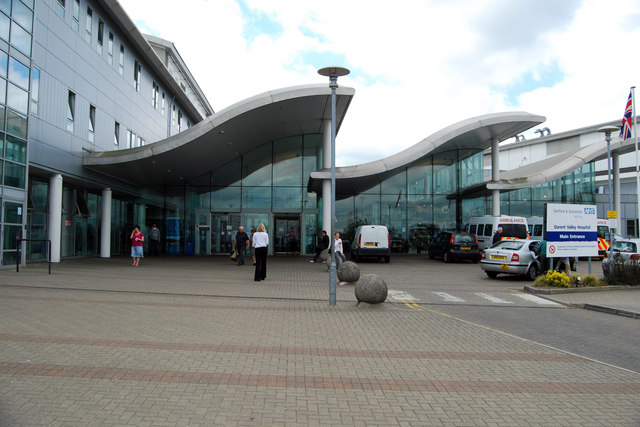
Darenth Park Hospital was founded by the Metropolitan Asylums Board in Darenth near Dartford in Kent as Darenth School for 500 children with learning disabilities on 18 November 1878. By 1890 it housed over 1,000 children and adults and included Darenth Asylum. By 1911 part of the site has become the Darenth Industrial Trading Colony, and the institution was becoming almost self-sufficient in food production and the manufacture of everyday items, thanks to its ample supply of free labour. In 1936, as the age and disability levels of residents increased, the name became Darenth Park Hospital, and in 1948 the management was transferred from the London County Council, which had succeeded the Metropolitan Asylums Board in the management of the institution, to the new National Health Service. The hospital drew patients from a wide catchment of south-east London and Kent. By 1970 the population had grown to 1,500 and the physical conditions in this grim and vast Victorian building were increasingly unacceptable by modern standards. The hospital had over 40 wards, of which 10 contained more than 50 residents. Finally in 1973 the Regional Health Board agreed to close Darenth, but the funding and planning required for such a major undertaking took years to put in place. Darenth Park was the first large regional learning disability institution to close in England as a result of the British government's emerging Care in the Community policy. Audrey Emerton, the South East Thames Regional Chief nursing officer between 1979 and 1990, guided the replacement programme, and from the early 1980s on nearly a thousand residents were resettled to other hospitals, hostels, small group homes and local facilities. In August 1988 the last residents were transferred and the hospital finally shut its doors. The buildings have been entirely demolished and the new Darent Valley Hospital has been built on part of the site. A 'village' of 300 new houses was also built and the remaining 100 acres became the Darenth Country Park. The only building surviving from the Asylum is at the former Darenth Park Hospital Farm, now used as the Arrow Riding School for the disabled.

This attraction is located in

This is a private property. Please enjoy respectfully and do not disturb the occupants.

Edit Categories
Add Tours

This attraction is not part of any tours

Add Collections

This attraction is not part of any collections


Some of the attractions we imported from Wikipedia are not perfect. Send us an email detailing what's wrong and we'll look into fixing it.

GuRoute is all about Gurus sharing their local knowledge. If you feel up to fixing this problem yourself, why not adopt it. You will become the owner and can fix whatever problems you see.

We've copied a link to this attraction into your clipboard so that ou can paste it into an email or text message...

More Info...
You can add your friends to the visit yourself, or, send them a link and let them add themselves...

The visit will appear on both your timelines and on your Shared Timeline.

Click below and we'll email you a link that you can send on to friends or post on your group's Facebook page.

If your friends aren't members of GuRoute yet, this is a great way to get them started.
Recent
Recently used Collections will appear here...
Recent
Recently used tours will appear here...

Where is this?

GuRoute likes to place attractions inside other attractions. So, maybe it's in a city, or maybe it's inside a particular park in that city. Maybe your attraction is a huge park that spans half the county, or multiple counties.

Determining where this attraction is gives it context - if it's in a park, you'll be able to see it alongside all the other attractions in that park. And that helps define the park.

GuRoute will automatically calculate a parent region for this attraction. You can change it if there is something more appropriate.

This attraction is currently located in .

Change

This attraction does not yet have any reviews

Please login to write a review...

Reviewed by
Record new Visit

Add this location to your timneline?

  • If there's an existing attraction open it and add it to your timeline...
  • If not, enter a title and we'll create a new attraction for your memories...
Create new Attraction

Create a new attraction at this location?

  • We rely on Gurus like you to share your local knowledge...
(Give a name for this location)


+
Add this to your timeline instead...

Imagine having a record of all the cool things you've done in your life!


Using our timeline you can keep track of everywhere you visit in your lifetime...

But, you'll need to sign in first...

Add contacts so that you can share your travels and record places that you visit together...

Family
Favorites
Family
Favorites

Profile TimeLine Our Visits Edit Accept Decline Invite

If you have any more friends that visited this place with you, feel free to add them to the visit. We'll write it to their timeline and once they confirm it, they too will have this memory for a lifetime.

If they're not already registered, you just need their name and email address and you can add them and we'll send them an invite on your behlaf.

Add a tour comment

Add some extra information for when this attraction is viewed as part of your tour...

Next Stop Instructions

Add some instructions for what to see/do on the way to the next stop...

Next Stop Instructions

Add some instructions for what to see/do on the way to the next stop...

If you're visiting an existing attraction, open it and add it to your timeline. If there is no attraction for the place you are visiting...

  • Click 'Add My Location' below
  • Or right-click on the map to mark a different location
  • Or long-press if you have a touch screen
You can even add locations while you're offline....
  • Load up the map when you're online and we'll keep track of your locaiton
  • You can add locations to your timeline
  • When you are online again we'll sync them with the cloud

We can't connect to the internet right now. The following attractions are saved locally and can be uploaded when you're online...

GuRoute would like to access your current location so that we can pin you on the map and show you nearby attractions

Add friends so that you can share your experiences with each other...

Add tour to What's Next?

Go...

Either for yourself or someone else...

  1. Do your trip research in GuRoute
    Add all the places that you think might be worthy of a visit into a trip-plan
  2. Add your trip-plan to your "What's Next" timeline
    (or a friend's "What's Next" timeline)
  3. When you're on vacation you'll have all your research at your fingertips
  4. Share your timline with your friends
    They can enjoy your vacation with you, seeing not only where you've been, but where you're going next...
  5. Add/remove attractions if things change

It also makes a great souvenir of your trip

Collections

Go...

Create a home page for a collection of attractions

  • Add an image and description to display on the homepage
  • Start adding content
    Add existing attractions to your collection or create new attractions of your own
  • Collections can be:
    • Public (Anyone can add attractions to your collection)
    • Shared (Only yourself and Gurus you nominate can add content)
    • Private (The collection will only be visible to yourself)

Uses

  • Local business or hotel
    Showcase local attractions that you endorse
  • Clubs
    Showcase attractions that members have created (eg. local historical society)
  • Special Interest
    If GuRoute does not have a category for your special interest you add your attractions to your own collection instead

Examples

Walking/Driving Tours

Go...

A guided tour where GuRoute will direct you from stop to stop and narrate a description of each attraction you arrive at

  • GuRoute uses your phone's GPS to guide you from stop to stop
  • GuRoute automatically detects when you arrive at the next tour-stop and narrates the description of the attraction (Chrome Only)
  • It then sends you on to the next stop

Tours are great to attract people to your town. Even places with no significant points of interest can be lots of fun when part of a tour


Cater tours to your Audience

  • Kid-friendly Tours
    • Focus on what will keep kids interested
    • Instead of parents having to drag their kids around they'll be struggling to keep up
    • Let the kids navigate and they'll get more fun out of finding that historical plaque than they ever would from reading it
  • Accessible tours
  • Short and long tours of the same location

What you need to do...

  1. Click 'Go...'
    Enter a title, description and location for the tour
  2. Add existing attractions OR create new ones and add them to the tour
  3. For existing attractions you can add more information specific to the theme of the tour
  4. You can also add instructions on what to do or see en-route to the next tour-stop
  5. Try out your tour and see how it works...

Mystery Tour

Go...

Create a Mystery Tour

Create a series of clues to show people around a city, neighborhood or whatever place you like...

  • GuRoute will show people clues to get them from attraction to attraction
  • When they reach each stop GuRoute will tell them about the place and give them the next clue
  • Take as long or as you like and explore each location at your leisure

Scavenger Hunt

Go...

Create a Scavenger Hunt

Create a series of questions that people have to answer. The answers can all be discovered by walking aroung the area, looking for clues.

  • How many beers are on tap at Michael Collin's Irish Bar?
  • What's the name of the oldest building on main streeet?
  • Show a picture of some public art and ask them what it is called
  • Clues can have numeric or multiple choice answers