Sign In

My Timeline

GuRoute

Discover Your World

Share your Experiences

Record your Life


Top Attractions in York

York Castle

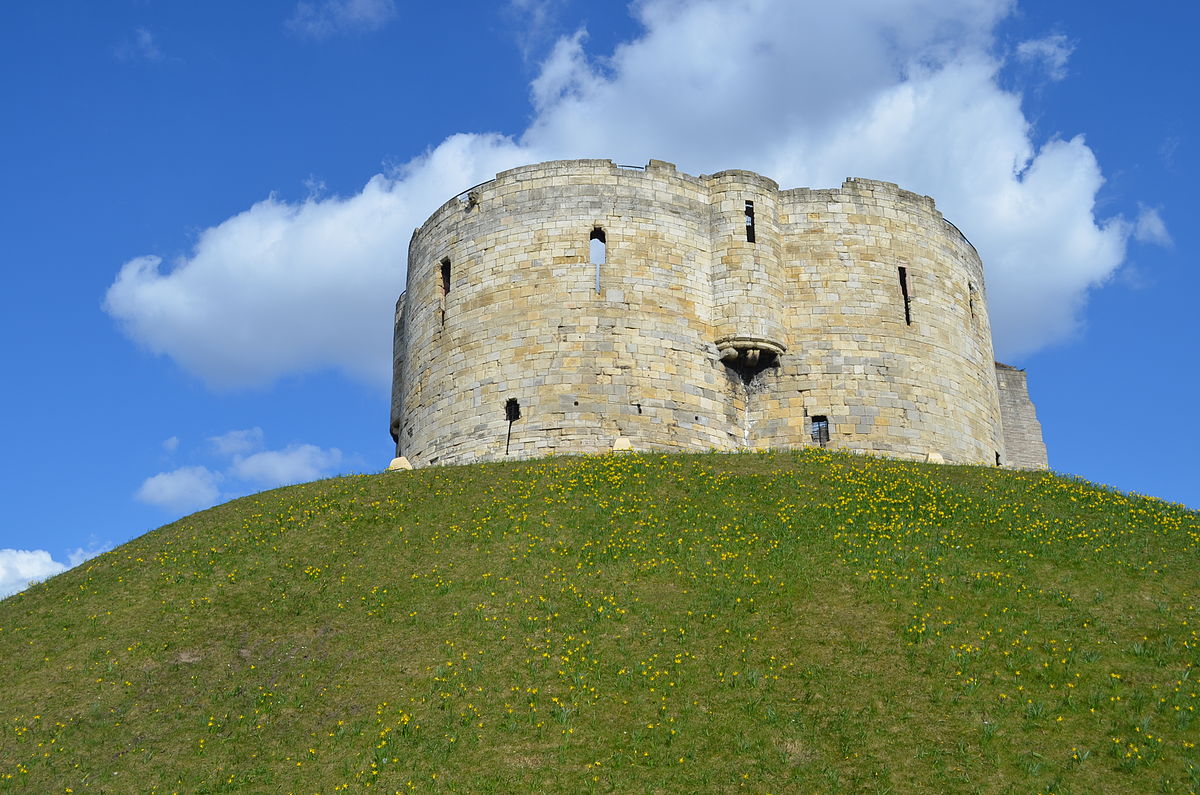
York Castle in the city of York, England, is a fortified complex comprising, over the last nine centuries, a sequence of castles, prisons, law courts and other buildings on the south side of the River Foss. The now-ruinous keep of the medieval Norman castle is commonly referred to as Cliffords Tower. Built originally on the orders of William I to dominate the former Viking city of York, the castle suffered a tumultuous early history before developing into a major fortification with extensive water defences. After a major explosion in 1684 rendered the remaining military defences uninhabitable, York Castle continued to be used as a jail and prison until 1929. The first motte and bailey castle on the site was built in 1068 following the Norman conquest of York. After the destruction of the castle by rebels and a Viking army in 1069, York Castle was rebuilt and reinforced with extensive water defences, including a moat and an artificial lake. York Castle formed an important royal fortification in the north of England. In 1190, 150 local Jews were killed in a pogrom in the castle keep. Henry III rebuilt the castle in stone in the middle of the 13th century, creating a keep with a unique quatrefoil design, supported by an outer bailey wall and a substantial gatehouse. During the Scottish wars between 1298 and 1338, York Castle was frequently used as the centre of royal administration across England, as well as an important military base of operations. York Castle fell into disrepair by the 15th and 16th centuries, becoming used increasingly as a jail for both local felons and political prisoners. By the time of Elizabeth I the castle was estimated to have lost all of its military value but was maintained as a centre of royal authority in York. The outbreak of the English Civil War in 1642 saw York Castle being repaired and refortified, playing a part in the Royalist defence of York in 1644 against Parliamentary forces. York Castle continued to be garrisoned until 1684, when an explosion destroyed the interior of Cliffords Tower. The castle bailey was redeveloped in a neoclassical style in the 18th century as a centre for county administration in Yorkshire, and was used as a jail and debtors prison. Prison reform in the 19th century led to the creation of a new prison built in a Tudor Gothic style on the castle site in 1825; used first as a county and then as a military prison, this facility was demolished in 1935. By the 20th century the ruin of Cliffords Tower had become a well-known tourist destination and national monument; today the site is owned by English Heritage and open to the public. The other remaining buildings serve as the York Castle Museum and the Crown Court.

Treasurer's House

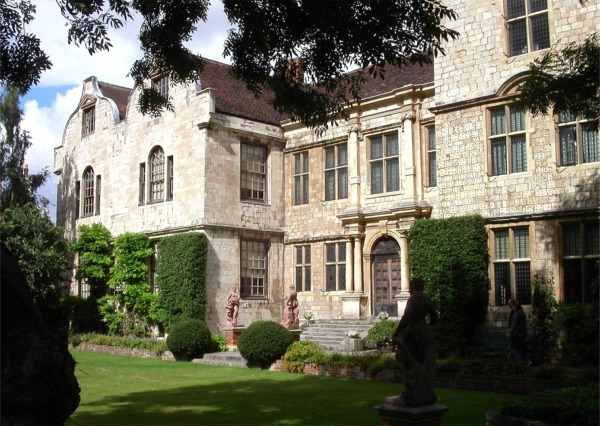
The Treasurers House in York, North Yorkshire, England is an historic house owned by the National Trust. who also maintain its garden. It is located directly to the North of York Minster. The first Treasurer for York Minster was appointed in 1091 AD. All that remains of the original Treasurer’s House is an external wall from the 12th century. The Treasurer was controller the finances of the Minster but also entertained important guests. This is why he was provided with a grand residence. The residence served in this capacity until 1547 when the Reformation of the English Church brought the job of Treasurer to an end and the house passed into the hands of the Archbishops of York. Thomas Young, Archbishop between 1561 and 1568, and his descendants are responsible for the structure of Treasurer’s House as it is today. In the early 17th century the Young family added the symmetrical front and almost entirely rebuilt the house. The Treasurer’s House played host to royalty when Sir George Young entertained King James I in 1617. The house then passed through a number of private owners. The house was restored to its present state by Frank Green, a wealthy local industrialist, between 1897 and 1930. The house and its contents were given to the National Trust in 1930, when its owner retired and moved away from York. The house was built directly over one of the main Roman roads leading out of Roman York to the North. During major structural changes carried out by Green four Roman column bases, one of which remains in-situ in the cellar and one of which was used as a base for a modern set of columns in the main hall.

Merchant Adventurers' Hall

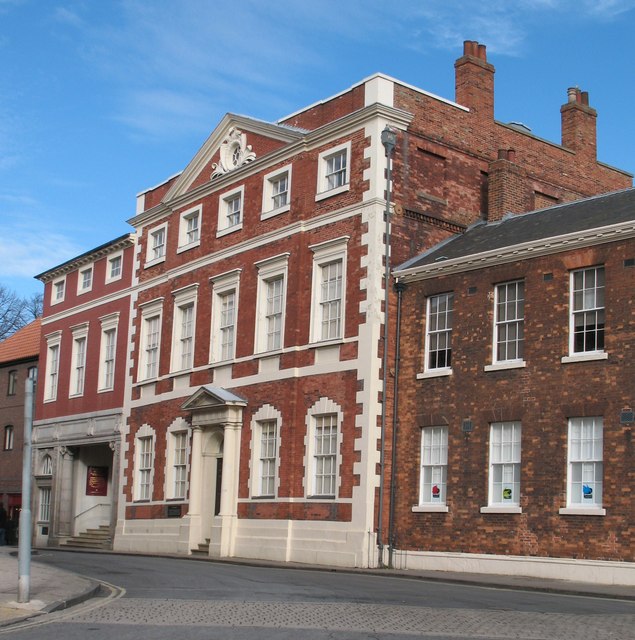
The Merchant Adventurers Hall is a medieval guildhall in the city of York, England, and was one of the most important buildings in the medieval city. The majority of the Hall was built in 1357 by a group of influential men and women who came together to form a religious fraternity called the Guild of Our Lord Jesus and the Blessed Virgin Mary. In 1430 the fraternity was granted a royal charter by King Henry VI and renamed The Mistry of Mercers. It was granted the status of the Company of Merchant Adventurers of York by Queen Elizabeth I in the sixteenth century. The main part of the building consists of the Great Hall and the undercroft, which was originally a hospital or almshouse for poor people of York. The Great Hall is a timber-framed structure and was built over a five-year period. It is the largest timber-framed building in the UK still standing and used for its original purpose. The roof of the hall is of two spans supported by a row of large central timber posts. It includes complex crown posts and is held together by wooden pegs. The undercroft, like the Great Hall, is divided in two by its supporting row of timber posts. The undercroft also provides access to an attached chapel built for the use of the ill and poor in the hospital as well as the members of the Merchant Adventurers Guild. It is still used for worship. There are Georgian additions including large windows and lecterns in the hall and chapel. The Hall belongs to and is still regularly used by The Company of Merchant Adventurers of the City of York, who, although no longer dedicated to mercantile activities are prominent in York and still exist as a charitable membership group. They have an extensive set of records, with documents dating from the 13th century and accounts dating back to 1432. The pre-1960 archive is described in ‘A Guide to the Archives of the Company of Merchant Adventurers of York’ by David M. Smith, and a listing is available on the Access to Archives website. The Borthwick Institute for Archives at the University of York holds photocopies of many medieval deeds, account rolls, rentals, and of Guild minutes for the period 1677–1985. The Hall is open as a museum and can also be hired for parties, dinners and special occasions. It is also licensed for weddings and holds wedding receptions throughout the year. It is a short walk from this hall to the Merchant Taylors Hall in York, another medieval guildhall but in less original condition. The guild still exists. There are about 300 members, most are men but women can also become members. Membership is hereditary or mostly by invitation, and includes influential York families, business people, and senior public sector staff.

Baile Hill

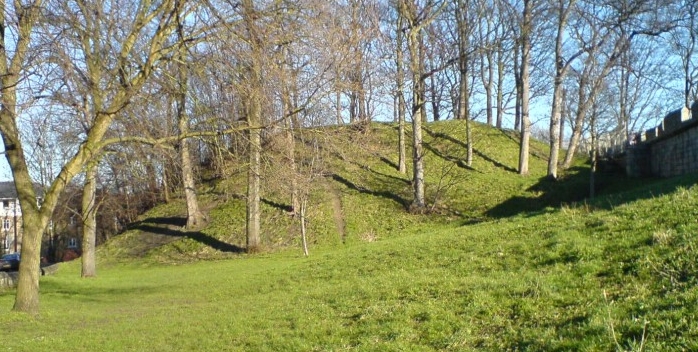
Baile Hill is a man-made earth mound in York, England. It is the only remaining feature of what was known as the Old Baile. The origins of Baile Hill date back to 1068. Having seized York in that year, William the Conqueror built a castle on the south side of the city close to the River Ouse. Then, as a response to a rebellion the following year, a second castle was built on the opposite side of the river. There is no clear evidence which of these castles was built first, but it is generally thought to be the one which stood on the site of the later York Castle on the east side of the river, followed by the Old Baile on the west side. Like its opposite counterpart, the Old Baile was of motte and bailey design. The motte was approximately 40 feet high and 180 feet in diameter, and was surrounded by a large ditch. A flight of steps led to a wooden structure at the top which was surrounded by a fence, also made of wood. The bailey lay to the north-west of the motte and was rectangular. Around its perimeter was an earth rampart and an outer ditch. The castle, it is believed, was not in regular use for long. By the 13th century it was in the hands of the Archbishop of York and in 1322 Archbishop Melton agreed to defend it in times of war. By c.1340 part of the city wall had been built along the south-east and south-west sides of the Old Baile, incorporating the existing ramparts and ditch, however, these defences were rarely called into use. The only notable occasion was the siege of York in 1644 during the Civil War, when Baile Hill was used as a royalist gun emplacement. Apart from that, however, the Old Baile was used mainly for grazing and recreation activities, particularly archery during the medieval period. Today, Baile Hill stands at the junction of Baile Hill Terrace and Cromwell Road. The only other visible evidence of the former castle are two slight dips in the city wall rampart, one next to Baile Hill and the other close to Victoria Bar, which indicate the location of the former ditch. Houses built during the 1880s cover the rest of the Old Baile.

Golden Fleece Inn

The Golden Fleece is an inn in York, England, which has a free house pub on the ground floor and four guest bedrooms above. It was mentioned in the York City Archives as far back as 1503. The inn claims to be the most haunted public house in the City of York. The back yard of the inn is named "Peckitts Yard" after John Peckett, who owned the premises as well as being Lord Mayor of York around 1702. The pub is situated on The Pavement in the centre of York, opposite the historic Tudor street called The Shambles. It has a recognisable large golden fleece hanging above the door. Whilst the pub has a narrow frontage, it is very deep, with a front bar, a corridor containing staircases and toilets leading to second bar, and past that a space with dining tables. There is further dining space upstairs, in an old-fashioned room complete with a set of armour. The menu is modern, with options for vegetarian, vegan, and gluten free. Obviously you cannot guarantee seeing a ghost, but fifteen have been reported. The most commonly encountered is Lady Alice Peckett, wife of former owner and Lord Mayor John Peckett. There is also One Eyed Jack, a man in a 16th-17th century red coat, armed with a pistol, and Victorian boy who was trampled to death by horses and who frequents the upper room. The most recent ghost appears to be a Canadian airman who fell to his death from an upper window during the Second World War. There have also been Roman soldiers reported in the cellars. In 1983 the inn was designated as a grade II listed building by English Heritage.

Yorkshire Air Museum

The Yorkshire Air Museum Allied Air Forces Memorial,, is an air museum in England. The Museum was founded, and first opened to the public, in the early 1980s. The Yorkshire Air Museum Allied Air Forces Memorial is the largest independent air museum in Britain and is the most original Second World War RAF Bomber Command station open to the public and the only base used by the French Heavy Bomber Squadrons, and the Royal Aeronautical Society. The President of the Museum/Memorial is Air Chief Marshal Sir Stephen Dalton GCB, BSc, FRAeS, CCMI and Vice Presidents include; the Chief of the Air Staff, Sir Andrew Pulford; General Denis Mercier, Chief of the French Air Force; Supreme Allied Commander NATO; Archbishop of York, Dr John Sentamu; and TV Presenter, Jan Leeming. The Museums principal activity is in education and the history of flight, through which it is involved with aerospace manufacturers and organisations via its long term "Reach for the Sky" project which delivered the first KS2 History of Aviation educational resource book to all 26,000 primary schools in UK, supported by RAeS and the Ministry of Transport. The Museum has around 50 aircraft scanning the development of aviation from 1853 up to the current GR4 Tornado. Several aircraft including Victor, Nimrod, Buccaneer, Sea Devon, SE5a, Eastchurch Kitten; are kept live and operated on special "Thunder Days" during the year. Over 20 historic vehicles and a Registered Archive containing over 500,000 historic artefacts and documents are also preserved at the Museum, which is also the Official Archive for the National Aircrew Association and National Air Gunners Association. It is nationally registered and accredited through DCMS/Arts Council England and is a registered charity. The 20-acre parkland site includes buildings and hangars, some of which are “listed”, and the site incorporates a 7-acre managed environment area and a DEFRA and EA supported self sustainability project called "Nature of Flight". The Museum is situated next to a 10,000ft x 400 acre international standard runway which holds the current European Land Speed Record. One of the UK’s most important permanent exhibitions on RAF Bomber Command was opened at the Museum by Life Member, Sir David Jason OBE. In 2010 a new exhibition called “Pioneers of Aviation”, and funded by the Heritage Lottery Fund, was opened featuring the lives and achievements of Sir George Cayley, Sir Barnes Wallis, Robert Blackburn, Nevil Shute and Amy Johnson. Principal on-site businesses include: Restaurant, Publishing, Retail Shop, Operational Fire Service, Events, Aircraft Operation Engineering Workshops, Archives and Corporate Business Suite. The Museum produces its own films and publications and is also a popular location for TV and film companies. The Museum undertakes several annual events each year within the general attraction / entertainment area as well as educational / academic events for specific audiences, plus several corporate events in association with companies such as Bentley, Porsche, Banking, Government Agencies etc. The biennial Allied Air Forces Memorial Day takes place in September. It is operated by 149 employees, of which 130 are unpaid volunteers. A small operations team works closely together in a variety of specialist subjects from PR/marketing to Corporate Affairs and Museum Management. The Museum is expanding rapidly and currently receives over 90,000 visitors per annum. It has received numerous awards, such as: Top Specialist Attraction in UK 2011 2015; Top Attraction in Yorkshire, Press Top Tourism Business; York Top Marketing Award and Winalot Top Dog Friendly Museum in UK. The Museum is open every day except Christmas Day and Boxing Day.

This attraction is located in

This is a private property. Please enjoy respectfully and do not disturb the occupants.

Edit Categories
Add Tours

This attraction is not part of any tours

Add Collections

This attraction is not part of any collections


Some of the attractions we imported from Wikipedia are not perfect. Send us an email detailing what's wrong and we'll look into fixing it.

GuRoute is all about Gurus sharing their local knowledge. If you feel up to fixing this problem yourself, why not adopt it. You will become the owner and can fix whatever problems you see.

We've copied a link to this attraction into your clipboard so that ou can paste it into an email or text message...

More Info...
You can add your friends to the visit yourself, or, send them a link and let them add themselves...

The visit will appear on both your timelines and on your Shared Timeline.

Click below and we'll email you a link that you can send on to friends or post on your group's Facebook page.

If your friends aren't members of GuRoute yet, this is a great way to get them started.
Recent
Recently used Collections will appear here...
Recent
Recently used tours will appear here...

Where is this?

GuRoute likes to place attractions inside other attractions. So, maybe it's in a city, or maybe it's inside a particular park in that city. Maybe your attraction is a huge park that spans half the county, or multiple counties.

Determining where this attraction is gives it context - if it's in a park, you'll be able to see it alongside all the other attractions in that park. And that helps define the park.

GuRoute will automatically calculate a parent region for this attraction. You can change it if there is something more appropriate.

This attraction is currently located in .

Change

This attraction does not yet have any reviews

Please login to write a review...

Reviewed by
Record new Visit

Add this location to your timneline?

  • If there's an existing attraction open it and add it to your timeline...
  • If not, enter a title and we'll create a new attraction for your memories...
Create new Attraction

Create a new attraction at this location?

  • We rely on Gurus like you to share your local knowledge...
(Give a name for this location)


+
Add this to your timeline instead...

Imagine having a record of all the cool things you've done in your life!


Using our timeline you can keep track of everywhere you visit in your lifetime...

But, you'll need to sign in first...

Add contacts so that you can share your travels and record places that you visit together...

Family
Favorites
Family
Favorites

Profile TimeLine Our Visits Edit Accept Decline Invite

If you have any more friends that visited this place with you, feel free to add them to the visit. We'll write it to their timeline and once they confirm it, they too will have this memory for a lifetime.

If they're not already registered, you just need their name and email address and you can add them and we'll send them an invite on your behlaf.

Add a tour comment

Add some extra information for when this attraction is viewed as part of your tour...

Next Stop Instructions

Add some instructions for what to see/do on the way to the next stop...

Next Stop Instructions

Add some instructions for what to see/do on the way to the next stop...

If you're visiting an existing attraction, open it and add it to your timeline. If there is no attraction for the place you are visiting...

  • Click 'Add My Location' below
  • Or right-click on the map to mark a different location
  • Or long-press if you have a touch screen
You can even add locations while you're offline....
  • Load up the map when you're online and we'll keep track of your locaiton
  • You can add locations to your timeline
  • When you are online again we'll sync them with the cloud

We can't connect to the internet right now. The following attractions are saved locally and can be uploaded when you're online...

GuRoute would like to access your current location so that we can pin you on the map and show you nearby attractions

Add friends so that you can share your experiences with each other...

Add tour to What's Next?

Go...

Either for yourself or someone else...

  1. Do your trip research in GuRoute
    Add all the places that you think might be worthy of a visit into a trip-plan
  2. Add your trip-plan to your "What's Next" timeline
    (or a friend's "What's Next" timeline)
  3. When you're on vacation you'll have all your research at your fingertips
  4. Share your timline with your friends
    They can enjoy your vacation with you, seeing not only where you've been, but where you're going next...
  5. Add/remove attractions if things change

It also makes a great souvenir of your trip

Collections

Go...

Create a home page for a collection of attractions

  • Add an image and description to display on the homepage
  • Start adding content
    Add existing attractions to your collection or create new attractions of your own
  • Collections can be:
    • Public (Anyone can add attractions to your collection)
    • Shared (Only yourself and Gurus you nominate can add content)
    • Private (The collection will only be visible to yourself)

Uses

  • Local business or hotel
    Showcase local attractions that you endorse
  • Clubs
    Showcase attractions that members have created (eg. local historical society)
  • Special Interest
    If GuRoute does not have a category for your special interest you add your attractions to your own collection instead

Examples

Walking/Driving Tours

Go...

A guided tour where GuRoute will direct you from stop to stop and narrate a description of each attraction you arrive at

  • GuRoute uses your phone's GPS to guide you from stop to stop
  • GuRoute automatically detects when you arrive at the next tour-stop and narrates the description of the attraction (Chrome Only)
  • It then sends you on to the next stop

Tours are great to attract people to your town. Even places with no significant points of interest can be lots of fun when part of a tour


Cater tours to your Audience

  • Kid-friendly Tours
    • Focus on what will keep kids interested
    • Instead of parents having to drag their kids around they'll be struggling to keep up
    • Let the kids navigate and they'll get more fun out of finding that historical plaque than they ever would from reading it
  • Accessible tours
  • Short and long tours of the same location

What you need to do...

  1. Click 'Go...'
    Enter a title, description and location for the tour
  2. Add existing attractions OR create new ones and add them to the tour
  3. For existing attractions you can add more information specific to the theme of the tour
  4. You can also add instructions on what to do or see en-route to the next tour-stop
  5. Try out your tour and see how it works...

Mystery Tour

Go...

Create a Mystery Tour

Create a series of clues to show people around a city, neighborhood or whatever place you like...

  • GuRoute will show people clues to get them from attraction to attraction
  • When they reach each stop GuRoute will tell them about the place and give them the next clue
  • Take as long or as you like and explore each location at your leisure

Scavenger Hunt

Go...

Create a Scavenger Hunt

Create a series of questions that people have to answer. The answers can all be discovered by walking aroung the area, looking for clues.

  • How many beers are on tap at Michael Collin's Irish Bar?
  • What's the name of the oldest building on main streeet?
  • Show a picture of some public art and ask them what it is called
  • Clues can have numeric or multiple choice answers