Sign In

My Timeline

GuRoute

Discover Your World

Share your Experiences

Record your Life


Top Attractions in Winchester

Fort Southwick

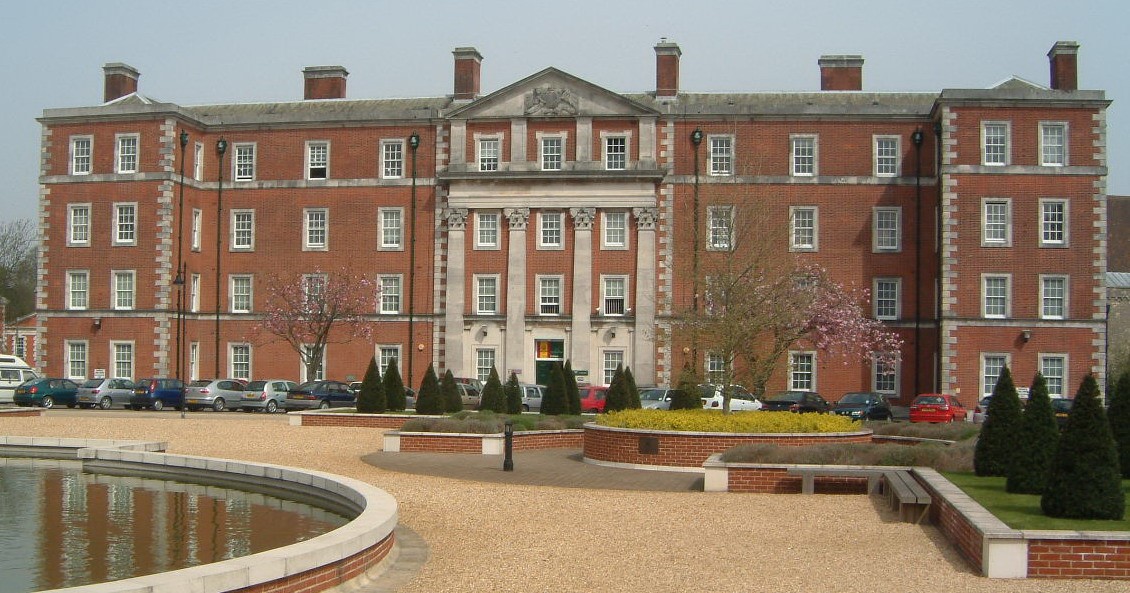
Fort Southwick is one of the forts found on Portsdown Hill, which overlooks the naval base of Portsmouth in the county of Hampshire, England. It is the highest fort on the hill, and holds the water storage tanks for the other forts, supplying them via a brick lined aqueduct. Construction was started in 1861 and completed by 1870. It was designed to house a large complement of men in a crescent-shaped barrack block. Its north projection has one full caponier to defend the dry ditch, and has two smaller demi-caponiers at the corners. A small musketry gallery crosses the ditch at the south-west angle to cover a minor branch of the ditch. Mortar batteries of five mortars each can be found set into the rampart behind the demi-caponiers. In 1893 the fort was armed with a total of 23 guns: Nine 64 lb rifled muzzle loaders Eight 7 in rifled breech loaders Six 8 in rifled muzzle loaded howitzers A central spiral staircase from the surface gives access to four main tunnels running radially outward from it at uneven angles. These tunnels lead to the barrack block and caponiers, and past the magazine. During the Second World War, Underground Headquarters or UGHQ, the communications "nerve centre" for Operation Overlord, was in a secret network of tunnels excavated between February and December 1942 by 172 Tunnelling Company of the Royal Engineers 100 ft underneath Fort Southwick, well out of reach of any bombs of the era. The call sign of this base was MIN. Although disarmed in 1906, the fort was retained by the military as a barracks, and also used to train soldiers how to capture and hold a fort. It became a demobilisation centre for three years after the First World War. The fort was part of the Admiralty Research Establishment until 2002, when all operational use of the fort ceased. It was sold by the Ministry of Defence in July 2003 to the "Fort Southwick Company Limited", who intend to convert the barrack block into luxury apartments. It has been a Grade I Listed Building since 1987.

St Mary's Abbey

St. Marys Abbey, also known as the Nunnaminster, was a Benedictine nunnery in Winchester, Hampshire. It was founded around 903 by Alfred the Greats consort Ealhswith, who was described as the builder of the Nunnaminster in the New Minster Liber Vitae. The first buildings were completed by their son, Edward the Elder. Among the houses early members was Edwards daughter Edburga. Sometime after 963 Bishop Æthelwold refounded the monastery and re-endowed it, imposing the stricter Benedictine rule. According to Æthelwolds hagiographer, Wulfstan the Cantor, Æthelwold made a woman called Æthelthryth abbess of the Nunnaminster. Æthelwold may also have translated the relics of Edburga, now recognized as a saint, to a more prominent shrine within the Nunnaminster; however, this event is only attested in Osbert of Clares much later Vita S. Edburgae. The house stood between High Street and Colebroke Street and was known as Nunnaminster. According to the Domesday Book the abbess held Lyss, Froyle, Leckford Abbess, Long Stoke, Timsbury, and Ovington in Hampshire; Coleshill in Berkshire; and Urchfont and All Cannings in Wiltshire. The Nunnery was rebuilt again after the Norman conquest, perhaps by AD 1100, by which time it was known as St Marys Abbey. During The Anarchy the monastery was burnt in the great fire of Winchester in 1141. The house became impoverished during the fourteenth and fifteenth centuries, but thanks to various grants and concessions it recovered its position and was in a healthy state at the time of the suppression. The house was suppressed as part of the Dissolution of the Monasteries in November 1539, with pensions granted to the abbess, prioress and nuns. Considerable remains of the buildings survived into the seventeenth century, but only certain watercourses survive into the present.

St. Mary's Abbey

St. Mary's Abbey, also known as the Nunnaminster, was a Benedictine nunnery in Winchester, Hampshire. It was founded around 903 by Alfred the Great's consort Ealhswith, who was described as the 'builder' of the Nunnaminster in the New Minster Liber Vitae. The first buildings were completed by their son, Edward the Elder. Among the house's early members was Edward's daughter Edburga. Sometime after 963 Bishop Æthelwold refounded the monastery and re-endowed it, imposing the stricter Benedictine rule. According to Æthelwold's hagiographer, Wulfstan the Cantor, Æthelwold made a woman called Æthelthryth abbess of the Nunnaminster. Æthelwold may also have translated the relics of Edburga, now recognized as a saint, to a more prominent shrine within the Nunnaminster; however, this event is only attested in Osbert of Clare's much later Vita S. Edburgae. The house stood between High Street and Colebroke Street and was known as Nunnaminster. According to the Domesday Book the abbess held Lyss, Froyle, Leckford Abbess, Long Stoke, Timsbury, and Ovington in Hampshire; Coleshill in Berkshire; and Urchfont and All Cannings in Wiltshire. The Nunnery was rebuilt again after the Norman conquest, perhaps by AD 1100, by which time it was known as St Mary's Abbey. During The Anarchy the monastery was burnt in the great fire of Winchester in 1141. The house became impoverished during the fourteenth and fifteenth centuries, but thanks to various grants and concessions it recovered its position and was in a healthy state at the time of the suppression. The house was suppressed as part of the Dissolution of the Monasteries in November 1539, with pensions granted to the abbess, prioress and nuns. Considerable remains of the buildings survived into the seventeenth century, but only certain watercourses survive into the present.

Old Minster

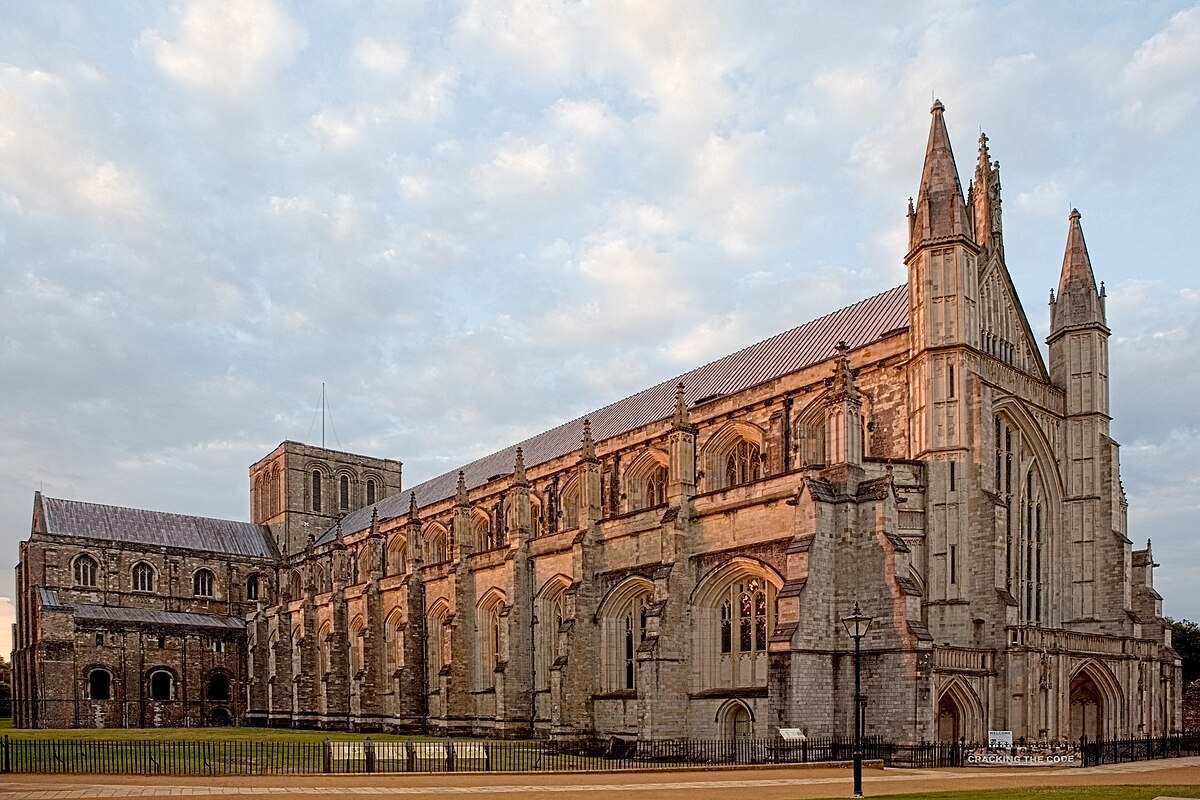
The Old Minster was the Anglo-Saxon cathedral for the diocese of Wessex and then Winchester from 660 to 1093. It stood on a site immediately north of and partially beneath its successor, Winchester Cathedral. The old legend that the Old Minster was built in the 2nd century for the non-existent King Lucius of Britain is erroneous. The stone minster was constructed in 648 for King Cenwalh of Wessex and Saint Birinus. It became the diocesan cathedral in 660. It was enlarged and redecorated over the years and Saint Swithun was buried outside it in 862. By the 10th century, the Old Minster was the priory church of a community of monks, living under the rule of St Benedict. In 901, the New Minster was built next to it, so close in fact that it is said the singing of the monks inside each became hopelessly intermingled. Saint Æthelwold of Winchester followed by his successor, Saint Alphege, almost completely rebuilt the minster on a vast scale during their monastic reforms of the 970s. Saint Swithuns body was taken into an indoor shrine in what had become the largest church in Europe. However, after the Norman conquest of England, Bishop Walkelin built a replacement cathedral alongside and the Old Minster was demolished in 1093. Many of the Kings of Wessex and England, as well bishops, had been buried there, so their bodies were exhumed and re-interred in the new building. The Old Minster was excavated in the 1960s. It is now laid out in brickwork in the churchyard adjoining Winchester Cathedral. Saint Swithuns first grave is clearly marked. Finds from the site may be seen in the Winchester City Museum. The bones of the monarchs removed to the cathedral are now housed in the famous mortuary chests around the choir. Egbert of Wessex, who was King of Wessex from 802 until his death in 839, was buried in the Old Minster.

This attraction is located in

This is a private property. Please enjoy respectfully and do not disturb the occupants.

Edit Categories
Add Tours

This attraction is not part of any tours

Add Collections

This attraction is not part of any collections


Some of the attractions we imported from Wikipedia are not perfect. Send us an email detailing what's wrong and we'll look into fixing it.

GuRoute is all about Gurus sharing their local knowledge. If you feel up to fixing this problem yourself, why not adopt it. You will become the owner and can fix whatever problems you see.

We've copied a link to this attraction into your clipboard so that ou can paste it into an email or text message...

More Info...
You can add your friends to the visit yourself, or, send them a link and let them add themselves...

The visit will appear on both your timelines and on your Shared Timeline.

Click below and we'll email you a link that you can send on to friends or post on your group's Facebook page.

If your friends aren't members of GuRoute yet, this is a great way to get them started.
Recent
Recently used Collections will appear here...
Recent
Recently used tours will appear here...

Where is this?

GuRoute likes to place attractions inside other attractions. So, maybe it's in a city, or maybe it's inside a particular park in that city. Maybe your attraction is a huge park that spans half the county, or multiple counties.

Determining where this attraction is gives it context - if it's in a park, you'll be able to see it alongside all the other attractions in that park. And that helps define the park.

GuRoute will automatically calculate a parent region for this attraction. You can change it if there is something more appropriate.

This attraction is currently located in .

Change

This attraction does not yet have any reviews

Please login to write a review...

Reviewed by
Record new Visit

Add this location to your timneline?

  • If there's an existing attraction open it and add it to your timeline...
  • If not, enter a title and we'll create a new attraction for your memories...
Create new Attraction

Create a new attraction at this location?

  • We rely on Gurus like you to share your local knowledge...
(Give a name for this location)


+
Add this to your timeline instead...

Imagine having a record of all the cool things you've done in your life!


Using our timeline you can keep track of everywhere you visit in your lifetime...

But, you'll need to sign in first...

Add contacts so that you can share your travels and record places that you visit together...

Family
Favorites
Family
Favorites

Profile TimeLine Our Visits Edit Accept Decline Invite

If you have any more friends that visited this place with you, feel free to add them to the visit. We'll write it to their timeline and once they confirm it, they too will have this memory for a lifetime.

If they're not already registered, you just need their name and email address and you can add them and we'll send them an invite on your behlaf.

Add a tour comment

Add some extra information for when this attraction is viewed as part of your tour...

Next Stop Instructions

Add some instructions for what to see/do on the way to the next stop...

Next Stop Instructions

Add some instructions for what to see/do on the way to the next stop...

If you're visiting an existing attraction, open it and add it to your timeline. If there is no attraction for the place you are visiting...

  • Click 'Add My Location' below
  • Or right-click on the map to mark a different location
  • Or long-press if you have a touch screen
You can even add locations while you're offline....
  • Load up the map when you're online and we'll keep track of your locaiton
  • You can add locations to your timeline
  • When you are online again we'll sync them with the cloud

We can't connect to the internet right now. The following attractions are saved locally and can be uploaded when you're online...

GuRoute would like to access your current location so that we can pin you on the map and show you nearby attractions

Add friends so that you can share your experiences with each other...

Add tour to What's Next?

Go...

Either for yourself or someone else...

  1. Do your trip research in GuRoute
    Add all the places that you think might be worthy of a visit into a trip-plan
  2. Add your trip-plan to your "What's Next" timeline
    (or a friend's "What's Next" timeline)
  3. When you're on vacation you'll have all your research at your fingertips
  4. Share your timline with your friends
    They can enjoy your vacation with you, seeing not only where you've been, but where you're going next...
  5. Add/remove attractions if things change

It also makes a great souvenir of your trip

Collections

Go...

Create a home page for a collection of attractions

  • Add an image and description to display on the homepage
  • Start adding content
    Add existing attractions to your collection or create new attractions of your own
  • Collections can be:
    • Public (Anyone can add attractions to your collection)
    • Shared (Only yourself and Gurus you nominate can add content)
    • Private (The collection will only be visible to yourself)

Uses

  • Local business or hotel
    Showcase local attractions that you endorse
  • Clubs
    Showcase attractions that members have created (eg. local historical society)
  • Special Interest
    If GuRoute does not have a category for your special interest you add your attractions to your own collection instead

Examples

Walking/Driving Tours

Go...

A guided tour where GuRoute will direct you from stop to stop and narrate a description of each attraction you arrive at

  • GuRoute uses your phone's GPS to guide you from stop to stop
  • GuRoute automatically detects when you arrive at the next tour-stop and narrates the description of the attraction (Chrome Only)
  • It then sends you on to the next stop

Tours are great to attract people to your town. Even places with no significant points of interest can be lots of fun when part of a tour


Cater tours to your Audience

  • Kid-friendly Tours
    • Focus on what will keep kids interested
    • Instead of parents having to drag their kids around they'll be struggling to keep up
    • Let the kids navigate and they'll get more fun out of finding that historical plaque than they ever would from reading it
  • Accessible tours
  • Short and long tours of the same location

What you need to do...

  1. Click 'Go...'
    Enter a title, description and location for the tour
  2. Add existing attractions OR create new ones and add them to the tour
  3. For existing attractions you can add more information specific to the theme of the tour
  4. You can also add instructions on what to do or see en-route to the next tour-stop
  5. Try out your tour and see how it works...

Mystery Tour

Go...

Create a Mystery Tour

Create a series of clues to show people around a city, neighborhood or whatever place you like...

  • GuRoute will show people clues to get them from attraction to attraction
  • When they reach each stop GuRoute will tell them about the place and give them the next clue
  • Take as long or as you like and explore each location at your leisure

Scavenger Hunt

Go...

Create a Scavenger Hunt

Create a series of questions that people have to answer. The answers can all be discovered by walking aroung the area, looking for clues.

  • How many beers are on tap at Michael Collin's Irish Bar?
  • What's the name of the oldest building on main streeet?
  • Show a picture of some public art and ask them what it is called
  • Clues can have numeric or multiple choice answers