Sign In

My Timeline

GuRoute

Discover Your World

Share your Experiences

Record your Life


Top Attractions in White House

White House Visitors Office

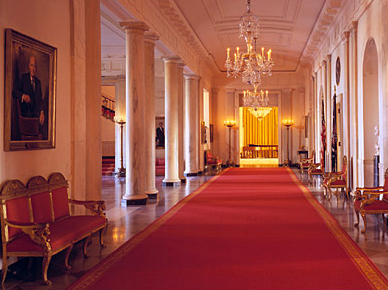
The White House Visitors Office is responsible for public tours of the White House, for maintaining a facility where the public can obtain information about the White House, and for other White House events such as the White House Easter Egg Roll, Holiday Open Houses, Spring and Fall Garden tours, State Arrival Ceremonies and other special events. The White House Visitor Center, which is managed and operated by the National Park Service, is located within President's Park at the north end of the Herbert C. Hoover Building (the Department of Commerce headquarters) between 14th Street and 15th Street on Pennsylvania Avenue NW, in the Federal Triangle. Since September 11, 2001, it no longer serves as a starting point for those going on a reserved tour of the White House; however, it does provide a unique visitor experience for those who did not schedule a tour. The themes of the six permanent exhibits are "First Families," "Symbols and Images," "White House Architecture," "White House Interiors," "Working White House," and "Ceremonies and Celebrations." Other exhibits change throughout the year. It houses a small bookstore operated by the White House Historical Association. The office is located in the East Wing of the White House and employed seven people at the start of the 2000s. Its role has been unique in that, up to 2001, the White House was the only home of a head of state that was regularly open to the public at no cost. Since January 2009, the Director of the White House Visitors Office has been Ellie Schafer.

West Sitting Hall

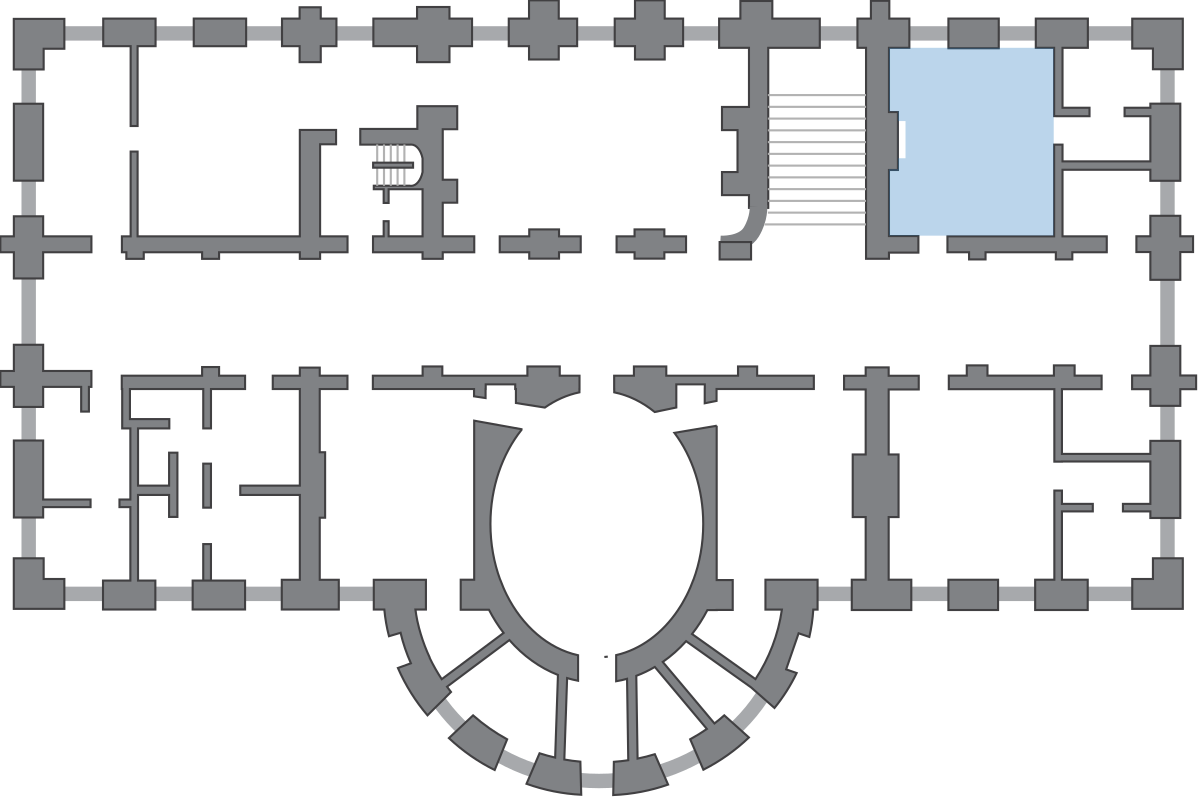
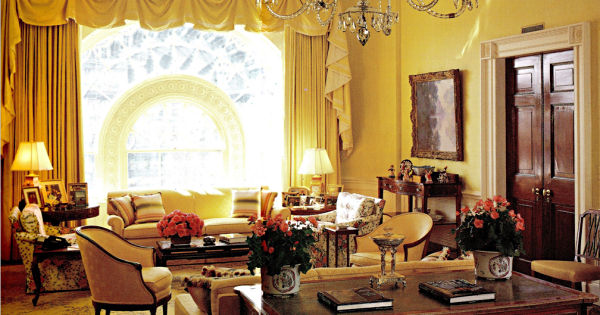
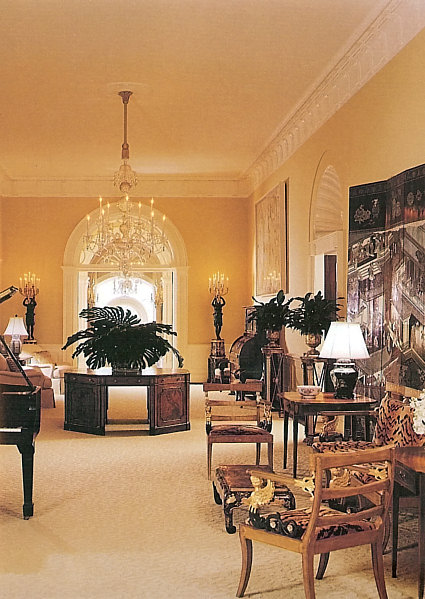
The West Sitting Hall is located on the second floor of the White House, home of the President of the United States. The room is entered from the second floor Center Hall on the east side of the room. The room features a large lunette window on the west wall looks out upon the West Colonnade, the West Wing, and the Old Executive Office Building. The room is used by first families as a less formal living room than the Yellow Oval Room. White House architect James Hoban's initial 1793 plan and 1814 reconstruction design both placed a double Imperial stair form here, with a single stair rising from the ground floor at the terminus of the Cross Hall and dividing to two stairs returning double runs to the east in the present space. Hoban's original plan was not built as designed, as Thomas Jefferson engaged Benjamin Henry Latrobe in 1803 to reverse the orientation of the stair. Latrobe's alteration placed a double run on either side rising from the west to a landing on the east and a single run returning west to the second floor. Alterations in 1869 simplified the stair moving it along the north side of the space and allowing a sitting area to the south. Presidents and first ladies would descend to the Cross Hall below during state dinners and official entertaining. The room was mainly just a grand staircase until President Ulysses Grant had it remodeled, allowing for sitting space by the nearby window. The 1869 staircase was removed during the administration of Theodore Roosevelt as part of a reconfiguration of the White House by architect Charles Follen McKim. McKim's plan removed the west stairway entirely creating room for a much enlarged State Dining Room and moved the ceremonial stair to site of the present Grand Staircase. Eleanor Roosevelt, who screened the area off from the Central Hall, particularly enjoyed it. In the subsequent Truman reconstruction, architects enclosed the hall with solid partitions and created a living room. At that time, the kitchen elevator was extended to this floor, and the door opened into this room; the Kennedy restoration rerouted it into the little hall when the room to the north was converted into the Family Kitchen. During the Truman reconstruction the east wall was rebuilt to include framed double doors allowing the room more privacy.

2011 White House shooting

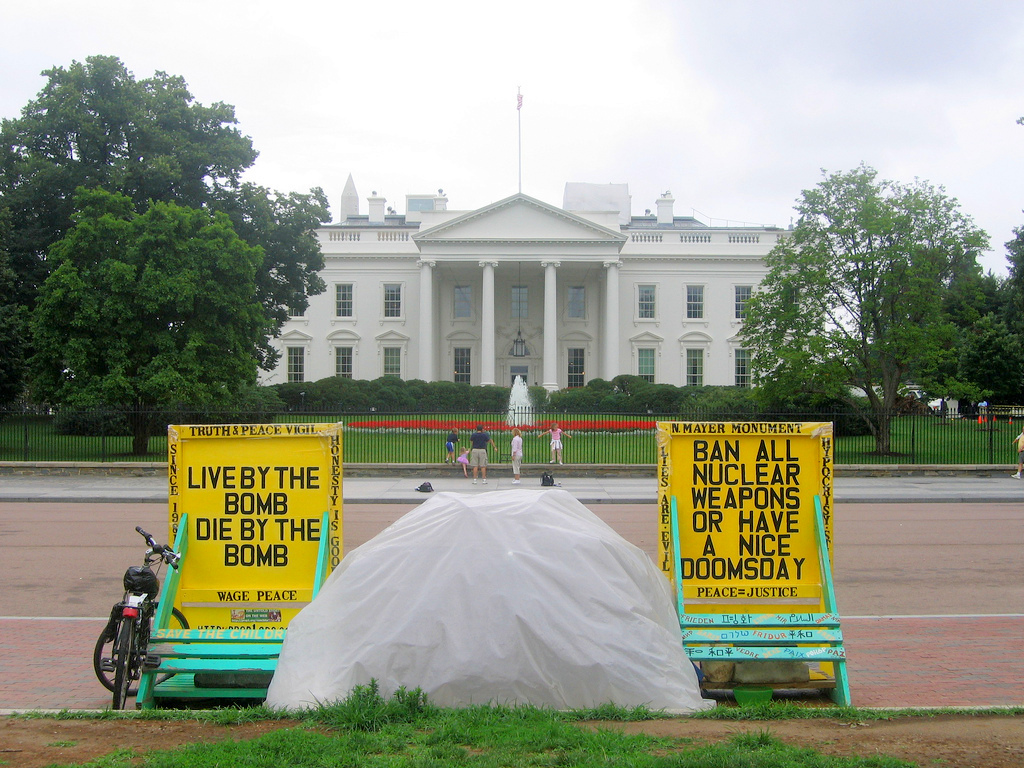
The 2011 White House shooting occurred on November 11, 2011, when Oscar Ramiro Ortega-Hernandez, an unemployed 21-year-old man who was obsessed with U.S. President Barack Obama, fired a semi-automatic rifle at the White House, the official residence of the U.S. Presidency in Washington, D.C. At least seven bullets hit the second floor. Neither the president nor First Lady Michelle Obama were home at the time, although their younger daughter, Sasha, and the first lady's mother, Marian Shields Robinson, were. No one was injured. It took four days for the Secret Service to realize that bullets had struck the White House. Michelle Obama learned of the shooting from an usher, then summoned Mark J. Sullivan, director of the Secret Service, to find out why the first family had not been informed. In September 2013, Ortega-Hernandez pleaded guilty to one count of property destruction and one count of discharging a firearm during a crime of violence, thereby avoiding the charge of attempting to assassinate the President. In March 2014, he was sentenced to 25 years' imprisonment. In September 2014, The Washington Post published an investigative report detailing errors that the Secret Service made on the night of the shooting that led to the crime going undiscovered. A House of Representatives hearing followed and Julia Pierson, director of the Secret Service, resigned the following week. It was the first shooting at the White House since Francisco Martin Duran's attempted assassination of President Bill Clinton in 1994.

Cabinet Room

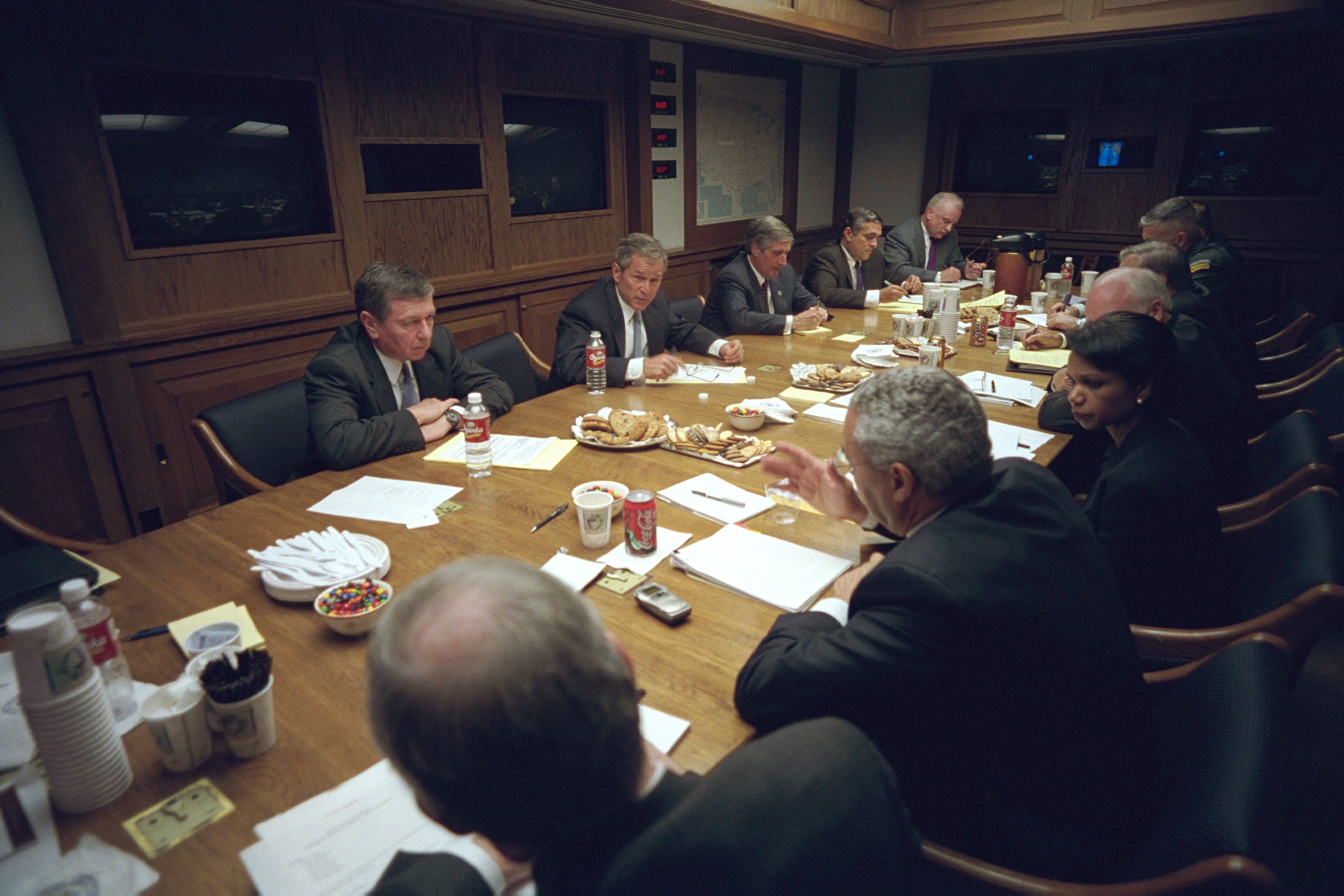
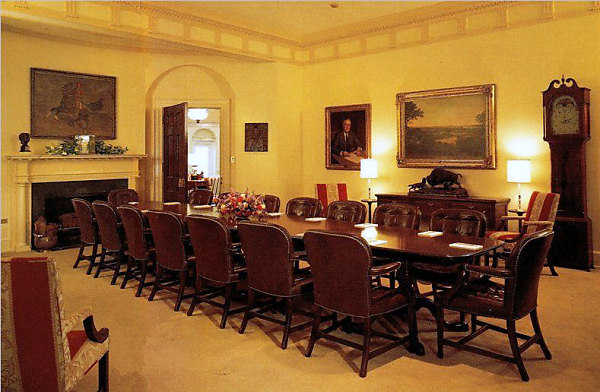
The Cabinet Room is the meeting room for the cabinet secretaries and advisors serving the President of the United States. The body is defined as the United States Cabinet. The Cabinet Room is located in the West Wing of the White House, adjoining the Oval Office, and looks out upon the White House Rose Garden. Though completed in 1934 the room is built in the Georgian style. The neoclassical ceiling molding with triglyphs was installed in 1934. A series of French doors topped with arched lunette windows are located on the east side of the room. A fireplace, flanked by two niches is located on the north side of the room. Busts of George Washington and Benjamin Franklin by Jean-Antoine Houdon fill the niches. Above the mantel hangs a painting titled "The Signing of the Declaration of Independence" by Charles Édouard Armand-Dumaresq, . Additional portraits along the west wall are chosen by an incumbent president. The large elliptical mahogany table was a gift from President Richard Nixon in 1970. The president and the cabinet secretaries' chairs are copies of a late-eighteenth century design. The president's chair is centered on the table on the east side of the room. The back of the president's chair is two inches taller than those of the cabinet secretaries. Engraved brass plates with the names of the cabinet positions are attached to the back of the chairs. The president's simply says "THE PRESIDENT." The chairs are purchased by the cabinet members, who may keep the chair as a souvenir after they leave office. Some cabinet members have had their chairs returned to the cabinet room for several positions and administrations. In 2006 the room was refurbished somewhat similarly to its appearance during the administration of Franklin Delano Roosevelt when the West Wing and current Cabinet Room were largely rebuilt following damages from a fire at the end of the Herbert Hoover administration. This includes Art Deco style wall sconces with spread eagles supporting internally lit globes. Three overhead Moderne style glass pendant lights were recreated from old photographs and a similar surviving example in a hallway between the Oval Office and Roosevelt Room. The room is painted an off-white color called deauville. A custom made carpet, in shades of carmine, old gold, sapphire and fern green with a pattern of overscaled stars and olive leaves was woven for the room. The refurbishment of White House rooms is jointly undertaken by the Curator of the White House, the Committee for the Preservation of the White House, and White House Historical Association. Costs relating to construction are often funded by the White House Endowment Trust. The purchase of fine art, historic furniture, or the recreation of period decorative arts, is frequently paid for by the White House Acquisition Trust.

East Sitting Hall

The East Sitting Hall is located on the second floor of the White House, home of the President of the United States. First used as a reception room for guests of the president (the Lincoln Bedroom and the Queens' Bedroom were originally offices of the chief executive), it is now a family parlor with access to the east rooms on the second floor. The room is entered from the second floor corridor on the west side of the room. A large fanlight window on the east side of the room faces the Jacqueline Kennedy Garden, the East Colonnade, the East Wing, and the U.S. Treasury. Two disguised doors allow access to a closet and a staircase up to the third floor. Charles Dickens wrote this about the room during the administration of John Tyler: [W]e went upstairs into another chamber, where were certain visitors, waiting for audiences. At sight of my conductor, a black in plain clothes and yellow slippers who was gliding noiselessly about and whispering messages in the ears of the more impatient, made a sign of recognition, and glided off to announce him. We had previously looked into another chamber fitted all round with a great bare wooden desk or counter [probably the Anteroom, today's Treaty Room], whereon lay piles of newspapers, to which sundry gentlemen were referring. But there were no such means of beguiling the time in this apartment, which was as unpromising and tiresome as any waiting-room.... Because the East Sitting Hall is situated above the East Room (which has a 22-foot ceiling), access to the East Sitting Hall was originally by way a small set of stairs from the Stair Landing. During the Truman reconstruction, the room was reduced by the addition of a lavatory and side stair to the third floor; the steps were replaced with a ramp through an arched corridor. Sister Parish, the first interior designer brought in to decorate during the Kennedy restoration, created the original concepts of the redesigned East Sitting Hall, which became a repository of furniture and memorabilia associated with the life of President James Monroe.

This attraction is located in

This is a private property. Please enjoy respectfully and do not disturb the occupants.

Edit Categories
Add Tours

This attraction is not part of any tours

Add Collections

This attraction is not part of any collections


Some of the attractions we imported from Wikipedia are not perfect. Send us an email detailing what's wrong and we'll look into fixing it.

GuRoute is all about Gurus sharing their local knowledge. If you feel up to fixing this problem yourself, why not adopt it. You will become the owner and can fix whatever problems you see.

We've copied a link to this attraction into your clipboard so that ou can paste it into an email or text message...

More Info...
You can add your friends to the visit yourself, or, send them a link and let them add themselves...

The visit will appear on both your timelines and on your Shared Timeline.

Click below and we'll email you a link that you can send on to friends or post on your group's Facebook page.

If your friends aren't members of GuRoute yet, this is a great way to get them started.
Recent
Recently used Collections will appear here...
Recent
Recently used tours will appear here...

Where is this?

GuRoute likes to place attractions inside other attractions. So, maybe it's in a city, or maybe it's inside a particular park in that city. Maybe your attraction is a huge park that spans half the county, or multiple counties.

Determining where this attraction is gives it context - if it's in a park, you'll be able to see it alongside all the other attractions in that park. And that helps define the park.

GuRoute will automatically calculate a parent region for this attraction. You can change it if there is something more appropriate.

This attraction is currently located in .

Change

This attraction does not yet have any reviews

Please login to write a review...

Reviewed by
Record new Visit

Add this location to your timneline?

  • If there's an existing attraction open it and add it to your timeline...
  • If not, enter a title and we'll create a new attraction for your memories...
Create new Attraction

Create a new attraction at this location?

  • We rely on Gurus like you to share your local knowledge...
(Give a name for this location)


+
Add this to your timeline instead...

Imagine having a record of all the cool things you've done in your life!


Using our timeline you can keep track of everywhere you visit in your lifetime...

But, you'll need to sign in first...

Add contacts so that you can share your travels and record places that you visit together...

Family
Favorites
Family
Favorites

Profile TimeLine Our Visits Edit Accept Decline Invite

If you have any more friends that visited this place with you, feel free to add them to the visit. We'll write it to their timeline and once they confirm it, they too will have this memory for a lifetime.

If they're not already registered, you just need their name and email address and you can add them and we'll send them an invite on your behlaf.

Add a tour comment

Add some extra information for when this attraction is viewed as part of your tour...

Next Stop Instructions

Add some instructions for what to see/do on the way to the next stop...

Next Stop Instructions

Add some instructions for what to see/do on the way to the next stop...

If you're visiting an existing attraction, open it and add it to your timeline. If there is no attraction for the place you are visiting...

  • Click 'Add My Location' below
  • Or right-click on the map to mark a different location
  • Or long-press if you have a touch screen
You can even add locations while you're offline....
  • Load up the map when you're online and we'll keep track of your locaiton
  • You can add locations to your timeline
  • When you are online again we'll sync them with the cloud

We can't connect to the internet right now. The following attractions are saved locally and can be uploaded when you're online...

GuRoute would like to access your current location so that we can pin you on the map and show you nearby attractions

Add friends so that you can share your experiences with each other...

Add tour to What's Next?

Go...

Either for yourself or someone else...

  1. Do your trip research in GuRoute
    Add all the places that you think might be worthy of a visit into a trip-plan
  2. Add your trip-plan to your "What's Next" timeline
    (or a friend's "What's Next" timeline)
  3. When you're on vacation you'll have all your research at your fingertips
  4. Share your timline with your friends
    They can enjoy your vacation with you, seeing not only where you've been, but where you're going next...
  5. Add/remove attractions if things change

It also makes a great souvenir of your trip

Collections

Go...

Create a home page for a collection of attractions

  • Add an image and description to display on the homepage
  • Start adding content
    Add existing attractions to your collection or create new attractions of your own
  • Collections can be:
    • Public (Anyone can add attractions to your collection)
    • Shared (Only yourself and Gurus you nominate can add content)
    • Private (The collection will only be visible to yourself)

Uses

  • Local business or hotel
    Showcase local attractions that you endorse
  • Clubs
    Showcase attractions that members have created (eg. local historical society)
  • Special Interest
    If GuRoute does not have a category for your special interest you add your attractions to your own collection instead

Examples

Walking/Driving Tours

Go...

A guided tour where GuRoute will direct you from stop to stop and narrate a description of each attraction you arrive at

  • GuRoute uses your phone's GPS to guide you from stop to stop
  • GuRoute automatically detects when you arrive at the next tour-stop and narrates the description of the attraction (Chrome Only)
  • It then sends you on to the next stop

Tours are great to attract people to your town. Even places with no significant points of interest can be lots of fun when part of a tour


Cater tours to your Audience

  • Kid-friendly Tours
    • Focus on what will keep kids interested
    • Instead of parents having to drag their kids around they'll be struggling to keep up
    • Let the kids navigate and they'll get more fun out of finding that historical plaque than they ever would from reading it
  • Accessible tours
  • Short and long tours of the same location

What you need to do...

  1. Click 'Go...'
    Enter a title, description and location for the tour
  2. Add existing attractions OR create new ones and add them to the tour
  3. For existing attractions you can add more information specific to the theme of the tour
  4. You can also add instructions on what to do or see en-route to the next tour-stop
  5. Try out your tour and see how it works...

Mystery Tour

Go...

Create a Mystery Tour

Create a series of clues to show people around a city, neighborhood or whatever place you like...

  • GuRoute will show people clues to get them from attraction to attraction
  • When they reach each stop GuRoute will tell them about the place and give them the next clue
  • Take as long or as you like and explore each location at your leisure

Scavenger Hunt

Go...

Create a Scavenger Hunt

Create a series of questions that people have to answer. The answers can all be discovered by walking aroung the area, looking for clues.

  • How many beers are on tap at Michael Collin's Irish Bar?
  • What's the name of the oldest building on main streeet?
  • Show a picture of some public art and ask them what it is called
  • Clues can have numeric or multiple choice answers