Sign In

My Timeline

GuRoute

Discover Your World

Share your Experiences

Record your Life


Top Attractions in Independence National Historical Park

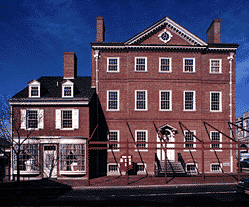
Second Bank of the United States

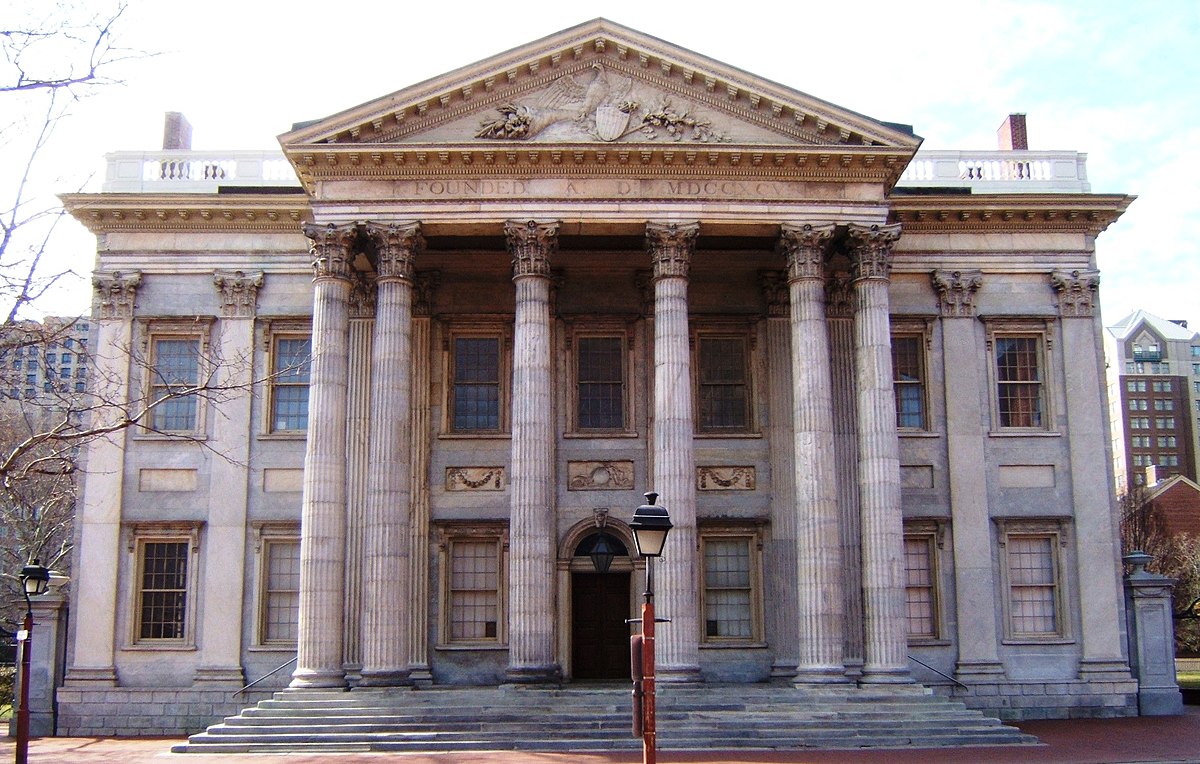
The Second Bank of the United States, located in Philadelphia, Pennsylvania, was the second federally authorized Hamiltonian National Bank in the United States during its 20-year charter from February 1816 to January 1836. The banks formal name, according to section 9 of its charter as passed by Congress, was "The President, Directors, and Company, of the Bank of the United States." A private corporation with public duties, the bank handled all fiscal transactions for the U.S. Government, and was accountable to Congress and the U.S. Treasury. Twenty percent of its capital was owned by the federal government, the banks single largest stockholder. Four thousand private investors held 80% of the banks capital, including one thousand Europeans. The bulk of the stocks were held by a few hundred wealthy Americans. In its time, the institution was the largest monied corporation in the world. The essential function of the bank was to regulate the public credit issued by private banking institutions through the fiscal duties it performed for the U.S. Treasury, and to establish a sound and stable national currency. The federal deposits endowed the BUS with its regulatory capacity. Modeled on Alexander Hamiltons First Bank of the United States, the Second Bank was chartered by President James Madison in 1816 and began operations at its main branch in Philadelphia on January 7, 1817, managing twenty-five branch offices nationwide by 1832. The efforts to renew the banks charter put the institution at the center of the general election of 1832, in which the banks president Nicholas Biddle and pro-bank National Republicans led by Henry Clay clashed with the "hard-money" Andrew Jackson administration and eastern banking interests in the Bank War. Failing to secure recharter, the Second Bank of the United States became a private corporation in 1836, and underwent liquidation in 1841.

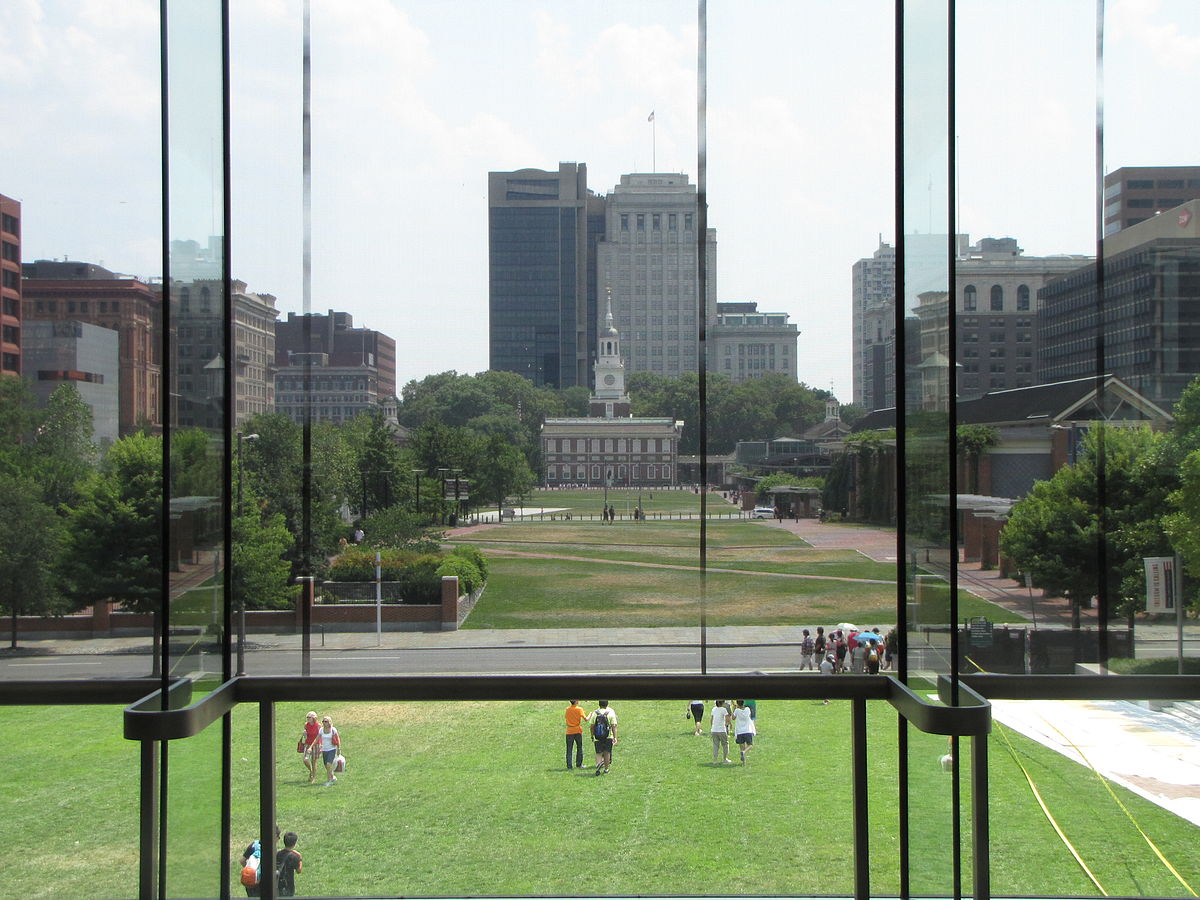
Liberty Bell

The Liberty Bell is an iconic symbol of American independence, located in Philadelphia, Pennsylvania. Formerly placed in the steeple of the Pennsylvania State House (now renamed Independence Hall), the bell today is located in the Liberty Bell Center in Independence National Historical Park. The bell was commissioned from the London firm of Lester and Pack in 1752, and was cast with the lettering "Proclaim LIBERTY throughout all the land unto all the inhabitants thereof," a Biblical reference from the Book of Leviticus (25:10). The bell first cracked when rung after its arrival in Philadelphia, and was twice recast by local workmen John Pass and John Stow, whose last names appear on the bell. In its early years, the Liberty Bell was used to summon lawmakers to legislative sessions and to alert citizens to public meetings and proclamations. No immediate announcement was made of the Second Continental Congress's vote for independence, and thus the bell could not have rung on July 4, 1776, at least not for any reason related to that vote. Bells were rung to mark the reading of the Declaration of Independence on July 8, 1776, and while there is no contemporary account of the Liberty Bell ringing, most historians believe it was one of the bells rung. After American independence was secured, it fell into relative obscurity for some years. In the 1830s, the bell was adopted as a symbol by abolitionist societies, who dubbed it the "Liberty Bell." Similarly suffragists adopted the bell as a symbol, calling it the "justice bell." The bell acquired its distinctive large crack sometime in the early 19th century—a widespread story claims it cracked while ringing after the death of Chief Justice John Marshall in 1835. The bell became famous after an 1847 short story claimed that an aged bell-ringer rang it on July 4, 1776, upon hearing of the Second Continental Congress's vote for independence. Despite the fact that the bell did not ring for independence on that July 4, the tale was widely accepted as fact, even by some historians. Beginning in 1885, the City of Philadelphia, which owns the bell, allowed it to go to various expositions and patriotic gatherings. The bell attracted huge crowds wherever it went, additional cracking occurred and pieces were chipped away by souvenir hunters. The last such journey occurred in 1915, after which the city refused further requests. After World War II, the city allowed the National Park Service to take custody of the bell, while retaining ownership. The bell was used as a symbol of freedom during the Cold War and was a popular site for protests in the 1960s. It was moved from its longtime home in Independence Hall to a nearby glass pavilion on Independence Mall in 1976, and then to the larger Liberty Bell Center adjacent to the pavilion in 2003. The bell has been featured on coins and stamps, and its name and image have been widely used by corporations.

Tomb of the Unknown Revolutionary War Soldier

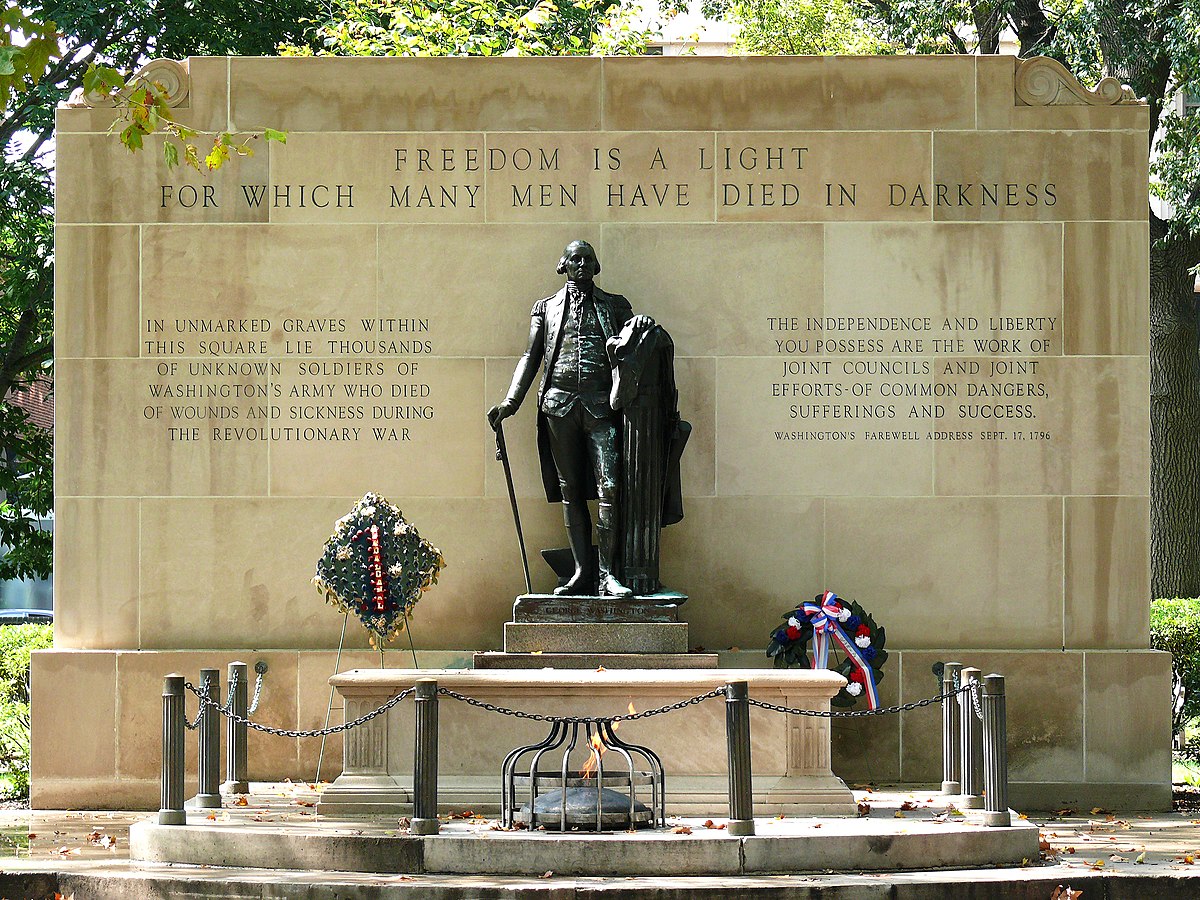
The Tomb of the Unknown Revolutionary War Soldier, sometimes referred to as the Tomb of the Unknown Soldier of the American Revolution, is a war memorial located in Washington Square in Philadelphia, Pennsylvania. It honors the thousands of soldiers who died during the American Revolutionary War, many of whom were buried in mass graves in that park. The memorial was first conceived in 1954 by the Washington Square Planning Committee, and was completed in 1957. The monument was designed by architect G. Edwin Brumbaugh and includes an eternal flame and a bronze cast of Jean Antoine Houdon's statue of George Washington as the monument's centerpiece. The Tomb includes remains which were disinterred, after archeological examination, from within the park from when it was a cemetery. The remains are that of a soldier, but it is uncertain if he was Colonial or British. An unknown number of bodies remain buried beneath the square and the surrounding area; some are still occasionally found during construction and maintenance projects. Engraved in the side of the tomb are these words: "Freedom is a light for which many men have died in darkness" "The independence and liberty you possess are the work of joint councils and joint efforts of common dangers, suffering and success" (Washington Farewell Address, Sept. 17, 1796) "In unmarked graves within this square lie thousands of unknown soldiers of Washington's Army who died of wounds and sickness during the Revolutionary War." The plaque on the tomb reads: "Beneath this stone rests a soldier of Washington's army who died to give you liberty." The tomb appears briefly in the opening credits of the 1983 comedy Trading Places.

Mikveh Israel Cemetery

Mikveh Israel Cemetery is the oldest Jewish cemetery in Philadelphia, Pennsylvania (the oldest in the United States is the first cemetery of Congregation Shearith Israel in New York). The site, less than 0.2 acres in size, is listed on the National Register of Historic Places and administered by Independence National Historical Park (even though the expense of maintaining the cemetery is borne by sponsoring Congregation Mikveh Israel). It is located in the center city section of Philadelphia, on the north-east corner of Spruce St. and S. Darien St. (between 8th and 9th St.), about 1⁄4 mi west and 1⁄4 mi south of Independence Hall. Mikveh Israel Cemetery was originally a private burial ground for the family of Nathan Levy, whose ship, Myrtilla was long reputed to have transported the Liberty Bell from England to Philadelphia in 1752 (though the Hibernia, captained by William Child, is more likely to have transported the bell). In 1738, one of Levy's children died. Rather than bury the child in unsanctified ground, he applied to John Penn for "a small piece of ground" with permission to make it a family cemetery. This property was at the corner of 9th and Walnut Streets, the present site of the Walnut Street Theatre. Two years later, Nathan Levy secured a larger plot from the Penn family at the present location of Mikveh Israel Cemetery. This was meant to be a permanent burial ground for the entire Jewish community of Philadelphia. Levy was buried there upon his death in 1753. The cemetery in 1740 was a 30' x 30' plot. In 1752, Nathan Levy received an additional grant of land north of the first plot. In 1765, John Penn granted Mathias Bush an adjacent piece of ground for burial purposes. By that time, the burial place was managed by the Sephardic synagogue Congregation Mikveh Israel (official name: קהל קדוש מקוה ישראל, Kahal Kadosh Mikveh Israel, or "Holy Congregation Hope of Israel"), founded in 1740 and still active in the 21st century.

City Tavern

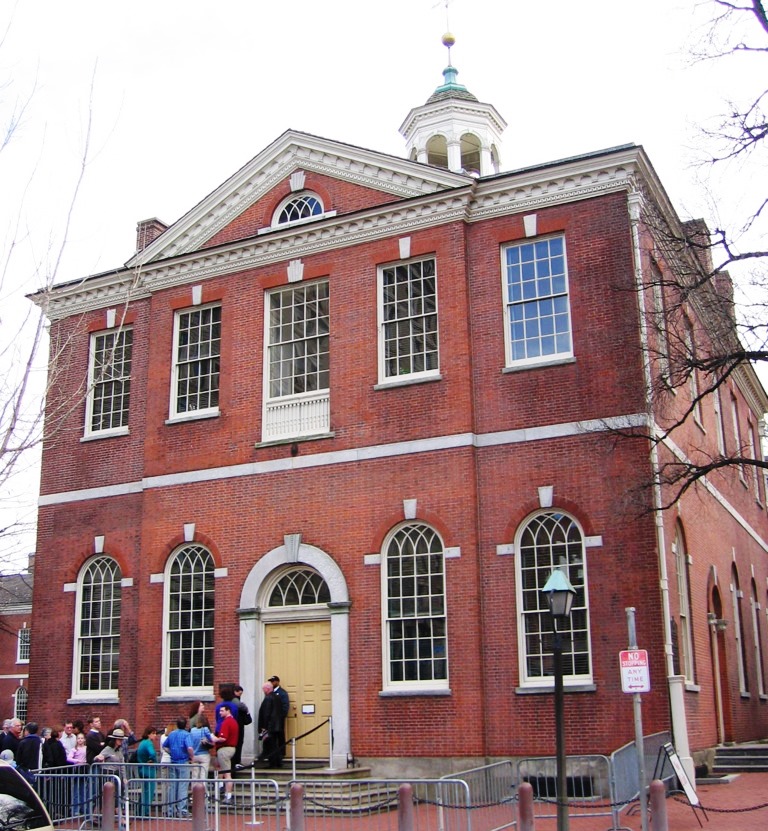
The City Tavern is a replica of a historic 18th-century building located at 138 South 2nd Street, at the intersection of Second and Walnut Streets in Philadelphia, Pennsylvania, part of Independence National Historical Park. Owner and Executive Chef Walter Staib cooks a variety of entrees using authentic 18th-century recipes, served in seven period dining rooms, three wine cellar rooms and an outdoor garden. Called the "most genteel tavern in America" by John Adams, it was the favorite meeting place of many of the Founding Fathers and of many members of the First Continental Congress. The land on which City Tavern was built was conveyed in 1772 by Samuel Powell to a group of seven wealthy citizens. The City Tavern was built by subscription in 1773 at a cost of more than £3,000. On May 20th, 1774, over two hundred men gathered in the long gallery of the City Tavern to respond to the request for assistance from Bostonians following the passage of the Boston Port Bill. It was partially destroyed by fire on March 22, 1834 and the structure was demolished in 1854. The entire building was reconstructed in the 1970s and re-opened in 1976 for the United States Bicentennial as a functioning tavern and restaurant. On October 1, 2013, the tavern was temporarily ordered to close by the National Park Service, the buildings owner, as a result of the United States federal government shutdown of 2013. City Tavern was featured in the novel The Riddle of Penncroft Farm by Dorothea Jensen. In it, it was the place where Will spied on the British during their occupation of Philadelphia in 1777 while pretending to be an apprentice of Little Smith. "Little" Daniel Smith was, in real life, the name of its proprietor.

This attraction is located in

This is a private property. Please enjoy respectfully and do not disturb the occupants.

Edit Categories
Add Tours

This attraction is not part of any tours

Add Collections

This attraction is not part of any collections


Some of the attractions we imported from Wikipedia are not perfect. Send us an email detailing what's wrong and we'll look into fixing it.

GuRoute is all about Gurus sharing their local knowledge. If you feel up to fixing this problem yourself, why not adopt it. You will become the owner and can fix whatever problems you see.

We've copied a link to this attraction into your clipboard so that ou can paste it into an email or text message...

More Info...
You can add your friends to the visit yourself, or, send them a link and let them add themselves...

The visit will appear on both your timelines and on your Shared Timeline.

Click below and we'll email you a link that you can send on to friends or post on your group's Facebook page.

If your friends aren't members of GuRoute yet, this is a great way to get them started.
Recent
Recently used Collections will appear here...
Recent
Recently used tours will appear here...

Where is this?

GuRoute likes to place attractions inside other attractions. So, maybe it's in a city, or maybe it's inside a particular park in that city. Maybe your attraction is a huge park that spans half the county, or multiple counties.

Determining where this attraction is gives it context - if it's in a park, you'll be able to see it alongside all the other attractions in that park. And that helps define the park.

GuRoute will automatically calculate a parent region for this attraction. You can change it if there is something more appropriate.

This attraction is currently located in .

Change

This attraction does not yet have any reviews

Please login to write a review...

Reviewed by
Record new Visit

Add this location to your timneline?

  • If there's an existing attraction open it and add it to your timeline...
  • If not, enter a title and we'll create a new attraction for your memories...
Create new Attraction

Create a new attraction at this location?

  • We rely on Gurus like you to share your local knowledge...
(Give a name for this location)


+
Add this to your timeline instead...

Imagine having a record of all the cool things you've done in your life!


Using our timeline you can keep track of everywhere you visit in your lifetime...

But, you'll need to sign in first...

Add contacts so that you can share your travels and record places that you visit together...

Family
Favorites
Family
Favorites

Profile TimeLine Our Visits Edit Accept Decline Invite

If you have any more friends that visited this place with you, feel free to add them to the visit. We'll write it to their timeline and once they confirm it, they too will have this memory for a lifetime.

If they're not already registered, you just need their name and email address and you can add them and we'll send them an invite on your behlaf.

Add a tour comment

Add some extra information for when this attraction is viewed as part of your tour...

Next Stop Instructions

Add some instructions for what to see/do on the way to the next stop...

Next Stop Instructions

Add some instructions for what to see/do on the way to the next stop...

If you're visiting an existing attraction, open it and add it to your timeline. If there is no attraction for the place you are visiting...

  • Click 'Add My Location' below
  • Or right-click on the map to mark a different location
  • Or long-press if you have a touch screen
You can even add locations while you're offline....
  • Load up the map when you're online and we'll keep track of your locaiton
  • You can add locations to your timeline
  • When you are online again we'll sync them with the cloud

We can't connect to the internet right now. The following attractions are saved locally and can be uploaded when you're online...

GuRoute would like to access your current location so that we can pin you on the map and show you nearby attractions

Add friends so that you can share your experiences with each other...

Add tour to What's Next?

Go...

Either for yourself or someone else...

  1. Do your trip research in GuRoute
    Add all the places that you think might be worthy of a visit into a trip-plan
  2. Add your trip-plan to your "What's Next" timeline
    (or a friend's "What's Next" timeline)
  3. When you're on vacation you'll have all your research at your fingertips
  4. Share your timline with your friends
    They can enjoy your vacation with you, seeing not only where you've been, but where you're going next...
  5. Add/remove attractions if things change

It also makes a great souvenir of your trip

Collections

Go...

Create a home page for a collection of attractions

  • Add an image and description to display on the homepage
  • Start adding content
    Add existing attractions to your collection or create new attractions of your own
  • Collections can be:
    • Public (Anyone can add attractions to your collection)
    • Shared (Only yourself and Gurus you nominate can add content)
    • Private (The collection will only be visible to yourself)

Uses

  • Local business or hotel
    Showcase local attractions that you endorse
  • Clubs
    Showcase attractions that members have created (eg. local historical society)
  • Special Interest
    If GuRoute does not have a category for your special interest you add your attractions to your own collection instead

Examples

Walking/Driving Tours

Go...

A guided tour where GuRoute will direct you from stop to stop and narrate a description of each attraction you arrive at

  • GuRoute uses your phone's GPS to guide you from stop to stop
  • GuRoute automatically detects when you arrive at the next tour-stop and narrates the description of the attraction (Chrome Only)
  • It then sends you on to the next stop

Tours are great to attract people to your town. Even places with no significant points of interest can be lots of fun when part of a tour


Cater tours to your Audience

  • Kid-friendly Tours
    • Focus on what will keep kids interested
    • Instead of parents having to drag their kids around they'll be struggling to keep up
    • Let the kids navigate and they'll get more fun out of finding that historical plaque than they ever would from reading it
  • Accessible tours
  • Short and long tours of the same location

What you need to do...

  1. Click 'Go...'
    Enter a title, description and location for the tour
  2. Add existing attractions OR create new ones and add them to the tour
  3. For existing attractions you can add more information specific to the theme of the tour
  4. You can also add instructions on what to do or see en-route to the next tour-stop
  5. Try out your tour and see how it works...

Mystery Tour

Go...

Create a Mystery Tour

Create a series of clues to show people around a city, neighborhood or whatever place you like...

  • GuRoute will show people clues to get them from attraction to attraction
  • When they reach each stop GuRoute will tell them about the place and give them the next clue
  • Take as long or as you like and explore each location at your leisure

Scavenger Hunt

Go...

Create a Scavenger Hunt

Create a series of questions that people have to answer. The answers can all be discovered by walking aroung the area, looking for clues.

  • How many beers are on tap at Michael Collin's Irish Bar?
  • What's the name of the oldest building on main streeet?
  • Show a picture of some public art and ask them what it is called
  • Clues can have numeric or multiple choice answers