Sign In

My Timeline

GuRoute

Discover Your World

Share your Experiences

Record your Life


Top Attractions in Alexandria

Mount Vernon

Mount Vernon was the plantation home of George Washington, first President of the United States. The estate is situated on the banks of the Potomac River in Fairfax County, Virginia, near Alexandria, across from Prince Georges County, Maryland. The Washington family had owned land in the area since the time of Washingtons great-grandfather in 1674, and in 1739 embarked on an expansion of the estate that continued under George Washington, who came into possession of the estate in 1754, but did not become its sole owner until 1761. The mansion is built of wood in a loose Palladian style, and was constructed by George Washington in stages between 1758 and 1778; it occupies the site of an earlier, smaller house built by George Washingtons father Augustine, some time between 1726 and 1735. It remained Washingtons country home for the rest of his life. Following his death in 1799, under the ownership of several successive generations of the family, the estate progressively declined. In 1858, the houses historical importance was recognized and it was saved from ruin by The Mount Vernon Ladies Association; this philanthropic organization acquired it together with part of the Washington estate. Escaping the damage suffered by many plantation houses during the American Civil War, Mount Vernon was restored. Mount Vernon was designated a National Historic Landmark in 1960 and is today listed on the National Register of Historic Places. It is still owned and maintained in trust by The Mount Vernon Ladies Association, and is open every day of the year. However, admitting the public is not a new innovation, but maintenance of a tradition over 200 years old begun by George Washington himself; as early as 1796, he wrote: "I have no objection to any sober or orderly persons gratifying their curiosity in viewing the buildings, Gardens, ca. about Mount Vernon."

Contrabands and Freedmen Cemetery

The Contrabands and Freedman Cemetery at 1001 S. Washington St. in Alexandria, Virginia was listed on the National Register of Historic Places on August 15, 2012. For African American escaped slaves, the military occupation of Alexandria during the American Civil War created opportunity on an unprecedented scale. As Federal troops extended their occupation of the seceded states, escaped slaves flooded into Union-controlled areas. Safely behind Union lines, the cities of Alexandria and Washington offered not only comparative freedom, but employment. Over the course of the war, Alexandria was transformed by the Union occupiers into a major supply depot and transport and hospital center, all under army control. Because the escaped slaves were still legally property until the abolition of slavery, they were labeled as contrabands to prevent their being returned to their masters. Contrabands took positions with the army as construction workers, nurses and hospital stewards, longshoremen, painters, wood cutters, teamsters, laundresses, cooks, gravediggers, personal servants, and ultimately as soldiers and sailors. According to one statistic, the population of Alexandria had exploded to 18,000 by the fall of 1863 – an increase of 10,000 people in 16 months. As of ratification of the Fifteenth Amendment, Alexandria County’s black population was more than 8,700, or about half the total number of residents in the County. This newly enfranchised constituency provided the support necessary to elect the first black Alexandrians to the City Council and the Virginia Legislature. The population of contrabands flooding into Alexandria during the Union occupation included many who were destitute, malnourished and in poor health. Once in Alexandria, the contrabands were housed in barracks and hastily assembled shantytowns. In the close quarters with poor sanitation, smallpox and typhoid outbreaks were prevalent and death was common. In February 1864, after hundreds of contrabands and freedmen had perished, the commander of the Alexandria military district, General John P. Slough, seized a parcel of undeveloped land at the corner of South Washington and Church Streets from a pro-Confederate owner to be used as a cemetery specifically for burial of contrabands. Burials started in March that year. The cemetery operated under General Sloughs command. Its oversight was supervised by Alexandria’s Superintendent of Contrabands, the Rev. Albert Gladwin, who made arrangements for burials. Each grave was identified with a whitewashed, wooden grave marker. In 1868, after Congress ended most functions of the Freedmens Bureau, the cemetery was closed; and the property was returned to its original owners. Eventually, after the grave markers had rotted and ownership had transferred several times, the property was redeveloped for commercial use. During its five years of operation, about 1800 contrabands and freedmen were buried in the cemetery. Beginning in 1987, when memory of the cemetery was revived, the City of Alexandria began the process of saving the cemetery to create a memorial park. During 2008, submissions in a design competition for the memorial were received from 20 countries, and a design for the memorial was selected. As of late 2008, construction of the memorial was underway. As Contrabands and Freedmen Cemetery, the cemetery was listed on the U.S. National Register of Historic Places in August, 2012.

Lee Corner

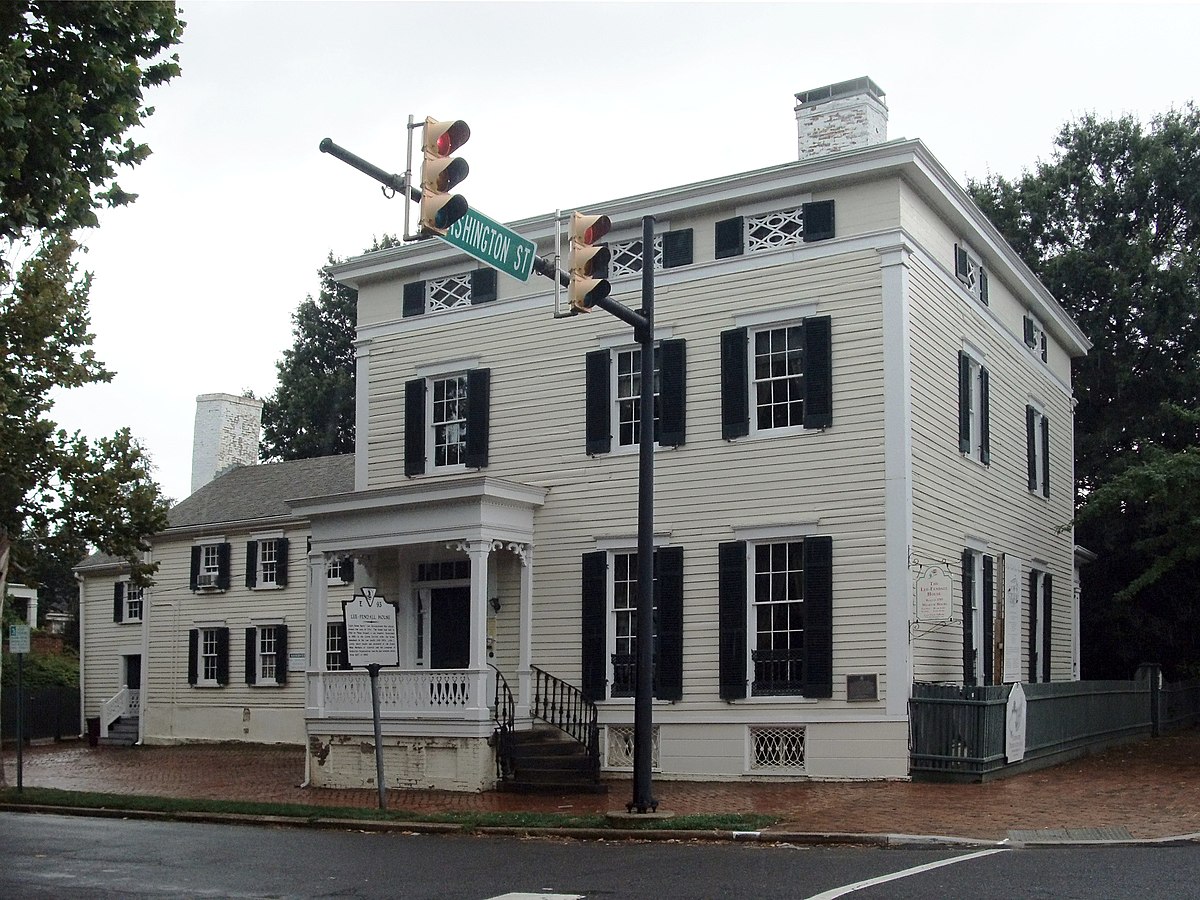
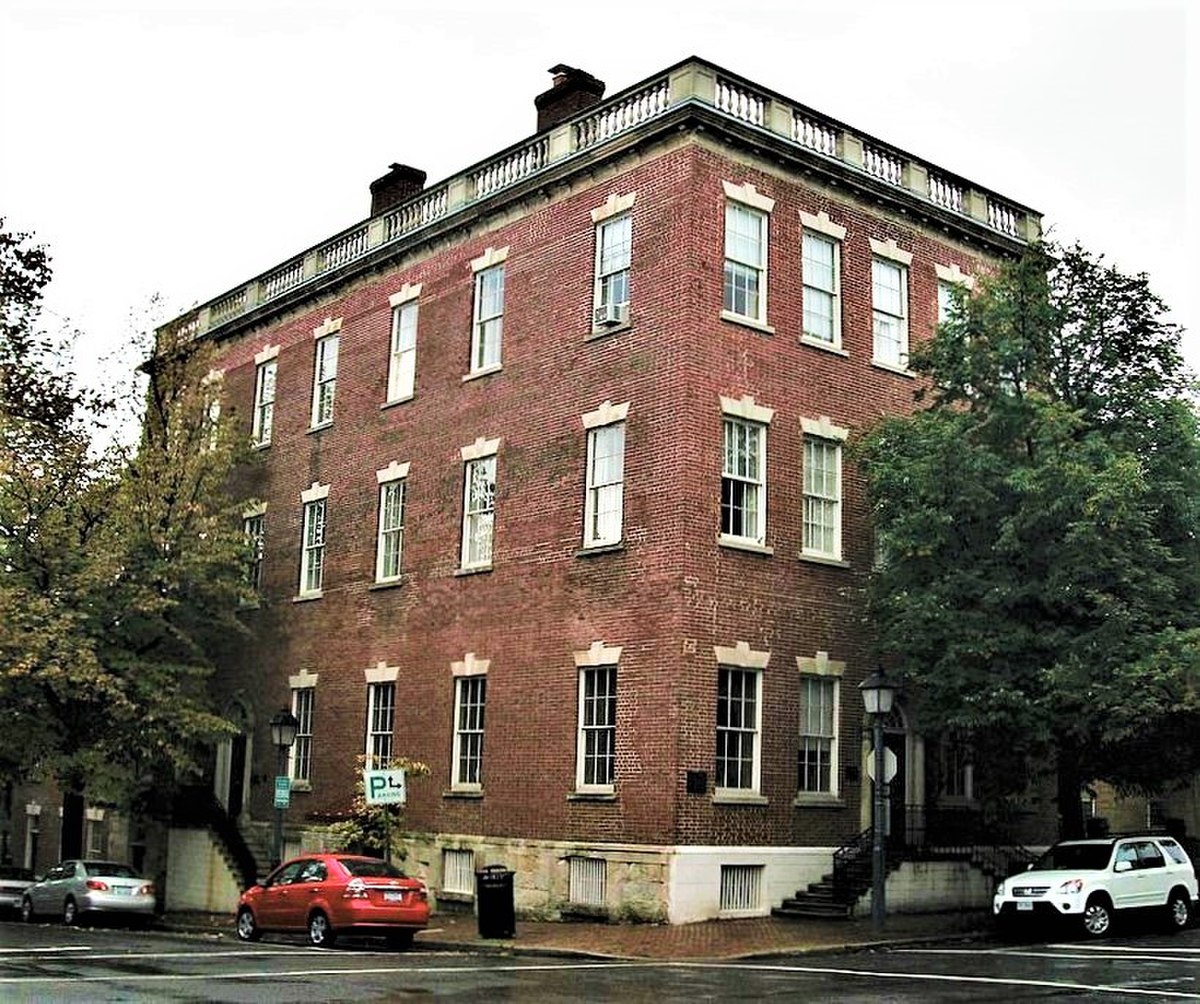
Lee Corner is an historic part of Old Town Alexandria, Virginia, at the intersection of North Washington and Oronoco Street. The corner is named after the Lee family, who once owned almost every property on the intersection. After the American Revolution, Alexandria, already known as "Washingtons Home Town", also became known as the "Home Town of the Lees". The keystone of the corner is the Lee-Fendall House at 614 Oronoco Street. The property was originally owned by Col. "Light Horse Harry" Lee, and the original 1785 home was built by Philip Richard Fendall I. The house was home to 37 members of the Lee family, including Philip R. Fendall II, Edmund Jennings Lee I, and Harriotte and Louis Cazenove. Across Oronoco Street from the Lee-Fendall House stands twin houses: 607 and 609 Oronoco Street. 607 Oronoco Street was the last home of Light Horse Harry Lee. His son, Robert E. Lee spent most of his youth living at the house with his mother, Anne Hill Carter Lee, before he left for his education at West Point in 1825. The house is known today as "Robert E. Lees Boyhood Home." Next door, 609 Oronoco, stands a mirror image of Lees Boyhood Home. The house was home to Cornelia Hopkins, daughter of William Lee, where she lived after her marriage to John Hopkins until her death in 1816. 428 North Washington Street is the house built by Edmund Jennings Lee I, younger brother of Harry Lee, who lived in the house from its 1801 construction until 1837, when he moved across the street to the Lee-Fendall House. Directly south of the Lee-Fendall House, on the corner of Washington and Princess, is the house built by U.S. Attorney General Charles Lee, another of Harrys brothers. Charles and Edmund married a pair of Lee sisters, Anne and Sally, the daughters of Richard Henry Lee, a signer of the Declaration of Independence. The Lee-Fendall House is the only Lee family house on Historic Lee Corner that is now a museum.

Old Presbyterian Meeting House

The heritage of the Old Presbyterian Meeting House in Alexandria, Virginia dates from the early eighteenth century. Scottish Presbyterians were among the early European settlers of Northern Virginia and were involved in establishing Alexandria as a port in 1749. The Society of Presbyterians worshiped publicly in the city from the 1760s, and the congregation’s first installed minister arrived in 1772. The Meeting House was erected in 1775. Largely destroyed by fire in 1835, it was subsequently rebuilt, maintaining a Reformed Protestant plain-style appearance. Except for a bell tower added in 1843 and granite entrance stairs installed in 1853, it remains little altered to the present day. Alexandrians have gathered at the Meeting House for public worship many times over the years. Among other such services that George Washington attended here was one conducted by the Rev. Dr. James Muir for the National Day of Solemn Humiliation, Fasting, and Prayer in 1798. Alexandria’s memorial services for George Washington in 1799 were held in this sanctuary. The church bell tolled in mourning during the four days between his death and burial. The Meeting House remained open for worship throughout the Civil War, but the congregation dwindled afterward. In 1899 the building was closed for worship, and all of the church property was entrusted to Second Presbyterian Church, which accepted responsibility for maintaining it. For the next half-century, it served as both a museum and a place of worship. In 1949, a new congregation, taking the name of “the Old Presbyterian Meeting House,” was established here. Music has been part of the Meeting House heritage from the earliest days, and the church has served as a venue for public concerts for more than two centuries. Its first pipe organ, built by Jacob Hilbus and installed in 1817, was—according to church historian Julius Melton—the first pipe organ installed in a Presbyterian church in the United States. The Hilbus organ was destroyed in the 1835 fire. The pipe organ in the apse, by Henry Erben, dates from 1849. The pipe organ in the rear gallery was installed in 1997 by the Lively-Fulcher Organ Company. Adjoining the Meeting House is a Burial Ground and several buildings: Flounder House, built in 1787, was originally a parsonage; Elliot House was originally a private residence; and the Education Building was constructed in 1957. The Burial Ground is the final resting place of many patriots of the Revolutionary War, including one unidentified soldier who is honored by the Tomb of an Unknown Soldier of the American Revolution. Among the more than 300 persons buried in this graveyard are John Carlyle, founder and first overseer of Alexandria; Dr. James Craik, Physician General of the Continental Army and close friend of George Washington; and William Hunter, Jr., mayor of Alexandria and founder of the St. Andrews Society. The Meeting House also maintains and operates the Presbyterian Cemetery on Hamilton Lane, about a mile west of the church. Opened in 1809, the cemetery is the final resting place of 17 patriots of the American Revolution, men killed in the War of 1812, and 62 Confederate veterans and a number of Union soldiers from the Civil War. Over the years, the Presbyterian Cemetery has provided burial space for merchants, ship captains, the Reverend Elias Harrison—the fourth pastor of the Meeting House, who died during the Civil War—a half dozen of Alexandria’s mayors, numerous representatives of the city’s governing council, a number of prominent businessmen and philanthropists, and at least one member of the U.S. House of Representatives.

This attraction is located in

This is a private property. Please enjoy respectfully and do not disturb the occupants.

Edit Categories
Add Tours

This attraction is not part of any tours

Add Collections

This attraction is not part of any collections


Some of the attractions we imported from Wikipedia are not perfect. Send us an email detailing what's wrong and we'll look into fixing it.

GuRoute is all about Gurus sharing their local knowledge. If you feel up to fixing this problem yourself, why not adopt it. You will become the owner and can fix whatever problems you see.

We've copied a link to this attraction into your clipboard so that ou can paste it into an email or text message...

More Info...
You can add your friends to the visit yourself, or, send them a link and let them add themselves...

The visit will appear on both your timelines and on your Shared Timeline.

Click below and we'll email you a link that you can send on to friends or post on your group's Facebook page.

If your friends aren't members of GuRoute yet, this is a great way to get them started.
Recent
Recently used Collections will appear here...
Recent
Recently used tours will appear here...

Where is this?

GuRoute likes to place attractions inside other attractions. So, maybe it's in a city, or maybe it's inside a particular park in that city. Maybe your attraction is a huge park that spans half the county, or multiple counties.

Determining where this attraction is gives it context - if it's in a park, you'll be able to see it alongside all the other attractions in that park. And that helps define the park.

GuRoute will automatically calculate a parent region for this attraction. You can change it if there is something more appropriate.

This attraction is currently located in .

Change

This attraction does not yet have any reviews

Please login to write a review...

Reviewed by
Record new Visit

Add this location to your timneline?

  • If there's an existing attraction open it and add it to your timeline...
  • If not, enter a title and we'll create a new attraction for your memories...
Create new Attraction

Create a new attraction at this location?

  • We rely on Gurus like you to share your local knowledge...
(Give a name for this location)


+
Add this to your timeline instead...

Imagine having a record of all the cool things you've done in your life!


Using our timeline you can keep track of everywhere you visit in your lifetime...

But, you'll need to sign in first...

Add contacts so that you can share your travels and record places that you visit together...

Family
Favorites
Family
Favorites

Profile TimeLine Our Visits Edit Accept Decline Invite

If you have any more friends that visited this place with you, feel free to add them to the visit. We'll write it to their timeline and once they confirm it, they too will have this memory for a lifetime.

If they're not already registered, you just need their name and email address and you can add them and we'll send them an invite on your behlaf.

Add a tour comment

Add some extra information for when this attraction is viewed as part of your tour...

Next Stop Instructions

Add some instructions for what to see/do on the way to the next stop...

Next Stop Instructions

Add some instructions for what to see/do on the way to the next stop...

If you're visiting an existing attraction, open it and add it to your timeline. If there is no attraction for the place you are visiting...

  • Click 'Add My Location' below
  • Or right-click on the map to mark a different location
  • Or long-press if you have a touch screen
You can even add locations while you're offline....
  • Load up the map when you're online and we'll keep track of your locaiton
  • You can add locations to your timeline
  • When you are online again we'll sync them with the cloud

We can't connect to the internet right now. The following attractions are saved locally and can be uploaded when you're online...

GuRoute would like to access your current location so that we can pin you on the map and show you nearby attractions

Add friends so that you can share your experiences with each other...

Add tour to What's Next?

Go...

Either for yourself or someone else...

  1. Do your trip research in GuRoute
    Add all the places that you think might be worthy of a visit into a trip-plan
  2. Add your trip-plan to your "What's Next" timeline
    (or a friend's "What's Next" timeline)
  3. When you're on vacation you'll have all your research at your fingertips
  4. Share your timline with your friends
    They can enjoy your vacation with you, seeing not only where you've been, but where you're going next...
  5. Add/remove attractions if things change

It also makes a great souvenir of your trip

Collections

Go...

Create a home page for a collection of attractions

  • Add an image and description to display on the homepage
  • Start adding content
    Add existing attractions to your collection or create new attractions of your own
  • Collections can be:
    • Public (Anyone can add attractions to your collection)
    • Shared (Only yourself and Gurus you nominate can add content)
    • Private (The collection will only be visible to yourself)

Uses

  • Local business or hotel
    Showcase local attractions that you endorse
  • Clubs
    Showcase attractions that members have created (eg. local historical society)
  • Special Interest
    If GuRoute does not have a category for your special interest you add your attractions to your own collection instead

Examples

Walking/Driving Tours

Go...

A guided tour where GuRoute will direct you from stop to stop and narrate a description of each attraction you arrive at

  • GuRoute uses your phone's GPS to guide you from stop to stop
  • GuRoute automatically detects when you arrive at the next tour-stop and narrates the description of the attraction (Chrome Only)
  • It then sends you on to the next stop

Tours are great to attract people to your town. Even places with no significant points of interest can be lots of fun when part of a tour


Cater tours to your Audience

  • Kid-friendly Tours
    • Focus on what will keep kids interested
    • Instead of parents having to drag their kids around they'll be struggling to keep up
    • Let the kids navigate and they'll get more fun out of finding that historical plaque than they ever would from reading it
  • Accessible tours
  • Short and long tours of the same location

What you need to do...

  1. Click 'Go...'
    Enter a title, description and location for the tour
  2. Add existing attractions OR create new ones and add them to the tour
  3. For existing attractions you can add more information specific to the theme of the tour
  4. You can also add instructions on what to do or see en-route to the next tour-stop
  5. Try out your tour and see how it works...

Mystery Tour

Go...

Create a Mystery Tour

Create a series of clues to show people around a city, neighborhood or whatever place you like...

  • GuRoute will show people clues to get them from attraction to attraction
  • When they reach each stop GuRoute will tell them about the place and give them the next clue
  • Take as long or as you like and explore each location at your leisure

Scavenger Hunt

Go...

Create a Scavenger Hunt

Create a series of questions that people have to answer. The answers can all be discovered by walking aroung the area, looking for clues.

  • How many beers are on tap at Michael Collin's Irish Bar?
  • What's the name of the oldest building on main streeet?
  • Show a picture of some public art and ask them what it is called
  • Clues can have numeric or multiple choice answers