Sign In

My Timeline

GuRoute

Discover Your World

Share your Experiences

Record your Life


Top Attractions in Wyoming

Yellowstone National Park

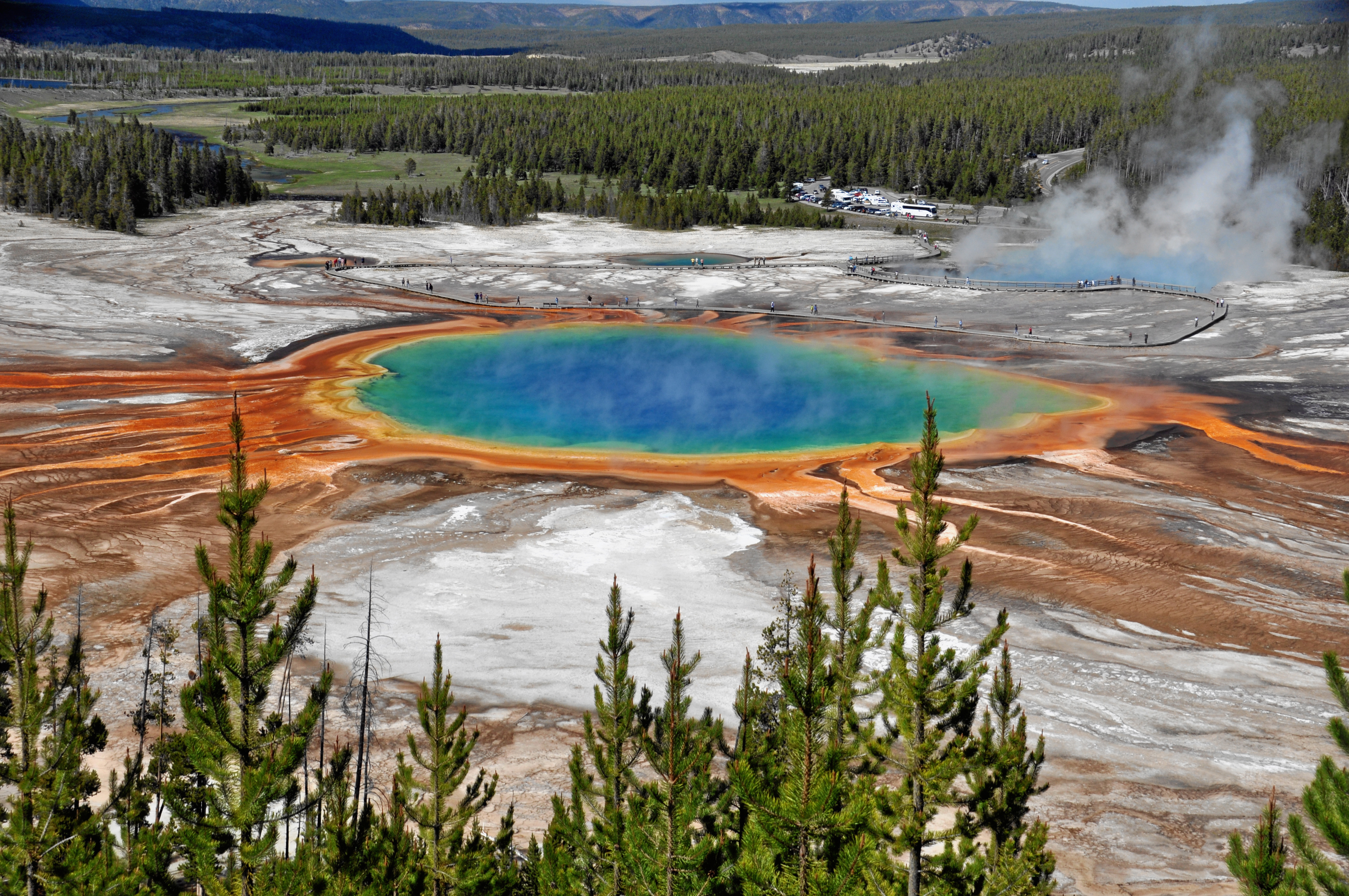
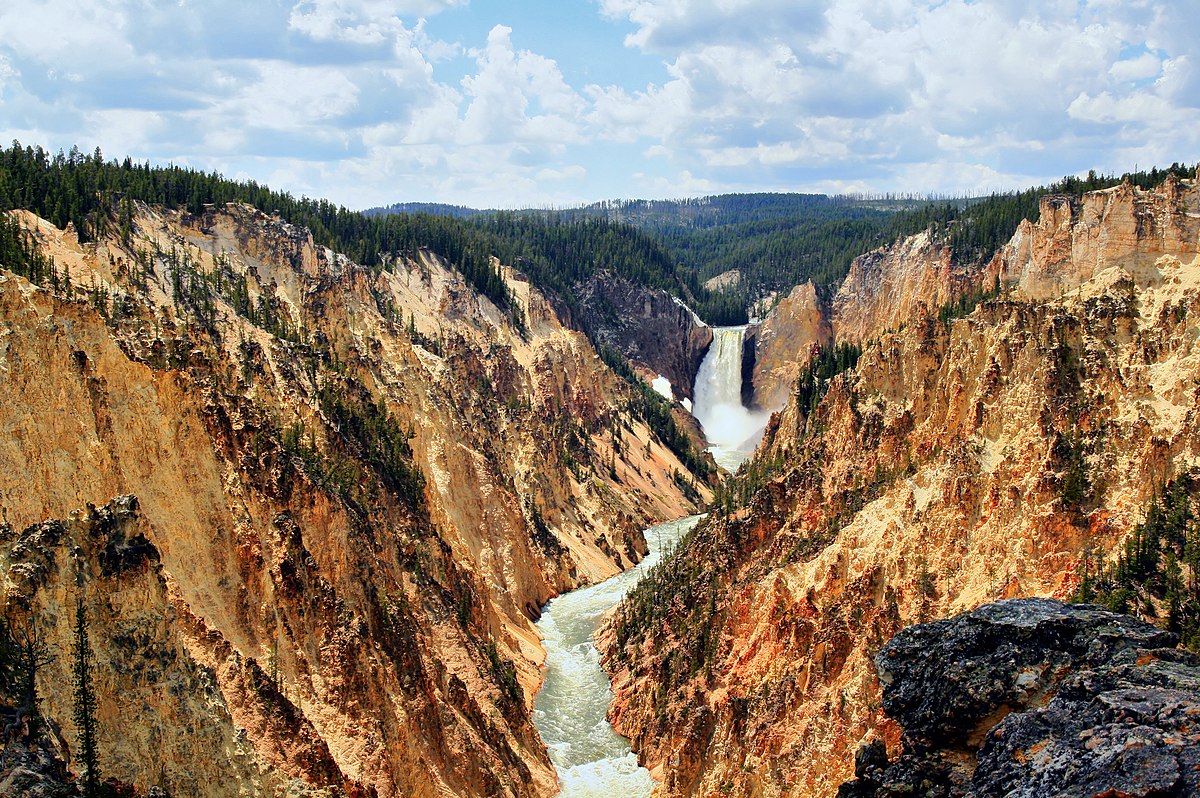
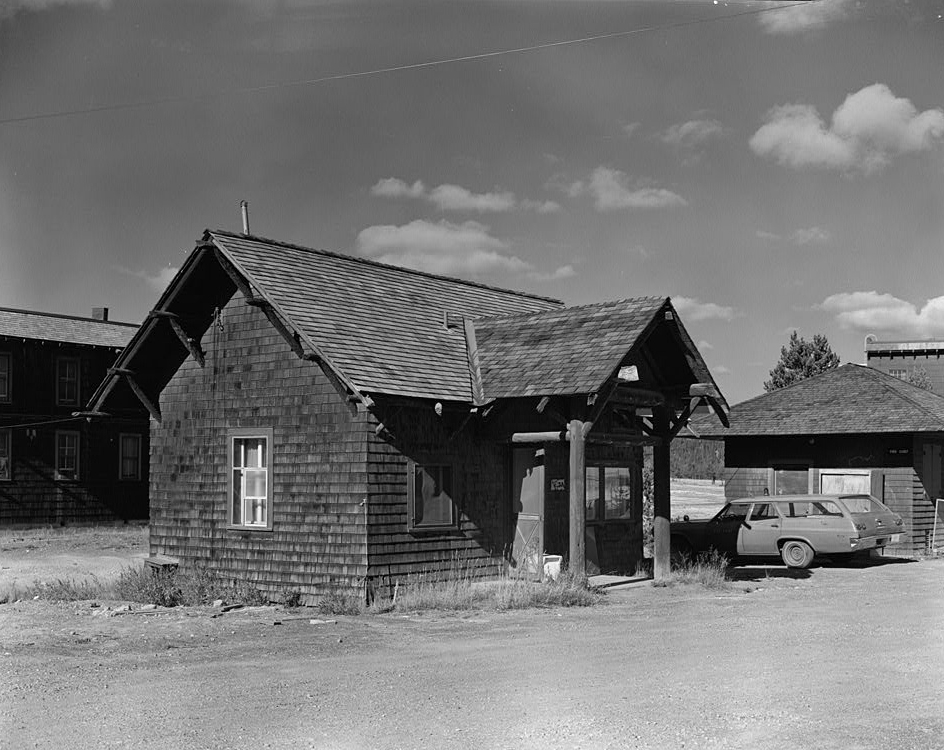
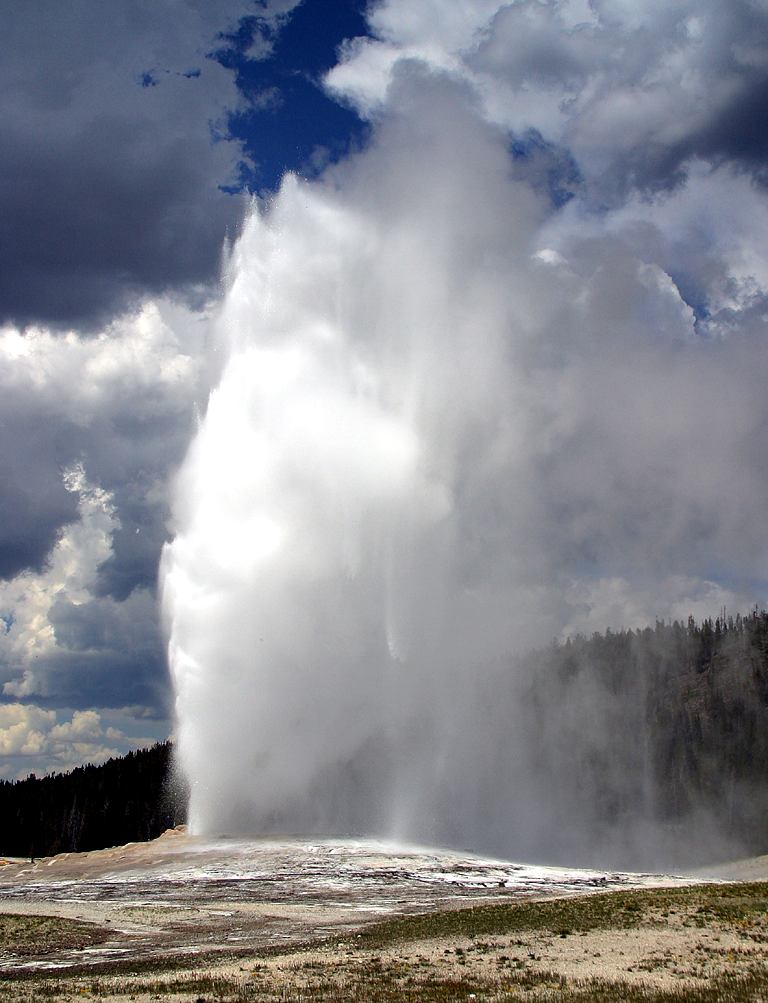
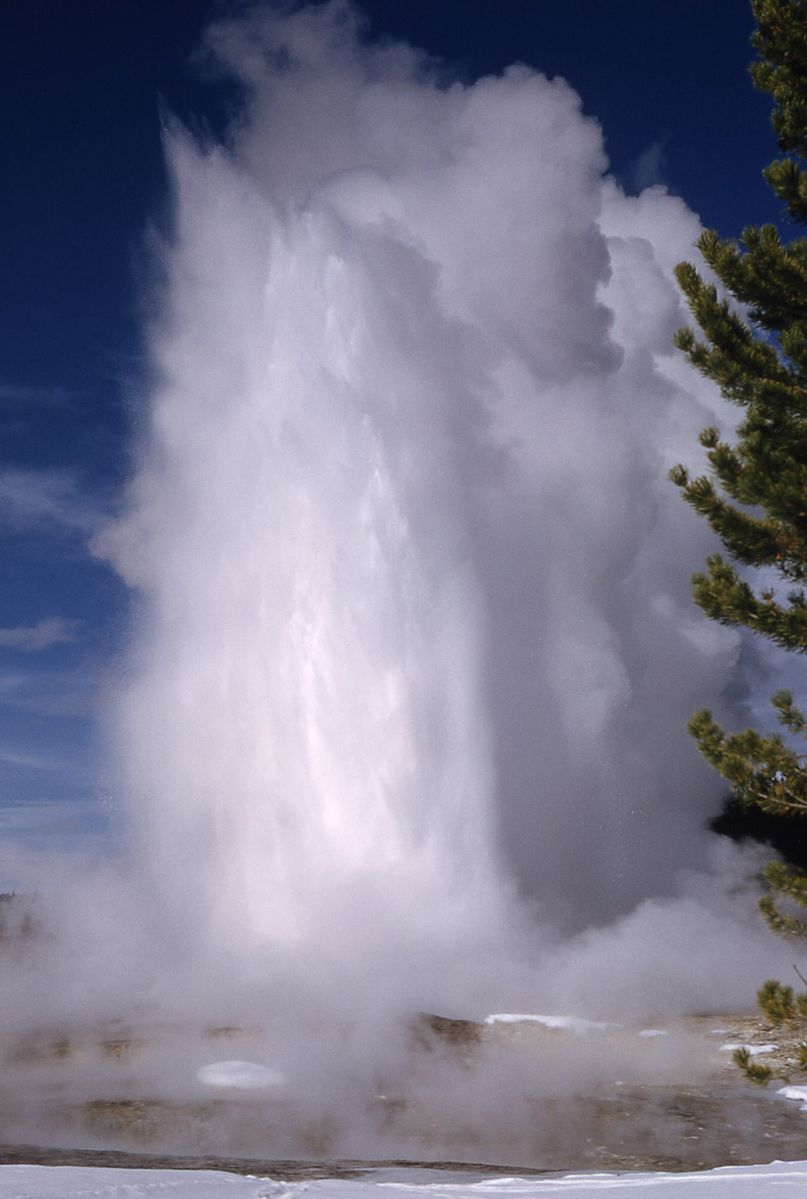
Yellowstone National Park is a national park located primarily in the U.S. state of Wyoming, although it also extends into Montana and Idaho. It was established by the U.S. Congress and signed into law by President Ulysses S. Grant on March 1, 1872. Yellowstone, widely held to be the first national park in the world, is known for its wildlife and its many geothermal features, especially Old Faithful Geyser, one of the most popular features in the park. It has many types of ecosystems, but the subalpine forest is most abundant. It is part of the South Central Rockies forests ecoregion. Native Americans have lived in the Yellowstone region for at least 11,000 years. The region was bypassed during the Lewis and Clark Expedition in the early 19th century. Aside from visits by mountain men during the early-to-mid-19th century, organized exploration did not begin until the late 1860s. The U.S. Army was commissioned to oversee the park just after its establishment. In 1917, administration of the park was transferred to the National Park Service, which had been created the previous year. Hundreds of structures have been built and are protected for their architectural and historical significance, and researchers have examined more than 1,000 archaeological sites. Yellowstone National Park spans an area of 3,468.4 square miles, comprising lakes, canyons, rivers and mountain ranges. Yellowstone Lake is one of the largest high-elevation lakes in North America and is centered over the Yellowstone Caldera, the largest supervolcano on the continent. The caldera is considered an active volcano. It has erupted with tremendous force several times in the last two million years. Half of the worlds geothermal features are in Yellowstone, fueled by this ongoing volcanism. Lava flows and rocks from volcanic eruptions cover most of the land area of Yellowstone. The park is the centerpiece of the Greater Yellowstone Ecosystem, the largest remaining nearly-intact ecosystem in the Earths northern temperate zone. Hundreds of species of mammals, birds, fish and reptiles have been documented, including several that are either endangered or threatened. The vast forests and grasslands also include unique species of plants. Yellowstone Park is the largest and most famous megafauna location in the Continental United States. Grizzly bears, wolves, and free-ranging herds of bison and elk live in the park. The Yellowstone Park bison herd is the oldest and largest public bison herd in the United States. Forest fires occur in the park each year; in the large forest fires of 1988, nearly one third of the park was burnt. Yellowstone has numerous recreational opportunities, including hiking, camping, boating, fishing and sightseeing. Paved roads provide close access to the major geothermal areas as well as some of the lakes and waterfalls. During the winter, visitors often access the park by way of guided tours that use either snow coaches or snowmobiles.

Grand Teton National Park

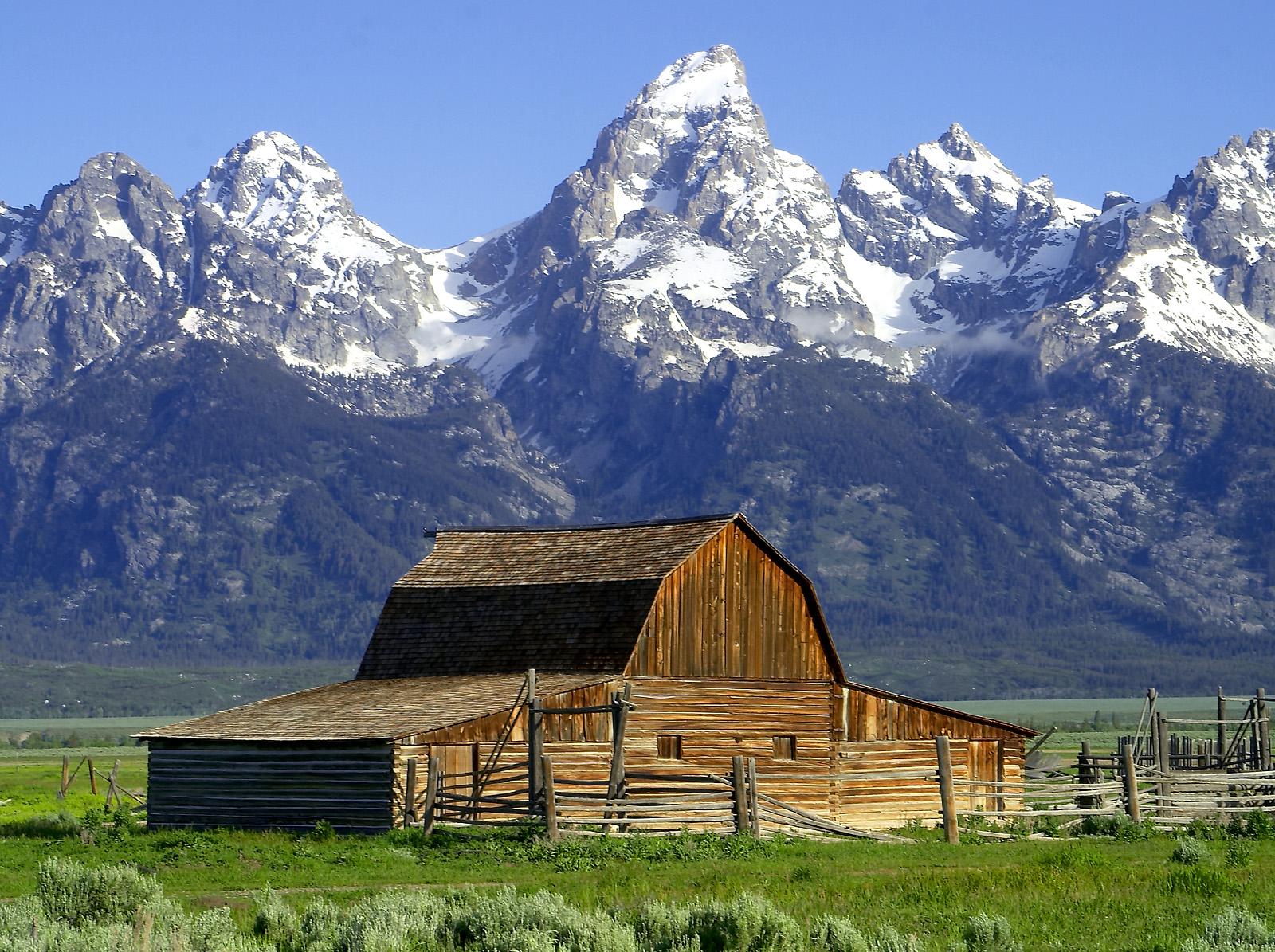
Grand Teton National Park is a United States National Park in northwestern Wyoming. At approximately 310,000 acresthe park includes the major peaks of the 40-mile-long Teton Range as well as most of the northern sections of the valley known as Jackson Hole. It is only 10 miles south of Yellowstone National Park, to which it is connected by the National Park Service-managed John D. Rockefeller, Jr. Memorial Parkway. Along with surrounding National Forests, these three protected areas constitute the almost 18,000,000-acre Greater Yellowstone Ecosystem, one of the largest intact mid-latitude temperate ecosystems in the world. Human history of the Grand Teton region dates back at least 11,000 years, when the first nomadic hunter-gatherer Paleo-Indians began migrating into the region during warmer months pursuing food and supplies. In the early 19th century, the first White explorers encountered the eastern Shoshone natives. Between 1810 and 1840, the region attracted fur trading companies that vied for control of the lucrative beaver pelt trade. U.S. Government expeditions to the region commenced in the mid-19th century as an offshoot of exploration in Yellowstone, with the first permanent white settlers in Jackson Hole arriving in the 1880s. Efforts to preserve the region as a national park commenced in the late 19th century, and in 1929 Grand Teton National Park was established, protecting the major peaks of the Teton Range. The valley of Jackson Hole remained in private ownership until the 1930s, when conservationists led by John D. Rockefeller, Jr. began purchasing land in Jackson Hole to be added to the existing national park. Against public opinion and with repeated Congressional efforts to repeal the measures, much of Jackson Hole was set aside for protection as Jackson Hole National Monument in 1943. The monument was abolished in 1950 and most of the monument land was added to Grand Teton National Park. Grand Teton National Park is named for Grand Teton, the tallest mountain in the Teton Range. The naming of the mountains is attributed to early 19th-century French-speaking trappers—les trois tétons was later anglicized and shortened to Tetons. At 13,775 feetGrand Teton abruptly rises more than 7,000 feet above Jackson Hole, almost 850 feet higher than Mount Owen, the second-highest summit in the range. The park has numerous lakes, including 15-mile-long Jackson Lake as well as streams of varying length and the upper main stem of the Snake River. Though in a state of recession, a dozen small glaciers persist at the higher elevations near the highest peaks in the range. Some of the rocks in the park are the oldest found in any U.S. National Park and have been dated at nearly 2.7 billion years. Grand Teton National Park is an almost pristine ecosystem and the same species of flora and fauna that have existed since prehistoric times can still be found there. More than 1,000 species of vascular plants, dozens of species of mammals, 300 species of birds, more than a dozen fish species and a few species of reptiles and amphibians exist. Due to various changes in the ecosystem, some of them human-induced, efforts have been made to provide enhanced protection to some species of native fish and the increasingly threatened whitebark pine. Grand Teton National Park is a popular destination for mountaineering, hiking, fishing and other forms of recreation. There are more than 1,000 drive-in campsites and over 200 miles of hiking trails that provide access to backcountry camping areas. Noted for world-renowned trout fishing, the park is one of the few places to catch Snake River fine-spotted cutthroat trout. Grand Teton has several National Park Service-run visitor centers, and privately operated concessions for motels, lodges, gas stations and marinas.

Moose

Moose is an unincorporated community in Teton County, Wyoming, United States, in the Jackson Hole valley. It has a US Post Office, with the zip code of 83012. The town is located within Grand Teton National Park along the banks of the Snake River. It is populated mostly by families with inholdings within the borders of the park. The name Moose can also refer to the small community of Park Service houses located immediately behind the Administration offices. These houses are exclusively inhabited by Park Service employees and their families. The National Park Service maintains the Grand Teton National Park headquarters in Moose, as well as the park visitor center. A local non-profit, the Grand Teton Association, also maintains some facilities in the area to help further the NPS mission. Olaus and Margaret Murie and Olaus' brother Adolph lived in Moose for much of their lives. Today the family ranch is home to the non-profit organization, The Murie Center, whose mission is bringing people together to inspire action that preserves nature, and is administered in partnership with the National Park. The Ranch was designated a National Historic Landmark in 2006. The residents in Moose are counted as part of the Moose–Wilson Road census-designated place, but most of the residents live on the east side of the Snake River stretching as far south as Jackson Hole Airport, and as far north as Shadow Mountain. Most of the ranches and residences along the Moose–Wilson Road have been turned over to the national park, including John D. Rockefeller, Jr.'s JY Ranch and the Murie Ranch. The commercial area in the community is centered mainly around the shops and restaurants of the Dornan family ranch inholding. Given its central location in the Jackson Hole valley, Moose has been the setting for several motion pictures, including The Far Horizons in 1955.

Norris Geyser Basin

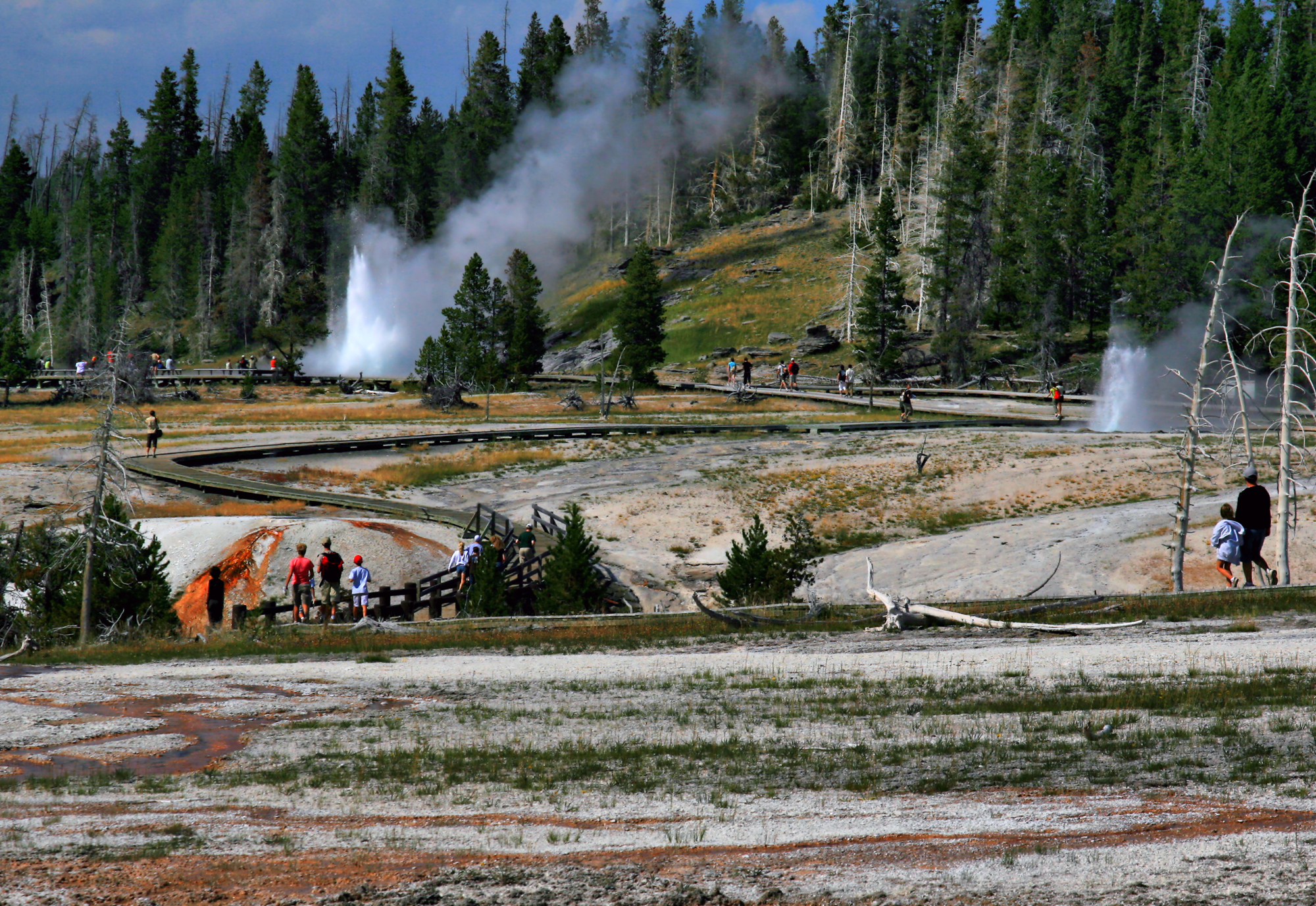
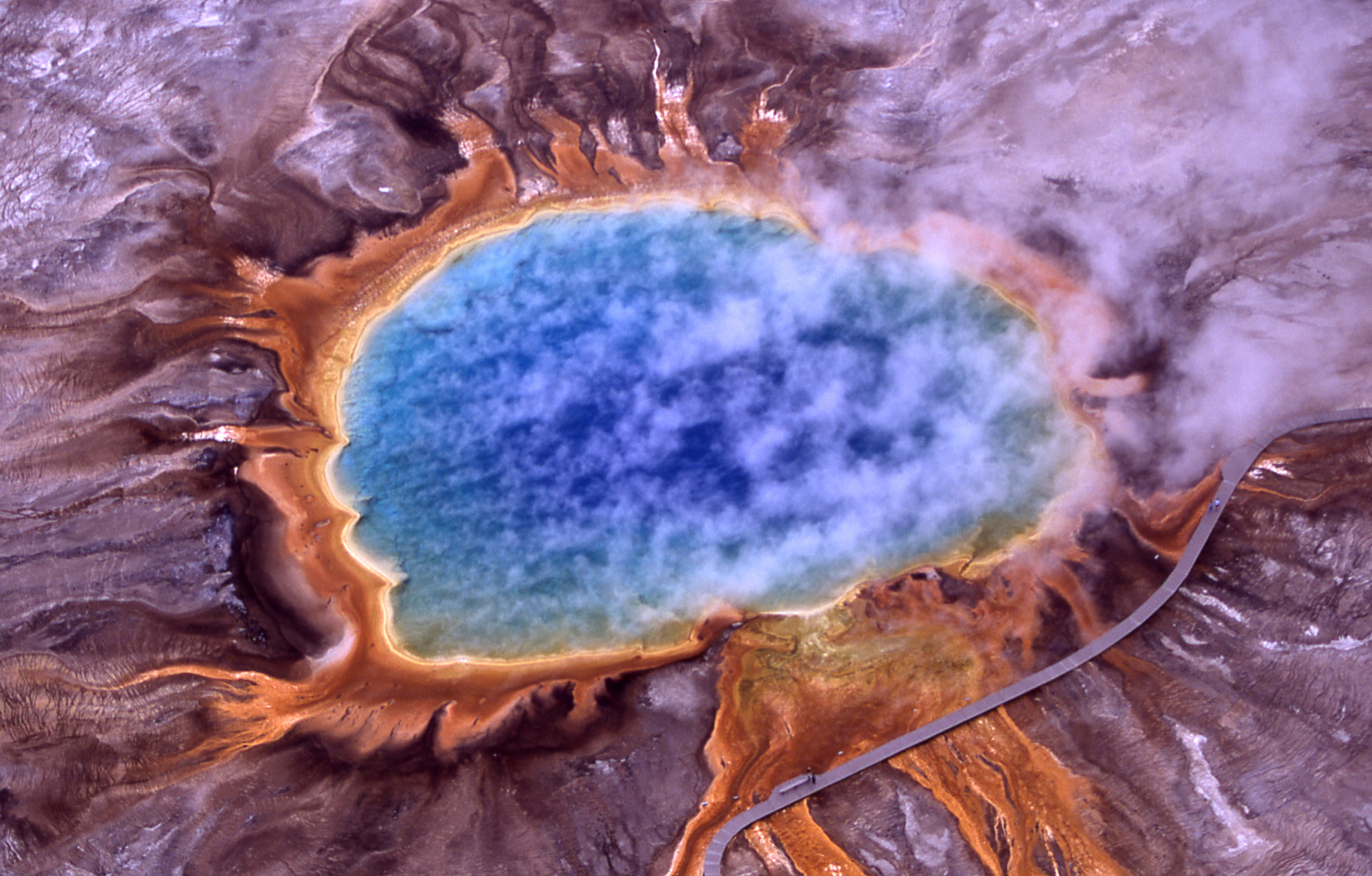
The Norris Geyser Basin is the hottest geyser basin in the park and is located near the northwest edge of Yellowstone Caldera near Norris Junction and on the intersection of three major faults. The Norris-Mammoth Corridor is a fault that runs from Norris north through Mammoth to the Gardiner, Montana, area. The Hebgen Lake fault runs from northwest of West Yellowstone, Montana, to Norris. This fault experienced an earthquake in 1959 that measured 7.4 on the Richter scale (sources vary on exact magnitude between 7.1 and 7.8; see 1959 Hebgen Lake earthquake). Norris Geyser Basin is so hot and dynamic because these two faults intersect with the ring fracture zone that resulted from the creation of the Yellowstone Caldera of 640,000 years ago. The Basin consists of three main areas: Porcelain Basin, Back Basin, and One Hundred Springs Plain. Unlike most of other geyser basins in the park, the waters from Norris are acidic rather than alkaline (for example, Echinus Geyser has a pH of ~3.5). The difference in pH allows for a different class of bacterial thermophiles to live at Norris, creating different color patterns in and around the Norris Basin waters. The Ragged Hills that lie between Back Basin and One Hundred Springs Plain are thermally altered glacial kames. As glaciers receded the underlying thermal features began to express themselves once again, melting remnants of the ice and causing masses of debris to be dumped. These debris piles were then altered by steam and hot water flowing through them. Madison lies within the eroded stream channels cut through lava flows formed after the caldera eruption. The Gibbon Falls lies on the caldera boundary as does Virginia Cascades.

Cirque of the Towers

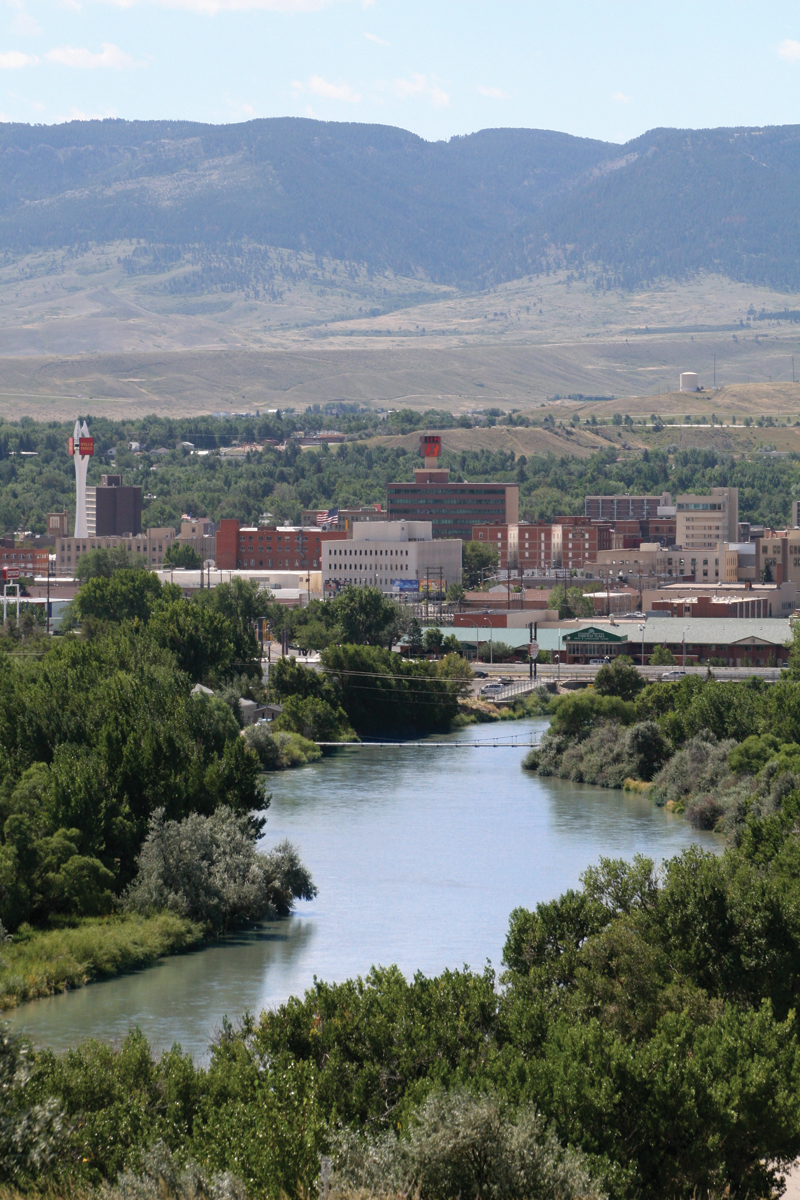
The Cirque of the Towers is located in the Wind River Range Wyoming, U.S., part of which is in the Bridger Wilderness in Bridger-Teton National Forest, while the remainder is in the Popo Agie Wilderness in Shoshone National Forest. Located in the southern section of the Wind River Range , the cirque is a very popular destination for technical rock climbers. Climber Orrin Bonney gave the area its current name in 1941 after his survey of the cirque. Prior to this, few if any visitors had ventured into the cirque due to the remote location. The cirque is an almost circular hole or valley carved by a glacier that retreated over 8,000 years ago. As is true with the rest of the Winds, the mountains are composed almost entirely of granite. The Continental Divide spans the crest of the main peaks. The towers average 1,000 feet lower in altitude than the highest mountains in the northern Winds, with Lizard Head Peak (12,847 ft (3,916 m)) being the tallest. Other individual mountains in the cirque include Shark's Nose, Warbonnet, Warrior Peak, Wolf's Head and Pingora Peak. There are hundreds of routes to choose from in difficulties ranging from 5.1 to 5.11a and since the mountains are composed primarily of granite rock, there is good anchoring. These climbs include two featured in Steck and Roper's Fifty Classic Climbs of North America the Northeast Face of Pingora (IV, 5.9) and the East Ridge of the Wolf's Head (III, 5.6). For both the climber and backpacker, access to the cirque from the west from Pinedale, Wyoming requires a 55 mi (89 km) drive, partly paved and partly gravel, to the Big Sandy trailhead. There is a small National Forest campground at the trailhead. An 8.7 mi (14.0 km) hike beginning at 9,000 ft (2,700 m) above sea level is relatively level the first 7 mi (11 km) and becomes very steep the last mile (1.6 km) and ascends to Jackass Pass at 10,800 ft (3,300 m), crossing the continental divide. From there one must descend a steep half mile (800 m) to Lonesome Lake, which is one of four lakes in the cirque. Expect the trail to be busy in July and August as the cirque is the most popular hiking and climbing destination in the Wind River Range. Lonesome Lake was the first lake in the Wind River Range whose water was deemed unfit for consumption due to human waste and consequently, no camping is permitted within a quarter mile (400 m) of the lake. The granitic rocks allow poor filtration of ground water and the ability of many alpine lakes to cleanse themselves is often poorer than one might find at lower altitudes.

This attraction is located in

This is a private property. Please enjoy respectfully and do not disturb the occupants.

Edit Categories
Add Tours

This attraction is not part of any tours

Add Collections

This attraction is not part of any collections


Some of the attractions we imported from Wikipedia are not perfect. Send us an email detailing what's wrong and we'll look into fixing it.

GuRoute is all about Gurus sharing their local knowledge. If you feel up to fixing this problem yourself, why not adopt it. You will become the owner and can fix whatever problems you see.

We've copied a link to this attraction into your clipboard so that ou can paste it into an email or text message...

More Info...
You can add your friends to the visit yourself, or, send them a link and let them add themselves...

The visit will appear on both your timelines and on your Shared Timeline.

Click below and we'll email you a link that you can send on to friends or post on your group's Facebook page.

If your friends aren't members of GuRoute yet, this is a great way to get them started.
Recent
Recently used Collections will appear here...
Recent
Recently used tours will appear here...

Where is this?

GuRoute likes to place attractions inside other attractions. So, maybe it's in a city, or maybe it's inside a particular park in that city. Maybe your attraction is a huge park that spans half the county, or multiple counties.

Determining where this attraction is gives it context - if it's in a park, you'll be able to see it alongside all the other attractions in that park. And that helps define the park.

GuRoute will automatically calculate a parent region for this attraction. You can change it if there is something more appropriate.

This attraction is currently located in .

Change

This attraction does not yet have any reviews

Please login to write a review...

Reviewed by
Record new Visit

Add this location to your timneline?

  • If there's an existing attraction open it and add it to your timeline...
  • If not, enter a title and we'll create a new attraction for your memories...
Create new Attraction

Create a new attraction at this location?

  • We rely on Gurus like you to share your local knowledge...
(Give a name for this location)


+
Add this to your timeline instead...

Imagine having a record of all the cool things you've done in your life!


Using our timeline you can keep track of everywhere you visit in your lifetime...

But, you'll need to sign in first...

Add contacts so that you can share your travels and record places that you visit together...

Family
Favorites
Family
Favorites

Profile TimeLine Our Visits Edit Accept Decline Invite

If you have any more friends that visited this place with you, feel free to add them to the visit. We'll write it to their timeline and once they confirm it, they too will have this memory for a lifetime.

If they're not already registered, you just need their name and email address and you can add them and we'll send them an invite on your behlaf.

Add a tour comment

Add some extra information for when this attraction is viewed as part of your tour...

Next Stop Instructions

Add some instructions for what to see/do on the way to the next stop...

Next Stop Instructions

Add some instructions for what to see/do on the way to the next stop...

If you're visiting an existing attraction, open it and add it to your timeline. If there is no attraction for the place you are visiting...

  • Click 'Add My Location' below
  • Or right-click on the map to mark a different location
  • Or long-press if you have a touch screen
You can even add locations while you're offline....
  • Load up the map when you're online and we'll keep track of your locaiton
  • You can add locations to your timeline
  • When you are online again we'll sync them with the cloud

We can't connect to the internet right now. The following attractions are saved locally and can be uploaded when you're online...

GuRoute would like to access your current location so that we can pin you on the map and show you nearby attractions

Add friends so that you can share your experiences with each other...

Add tour to What's Next?

Go...

Either for yourself or someone else...

  1. Do your trip research in GuRoute
    Add all the places that you think might be worthy of a visit into a trip-plan
  2. Add your trip-plan to your "What's Next" timeline
    (or a friend's "What's Next" timeline)
  3. When you're on vacation you'll have all your research at your fingertips
  4. Share your timline with your friends
    They can enjoy your vacation with you, seeing not only where you've been, but where you're going next...
  5. Add/remove attractions if things change

It also makes a great souvenir of your trip

Collections

Go...

Create a home page for a collection of attractions

  • Add an image and description to display on the homepage
  • Start adding content
    Add existing attractions to your collection or create new attractions of your own
  • Collections can be:
    • Public (Anyone can add attractions to your collection)
    • Shared (Only yourself and Gurus you nominate can add content)
    • Private (The collection will only be visible to yourself)

Uses

  • Local business or hotel
    Showcase local attractions that you endorse
  • Clubs
    Showcase attractions that members have created (eg. local historical society)
  • Special Interest
    If GuRoute does not have a category for your special interest you add your attractions to your own collection instead

Examples

Walking/Driving Tours

Go...

A guided tour where GuRoute will direct you from stop to stop and narrate a description of each attraction you arrive at

  • GuRoute uses your phone's GPS to guide you from stop to stop
  • GuRoute automatically detects when you arrive at the next tour-stop and narrates the description of the attraction (Chrome Only)
  • It then sends you on to the next stop

Tours are great to attract people to your town. Even places with no significant points of interest can be lots of fun when part of a tour


Cater tours to your Audience

  • Kid-friendly Tours
    • Focus on what will keep kids interested
    • Instead of parents having to drag their kids around they'll be struggling to keep up
    • Let the kids navigate and they'll get more fun out of finding that historical plaque than they ever would from reading it
  • Accessible tours
  • Short and long tours of the same location

What you need to do...

  1. Click 'Go...'
    Enter a title, description and location for the tour
  2. Add existing attractions OR create new ones and add them to the tour
  3. For existing attractions you can add more information specific to the theme of the tour
  4. You can also add instructions on what to do or see en-route to the next tour-stop
  5. Try out your tour and see how it works...

Mystery Tour

Go...

Create a Mystery Tour

Create a series of clues to show people around a city, neighborhood or whatever place you like...

  • GuRoute will show people clues to get them from attraction to attraction
  • When they reach each stop GuRoute will tell them about the place and give them the next clue
  • Take as long or as you like and explore each location at your leisure

Scavenger Hunt

Go...

Create a Scavenger Hunt

Create a series of questions that people have to answer. The answers can all be discovered by walking aroung the area, looking for clues.

  • How many beers are on tap at Michael Collin's Irish Bar?
  • What's the name of the oldest building on main streeet?
  • Show a picture of some public art and ask them what it is called
  • Clues can have numeric or multiple choice answers