Sign In

My Timeline

GuRoute

Discover Your World

Share your Experiences

Record your Life


Top Attractions in East Yorkshire

Hull

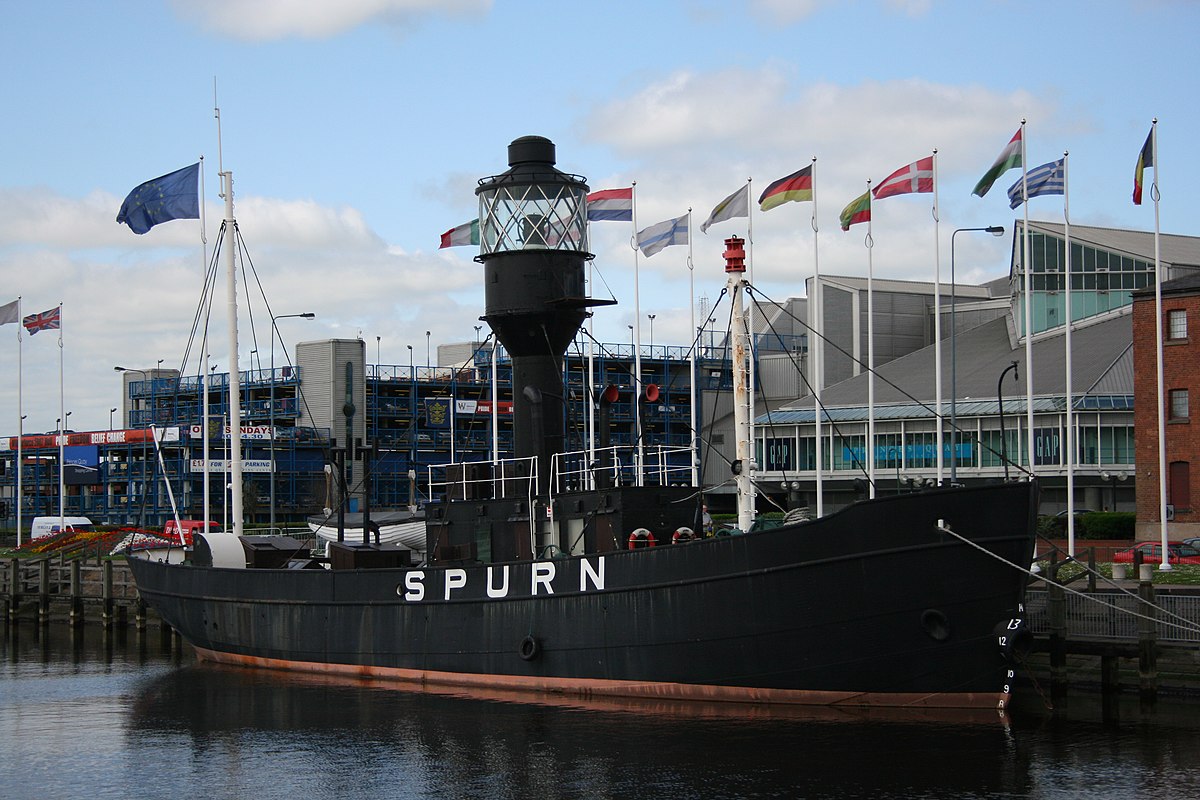
Hull, officially Kingston upon Hull, is a city and unitary authority in the East Riding of Yorkshire, England. It lies on the River Hull at its junction with the Humber estuary, 25 miles inland from the North Sea, with a population of 257,710 . The town of Hull was founded late in the 12th century. The monks of Meaux Abbey needed a port where the wool from their estates could be exported. They chose a place at the junction of the rivers Hull and Humber to build a quay. The exact year the town was founded is not known but it was first mentioned in 1193. Renamed Kings-town upon Hull by King Edward I in 1299, Hull has been a market town, military supply port, trading hub, fishing and whaling centre, and industrial metropolis. Hull was an early theatre of battle in the English Civil Wars. Its 18th-century Member of Parliament, William Wilberforce, played a key role in the abolition of the slave trade in Britain. The city is unique in the UK in having had a municipally owned telephone system from 1902, sporting cream, not red, telephone boxes. After suffering heavy damage in the Second World War, Hull weathered a period of post-industrial decline, gaining unfavourable results on measures of social deprivation, education and policing. In the early 21st-century spending boom before the late 2000s recession the city saw large amounts of new retail, commercial, housing and public service construction spending. Tourist attractions include the historic Old Town and Museum Quarter, Hull Marina and The Deep, a city landmark. The redevelopment of one of Hulls main thoroughfares, Ferensway, included the opening of St. Stephens Hull and the new Hull Truck Theatre. Spectator sports include Championship football and Super League Rugby. The KC Stadium houses Hull City football club and Hull FC rugby club and Craven Park rugby club Hull Kingston Rovers. Hull is also home to the English Premier Ice Hockey League Hull Pirates. In 2013, it was announced that Hull would be the 2017 UK City of Culture.

Beverley

Beverley is a market town, civil parish and the county town of the East Riding of Yorkshire, England. The town is noted for Beverley Minster, Beverley Westwood, North Bar and Beverley Racecourse. Its namesake serves as the origins for the cities of Beverly, Massachusetts, and, in turn, Beverly Hills in California. The town was originally known as Inderawuda and was founded around 700 AD by Saint John of Beverley during the time of the Anglian kingdom of Northumbria. After a period of Viking control, it passed to the Cerdic dynasty, a period during which it gained prominence in terms of religious importance in Great Britain. It continued to grow especially under the Normans when its trading industry was first established. A place of pilgrimage throughout the Middle Ages due to its founder, Beverley eventually became a notable wool-trading town. Beverley was once the tenth-largest town in England, as well as one of the richest, because of its wool and the pilgrims who came to venerate its founding saint, John of Beverley. After the Reformation, the regional stature of Beverley was much reduced. In the 20th century, Beverley was the administrative centre of the local government district of the Borough of Beverley . It is now the county town of the East Riding, located 8 miles north-west of Hull, 10 miles east of Market Weighton and 12 miles west of Hornsea. According to the 2001 United Kingdom census the total population of the urban area of Beverley was 29,110 – of whom 17,549 live within the historic parish boundaries. The population of the parish had risen to 18,624 at the time of the 2011 United Kingdom census. As well as its racecourse and markets, Beverley is known in the modern day for hosting various food and music festivals throughout the year. In 2007 Beverley was named as the best place to live in the United Kingdom in an "Affordable Affluence" study by the Royal Bank of Scotland.

Rudston

Rudston is a small village and civil parish in the East Riding of Yorkshire, England. It is situated between Driffield and Bridlington approximately 6 miles to the west of Bridlington, and lies on the B1253 road. The Gypsey Race runs through the village, which lies in the Great Wold Valley. There are a number of Neolithic sites associated with the stream and its valley. It is the current Seat of the Clan Macdonald of Sleat. According to the 2011 UK census, Rudston parish had a population of 409, an increase on the 2001 UK census figure of 390. The place-name 'Rudston' is first attested in the Domesday Book of 1086, and means 'rood' or 'cross' stone, referring to the monolith. However, the name 'rud' derives from Old Norse ruð, meaning a clearing or pasture. So the place name could be stone in the clearing, Ruðstane. Nearby Howes of Duggleby and Ba'l also indicate Norse Viking place names rather than Anglo-Saxon origins. Here stands the Rudston Monolith; at over 25 feet tall, it is the tallest standing stone in England, and gave the village its name; it is Grade I listed. Rudston is the centre of an unparalleled grouping of four Neolithic cursus monuments: cursus A, cursus B, cursus C and cursus D. At least one end of each cursus rests on an elevated chalk ridge on the sides of the Great Wold Valley. Cursuses A and C cross the Gypsey Race, whilst the other ends of cursuses B and D probably lie under the village. Rudston Roman villa, noted for its mosaics, was first excavated in 1839. It was subsequently re-excavated in the 1930s, 1960s and 1970s. Rudston Grade I listed Anglican parish church is dedicated to All Saints. Of 14th-century origin, it was restored in 1861 by George Fowler Jones. It contains the gigantic organ, originally of four manuals, given by Sir Alexander McDonald of the Isles. Now a 3 manual instrument, it stands at the west end of the church in the original case. The author Winifred Holtby was born in Rudston and is buried in the church graveyard. Thorpe Hall to the east of the village was designated a Grade II* listed building in 1952 and is now recorded in the National Heritage List for England, maintained by Historic England.

Rudston Monolith

The Rudston Monolith at over 7.6 metres is the tallest megalith in the United Kingdom. It is situated in the churchyard in the village of Rudston in the East Riding of Yorkshire. The nearest source of stone of the type the monolith is made of is 9.9 miles north of the site. It was probably erected around 1600 BC. There is one other smaller stone, of the same type, in the churchyard, which was once situated near the large stone. The Norman church was almost certainly intentionally built on a site which was already considered sacred, a practice which was common through the country, indeed the name of Rudston is thought to come from the Old English "Rood-stane", meaning "cross-stone", implying that a stone already venerated was adapted for Christian purposes. Royston stated that in 1861 during levelling of the church yard an additional 1.5 metres of the monolith was buried. The weight is estimated at 40 tons . Sir William Strickland is reported to have conducted an experiment in the late 18th century determining that there was as much of the stone below ground as is visible above. Strickland found many skulls during his dig and suggests they might have been sacrificial. The top appears to have broken off the stone. If pointed, the stone would originally have stood about 8.5 metres . In 1773, the stone was capped in lead, this was later removed, though the stone is currently capped. Fossilised dinosaur footprints on one side of the stone may have contributed to its importance to those who erected it. The stone is very slender, with two large flat faces. The flat face of the stone faces the midwinter sunrise in the south-east. Lines, created by removing soil and grass from above the turf may have been created in the area, and have been linked to the stone. There are many other earthworks in the area, including burial mounds and Cursuses.

Market Weighton

Market Weighton is a small town and civil parish in the East Riding of Yorkshire, England. It is one of the main market towns in the East Yorkshire Wolds and lies midway between Hull and York, about 20 miles from either one. According to the 2011 UK census, Market Weighton parish had a population of 6,429, an increase on the 2001 UK census figure of 5,212. Smith proposed Market Weighton as the location of the still-undiscovered Roman camp of Delgovicia. Historically the town was listed in the Domesday Book as "Wicstun" and was granted its charter to become a market town in 1251. Notable architecture includes: a parish church, parts of which are Norman, the Londesborough Arms, a Wesleyan chapel, a Methodist chapel and a high street still recognisable from the 1800s. Other sights of interest include the post office, the duck pond and Station Farm. Market Weighton history includes William Bradley, the Yorkshire Giant who at the age of 20 was seven feet and nine inches tall. Another resident was Peg Fyfe, a local witch, who reputedly skinned a young local resident alive in the 1660s and was later hanged for the crime, but swallowed a spoon to save herself only to be "finished off" by two passing knights. In May of each year local residents take to the streets of Market Weighton for the Giant Bradley Day festival in a celebration of the life and times of William Bradley. Industry in the town is largely based on agriculture. The town is known geologically for having given its name to the Market Weighton Axis. The Yorkshire Wolds Way National Trail, a long distance footpath, passes through the town.

Sledmere

Sledmere is a village in the East Riding of Yorkshire, England, about 7 miles north-west of Driffield on the B1253 road. Together with the hamlet of Croome it forms the civil parish of Sledmere and Croome. Local points of interest include Sledmere House, a Georgian country house. Built in 1751 by Richard Sykes, the house has remained in the Sykes family since then. It is now the home of Sir Tatton Sykes, 8th baronet. The Sledmere Monument is about 2 miles south-east of the village, along the B1252 road, on top of Garton Hill. It is 120 feet tall and is a tribute to Sir Tatton Sykes, 4th Baronet, built by his friends in 1865. The war memorial in the village, designed by Sir Mark Sykes, 6th baronet, is dedicated to the Wolds Wagoners Reserve, a regiment that Sir Mark raised from the local population to fight in the First World War. It is noted for its unusual shape and its graphic scenes of war and country life. Sledmere is also the site of a replica Eleanor cross: this was designated a Grade II listed building in September 1966. The 'Sledmere Cross' takes the form of an Eleanor Cross and is a true 'folly' that was 'converted' in 1919 to a War Memorial by Sir Mark Sykes who added a series of brass portraits in commemoration of his friends and the local men who fell in the war and also notably himself in crusader armor with the inscription “Laetare Jerusalem (Rejoice Jerusalem)”. East of the village is Sledmere Castle, a folly built around 1790 by John Carr for Sir Christopher Sykes, the 2nd baronet, to enhance the view from Sledmere House. The church of St Mary is one of the churches on the Sykes Churches Trail. In 1966 the church was designated a Grade II* listed building. Sledmere was served by Sledmere and Fimber railway station on the Malton and Driffield Railway between 1853 and 1950.

Hedon

Hedon is a small town and civil parish in Holderness in the East Riding of Yorkshire, England. It is situated approximately 5 miles east of Hull city centre. It lies to the north of the A1033 road at the crossroads of the B1240 and B1362 roads. It is particularly noted for the parish church of St. Augustine, known as the King of Holderness, which is a Grade I listed building. According to the 2011 UK census, Hedon parish had a population of 7,100, an increase on the 2001 UK census figure of 6,322. Hedon is not mentioned in the Domesday Book which leads to the belief that it was a new town created by the Normans as a port. Hedon was at its most prosperous in the 12th and 13th centuries and at one time was the 11th largest port in England. The decline of the port came with the development of the port of Hull and the building of larger ships which were unable to get up the small river to Hedon. Hedon was given its first charter by Henry II in 1158 and was granted improved ones by King John in 1200 and Henry III in 1248 and 1272. Edward III granted the most important charter which gave the town the right to elect a mayor. In 1415 Hedon was granted an important charter, which let the town have burgesses and other ministers and also gave the town a mace. This mace is now the oldest surviving mace in the country. The town was a parliamentary borough until it was disenfranchised under the Reform Act 1832. It still enjoyed its borough status granted by its charters until 1974 when it was removed in a reorganisation of local government. To the west of the town, there used to be a racecourse which boasted the longest straight in the country at the time. After popularity waned, it was developed into an aerodrome in 1910. This was closed in both world wars but many famous pilots including Amy Johnson landed there. After the Second World War it was developed into a speedway track for a short time but is now home to cattle. The Hull and Holderness Railway opened in 1854 which ran from Victoria Dock in Hull to Withernsea going through Hedon. The station was built to the north of the town and it proved a vital part of Hedons transport system for a century. In 1965 Hedon lost its passenger service when British Railways appointed Lord Beeching to stop losses, and closed branch lines that werent making a profit. The line from Hull as far as Hedon station remained open for Goods traffic until 1968. Hedon became the subject of national media attention in August 2000 when a freak mini-tornado in the Humber Estuary caused flash floods and even hailstones to drop on parts of the town. Hedon was also affected by the widespread floods that occurred in the UK in the summer of 2007. The areas of Hedon affected included the Inmans Estate and most areas near the Burstwick drain. The nearby village of Burstwick was the worst affected place in the East Riding of Yorkshire. There have recently been plans to create a country park around the Hedon Haven to the south of the town. The English potter, Dorothy Marion Campbell was born here. Sir Alexander Campbell, PC, KCMG, QC was also born here; he was a Canadian statesman and politician, and a father of Canadian Confederation.

This attraction is located in

This is a private property. Please enjoy respectfully and do not disturb the occupants.

Edit Categories
Add Tours

This attraction is not part of any tours

Add Collections

This attraction is not part of any collections


Some of the attractions we imported from Wikipedia are not perfect. Send us an email detailing what's wrong and we'll look into fixing it.

GuRoute is all about Gurus sharing their local knowledge. If you feel up to fixing this problem yourself, why not adopt it. You will become the owner and can fix whatever problems you see.

We've copied a link to this attraction into your clipboard so that ou can paste it into an email or text message...

More Info...
You can add your friends to the visit yourself, or, send them a link and let them add themselves...

The visit will appear on both your timelines and on your Shared Timeline.

Click below and we'll email you a link that you can send on to friends or post on your group's Facebook page.

If your friends aren't members of GuRoute yet, this is a great way to get them started.
Recent
Recently used Collections will appear here...
Recent
Recently used tours will appear here...

Where is this?

GuRoute likes to place attractions inside other attractions. So, maybe it's in a city, or maybe it's inside a particular park in that city. Maybe your attraction is a huge park that spans half the county, or multiple counties.

Determining where this attraction is gives it context - if it's in a park, you'll be able to see it alongside all the other attractions in that park. And that helps define the park.

GuRoute will automatically calculate a parent region for this attraction. You can change it if there is something more appropriate.

This attraction is currently located in .

Change

This attraction does not yet have any reviews

Please login to write a review...

Reviewed by
Record new Visit

Add this location to your timneline?

  • If there's an existing attraction open it and add it to your timeline...
  • If not, enter a title and we'll create a new attraction for your memories...
Create new Attraction

Create a new attraction at this location?

  • We rely on Gurus like you to share your local knowledge...
(Give a name for this location)


+
Add this to your timeline instead...

Imagine having a record of all the cool things you've done in your life!


Using our timeline you can keep track of everywhere you visit in your lifetime...

But, you'll need to sign in first...

Add contacts so that you can share your travels and record places that you visit together...

Family
Favorites
Family
Favorites

Profile TimeLine Our Visits Edit Accept Decline Invite

If you have any more friends that visited this place with you, feel free to add them to the visit. We'll write it to their timeline and once they confirm it, they too will have this memory for a lifetime.

If they're not already registered, you just need their name and email address and you can add them and we'll send them an invite on your behlaf.

Add a tour comment

Add some extra information for when this attraction is viewed as part of your tour...

Next Stop Instructions

Add some instructions for what to see/do on the way to the next stop...

Next Stop Instructions

Add some instructions for what to see/do on the way to the next stop...

If you're visiting an existing attraction, open it and add it to your timeline. If there is no attraction for the place you are visiting...

  • Click 'Add My Location' below
  • Or right-click on the map to mark a different location
  • Or long-press if you have a touch screen
You can even add locations while you're offline....
  • Load up the map when you're online and we'll keep track of your locaiton
  • You can add locations to your timeline
  • When you are online again we'll sync them with the cloud

We can't connect to the internet right now. The following attractions are saved locally and can be uploaded when you're online...

GuRoute would like to access your current location so that we can pin you on the map and show you nearby attractions

Add friends so that you can share your experiences with each other...

Add tour to What's Next?

Go...

Either for yourself or someone else...

  1. Do your trip research in GuRoute
    Add all the places that you think might be worthy of a visit into a trip-plan
  2. Add your trip-plan to your "What's Next" timeline
    (or a friend's "What's Next" timeline)
  3. When you're on vacation you'll have all your research at your fingertips
  4. Share your timline with your friends
    They can enjoy your vacation with you, seeing not only where you've been, but where you're going next...
  5. Add/remove attractions if things change

It also makes a great souvenir of your trip

Collections

Go...

Create a home page for a collection of attractions

  • Add an image and description to display on the homepage
  • Start adding content
    Add existing attractions to your collection or create new attractions of your own
  • Collections can be:
    • Public (Anyone can add attractions to your collection)
    • Shared (Only yourself and Gurus you nominate can add content)
    • Private (The collection will only be visible to yourself)

Uses

  • Local business or hotel
    Showcase local attractions that you endorse
  • Clubs
    Showcase attractions that members have created (eg. local historical society)
  • Special Interest
    If GuRoute does not have a category for your special interest you add your attractions to your own collection instead

Examples

Walking/Driving Tours

Go...

A guided tour where GuRoute will direct you from stop to stop and narrate a description of each attraction you arrive at

  • GuRoute uses your phone's GPS to guide you from stop to stop
  • GuRoute automatically detects when you arrive at the next tour-stop and narrates the description of the attraction (Chrome Only)
  • It then sends you on to the next stop

Tours are great to attract people to your town. Even places with no significant points of interest can be lots of fun when part of a tour


Cater tours to your Audience

  • Kid-friendly Tours
    • Focus on what will keep kids interested
    • Instead of parents having to drag their kids around they'll be struggling to keep up
    • Let the kids navigate and they'll get more fun out of finding that historical plaque than they ever would from reading it
  • Accessible tours
  • Short and long tours of the same location

What you need to do...

  1. Click 'Go...'
    Enter a title, description and location for the tour
  2. Add existing attractions OR create new ones and add them to the tour
  3. For existing attractions you can add more information specific to the theme of the tour
  4. You can also add instructions on what to do or see en-route to the next tour-stop
  5. Try out your tour and see how it works...

Mystery Tour

Go...

Create a Mystery Tour

Create a series of clues to show people around a city, neighborhood or whatever place you like...

  • GuRoute will show people clues to get them from attraction to attraction
  • When they reach each stop GuRoute will tell them about the place and give them the next clue
  • Take as long or as you like and explore each location at your leisure

Scavenger Hunt

Go...

Create a Scavenger Hunt

Create a series of questions that people have to answer. The answers can all be discovered by walking aroung the area, looking for clues.

  • How many beers are on tap at Michael Collin's Irish Bar?
  • What's the name of the oldest building on main streeet?
  • Show a picture of some public art and ask them what it is called
  • Clues can have numeric or multiple choice answers