Sign In

My Timeline

GuRoute

Discover Your World

Share your Experiences

Record your Life


Top Attractions in Savannah

Fort James Jackson

Fort James Jackson (usually called Old Fort Jackson or shortened to Fort Jackson) is a restored 19th-century fort located on the Savannah River, two miles east of the city of Savannah in the U.S. state of Georgia. It is a National Historic Landmark and the oldest standing brick fort in Georgia. U.S. President Thomas Jefferson authorized the construction of a national defense system of fortifications to defend his new nation. Jefferson's system included Fort Jackson, constructed between 1808 and 1812 over an old earthen battery from the American Revolution. At the time, war with Great Britain or France seemed likely, and Fort Jackson was the best site from which to protect Savannah from attack by sea. In the War of 1812, local militias and U.S. troops saw active duty at Fort Jackson. After the War of 1812, two periods of construction followed at the fort. A moat, drawbridge, brick barracks, privies, a rear wall, and another powder magazine were added. James Jackson, the namesake of the fort, was a British native who fought for the American cause and rose to the rank of colonel. When he was twenty-five, Jackson accepted the surrender of the British in Savannah at the close of the revolution. He was later a U.S. Representative, U.S. Senator, and Governor of Georgia. He is interred at the Congressional Cemetery in Washington, D.C.. During the American Civil War, Fort Jackson, along with nearby Fort McAllister and Fort Pulaski, defended Savannah from Union attack. In 1862, Fort Jackson was shelled from a ship captained by an escaped slave named Robert Smalls. The fort was commanded by Colonel Edward Clifford Anderson and would become the Confederate Headquarters for the Savannah River defenses, including the Confederate Navy. When the Union Army commanded by William T. Sherman captured Savannah by land on December 20, 1864, Confederate troops abandoned the fort and retreated across the Savannah River into South Carolina. Confederate troops from Savannah joined other forces in North Carolina and South Carolina and continued to fight until April 26, 1865, when they surrendered to General Sherman's army at Durham, North Carolina. Several different regiments garrisoned Fort Jackson during the Union occupation of Savannah. One of these units was the 55th Massachusetts Regiment, which consisted of African American troops. From 1884 to 1905, Fort Jackson was known as Fort Oglethorpe and was little used by the U.S. military. It was purchased by the city of Savannah in 1924 for park purposes but not fully restored until the 1970s. Fort Jackson is located at 1 Fort Jackson Road, on the Islands Expressway linking Savannah to Fort Pulaski and the town of Tybee Island. Fort Jackson is owned by the state of Georgia and operated as a museum by Coastal Heritage Society, which also manages Savannah History Museum, Georgia State Railroad Museum (formerly the Railroad Roundhouse Museum), Savannah Children's Museum and, most recently, Pin Point Heritage Museum. In the summer the fort has a daily cannon-firing demonstration. Admission is $7 for adults.

Telfair Museums

Telfair Museums, in the historic district of Savannah, Georgia, is the first public art museum in the Southern United States. Founded through the bequest of Mary Telfair, a prominent local citizen, and operated by the Georgia Historical Society until 1920, the museum opened in 1886 in the Telfair family’s renovated Regency-style mansion, known as the Telfair Academy. Today, the museum encompasses an extensive collection of over 4,500 American and European paintings, sculptures, and works on paper, housed in three buildings: the Telfair Academy and the Owens-Thomas House, which are both National Historic Landmarks designed by British architect William Jay in the early nineteenth century; and the contemporary Jepson Center for the Arts, designed by Moshe Safdie and completed in 2006. Each of the museum’s three buildings represents an innovative expression of its time, and houses a collection corresponding to the era in which it was built. The Telfair Academy contains two nineteenth-century period rooms, and it houses nineteenth- and twentieth-century American and European art from the museum’s permanent collection including paintings, works on paper, sculpture, and decorative arts. The Owens-Thomas House boasts a decorative arts collection comprised primarily of Owens family furnishings, along with American and European objects dating from 1750-1830. Additionally the site includes intact urban slave quarters and a lovely parterre garden. The Jepson Center for the Arts features contemporary art galleries of Southern art, African American art, photography and works-on-paper, two galleries for large traveling exhibitions, a community gallery, a childrens gallery and two outdoor sculpture terraces.

Coastal Georgia Botanical Gardens

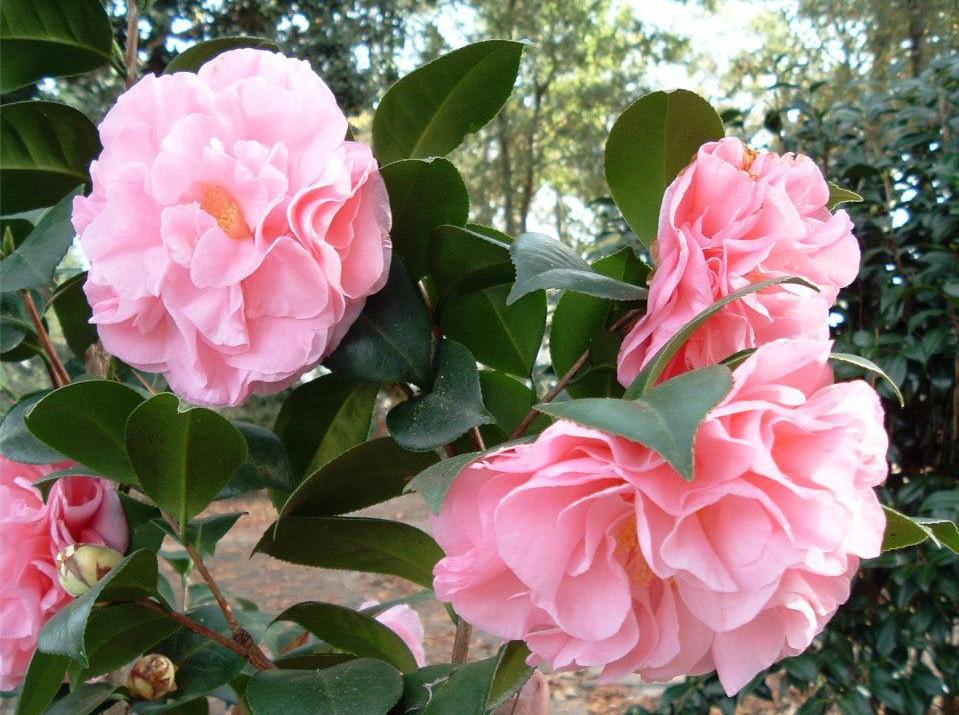
Coastal Georgia Botanical Gardens is a former USDA plant-introduction station that has developed into a 51-acre botanical garden. It is located is Chatham County, Georgia, south of Savannah. The garden's collection began in the late 1880s when property owner Mrs. H. B. Miller planted three giant Japanese timber bamboo (Phyllostachys bambusoides) plants. By 1915 an impressive bamboo grove developed, which drew the attention of noted botanist and plant explorer David Fairchild. In 1919 Barbour Lathrop, a friend of Fairchild, purchased the site from Mrs. Miller for $5,430 and leased it to the United States Department of Agriculture (USDA) for $1. Noted plant explorer Frank Meyer, David Bisset and Alfonso McClure were vital players in the development of the facility as a federally funded plant-introduction station throughout the mid-20th century. In 1979 the USDA closed the site and in 1983 deeded it to the University of Georgia; it remains part of the College of Agricultural and Environmental Sciences. Today, Coastal Georgia Botanical Gardens' collections contain around 60 bamboo taxa, said to be the largest American bamboo collection open to the public east of California. Most specimens (genera Phyllostachys and Bambusa) were planted in the 1920s and '30s. It also displays 40 winter-hardy palm species, including numerous cultivars of dwarf palmetto (Sabal minor). With at least 36 different species, the gardens are also home to one of the largest collections of camellia species outside of China, in the Judge Arthur Solomon Camellia Trail. Impressive specimen trees also cast shade across the property, including China fir (Cunninghamia lanceolata), southern magnolia (Magnolia grandiflora), Japanese evergreen oak (Castanopsis delavayi), lord's holly (Ilex rotunda), Oliver maple (Acer oliverianum), Chinese pistachio (Pistacia chinensis) and live oak (Quercus virginiana). The site also showcases landscape roses, native plants of the state of Georgia, and seasonal annuals and educational displays. A 50,000-gallon water garden was completed on the shores of one of the site's lakes in 2012. In 2013, a Mediterranean-style garden was completed in the area by the Bridal Cottage and Conference Center, historically the original entrance to the property when it was a USDA plant-introduction station. In 2015, the new Andrews Visitor and Education Center opened and is the point of entrance for all visitors from the improved and landscaped Canebrake Road entrance drive. Four other gardens were completed in 2015, too. The Shade Garden offers picturesque views over a chain of lakes, the White Garden boasts three magnificent white pergolas surrounding a lawn and the Formal Garden features four parterres surrounded by olive and white crapemyrtles. The Georgia Trustees Garden replica -- the agricultural plot began by James Oglethorpe and existed from 1733 to 1755 -- also was laid out and features edible, medicinal and crop commodities the first settlers to the Georgia colony were expected to produce. Such items included mulberry leaves for silkworms, as well as grapes, pomegranates, stone fruits, cotton, sesame, hops and sour oranges. Coastal Georgia Botanical Gardens sells a number of containerized bamboo and garden plants and holds various special events and gardening classes throughout the year. Among the special events include the Wild Game Supper (February), Spring Plant Sale (March/April), Autumn Gardenfest (October) and December Nights and Holiday Lights (November/December); the latter features 600,000 lights in the evenings. The site also offers visitors "pick your own" fruit fields including strawberries (late-March to May), blackberries (mid-May to early July), and blueberries (late April to late June). Precise harvest times vary annually depending on the weather. Coastal Georgia Botanical Gardens is part of the University of Georgia's Extension. It also benefits from support from the Chatham County government and the non-profit Friends of the Coastal Gardens organization. There is no fee to park at the facility and a gift shop offers a wide array of souvenirs and garden-related items for sale. There is no snack bar on site.

Sorrel-Weed House

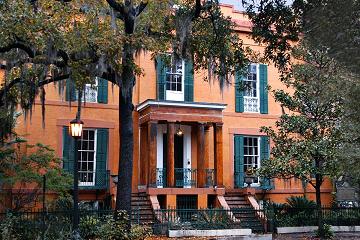
The Sorrel-Weed House, or the Francis Sorrel House, is a historic landmark and Savannah Museum located in Savannah, Georgia. It represents one of the finest examples of Greek Revival and Regency architecture in Savannah and was one of the first two homes in the State of Georgia to be made a State Landmark in 1954. At 16,000 square feet, it is also one of the largest houses in the city. The Sorrel-Weed House was first opened to the public in January 1940 by the Society for the Preservation of Savannah Landmarks. It was the Society's first exhibit and was called "The Society for the Preservation of Savannah Landmarks Presents a loan Exhibit of Furniture and Fine Arts 18th and 19th Centuries at the Sorrel-Weed House on Madison Square : Jan-April 1940." This Society later became the Historic Savannah Foundation. The Sorrel-Weed House was opened again to the public in 2005 and conducts Historic Savannah Tours during the day and Haunted Savannah Ghost Tours inside the house every evening. These tours are conducted by The Sorrel-Weed House Museum. It is located at the corner of Bull Street and Harris Street. The Sorrel-Weed House was the boyhood home of Brigadier General Moxley Sorrel, who fought for the Confederate States of America during the Civil War. He served under General James Longstreet, and after the War wrote "Recollections of a Confederate Staff Officer", considered to be one of the top postwar accounts written. General Robert E. Lee visited the home in late 1861 and early 1862. He and Francis Sorrel had been friends since the early 1830s. Lee also visited the Sorrel family in April 1870, shortly before his death. The opening scene of the 1994 film Forrest Gump was filmed from the rooftop of the Sorrel-Weed house and is a popular tourist stop. The scene, which begins with a floating feather through the Savannah sky, pans the rooftops of other buildings occupying Madison Square as seen from the very top of the Sorrel-Weed home. The scene is then spliced to a scene of another church located on Chippewa square, where ultimately, Forrest is seen sitting on a bench. The house was investigated by TAPS during a special 2005 Halloween Special episode of Ghost Hunters. The house was also featured on HGTV's "If Walls Could Talk" in March 2006. It was also investigated by the Ghost Adventures crew in 2014. Zak Bagans stated the Sorrel-Weed House Museum gave him a "3 alarm hangover". Jason Hawes and Grant Wilson of Taps told us it was one of the most haunted locations they had ever investigated in 2005. The house was featured on the Travel Channel's " The Most Terrifying Places in America" in 2010, and on the Paula Deen Network in 2015.

SCAD Museum of Art

The SCAD Museum of Art was founded in 2002 as part of the Savannah College of Art and Design in Savannah, Georgia, and originally was known as the Earle W. Newton Center for British American Studies. The museum's permanent collection of more than 4,500 pieces includes works of haute couture, drawings, painting, sculpture, photography, prints and more. The SCAD Museum of Art is a teaching museum, serving Savannah College of Art and Design students and as well as members of the community and other visitors. A focal point is the Walter O. Evans Center for African American Studies, a multidisciplinary center for the study, understanding and appreciation of African American culture, art and literature. It is complemented by the new André Leon Talley Gallery, named for the Vogue contributing editor and SCAD Board of Trustees member. On Oct. 29, 2011, the SCAD museum opened its doors to a new era, unveiling the most extensive rehabilitation project the university has undertaken since its inception. The revitalized museum features new galleries and classrooms, a 250-seat theater, a terrace and outdoor projection screen, a conservation studio, a museum café, as well as a 12-foot-long orientation touch table. An 86-foot-tall steel and glass lantern welcomes visitors and elegantly redefines the Savannah city skyline. The museum originally was housed in an 1856 Greek Revival structure that was once home to the headquarters of the Central of Georgia Railway. This National Historic Landmark is the only surviving antebellum railroad complex in the country. Originally conceived as a major trade post for Savannah, the railroad complex was occupied by Union troops at the close of the Civil War. In the early 20th century, the area surrounding much of the Central of Georgia Railroad buildings emerged as an important African American commercial district and cultural hub, and remained so through the mid 20th century. Despite its prime location and significant pedigree, however, the complex was beset by five decades of neglect, and by the late 20th century the depot and its Savannah gray brick lay in ruins. In 1992, SCAD acquired the deteriorating former railroad headquarters and began renovations. A year later, the building was dedicated to Virginia Kiah (1911–2001), a member of SCAD’s Board of Trustees and a pioneering African American female artist. Established in 2002 as the Earle W. Newton Center for British American Studies (named after the gift of a major collection of British and American art from Newton in 2001), the museum was renamed the SCAD Museum of Art in 2006, recognizing its expanding collections. Further exterior renovations were completed in 2007 and 2008, including masonry repair, window restoration, drainage improvements and the replacement of the original 150-year-old roof. Today, the adjoining 1853 depot is the continued focus of SCAD’s most recent restoration efforts. Following a groundbreaking ceremony in January 2010, SCAD architects, designers and craftsmen integrated the building's history with its future, analyzing and reproducing key original components, down to the chemical compounds of the 19th-century mortar. At present, the museum is outfitted with low-energy-consuming light fixtures, zoned climate control, exterior cooling towers, low-flow plumbing fixtures for water-use reduction and low-emissivity (low-E) glass on the south elevation. Landscape planning for the courtyard made use of xeriscape planning, porous paving materials and custom irrigation plans. Salvaged bricks and original heart pine timbers appear throughout the museum, as well as a majority of original high ceilings that allow for optimal temperature regulation and provide a dramatic background for the display and experience of art. The SCAD Museum of Art houses the Walter O. Evans Collection of African American Art, one of the largest collections of African American art in the United States, which includes prized works by Edward Mitchell Bannister, Romare Bearden, Elizabeth Catlett, Robert S. Duncanson, Richard Hunt and Jacob Lawrence, while the Earle W. Newton Center of British and American Art features rare books, antique maps and paintings by William Hogarth, Sir Anthony van Dyck, Thomas Gainsborough and others. SCAD’s permanent collection of more than 4,500 works also includes items by Salvador Dalí, Nicholas Hlobo, Willem de Kooning, Annie Leibovitz, Robert Mapplethorpe, Wangechi Mutu, Pablo Picasso, Robert Rauschenberg, Andy Warhol and Carrie Mae Weems, as well as haute couture from Yves Saint Laurent, Chanel, Oscar de la Renta and Givenchy, among many others. Upon its re-opening on Oct. 29, 2011, the museum kicked off with exhibitions by renowned contemporary artists Alfredo Jaar, Stephen Antonakos, Liza Lou, Bill Viola, Kendall Buster and Kehinde Wiley.

This attraction is located in

This is a private property. Please enjoy respectfully and do not disturb the occupants.

Edit Categories
Add Tours

This attraction is not part of any tours

Add Collections

This attraction is not part of any collections


Some of the attractions we imported from Wikipedia are not perfect. Send us an email detailing what's wrong and we'll look into fixing it.

GuRoute is all about Gurus sharing their local knowledge. If you feel up to fixing this problem yourself, why not adopt it. You will become the owner and can fix whatever problems you see.

We've copied a link to this attraction into your clipboard so that ou can paste it into an email or text message...

More Info...
You can add your friends to the visit yourself, or, send them a link and let them add themselves...

The visit will appear on both your timelines and on your Shared Timeline.

Click below and we'll email you a link that you can send on to friends or post on your group's Facebook page.

If your friends aren't members of GuRoute yet, this is a great way to get them started.
Recent
Recently used Collections will appear here...
Recent
Recently used tours will appear here...

Where is this?

GuRoute likes to place attractions inside other attractions. So, maybe it's in a city, or maybe it's inside a particular park in that city. Maybe your attraction is a huge park that spans half the county, or multiple counties.

Determining where this attraction is gives it context - if it's in a park, you'll be able to see it alongside all the other attractions in that park. And that helps define the park.

GuRoute will automatically calculate a parent region for this attraction. You can change it if there is something more appropriate.

This attraction is currently located in .

Change

This attraction does not yet have any reviews

Please login to write a review...

Reviewed by
Record new Visit

Add this location to your timneline?

  • If there's an existing attraction open it and add it to your timeline...
  • If not, enter a title and we'll create a new attraction for your memories...
Create new Attraction

Create a new attraction at this location?

  • We rely on Gurus like you to share your local knowledge...
(Give a name for this location)


+
Add this to your timeline instead...

Imagine having a record of all the cool things you've done in your life!


Using our timeline you can keep track of everywhere you visit in your lifetime...

But, you'll need to sign in first...

Add contacts so that you can share your travels and record places that you visit together...

Family
Favorites
Family
Favorites

Profile TimeLine Our Visits Edit Accept Decline Invite

If you have any more friends that visited this place with you, feel free to add them to the visit. We'll write it to their timeline and once they confirm it, they too will have this memory for a lifetime.

If they're not already registered, you just need their name and email address and you can add them and we'll send them an invite on your behlaf.

Add a tour comment

Add some extra information for when this attraction is viewed as part of your tour...

Next Stop Instructions

Add some instructions for what to see/do on the way to the next stop...

Next Stop Instructions

Add some instructions for what to see/do on the way to the next stop...

If you're visiting an existing attraction, open it and add it to your timeline. If there is no attraction for the place you are visiting...

  • Click 'Add My Location' below
  • Or right-click on the map to mark a different location
  • Or long-press if you have a touch screen
You can even add locations while you're offline....
  • Load up the map when you're online and we'll keep track of your locaiton
  • You can add locations to your timeline
  • When you are online again we'll sync them with the cloud

We can't connect to the internet right now. The following attractions are saved locally and can be uploaded when you're online...

GuRoute would like to access your current location so that we can pin you on the map and show you nearby attractions

Add friends so that you can share your experiences with each other...

Add tour to What's Next?

Go...

Either for yourself or someone else...

  1. Do your trip research in GuRoute
    Add all the places that you think might be worthy of a visit into a trip-plan
  2. Add your trip-plan to your "What's Next" timeline
    (or a friend's "What's Next" timeline)
  3. When you're on vacation you'll have all your research at your fingertips
  4. Share your timline with your friends
    They can enjoy your vacation with you, seeing not only where you've been, but where you're going next...
  5. Add/remove attractions if things change

It also makes a great souvenir of your trip

Collections

Go...

Create a home page for a collection of attractions

  • Add an image and description to display on the homepage
  • Start adding content
    Add existing attractions to your collection or create new attractions of your own
  • Collections can be:
    • Public (Anyone can add attractions to your collection)
    • Shared (Only yourself and Gurus you nominate can add content)
    • Private (The collection will only be visible to yourself)

Uses

  • Local business or hotel
    Showcase local attractions that you endorse
  • Clubs
    Showcase attractions that members have created (eg. local historical society)
  • Special Interest
    If GuRoute does not have a category for your special interest you add your attractions to your own collection instead

Examples

Walking/Driving Tours

Go...

A guided tour where GuRoute will direct you from stop to stop and narrate a description of each attraction you arrive at

  • GuRoute uses your phone's GPS to guide you from stop to stop
  • GuRoute automatically detects when you arrive at the next tour-stop and narrates the description of the attraction (Chrome Only)
  • It then sends you on to the next stop

Tours are great to attract people to your town. Even places with no significant points of interest can be lots of fun when part of a tour


Cater tours to your Audience

  • Kid-friendly Tours
    • Focus on what will keep kids interested
    • Instead of parents having to drag their kids around they'll be struggling to keep up
    • Let the kids navigate and they'll get more fun out of finding that historical plaque than they ever would from reading it
  • Accessible tours
  • Short and long tours of the same location

What you need to do...

  1. Click 'Go...'
    Enter a title, description and location for the tour
  2. Add existing attractions OR create new ones and add them to the tour
  3. For existing attractions you can add more information specific to the theme of the tour
  4. You can also add instructions on what to do or see en-route to the next tour-stop
  5. Try out your tour and see how it works...

Mystery Tour

Go...

Create a Mystery Tour

Create a series of clues to show people around a city, neighborhood or whatever place you like...

  • GuRoute will show people clues to get them from attraction to attraction
  • When they reach each stop GuRoute will tell them about the place and give them the next clue
  • Take as long or as you like and explore each location at your leisure

Scavenger Hunt

Go...

Create a Scavenger Hunt

Create a series of questions that people have to answer. The answers can all be discovered by walking aroung the area, looking for clues.

  • How many beers are on tap at Michael Collin's Irish Bar?
  • What's the name of the oldest building on main streeet?
  • Show a picture of some public art and ask them what it is called
  • Clues can have numeric or multiple choice answers