Sign In

My Timeline

GuRoute

Discover Your World

Share your Experiences

Record your Life


Top Attractions in Lexington

Calumet Farm

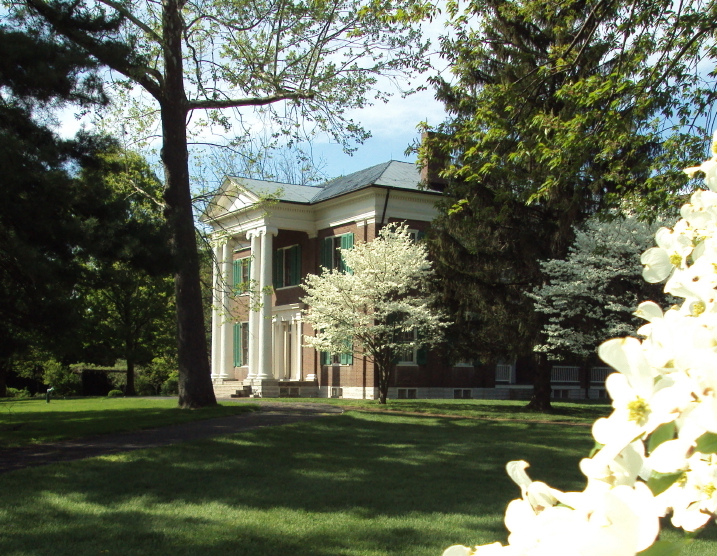
Calumet Farm is a 762-acre Thoroughbred breeding and training farm established in 1924 in Lexington, Kentucky, United States by William Monroe Wright, founding owner of the Calumet Baking Powder Company. Calumet is located in the heart of the Bluegrass, a well-known horse breeding region. Calumet Farm has a record history of Kentucky Derby and Triple Crown winners and throughout its history of over 87 years, it has produced some of the greatest Thoroughbred horses of all time. Though Calumet was initially based in Libertyville, Illinois, the more favorable climate of Kentucky made it a better place for a horse farm and led to W. M. Wright acquiring the land and relocating his standardbred breeding operation. At a time in American history when harness racing was the most popular type of horse racing, in 1931 the farms trotter "Calumet Butler" won the most prestigious event of the day, the Hambletonian. Following the death of W. M. Wright, in 1932 his son Warren Wright, Sr. took over the business and began converting it to Thoroughbred breeding and training. His acquisition of quality breeding stock saw Calumet Farm develop into one of North Americas most successful stables in Thoroughbred racing history. Calumet Farm was added to the National Register of Historic Places in 1991. The Pennsylvania Railroad named its baggage car #5868 the "Calumet Farm". The farms breeding success was notably anchored by a part ownership in Blenheim II, a stallion imported from England, and its Foundation Sire, Bull Lea. Calumet Farm has produced eight Kentucky Derby winners, more than any other operation in U.S. racing history. As well, Calumet Farm is both the leading breeder and owner of Preakness Stakes winners with seven each. From the farms many great foals, two colts also won the U.S. Triple Crown and three females won the Triple Crown for fillies. Under Warren Wright, Sr. and his wife Lucille Parker Wright who inherited the property on his death in 1950, Calumet was the number one money-earning farm in racing for twelve years. Among the farms best-known horses are Nellie Flag, Armed, Two Lea, Mar-Kell, A Gleam, Twilight Tear, Mark-Ye-Well, A Glitter, Bewitch, Coaltown, Real Delight, Bardstown, Our Mims, Davona Dale, Alydar, and Before Dawn. The names of the Calumet Farm official winners of the Kentucky Derby, and the years they won, are: Whirlaway, Pensive, Citation, Ponder, Hill Gail, Iron Liege, Tim Tam, Forward Pass . Two of these greats, and Citation are the United States Triple Crown of Thoroughbred Racing champions. In all, the farm produced eleven horses that have been inducted into the National Museum of Racing and Hall of Fame. Lucille Wright died in 1982 and according to the terms of her husbands will, the farm went to the heirs of their only child Warren Wright, Jr. . Son-in-law John Thomas Lundy, married to Lucille "Cindy" Wright, took over as head of operations and president. Calumet Farm won the 1990 Eclipse Award for Outstanding Breeder. In November of that year, details surrounding the death of 15-year-old Alydar Americas leading sire of the time and the collection of a $36 million insurance policy brought a cloud of suspicion over the business. Under Calumet president J.T. Lundy, mismanagement and fraud had left the farm with a massive debt load that led Calumet Farms to file for bankruptcy protection in 1991 as they were losing one million dollars a month. After years of legal proceedings, in 2000, J.T. Lundy along with Gary Matthews, the farms former attorney and chief financial officer, were convicted of fraud and bribery and sent to prison. In 1992, a trust established by Henryk de Kwiatkowski, a Polish-born Canadian citizen, purchased Calumet Farm, saving it from possible liquidation. Since 1992, the farm has been fully restored to its former beauty. In 2012, the Calumet Investment Group bought Calumet Farm from the de Kwiatkowski Trust for over $36 million. Calumet Investment Group in turn leased it to Brad M. Kelley, believed to be a member of the investment group. Kelleys horses race under the name of Calumet Farm, but they carry Kelleys black and gold racing colors, as the original "Devils Red and Blue" silks of Calumet had been sold to a Brazilian investment group. The win of Oxbow in the 2013 Preakness Stakes marked the return of Calumet to the winners circle of a Triple Crown race for the first time since 1968.

John Hunt Morgan Memorial

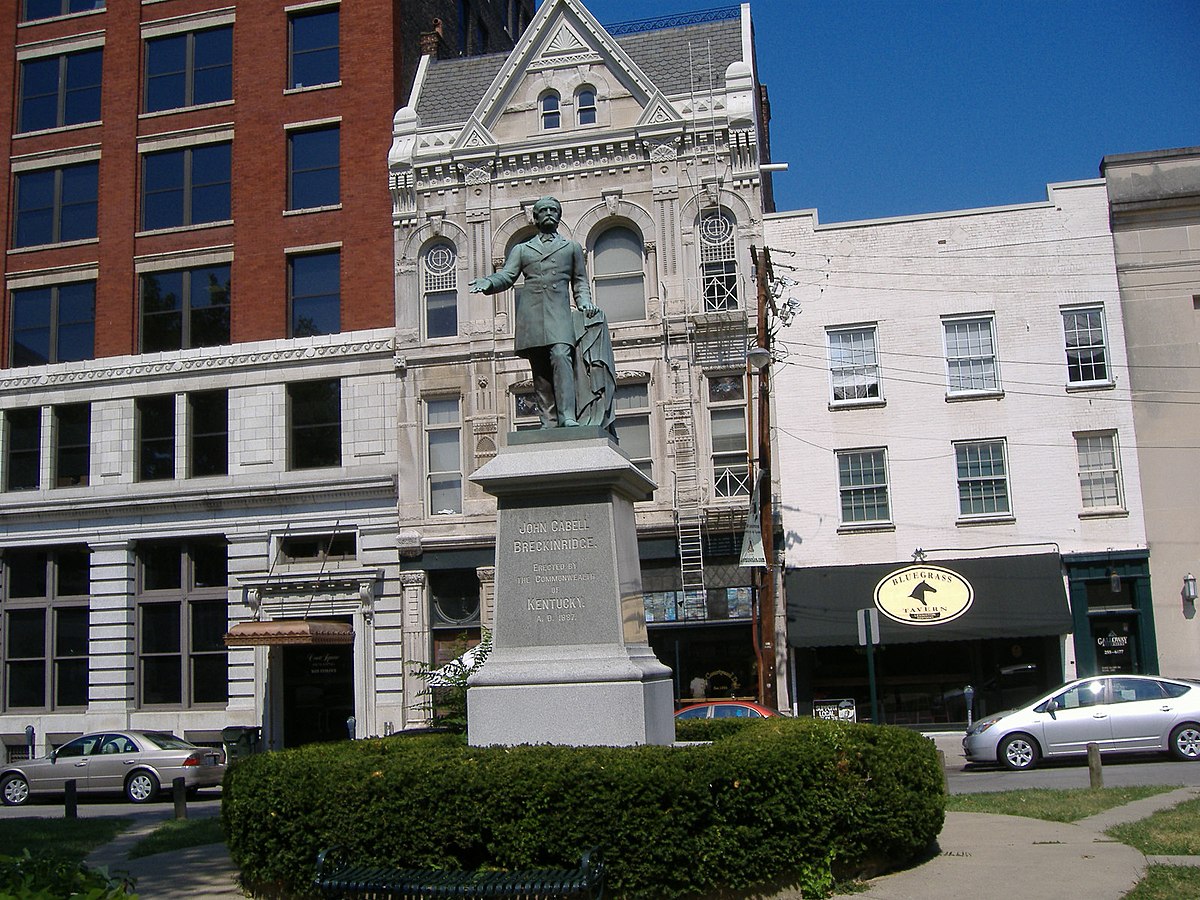
The John Hunt Morgan Memorial in Lexington, Kentucky, is a monument created as a tribute to Confederate General John Hunt Morgan, who was from Lexington and is buried in nearby Lexington Cemetery. With the help of the state government of Kentucky, the United Daughters of the Confederacy erected the monument on October 18, 1911 on what was then the courthouse lawn. The bronze statue was cast in Brooklyn, New York, at a cost of $15,000. The state of Kentucky contributed $7,500 of the cost because the UDC was unable to raise all of the funds promised. The ceremony included a parade of 400 veterans. The pedestal was of granite. The monument was dedicated by Morgans brother-in-law Basil W. Duke, master of ceremonies, and keynote speaker Dr. Guy Carleton Lee, a third cousin of Robert E. Lee. Also in attendance were John Castleman, and Morgans brothers Charlton and Dick. Of the monuments of the American Civil War in Kentucky, it is the only one with a soldier on horseback. Morgans horse, Black Bess, was a mare, but sculptor Pompeo Coppini thought a stallion was more appropriate. Coppini said, "No hero should bestride a mare!". Therefore, Coppini added the necessary testicles. Undergraduates from nearby University of Kentucky have been known to paint the testicles of the horse in the school colors of blue and white. An anonymous author wrote the "Ballad of Black Bess", which ended with: So darkness comes to Bluegrass men — Like darkness oer them falls — For well we know gentlemen should show Respect for a ladys balls. The Memorial was one of 60 different Civil War properties in Kentucky placed on the National Register of Historic Places on the same day, July 17, 1997. Three other properties listed that day are also located in Lexington: the John C. Breckinridge Memorial, which is on the other side of the same block as the Morgan Memorial, and the Confederate Soldier Monument in Lexington and the Ladies Confederate Memorial, both in nearby Lexington Cemetery.

Ladies' Confederate Memorial

The Ladies Confederate Memorial is an American Civil War monument erected in 1874 in Lexington Cemetery in Lexington, Kentucky. It was placed on the National Register of Historic Places on July 17, 1997, as part of the Civil War Monuments of Kentucky MPS. Unlike most Confederate monuments in Kentucky, it represents grief rather than Southern patriotism. The Ladies Memorial and Monument Association was founded by the wife of John C. Breckinridge on May 19, 1869, after she saw the unveiling of the Confederate Monument in Cynthiana, Kentucky. After six years of funding, the memorial was dedicated on May 26, 1875. The statue features a marble cross shaped as if made of logs. A broken sword and broken flagstaff are among the motifs, which include lilies, with rugged rocks being the motif for the limestone pedestal. It was designed by George W. Ranck, a Lexington historian, and paid for by the Ladies Memorial and Monument Association of Lexington. The cross was made in Italy, with the pedestal supplied by Louisvilles Muldoon Monument Company. It was called "probably the most perfect thing of its kind in the South" by Frank Leslies Illustrated Newspaper. It is believed that the memorial might have been inspired by a poem written by Abram Joseph Ryan, a Confederate chaplain: Take that banner down! tis tattered; Broken is its staff and shattered, And the valiant hosts are scattered Over whom it floated high. The Confederate Soldier Monument in Lexington is a few feet away, and was also part of the Civil War Monuments of Kentucky MPS.

Commonwealth Stadium

Commonwealth Stadium is the name of a stadium in Lexington, Kentucky, USA. This stadium, named for the Commonwealth of Kentucky, is located on the campus of the University of Kentucky and is the home field for the schools football team, replacing the smaller Stoll Field/McLean Stadium. The field is named C.M. Newton Field in honor of retired UK athletic director and former baseball and basketball player C.M. Newton. Built in 1973, it is the newest football stadium in the Southeastern Conference, as measured by date of original construction. The original capacity for the stadium was 57,800. In Commonwealths first game, played on September 15, 1973, the Wildcats defeated the Virginia Tech Hokies 31–26, as quarterback Ernie Lewis ran for two touchdowns and threw for another touchdown to lead the Wildcats. The facility currently seats 67,942. In 1999 both ends of the stadium were enclosed and 40 suites were added, 10 in each corner of the stadium, resulting in a symmetrical oval bowl. The total cost of the expansion was $27.6 million. During the 1999 season, Kentuckys average home attendance for football games was 67,756. Attendance for the game against Tennessee that year was 71,022, which remained the record attendance until the Wildcats 2007 game against Florida drew 71,024. In recent years, crowds of over 70,000 have become very common. Since 1999, fireworks have been shot from atop the suites after every Wildcat touchdown. In July 2011, the University of Kentucky announced a massive audio and video upgrade to Commonwealth Stadium. These upgrades include two LED video boards each measuring approximately 37 feet high by 80 feet wide, making each display the 20th-largest scoreboard in the country. Combined, the 5,920 square feet will make the new video boards one of the largest scoreboard systems in the country. Additionally, a new custom audio system and over 1,800 linear sq/ft of video ribbon board will be implemented by September 10, 2011. The approximate cost of the upgrades total close to $6 million. The stadium is currently undergoing a $110 million renovation. The renovation includes a new press box, loge box seats, club seats, recruiting room, suites, concourses, bathrooms, lights and exterior facade while reducing capacity to around 61,000. The project is expected to be completed by the start of the 2015 season.

Memorial Coliseum

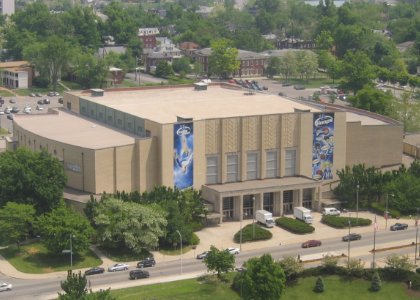
Memorial Coliseum is a 10,000-seat multi-purpose arena in Lexington, Kentucky. The facility, which opened in 1950, is home to three womens teams at the University of Kentucky—basketball, volleyball, and gymnastics. Before Rupp Arena opened in 1976, it also housed the mens basketball team, and continued to house the universitys swimming and diving team as well until the completion of the Lancaster Aquatics Center in 1989. The facility was built as a memorial to Kentuckians who had died in World War I, World War II and the Korean War. Later, the names of all Kentuckians who died in the Vietnam War were added. Originally, it had an official capacity of 12,000, making it the largest arena in the South at the time. However, the Coliseum frequently drew crowds of over 13,000 for many UK basketball games. A major renovation, completed in 1990, reduced the seating capacity to its current total of 10,000 and added an elaborate weight training facility, new offices for the basketball and athletics programs, a players lounge, and a team meeting room. The seating is now mostly located on the sidelines, and the mens NCAA basketball championship banners still hang on the walls. The building is known for its air of great tradition. While it was the home of the UK mens basketball team, it hosted the NCAA Mens Basketball Tournament ten times, four times as a regional site and six more as a sub-regional site . As home to the University of Kentucky Wildcats, it saw two NCAA mens basketball national championship teams, two NCAA mens basketball runner-up teams, one NIT Mens Basketball champion, and 16 Southeastern Conference Mens Basketball regular season champions. Overall, in 26 seasons, the University of Kentucky Wildcats mens basketball team posted a home record of 307–38 . Memorial hosted a first-round game in the 2009 National Invitation Tournament on March 17, 2009 between the Wildcats and the UNLV Running Rebels, with the Wildcats winning 70–60. The game was held at Memorial instead of Rupp Arena due to a scheduling conflict with the KHSAA boys high school basketball state tournament scheduled at Rupp that week. The Coliseum was also the home of the Kentucky Boys Sweet Sixteen State Basketball Tournament from 1951 to 1964. Since then, it has hosted numerous high school basketball tournaments over the years. The Coliseum stands across the street from the former site of Stoll Field/McLean Stadium, the football teams home before moving to Commonwealth Stadium in 1973. Prior to the building of the Coliseum, the Kentucky basketball teams played at Alumni Gymnasium, a 2,800-seat arena built in 1924 and still standing just down the street.

This attraction is located in

This is a private property. Please enjoy respectfully and do not disturb the occupants.

Edit Categories
Add Tours

This attraction is not part of any tours

Add Collections

This attraction is not part of any collections


Some of the attractions we imported from Wikipedia are not perfect. Send us an email detailing what's wrong and we'll look into fixing it.

GuRoute is all about Gurus sharing their local knowledge. If you feel up to fixing this problem yourself, why not adopt it. You will become the owner and can fix whatever problems you see.

We've copied a link to this attraction into your clipboard so that ou can paste it into an email or text message...

More Info...
You can add your friends to the visit yourself, or, send them a link and let them add themselves...

The visit will appear on both your timelines and on your Shared Timeline.

Click below and we'll email you a link that you can send on to friends or post on your group's Facebook page.

If your friends aren't members of GuRoute yet, this is a great way to get them started.
Recent
Recently used Collections will appear here...
Recent
Recently used tours will appear here...

Where is this?

GuRoute likes to place attractions inside other attractions. So, maybe it's in a city, or maybe it's inside a particular park in that city. Maybe your attraction is a huge park that spans half the county, or multiple counties.

Determining where this attraction is gives it context - if it's in a park, you'll be able to see it alongside all the other attractions in that park. And that helps define the park.

GuRoute will automatically calculate a parent region for this attraction. You can change it if there is something more appropriate.

This attraction is currently located in .

Change

This attraction does not yet have any reviews

Please login to write a review...

Reviewed by
Record new Visit

Add this location to your timneline?

  • If there's an existing attraction open it and add it to your timeline...
  • If not, enter a title and we'll create a new attraction for your memories...
Create new Attraction

Create a new attraction at this location?

  • We rely on Gurus like you to share your local knowledge...
(Give a name for this location)


+
Add this to your timeline instead...

Imagine having a record of all the cool things you've done in your life!


Using our timeline you can keep track of everywhere you visit in your lifetime...

But, you'll need to sign in first...

Add contacts so that you can share your travels and record places that you visit together...

Family
Favorites
Family
Favorites

Profile TimeLine Our Visits Edit Accept Decline Invite

If you have any more friends that visited this place with you, feel free to add them to the visit. We'll write it to their timeline and once they confirm it, they too will have this memory for a lifetime.

If they're not already registered, you just need their name and email address and you can add them and we'll send them an invite on your behlaf.

Add a tour comment

Add some extra information for when this attraction is viewed as part of your tour...

Next Stop Instructions

Add some instructions for what to see/do on the way to the next stop...

Next Stop Instructions

Add some instructions for what to see/do on the way to the next stop...

If you're visiting an existing attraction, open it and add it to your timeline. If there is no attraction for the place you are visiting...

  • Click 'Add My Location' below
  • Or right-click on the map to mark a different location
  • Or long-press if you have a touch screen
You can even add locations while you're offline....
  • Load up the map when you're online and we'll keep track of your locaiton
  • You can add locations to your timeline
  • When you are online again we'll sync them with the cloud

We can't connect to the internet right now. The following attractions are saved locally and can be uploaded when you're online...

GuRoute would like to access your current location so that we can pin you on the map and show you nearby attractions

Add friends so that you can share your experiences with each other...

Add tour to What's Next?

Go...

Either for yourself or someone else...

  1. Do your trip research in GuRoute
    Add all the places that you think might be worthy of a visit into a trip-plan
  2. Add your trip-plan to your "What's Next" timeline
    (or a friend's "What's Next" timeline)
  3. When you're on vacation you'll have all your research at your fingertips
  4. Share your timline with your friends
    They can enjoy your vacation with you, seeing not only where you've been, but where you're going next...
  5. Add/remove attractions if things change

It also makes a great souvenir of your trip

Collections

Go...

Create a home page for a collection of attractions

  • Add an image and description to display on the homepage
  • Start adding content
    Add existing attractions to your collection or create new attractions of your own
  • Collections can be:
    • Public (Anyone can add attractions to your collection)
    • Shared (Only yourself and Gurus you nominate can add content)
    • Private (The collection will only be visible to yourself)

Uses

  • Local business or hotel
    Showcase local attractions that you endorse
  • Clubs
    Showcase attractions that members have created (eg. local historical society)
  • Special Interest
    If GuRoute does not have a category for your special interest you add your attractions to your own collection instead

Examples

Walking/Driving Tours

Go...

A guided tour where GuRoute will direct you from stop to stop and narrate a description of each attraction you arrive at

  • GuRoute uses your phone's GPS to guide you from stop to stop
  • GuRoute automatically detects when you arrive at the next tour-stop and narrates the description of the attraction (Chrome Only)
  • It then sends you on to the next stop

Tours are great to attract people to your town. Even places with no significant points of interest can be lots of fun when part of a tour


Cater tours to your Audience

  • Kid-friendly Tours
    • Focus on what will keep kids interested
    • Instead of parents having to drag their kids around they'll be struggling to keep up
    • Let the kids navigate and they'll get more fun out of finding that historical plaque than they ever would from reading it
  • Accessible tours
  • Short and long tours of the same location

What you need to do...

  1. Click 'Go...'
    Enter a title, description and location for the tour
  2. Add existing attractions OR create new ones and add them to the tour
  3. For existing attractions you can add more information specific to the theme of the tour
  4. You can also add instructions on what to do or see en-route to the next tour-stop
  5. Try out your tour and see how it works...

Mystery Tour

Go...

Create a Mystery Tour

Create a series of clues to show people around a city, neighborhood or whatever place you like...

  • GuRoute will show people clues to get them from attraction to attraction
  • When they reach each stop GuRoute will tell them about the place and give them the next clue
  • Take as long or as you like and explore each location at your leisure

Scavenger Hunt

Go...

Create a Scavenger Hunt

Create a series of questions that people have to answer. The answers can all be discovered by walking aroung the area, looking for clues.

  • How many beers are on tap at Michael Collin's Irish Bar?
  • What's the name of the oldest building on main streeet?
  • Show a picture of some public art and ask them what it is called
  • Clues can have numeric or multiple choice answers