Sign In

My Timeline

GuRoute

Discover Your World

Share your Experiences

Record your Life


Top Attractions in Chicago

Millennium Park

Millennium Park is a public park located in the Loop community area of Chicago in Illinois, US, and originally intended to celebrate the second millennium. It is a prominent civic center near the city's Lake Michigan shoreline that covers a 24.5-acre section of northwestern Grant Park. The area was previously occupied by parkland, Illinois Central rail yards, and parking lots. The park, which is bounded by Michigan Avenue, Randolph Street, Columbus Drive and East Monroe Drive, features a variety of public art. As of 2009, Millennium Park trailed only Navy Pier as a Chicago tourist attraction. In 2015, the park became the location of the city's annual Christmas tree lighting. Planning of the park began in October 1997. Construction began in October 1998, and Millennium Park was opened in a ceremony on July 16, 2004, four years behind schedule. The three-day opening celebrations were attended by some 300,000 people and included an inaugural concert by the Grant Park Orchestra and Chorus. The park has received awards for its accessibility and green design. Millennium Park has free admission, and features the Jay Pritzker Pavilion, Cloud Gate, the Crown Fountain, the Lurie Garden, and various other attractions. The park is connected by the BP Pedestrian Bridge and the Nichols Bridgeway to other parts of Grant Park. Because the park sits atop a parking garage and the commuter rail Millennium Station, it is considered the world's largest rooftop garden. Some observers consider Millennium Park to be the city's most important project since the World's Columbian Exposition of 1893. It far exceeded its originally proposed budget of $150 million. The final cost of $475 million was borne by Chicago taxpayers and private donors. The city paid $270 million; private donors paid the rest, and assumed roughly half of the financial responsibility for the cost overruns. The construction delays and cost overruns were attributed to poor planning, many design changes, and cronyism. Many critics have praised the completed park.

University of Chicago

The University of Chicago is a private research university in Chicago, Illinois. Established in 1890, the University of Chicago consists of The College, various graduate programs, interdisciplinary committees organized into four academic research divisions and seven professional schools. Beyond the arts and sciences, Chicago is also well known for its professional schools, which include the Pritzker School of Medicine, the University of Chicago Booth School of Business, the Law School, the School of Social Service Administration, the Harris School of Public Policy Studies, the Graham School of Continuing Liberal and Professional Studies and the Divinity School. The university currently enrolls approximately 5,000 students in the College and around 15,000 students overall. University of Chicago scholars have played a major role in the development of various academic disciplines, including: the Chicago school of economics, the Chicago school of sociology, the law and economics movement in legal analysis, the Chicago school of literary criticism, the Chicago school of religion, and the behavioralism school of political science. Chicagos physics department helped develop the worlds first man-made, self-sustaining nuclear reaction beneath the universitys Stagg Field. Chicagos research pursuits have been aided by unique affiliations with world-renowned institutions like the nearby Fermilab and Argonne National Laboratory, as well as the Marine Biological Laboratory. The university is also home to the University of Chicago Press, the largest university press in the United States. Founded by the American Baptist Education Society with a donation from oil magnate and wealthiest man in history John D. Rockefeller, the University of Chicago was incorporated in 1890; William Rainey Harper became the universitys first president in 1891, and the first classes were held in 1892. Both Harper and future president Robert Maynard Hutchins advocated for Chicagos curriculum to be based upon theoretical and perennial issues rather than on applied sciences and commercial utility. With Harpers vision in mind, the University of Chicago also became one of the 14 founding members of the Association of American Universities, an international organization of leading research universities, in 1900. The University of Chicago is home to many prominent alumni. 89 Nobel laureates have been affiliated with the university as visiting professors, students, faculty, or staff, the fourth most of any institution in the world. In addition, Chicagos alumni include 49 Rhodes Scholars, 9 Fields Medalists, 13 National Humanities Medalists, 13 billionaire graduates, and a plethora of members of the United States Congress and heads of state of countries all over the world.

Trump International Hotel and Tower

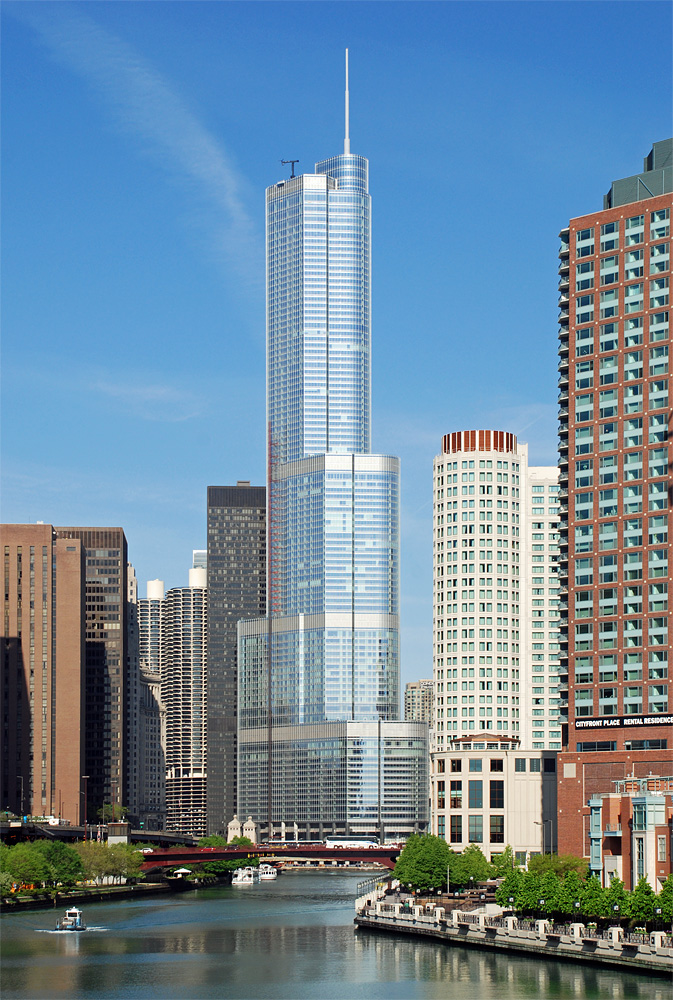
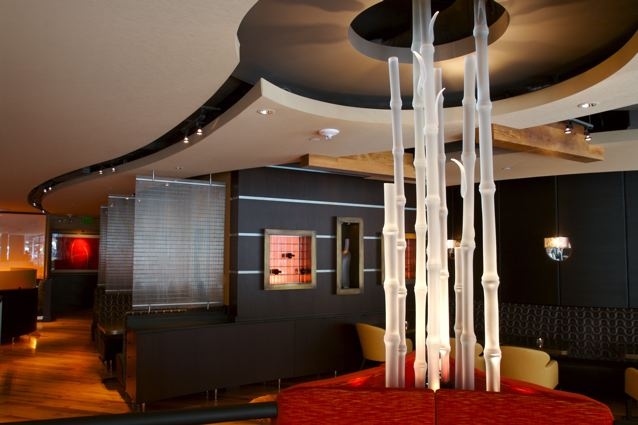
The Trump International Hotel and Tower, also known as Trump Tower Chicago and Trump Tower, is a skyscraper condo-hotel in downtown Chicago, Illinois. The building, named after billionaire real estate developer Donald Trump, was designed by architect Adrian Smith of Skidmore, Owings and Merrill. Bovis Lend Lease built the 98-story structure, which reached a height of 1,389 feet including its spire, its roof topping out at 1,170 feet . It is adjacent to the main branch of the Chicago River, with a view of the entry to Lake Michigan beyond a series of bridges over the river. The building received publicity when the winner of the first season of The Apprentice reality television show, Bill Rancic, chose to manage the construction of the tower over managing a new Trump National Golf Course and resort in Los Angeles, California. Trump announced in 2001 that the skyscraper would become the tallest building in the world, but after the September 11 attacks that same year, he scaled back the buildings plans, and its design underwent several revisions. When topped out in 2009, it became the second-tallest building in the Western Hemisphere, after another Chicago building, the Willis Tower . Trump Tower Chicago surpassed the citys John Hancock Center as the building with the highest residence in the world, and held this title until the completion of the Burj Khalifa. As of October 2014 it is the 16th tallest building in the world and fourth-tallest in the United States. The design of the building includes, from the ground up, retail space, a parking garage, a hotel and condominiums. The 339-room hotel opened for business with limited accommodations and services on January 30, 2008. April 28 of that year marked the grand opening with full accommodation and services. A restaurant on the 16th floor, named Sixteen, opened in early 2008 to favorable reviews. The building topped out in late 2008 and construction was completed in 2009. As of 2015, the hotel is one of seven in Chicago with an elite five-star rating and the building hosts a restaurant that is one of five in Chicago with at least a Michelin Guide two-star rating.

BP Pedestrian Bridge

The BP Pedestrian Bridge, or simply BP Bridge, is a girder footbridge in the Loop community area of Chicago, Illinois, United States. It spans Columbus Drive to connect Maggie Daley Park with Millennium Park, both parts of the larger Grant Park. Designed by Pritzker Prize-winning architect Frank Gehry, it opened along with the rest of Millennium Park on July 16, 2004. Gehry had been courted by the city to design the bridge and the neighboring Jay Pritzker Pavilion, and eventually agreed to do so after the Pritzker family funded the Pavilion. Named for energy firm BP, which donated $5 million toward its construction, it is the first Gehry-designed bridge to have been completed. BP Bridge is described as snakelike because of its curving form. Designed to bear a heavy load without structural problems caused by its own weight, it has won awards for its use of sheet metal. The bridge is known for its aesthetics, and Gehry's style is seen in its biomorphic allusions and extensive sculptural use of stainless steel plates to express abstraction. The pedestrian bridge serves as a noise barrier for traffic sounds from Columbus Drive. It is a connecting link between Millennium Park and destinations to the east, such as the nearby lakefront, other parts of Grant Park and a parking garage. BP Bridge uses a concealed box girder design with a concrete base, and its deck is covered by hardwood floor boards. It is designed without handrails, using stainless steel parapets instead. The total length is 935 feet , with a five percent slope on its inclined surfaces that makes it barrier free and accessible. Although the bridge is closed in winter because ice cannot be safely removed from its wooden walkway, it has received favorable reviews for its design and aesthetics.

Field Museum of Natural History

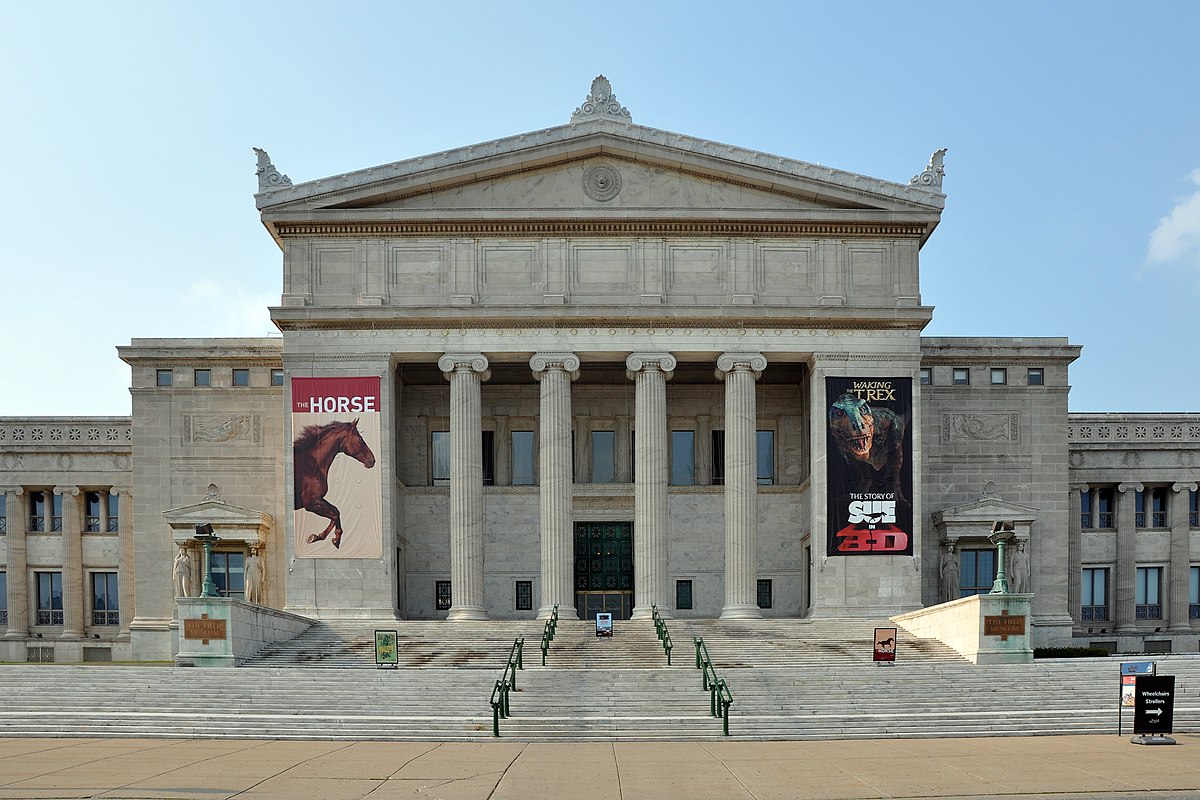
The Field Museum of Natural History, located in Chicago, Illinois, USA, is one of the largest natural history museums in the world. The museum maintains its status as a premier natural history museum through the size and quality of its educational and scientific programs, as well as due to its extensive scientific specimen and artifact collections. The diverse, high quality permanent exhibitions, which attract up to 2 million visitors annually, range from the earliest fossils to past and current cultures from around the world to interactive programming demonstrating today’s urgent conservation needs. Additionally, the Field Museum maintains a temporary exhibition program of traveling shows as well as in-house produced topical exhibitions. The professional staff maintains collections of over 24 million specimens and objects that provide the basis for the museum’s scientific research programs. These collections include the full range of existing biodiversity, gems, meteorites, fossils, as well as rich anthropological collections and cultural artifacts from around the globe. The Field Museum Library, which contains over 275,000 books, journals, and photo archives focused on biological systematics, evolutionary biology, geology, archaeology, ethnology and material culture, supports the Field Museum’s academic research faculty and exhibit development. The Field Museum academic faculty and scientific staff engage in field expeditions, in biodiversity and cultural research on all continents, in local and foreign student training, in stewardship of the rich specimen and artifact collections, and work in close collaboration with public programming exhibitions and education initiatives.

Chicago Architecture Foundation

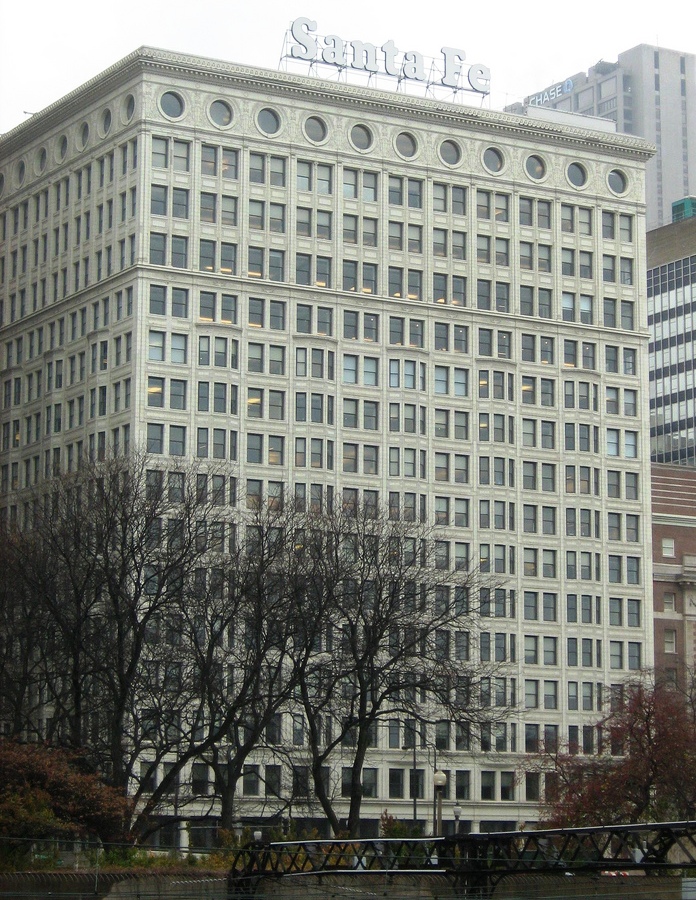
The Chicago Architecture Foundation is a nonprofit organization based in Chicago, Illinois, USA, whose mission is to inspire people to discover why architecture and design matters. It is well known for its public programs, most notably the docent-led architecture cruise on the Chicago River, and bus, walking, bike, Segway and L train tours of the Chicago-area. CAF is also known for its scale model of downtown Chicago. CAF was named the #1 best thing to do in Chicago by U.S. News and World Report in 2012. CAF offers more than 85 different tours of the city. All tours are led by highly trained volunteer docents who go through a vigorous 14-week training course before being certified to lead CAF tours. Many tours in the Loop include historic buildings such as the Chicago Board of Trade, the Marquette Building, the Monadnock Building, and Daniel Burnham and John Wellborn Roots Rookery among many others. Some modern buildings that are explored include the Inland Steel Building, Mies van der Rohes Chicago Federal Center and the Trump Tower. CAF also offers tours of Millennium Park. During the summer months CAF offers tours of various neighborhoods throughout Chicago in addition to Loop tours. CAFs most popular tour, the CAF River Cruise aboard Chicagos First Lady Cruises has departures April-November every year. CAF offers tours year-round with no tours offered on New Years Day, Thanksgiving Day and Christmas Day. The Chicago Architecture Foundation was founded in 1966 as the Chicago School of Architecture Foundation to save H. H. Richardsons Glessner House, one of Chicagos oldest residences. In 1971, it began to offer lectures and volunteer-led tours of Chicago to the public. In 1979 it was renamed the Chicago Architecture Foundation. In 2009 CAF opened a new exhibition, Chicago Model City, which includes a scale model of the central area of the city and has proven so popular that it is now on permanent display. In addition, CAF provides educational material for the Chicago primary and secondary school system. The Chicago Architecture Foundation is also proud to host the largest annual architecture event in the city, Open House Chicago . This free, annual event gives the public access to buildings and spaces around the city that are typically closed to the public. Held over a weekend in October, OHC attracts tens of thousands of participants from across the country and around the world. CAF offers a robust architecture and design education program and has received several awards for their curricula and textbooks including Schoolyards to Skylines, the Architecture Handbook, and discoverdesign.org. The Chicago Architecture Foundation is located at 224 South Michigan Avenue, Chicago in the Chicago Loops historic Santa Fe Building. It offers exhibitions about architecture, infrastructure, cities, and design. Lectures, panel discussions, education programs and architecture tours are also offered. The CAF Shop, which offers unique Chicago gifts as well as architecture and design themed merchandise, is also located at 224 South Michigan Avenue.

Krause Music Store

The Krause Music Store, a National Historic landmark building, is an award winning adaptive re-use of a 1922-vintage structure and the final work of famed architect Louis Sullivan, considered one of the greatest architects of the Chicago School of Architecture. The Krause Music Store is the last of the 126 buildings designed by Louis Sullivan. In coining the phrase “form follows function”, Sullivan believed that the function of a building gave rise to its form and that the two should work in concert with each other to be beautiful. With its curvilinear plant forms and intricate framing of the picture window, the Chicago-landmark facade of this building is an outgrowth of Sullivan’s belief in organic architecture. It was commissioned in 1921 by William P. Krause to serve the dual purpose of a residence and a music shop, at a total cost of $22,000. Krause chose his neighbor, architect William Presto, to design the building. Years earlier, Presto had worked as a draftsman for Louis Sullivan. But by 1921, Sullivan’s success had faded, as his designs were no longer in demand. So in a reversal of roles, Sullivan was asked by his former employee to design what would become the building’s beautiful green terra cotta façade. Sullivan, in ill health, living in a rented room and hopelessly insolvent, accepted the offer. Showcasing his genius with terra cotta, Sullivan designed the entire façade with ornamentation richly detailed in geometric and curvilinear forms of nature. The material for the facade was furnished by the American Terra Cotta Company for $3,770. The building was completed in 1922. The store opened to sell pianos and sheet music, and was a pioneering retailer for the introduction of the radio. Tragically, with the onset of the Great Depression, William Krause committed suicide in the family’s apartment on the second floor. His widow rented and eventually sold the building to a funeral parlor. During the next 60 years, the building functioned as a funeral home, undergoing much neglect and alteration. The terra cotta façade was acid washed, which ultimately damaged and lightened its color. The basement was converted into a workspace for embalming the dead. On September 20, 1977, the City of Chicago recognized the historic significance of the building and designated the façade as a Chicago Landmark. Thirteen years later, Scott Elliott opened Klemscott Galleries and restored the front of the building to its original intent. By the turn of the new century, a gift shop called The Museum of Decorative Arts occupied the space. In May 2005, the building was purchased by Pooja and Peter Vukosavich, who painstakingly restored the historic Sullivan façade and completed a modern renovation of the main floor for their company offices, Studio V Design – a marketing communications and design agency. The building is now a serene and elegant space with a meditative “zen” garden, fostering a dynamic environment for creative design. The renovation has won several awards (including the Driehaus Foundation Award and the AIA award,) and has attracted media publicity. More than 15 feature stories have been written about the building, including features on NPR, Chicago Tribune, and in TimeOut Chicago. In 2006, through the efforts of Peter and Pooja Vukosavich, the building was placed on the National Register of Historic Places.

860–880 Lake Shore Drive Apartments

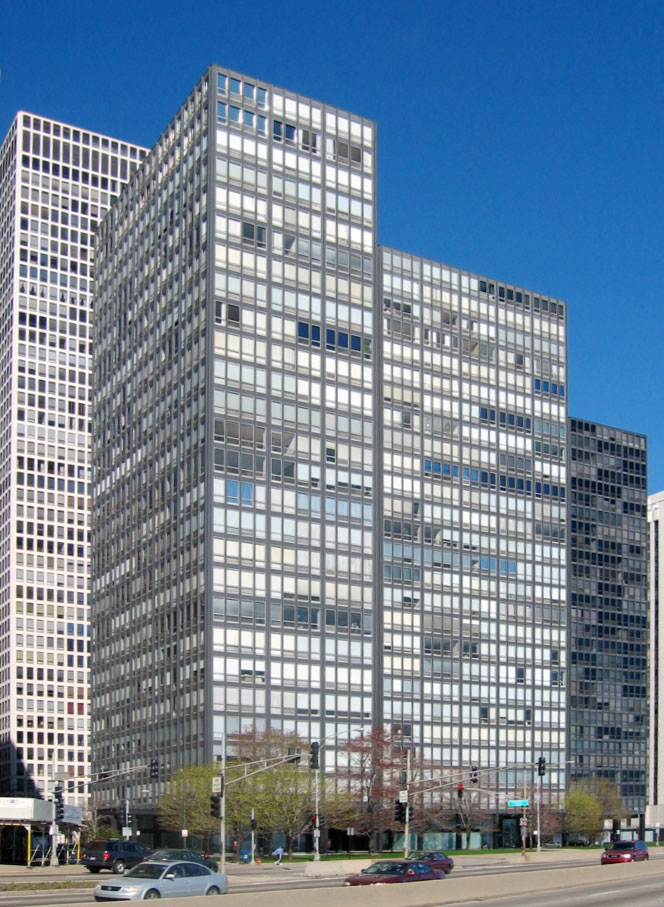
860-880 Lake Shore Drive is a twin pair of glass-and-steel apartment towers on N. Lake Shore Drive along Lake Michigan in the Streeterville neighborhood of Chicago, Illinois. Construction began in 1949 and the project was completed in 1951. The towers were added to the National Register of Historic Places on August 28, 1980, and were designated as Chicago Landmarks on June 10, 1996. The 26 floor, 254 ft tall towers were designed by the architect Ludwig Mies van der Rohe, and dubbed the "Glass House" apartments. Construction was by the Chicago real estate developer Herbert Greenwald, and the Sumner S. Sollitt Company. The design principles, first expressed in the 1921 Friedrichstrasse Skyscraper competition in Berlin and built thirty years later in 860-880 Lake Shore Drive, were copied extensively and are now considered characteristic of the modern International Style as well as essential for the development of modern High-tech architecture. The towers were not entirely admired at the time they were built, yet they went on to be the prototype for steel and glass skyscrapers worldwide. Initially, it was difficult to acquire financing for the project, turned down by lenders like Baird & Warner, who considered the design scheme to be too extreme. 860-880 Lake Shore Drive Apartments embody a Modernistic tone with their verticality, grids of steel and glass curtain walls (a hallmark of Mies’ skyscrapers), and complete lack of ornamentation. Tenants had to accept the neutral gray curtains that were uniform throughout the buildings;no other curtains or blinds were permitted lest they mar the external appearance. Since Mies was a master of minimalist composition, his principle was “less is more” as it is demonstrated in his self-proclaimed “skin and bones” architecture.

Maggie Daley Park ice skating ribbon

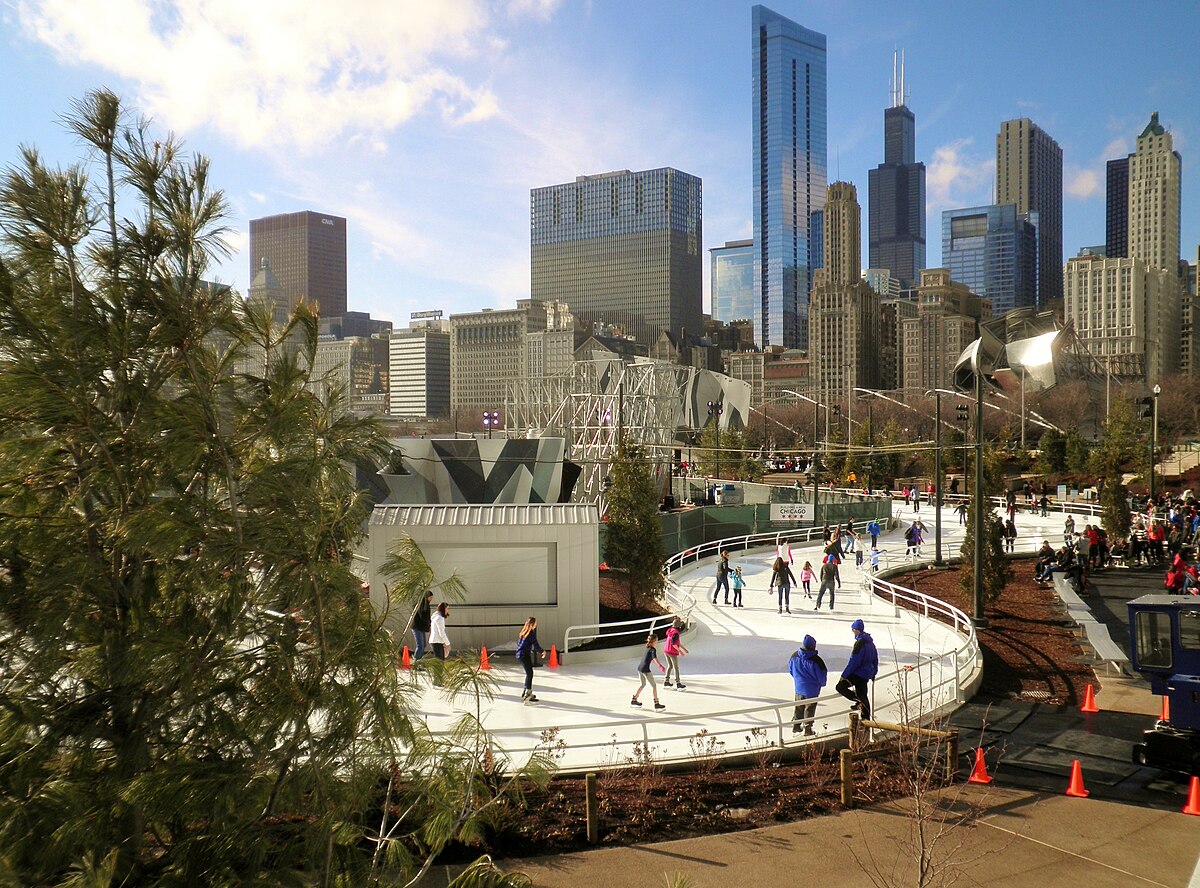
Maggie Daley Park ice skating ribbon is a seasonal public ice skating surface in the Maggie Daley Park section of Grant Park in the Loop community area of Chicago, which is bounded by Columbus Drive, Randolph Street, Monroe Street and Lake Shore Drive. The ice skating ribbon opened on December 13, 2014, along with the park. The rink extends for one-quarter mile mile and has a capacity of 700 skaters. In the summer, the rink will serve as a walking path. The rink features changes in elevation, which give it an incline and decline. On November 20, 2014, the city announced that the ice skating ribbon would open on an undetermined date in December with free admission and $12 skate rentals, which was the same price structure as was being used at McCormick Tribune Plaza Ice Rink at the time, although other outdoor public skating rinks in the Chicago Park District charged a $3 admission for adults but had lower rental fees. Lockers are also available for rental for a nominal fee at the skating ribbon. Among the numerous rules for the skating ribbon is a ban on the use of smartphones while skating. In the first month, 28,000 skate rentals generated over $300,000 for the city. The rink is closed for one-hour periods during which the ice is resurfaced by a zamboni machine. Because of the inconvenience of frequent lengthy closure periods, the Park announces the skating schedule and resurfacing schedule daily via a dedicated Maggie Daley Park Zamboni Twitter account, @MDPZamboni, that was created on December 29.

Congress Plaza Hotel

The Congress Plaza Hotel is located on South Michigan Avenue across from Grant Park in Chicago at 520 South Michigan Avenue. After opening for business in 1893, for the World's Columbian Exposition, the hotel underwent two major expansions and renovations; it now features 871 guest rooms and suites. Its 11 story edifice was originally designed by architect Clinton J. Warren as an annex to the Auditorium Theater across the street. The two buildings were linked by an underground, marble-lined passage called Peacock Alley. In 1902 and then in 1907, the firm of Holabird & Roche oversaw the design and construction of two additions, bringing the total complex up to 1 million square feet. In June, 1912, Theodore Roosevelt stayed at the Congress Plaza when the 1912 Republican National Convention was held in Chicago. Roosevelt, who at that time was seeking the Republican nomination for President, spoke from the balcony of his room at the hotel to a crowd assembled across the street in Grant Park. In October of 1916, US President Woodrow Wilson passed the hotel as part of his visit to the city. Over a hundred protestors from the National Women's Party demonstrated in favor of women's suffrage with a silent protest. Holding banners such as "Wilson is Against Women," the demonstrators were attacked by a mob and their banners destroyed while police looked on and, in some cases, laughed, according to newspaper reports. In 1940, Louis Grell , a Chicago based artist, was commissioned to paint thirteen murals for the lunettes that are an architectural feature surrounding the grand lobby. The murals were various popular scenes around Chicago at the time. Under the Albert Pick Jr ownership in 1952, Grell was again commissioned to paint the same architectural lunettes, this time Grell incorporated Chicago figures into the scenes depicting important trades significant to Chicago's growth and symbolism. Lady Liberty was found in one mural holding the Chicago River "Y" on her lap. Additionally, in 1955 Pick commissioned Grell once again, during one of the many renovations, to paint three walls for the newly decorated Pompeian Room which also had a magnificent Louis Comfort Tiffany glass fountain in the center of the vast room. Today glass covers the thirteen lunettes where the murals could be hiding. Grell also painted a large white Peacock that was mounted above the bar next to Peacock Alley. Each wall had a main central Greek/Roman mural, however, Grell decorated the entire wall with various patterns of flora and custom design. Taos Society of Artists painter, E. Martin Hennings painted the ceiling murals inside the Florentine Room around 1918. Events that have been held at the hotel include the 1963 Prohibition Party National Convention August 23, 1963. The hotel is not affiliated with any national chain. It is owned by a Syrian national, Albert Nasser Shayo, who purchased the property in 1987. On 15 June 2003, about 130 members of UNITE HERE Local 1 went on strike to protest a proposed seven percent wage cut. On 16 June 2007, Barack Obama, then running for the presidency, briefly stood by the picket line and promised to return as president, but he did not. The strike, one of the world's longest, ended May 30, 2013 after nearly 10 years. No concessions were given by management.

This attraction is located in

This is a private property. Please enjoy respectfully and do not disturb the occupants.

Edit Categories
Add Tours

This attraction is not part of any tours

Add Collections

This attraction is not part of any collections


Some of the attractions we imported from Wikipedia are not perfect. Send us an email detailing what's wrong and we'll look into fixing it.

GuRoute is all about Gurus sharing their local knowledge. If you feel up to fixing this problem yourself, why not adopt it. You will become the owner and can fix whatever problems you see.

We've copied a link to this attraction into your clipboard so that ou can paste it into an email or text message...

More Info...
You can add your friends to the visit yourself, or, send them a link and let them add themselves...

The visit will appear on both your timelines and on your Shared Timeline.

Click below and we'll email you a link that you can send on to friends or post on your group's Facebook page.

If your friends aren't members of GuRoute yet, this is a great way to get them started.
Recent
Recently used Collections will appear here...
Recent
Recently used tours will appear here...

Where is this?

GuRoute likes to place attractions inside other attractions. So, maybe it's in a city, or maybe it's inside a particular park in that city. Maybe your attraction is a huge park that spans half the county, or multiple counties.

Determining where this attraction is gives it context - if it's in a park, you'll be able to see it alongside all the other attractions in that park. And that helps define the park.

GuRoute will automatically calculate a parent region for this attraction. You can change it if there is something more appropriate.

This attraction is currently located in .

Change

This attraction does not yet have any reviews

Please login to write a review...

Reviewed by
Record new Visit

Add this location to your timneline?

  • If there's an existing attraction open it and add it to your timeline...
  • If not, enter a title and we'll create a new attraction for your memories...
Create new Attraction

Create a new attraction at this location?

  • We rely on Gurus like you to share your local knowledge...
(Give a name for this location)


+
Add this to your timeline instead...

Imagine having a record of all the cool things you've done in your life!


Using our timeline you can keep track of everywhere you visit in your lifetime...

But, you'll need to sign in first...

Add contacts so that you can share your travels and record places that you visit together...

Family
Favorites
Family
Favorites

Profile TimeLine Our Visits Edit Accept Decline Invite

If you have any more friends that visited this place with you, feel free to add them to the visit. We'll write it to their timeline and once they confirm it, they too will have this memory for a lifetime.

If they're not already registered, you just need their name and email address and you can add them and we'll send them an invite on your behlaf.

Add a tour comment

Add some extra information for when this attraction is viewed as part of your tour...

Next Stop Instructions

Add some instructions for what to see/do on the way to the next stop...

Next Stop Instructions

Add some instructions for what to see/do on the way to the next stop...

If you're visiting an existing attraction, open it and add it to your timeline. If there is no attraction for the place you are visiting...

  • Click 'Add My Location' below
  • Or right-click on the map to mark a different location
  • Or long-press if you have a touch screen
You can even add locations while you're offline....
  • Load up the map when you're online and we'll keep track of your locaiton
  • You can add locations to your timeline
  • When you are online again we'll sync them with the cloud

We can't connect to the internet right now. The following attractions are saved locally and can be uploaded when you're online...

GuRoute would like to access your current location so that we can pin you on the map and show you nearby attractions

Add friends so that you can share your experiences with each other...

Add tour to What's Next?

Go...

Either for yourself or someone else...

  1. Do your trip research in GuRoute
    Add all the places that you think might be worthy of a visit into a trip-plan
  2. Add your trip-plan to your "What's Next" timeline
    (or a friend's "What's Next" timeline)
  3. When you're on vacation you'll have all your research at your fingertips
  4. Share your timline with your friends
    They can enjoy your vacation with you, seeing not only where you've been, but where you're going next...
  5. Add/remove attractions if things change

It also makes a great souvenir of your trip

Collections

Go...

Create a home page for a collection of attractions

  • Add an image and description to display on the homepage
  • Start adding content
    Add existing attractions to your collection or create new attractions of your own
  • Collections can be:
    • Public (Anyone can add attractions to your collection)
    • Shared (Only yourself and Gurus you nominate can add content)
    • Private (The collection will only be visible to yourself)

Uses

  • Local business or hotel
    Showcase local attractions that you endorse
  • Clubs
    Showcase attractions that members have created (eg. local historical society)
  • Special Interest
    If GuRoute does not have a category for your special interest you add your attractions to your own collection instead

Examples

Walking/Driving Tours

Go...

A guided tour where GuRoute will direct you from stop to stop and narrate a description of each attraction you arrive at

  • GuRoute uses your phone's GPS to guide you from stop to stop
  • GuRoute automatically detects when you arrive at the next tour-stop and narrates the description of the attraction (Chrome Only)
  • It then sends you on to the next stop

Tours are great to attract people to your town. Even places with no significant points of interest can be lots of fun when part of a tour


Cater tours to your Audience

  • Kid-friendly Tours
    • Focus on what will keep kids interested
    • Instead of parents having to drag their kids around they'll be struggling to keep up
    • Let the kids navigate and they'll get more fun out of finding that historical plaque than they ever would from reading it
  • Accessible tours
  • Short and long tours of the same location

What you need to do...

  1. Click 'Go...'
    Enter a title, description and location for the tour
  2. Add existing attractions OR create new ones and add them to the tour
  3. For existing attractions you can add more information specific to the theme of the tour
  4. You can also add instructions on what to do or see en-route to the next tour-stop
  5. Try out your tour and see how it works...

Mystery Tour

Go...

Create a Mystery Tour

Create a series of clues to show people around a city, neighborhood or whatever place you like...

  • GuRoute will show people clues to get them from attraction to attraction
  • When they reach each stop GuRoute will tell them about the place and give them the next clue
  • Take as long or as you like and explore each location at your leisure

Scavenger Hunt

Go...

Create a Scavenger Hunt

Create a series of questions that people have to answer. The answers can all be discovered by walking aroung the area, looking for clues.

  • How many beers are on tap at Michael Collin's Irish Bar?
  • What's the name of the oldest building on main streeet?
  • Show a picture of some public art and ask them what it is called
  • Clues can have numeric or multiple choice answers