Sign In

My Timeline

GuRoute

Discover Your World

Share your Experiences

Record your Life


Top Attractions in Ann Arbor

Michigan Stadium

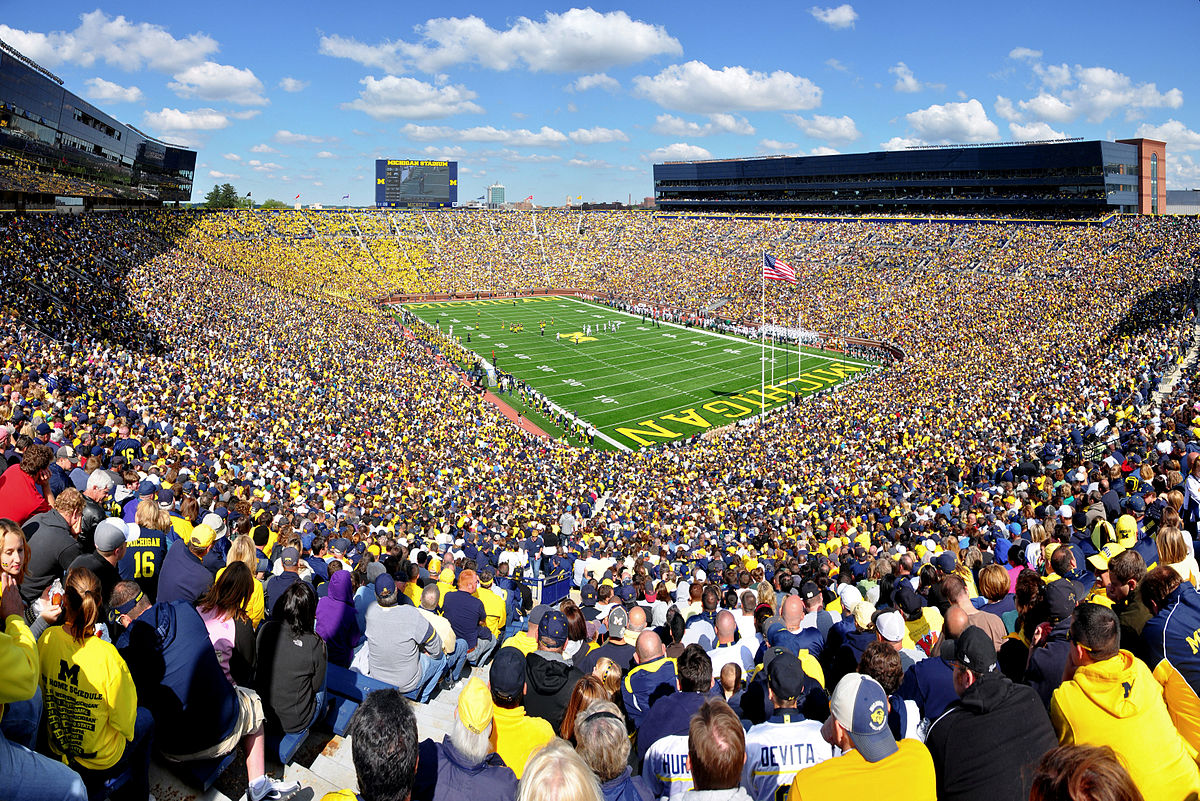
Michigan Stadium, nicknamed "The Big House", is the football stadium for the University of Michigan in Ann Arbor, Michigan. It is the largest stadium in the United States, the second largest stadium in the world and the 36th largest sports venue. Its official capacity is 109,901, but it can host crowds in excess of 115,000. Michigan Stadium was built in 1927 at a cost of $950,000 and had an original capacity of 72,000. Prior to the stadiums construction, the Wolverines played football at Ferry Field. Every home game since November 8, 1975 has drawn a crowd in excess of 100,000, an active streak of more than 200 contests. On September 7, 2013 the game between Michigan and the Notre Dame Fighting Irish attracted a crowd of 115,109, a record attendance for a college football game since 1927, and an NCAA single-game attendance record, overtaking the 114,804 record set two years previously for the same match up. Michigan Stadium was designed with footings to allow the stadiums capacity to be expanded beyond 100,000. Fielding Yost envisioned a day where 150,000 seats would be needed. To keep construction costs low at the time, the decision was made to build a smaller stadium than Yost envisioned but to include the footings for future expansion. Michigan Stadium is used for the University of Michigans main graduation ceremonies; Lyndon Johnson outlined his Great Society program at the 1964 commencement ceremonies in the stadium. It has also hosted hockey games including the 2014 NHL Winter Classic, a regular season NHL game between the Toronto Maple Leafs and the Detroit Red Wings with an official attendance of 105,491, a record for a hockey game. Additionally, a 2014 International Champions Cup soccer match between Real Madrid and Manchester United had an attendance of 109,318, a record crowd for a soccer match in the United States.

Nichols Arboretum

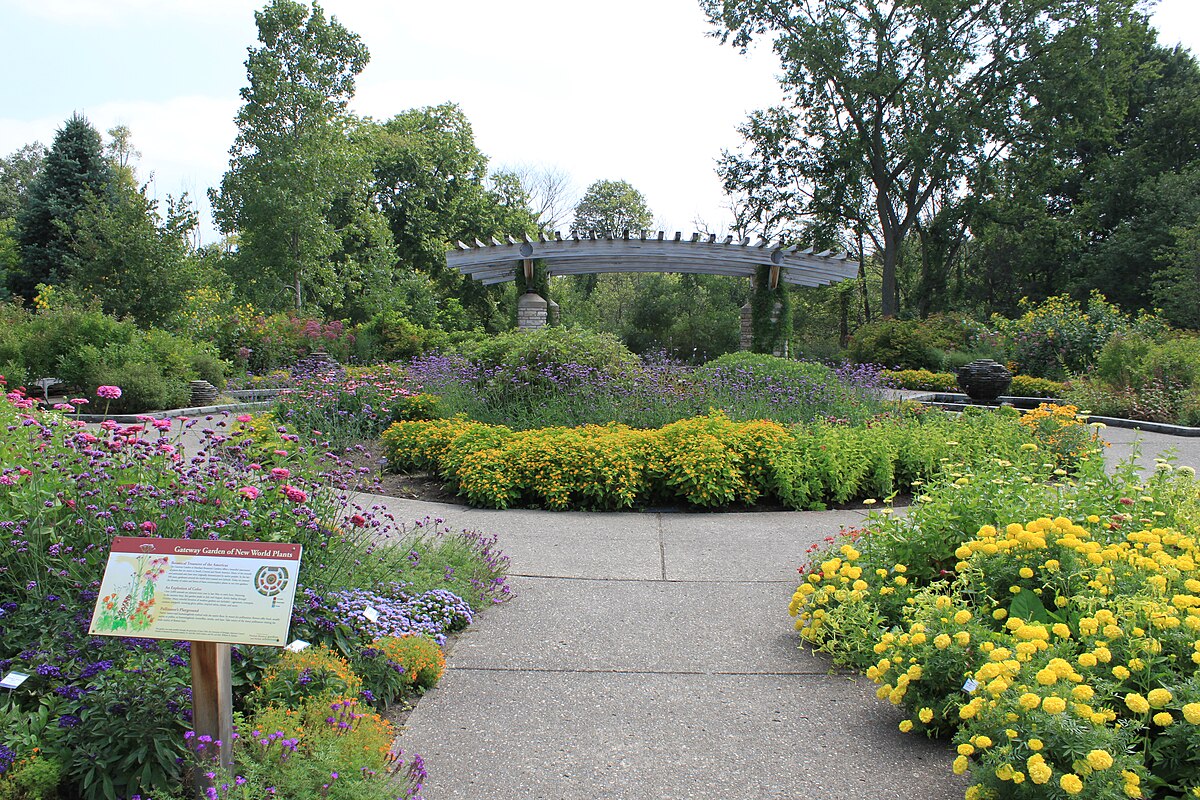
Nichols Arboretum is an arboretum operated by the University of Michigan. Located on the eastern edge of its Central Campus at 1610 Washington Heights in Ann Arbor, Michigan, the Arboretum is a mosaic of University and City properties operated as one unit. The arboretum is open daily from sunrise to sunset with no charge for admission. The Huron River separates a northern section of the arboretums floodplain woods; the railroad marks the northern border. The arboretum is popularly known as "the Arb" by locals. The arboretum was designed in 1906 by O. C. Simonds, and he used the steep glacial topography to include areas both for collections and natural areas. Many of the older plantings date from the 1920s and 1930s. It is particularly known for its Peony Collection, Heathdale Collection, the Centennial Shrub Collection and the Dow Prairie. The University of Michigan conducts controlled burns of the prairie each year in an attempt to maintain native species and habitat. Students flock to the Arb for a variety of outdoor activities beyond assigned studies, such as jogging, picnicking, and sun-bathing. Maps are posted, which include the length and type of trail . The Arb is a common spot for Ann Arbors students to gather. During winter, students have been known to go sledding in the Arb using cafeteria trays from university dining halls. In recent summers, the Arb has been the site of Shakespeare in the Arb, dramatic performances of Shakespearean plays, including A Midsummer Nights Dream and Loves Labours Lost; the June 2012 production was The Merry Wives of Windsor.

University of Michigan Library

The University of Michigan Library is the university library system of the University of Michigan, based in Ann Arbor, Michigan, in the United States. The University of Michigan Library ranks in the top ten largest libraries in the United States. As of 2014–15, the University Library contained more than 12.8 million volumes, while all campus library systems combined held more than 13.8 million volumes. The Library also held 136,810 current serials, and over 4.42 million annual visits. Founded in 1838, the University Library is the university's main library and is housed in 12 buildings, with more than 20 libraries, among the most significant of which are the Shapiro Undergraduate Library, Hatcher Graduate Library, Special Collections Library, and Taubman Health Sciences Library. However, several U-M libraries are independent of the University Library: the Bentley Historical Library, the William L. Clements Library, the Gerald R. Ford Library, the Kresge Business Administration Library of the Ross School of Business, and the Law Library of the University of Michigan Law School. The University Library is also separate from the libraries of the University of Michigan–Dearborn and the University of Michigan–Flint (Frances Willson Thompson Library and Genesee Historical Collections Center). UM was the original home of the JSTOR database, which contains about 750,000 digitized pages from the entire pre-1990 backfile of ten journals of history and economics. In December 2004, the University of Michigan announced a book digitization program in collaboration with Google (known as Michigan Digitization Project), which is both revolutionary and controversial. Books scanned by Google are included in HathiTrust, a digital library created by a partnership of major research institutions. As of March 2014, the following collections had been digitized: Art, Architecture and Engineering Library; Bentley Historical Library; Buhr Remote Shelving Facility (large portions; Dentistry Library (portions); Fine Arts Library (large portions); Hatcher Graduate Library (large portions); Herbarium Library;Kresge Business Administration Library; Law Library (portions); Museums Library; Music Library (large portions); Shapiro Science Library (large portions); Shapiro Undergraduate Library (large portions); Social Work Library; Special Collections Library (portions); Taubman Health Sciences Library (large portions); Responding to restricted public funding and the rising costs of print materials, the Library has launched significant new ventures that use digital technology to provide cost-effective and permanent alternatives to traditional print publication. This includes access to print on demand books via the Library's Espresso Book Machine. The University Library is also an educational organization in its own right, offering a full range of courses, resources, support, and training for students, faculty, and researchers. The University Librarian and Dean of Libraries is James Hilton, whose term began on September 1, 2013.

Michigan Theater (Ann Arbor, Michigan)

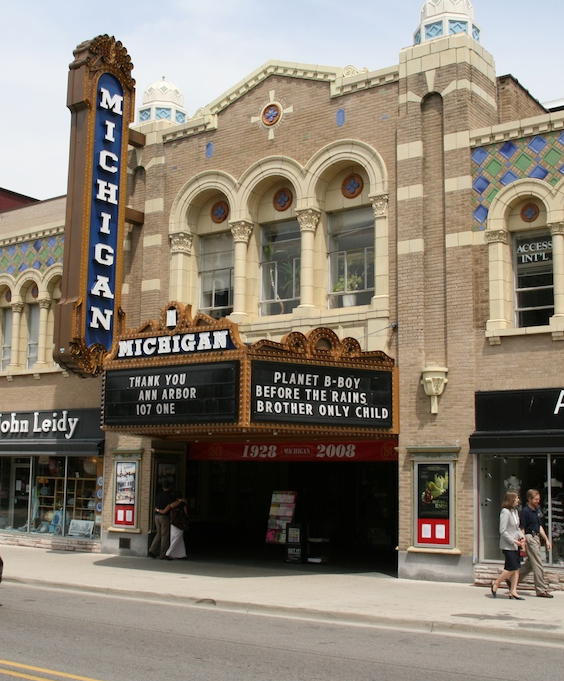
The Michigan Theater is a movie palace in Ann Arbor, Michigan, United States. It shows independent films, stage productions and musical concerts. Designed by Detroit-based architect Maurice Finkel and built in 1928, the theater seats 1700 and features the theaters original 1927 Barton Theatre Pipe Organ, orchestra pit, stage, and elaborate architectural details. It has been co-owned, off and on, with the State Theater for years, as both were originally under the ownership of the Butterfield Theaters chain. During a renovation in 1956, many of the original ornate designs were destroyed. After a period of low attendance, the theater was threatened with demolition in 1978, but members of the community and local organists helped raise funds to save and renovate the theater, returning it to its original design. A second screen with a state-of-the-art sound system, seating for 200 and the ability to project films digitally was added in 1999. The Barton Opus 245 theatre pipe organ was built for the Michigan Theater and installed in November 1927 shortly before the theater was opened. It is one of the few remaining organs which exists in its original location. It has three manualsthirteen separate ranks of pipes and the console is situated on a functioning Barton four-poster lift. The instrument has been fully restored and has retained all of its original electropneumatic operating systems. No portion of it has been digitized and no such modification is planned. The instrument is professionally maintained and played daily prior to most film screenings, making it one of the most heard theater organs in the country. The Michigan Theater is the current home of the annual Ann Arbor Film Festival, the Ann Arbor Symphony, the Ann Arbor Concert Band, and Dandia Dhamaka, and has been named 2006 Outstanding Historic Theatre by the League of Historic American Theaters. The theater also hosts a series of childrens stage productions entitled "Not Just For Kids" and a concert series entitled "The Legends of Rock Roll."

Hill Auditorium

Hill Auditorium is the largest performance venue on the University of Michigan campus, in Ann Arbor, Michigan. The auditorium was named in honor of Arthur Hill , who served as a regent of the university from 1901 to 1909. He bequeathed $200,000 to the university for the construction of a venue for lectures, musical performances, and other large productions. Opened in 1913, the auditorium was designed by Albert Kahn and Associates. It was recently renovated by the same firm beginning in 2002 and was re-opened in 2004. With seating for up to 3,538 audience members, Hill is one of the most popular venues for large productions on campus. The building routinely hosts performances given by the School of Music's various ensembles, including the University of Michigan Symphony Orchestra, University of Michigan Philharmonia Orchestra, University of Michigan Concert Band, University of Michigan Symphony Band, and University of Michigan Choirs, as well as the mostly non-major ensembles such as the University of Michigan Arts Chorale, the Campus Symphony Orchestra, Campus Bands, the Michigan Marching Band, and the Men's Glee Club and Women's Glee Club. The auditorium is also host to the Detroit Catholic Central High School graduation each May. Hill Auditorium's acoustics have been widely praised. The University of Michigan website that describes the recent $33.5 million Hill Auditorium refurbishing and restoration states: "When it opened in 1913, Hill Auditorium was hailed as a 'monument to perfect acoustics.' The excellent acoustics, a result of collaboration by architect Albert Kahn with noted acoustical engineer Hugh Tallant, are known world-wide and have made the auditorium a favorite venue for legions of famous musicians and other artists, as well as numerous noted speakers." "Careful attention will be given throughout the renovation to maintaining the acoustic quality of Hill, said Henry Baier, associate vice president for facilities and operations. In addition, further work will be done to reduce street and lobby noise by building a “sound lock” between the lobby and the auditorium." Michigan's University Musical Society presents performances of many world-renowned artists at Hill Auditorium.

University of Michigan

The University of Michigan , frequently referred to simply as Michigan, is a public research university in Ann Arbor, Michigan, United States. Founded in 1817 in Detroit as the Catholepistemiad, or University of Michigania, 20 years before the Michigan Territory became a state, the University of Michigan is the state's oldest university. The university moved to Ann Arbor in 1837 onto 40 acres of what is now known as Central Campus. Since its establishment in Ann Arbor, the university campus has expanded to include more than 584 major buildings with a combined area of more than 34 million gross square feet spread out over a Central Campus and North Campus, has two satellite campuses in Flint and Dearborn, and a Center in Detroit. The University was a founding member of the Association of American Universities. Considered one of the foremost research universities in the United States, the university has very high research activity and its comprehensive graduate program offers doctoral degrees in the humanities, social sciences, and STEM fields (Science, Technology, Engineering and Mathematics) as well as professional degrees in architecture, business, medicine, law, pharmacy, nursing, social work, public health, and dentistry. Michigan's body of living alumni (as of 2012) comprises more than 500,000. Besides academic life, Michigan's athletic teams compete in Division I of the NCAA and are collectively known as the Wolverines. They are members of the Big Ten Conference.

Ann Arbor Film Festival

The Ann Arbor Film Festival is an annual film festival held in Ann Arbor in the U.S. state of Michigan. Established in 1963, it is the third-oldest film festival in North America (after the Columbus International Film & Video Festival, 1953; and the San Francisco International Film Festival, 1957); and the oldest experimental film festival. It has become one of the premier film festivals for independent and, especially, experimental filmmakers to showcase their work. Now in its 51st year, the Ann Arbor Film Festival attracts over 3,000 entries from filmmakers in more than 60 countries, and distributes over $20,000 in cash awards. As a pioneer of the traveling festival concept in 1964, each year the Ann Arbor Film Festival Tour continues to present a collection of short films at more than 30 art house theaters, universities, galleries and cinematheques throughout the world. Created as an alternative to commercial cinema, the annual week-long festival remains true to its original mission of promoting film as an art form. The Ann Arbor Film Festival also fosters the growth of emerging and established film and video makers. The festival is open to film and video of all lengths and genres, including experimental, narrative, animation, documentary, and genre hybrids. The festival’s mission is to supporting bold, visionary filmmakers, promote the art of film & new media, and provide communities with remarkable cinematic experiences. The 51st Ann Arbor Film Festival was held March 19–24, 2013.

This attraction is located in

This is a private property. Please enjoy respectfully and do not disturb the occupants.

Edit Categories
Add Tours

This attraction is not part of any tours

Add Collections

This attraction is not part of any collections


Some of the attractions we imported from Wikipedia are not perfect. Send us an email detailing what's wrong and we'll look into fixing it.

GuRoute is all about Gurus sharing their local knowledge. If you feel up to fixing this problem yourself, why not adopt it. You will become the owner and can fix whatever problems you see.

We've copied a link to this attraction into your clipboard so that ou can paste it into an email or text message...

More Info...
You can add your friends to the visit yourself, or, send them a link and let them add themselves...

The visit will appear on both your timelines and on your Shared Timeline.

Click below and we'll email you a link that you can send on to friends or post on your group's Facebook page.

If your friends aren't members of GuRoute yet, this is a great way to get them started.
Recent
Recently used Collections will appear here...
Recent
Recently used tours will appear here...

Where is this?

GuRoute likes to place attractions inside other attractions. So, maybe it's in a city, or maybe it's inside a particular park in that city. Maybe your attraction is a huge park that spans half the county, or multiple counties.

Determining where this attraction is gives it context - if it's in a park, you'll be able to see it alongside all the other attractions in that park. And that helps define the park.

GuRoute will automatically calculate a parent region for this attraction. You can change it if there is something more appropriate.

This attraction is currently located in .

Change

This attraction does not yet have any reviews

Please login to write a review...

Reviewed by
Record new Visit

Add this location to your timneline?

  • If there's an existing attraction open it and add it to your timeline...
  • If not, enter a title and we'll create a new attraction for your memories...
Create new Attraction

Create a new attraction at this location?

  • We rely on Gurus like you to share your local knowledge...
(Give a name for this location)


+
Add this to your timeline instead...

Imagine having a record of all the cool things you've done in your life!


Using our timeline you can keep track of everywhere you visit in your lifetime...

But, you'll need to sign in first...

Add contacts so that you can share your travels and record places that you visit together...

Family
Favorites
Family
Favorites

Profile TimeLine Our Visits Edit Accept Decline Invite

If you have any more friends that visited this place with you, feel free to add them to the visit. We'll write it to their timeline and once they confirm it, they too will have this memory for a lifetime.

If they're not already registered, you just need their name and email address and you can add them and we'll send them an invite on your behlaf.

Add a tour comment

Add some extra information for when this attraction is viewed as part of your tour...

Next Stop Instructions

Add some instructions for what to see/do on the way to the next stop...

Next Stop Instructions

Add some instructions for what to see/do on the way to the next stop...

If you're visiting an existing attraction, open it and add it to your timeline. If there is no attraction for the place you are visiting...

  • Click 'Add My Location' below
  • Or right-click on the map to mark a different location
  • Or long-press if you have a touch screen
You can even add locations while you're offline....
  • Load up the map when you're online and we'll keep track of your locaiton
  • You can add locations to your timeline
  • When you are online again we'll sync them with the cloud

We can't connect to the internet right now. The following attractions are saved locally and can be uploaded when you're online...

GuRoute would like to access your current location so that we can pin you on the map and show you nearby attractions

Add friends so that you can share your experiences with each other...

Add tour to What's Next?

Go...

Either for yourself or someone else...

  1. Do your trip research in GuRoute
    Add all the places that you think might be worthy of a visit into a trip-plan
  2. Add your trip-plan to your "What's Next" timeline
    (or a friend's "What's Next" timeline)
  3. When you're on vacation you'll have all your research at your fingertips
  4. Share your timline with your friends
    They can enjoy your vacation with you, seeing not only where you've been, but where you're going next...
  5. Add/remove attractions if things change

It also makes a great souvenir of your trip

Collections

Go...

Create a home page for a collection of attractions

  • Add an image and description to display on the homepage
  • Start adding content
    Add existing attractions to your collection or create new attractions of your own
  • Collections can be:
    • Public (Anyone can add attractions to your collection)
    • Shared (Only yourself and Gurus you nominate can add content)
    • Private (The collection will only be visible to yourself)

Uses

  • Local business or hotel
    Showcase local attractions that you endorse
  • Clubs
    Showcase attractions that members have created (eg. local historical society)
  • Special Interest
    If GuRoute does not have a category for your special interest you add your attractions to your own collection instead

Examples

Walking/Driving Tours

Go...

A guided tour where GuRoute will direct you from stop to stop and narrate a description of each attraction you arrive at

  • GuRoute uses your phone's GPS to guide you from stop to stop
  • GuRoute automatically detects when you arrive at the next tour-stop and narrates the description of the attraction (Chrome Only)
  • It then sends you on to the next stop

Tours are great to attract people to your town. Even places with no significant points of interest can be lots of fun when part of a tour


Cater tours to your Audience

  • Kid-friendly Tours
    • Focus on what will keep kids interested
    • Instead of parents having to drag their kids around they'll be struggling to keep up
    • Let the kids navigate and they'll get more fun out of finding that historical plaque than they ever would from reading it
  • Accessible tours
  • Short and long tours of the same location

What you need to do...

  1. Click 'Go...'
    Enter a title, description and location for the tour
  2. Add existing attractions OR create new ones and add them to the tour
  3. For existing attractions you can add more information specific to the theme of the tour
  4. You can also add instructions on what to do or see en-route to the next tour-stop
  5. Try out your tour and see how it works...

Mystery Tour

Go...

Create a Mystery Tour

Create a series of clues to show people around a city, neighborhood or whatever place you like...

  • GuRoute will show people clues to get them from attraction to attraction
  • When they reach each stop GuRoute will tell them about the place and give them the next clue
  • Take as long or as you like and explore each location at your leisure

Scavenger Hunt

Go...

Create a Scavenger Hunt

Create a series of questions that people have to answer. The answers can all be discovered by walking aroung the area, looking for clues.

  • How many beers are on tap at Michael Collin's Irish Bar?
  • What's the name of the oldest building on main streeet?
  • Show a picture of some public art and ask them what it is called
  • Clues can have numeric or multiple choice answers